
«The international financial system is worsening inequalities»
When I reflect on my twelve years spent at the head of Senegal, one lesson prevails: the international financial system is unfavourable to developing countries like mine.
However sound our economic policies may be, we are considered a risky bet. Our access to capital is both restricted and excessively expensive. Our fiscal and monetary policies are dictated, in effect, by distant central banks. And when we try to protest, we find that we have no voice.
It took a pandemic and the ensuing economic implosion for these flaws to come to light. This led the United Nations and the International Monetary Fund (IMF) to call for a new «Bretton Woods»: a major overhaul of international financial institutions.
Four years later, with Covid under control and a fragile global economic recovery underway, reformist zeal risks fading as the sense of urgency diminishes.
Yet for most of us in the developing world, these efforts have been insufficient. The multiple crises we face have not gone away. In the last three years alone, ten developing countries have experienced 18 sovereign defaults, which is more than all the debt defaults of the previous two decades combined.
Global inequalities continue to widen
According to the World Bank, 60 % of low-income countries are at high risk of over-indebtedness or are already facing it. Interest payments by these countries have quadrupled over the last ten years, whilst global interest rates have soared.
To honour their debt repayments, low-income countries are cutting spending on education, health and other public services. In doing so, they are also sacrificing their right to a better future.
Africa currently pays more in debt service than it needs to invest in climate resilience, estimated at 50 billion dollars per year. The external debt of the European Union reached 824 billion dollars in 2021, with countries dedicating 65 % of their GDP to servicing these obligations.
At this year's World Bank and IMF Spring Meetings, the IMF warned that global inequalities were widening and that «poorest countries were falling even further behind».
It is more urgent than ever to make the international financial system fairer, more responsive to the real needs of developing countries and more representative of the global community.
Last year in Paris, at a global summit convened by French President Emmanuel Macron, 32 countries, including Senegal, agreed on the Paris Pact for People and the Planet (P4).
Our objectives are clear: to create a world where poverty has been eradicated and the planet preserved, and where vulnerable countries are better equipped to cope with crises. To achieve this, we aim to mobilise all sources of financing, which is why reforming the international financial system is a priority.
We know that many institutions share our goals and we do not wish to duplicate their efforts. Instead, we advocate a new approach, which I call «inclusive multilateralism».
We are seeking to bring together as many countries as possible, from all continents and all income levels, overcoming the divisions – East versus West, North versus South, greens versus polluters – that have blighted initiatives in the past.
Rewriting the rules of global finance
As a platform, we can already report some progress. For example, our campaign in favour of greater participation by developing countries in the governance of international financial institutions is being taken into account.
Last October, IMF members approved the expansion of its Executive Board to include a third representative for Africa out of 25, which will help to strengthen the continent's voice in economic and financial affairs.
But there is still a long way to go.
We also encourage governments to require objective, transparent and measurable criteria for the assessment of sovereign risk by rating agencies.
Research conducted by the United Nations Development Programme (UNDP) shows that these agencies systematically assign higher risk ratings to poor countries, without taking account of economic realities on the ground.
This has led to a situation where, on average, African countries pay four times more for their borrowing than the United States and eight times more than the wealthiest European economies. Our access to development and climate finance depends on putting an end to this financial discrimination.
Another objective is to attract at least one euro of private funding for every euro of public funding dedicated to development, climate and nature.
We invite other countries to join the Paris Pact to rewrite the rules of global finance, to give developing countries a greater say in international financial institutions and to mobilise funds for sustainable growth.
We hope in this way to create a new, inclusive global financial system fit for the 21st century.
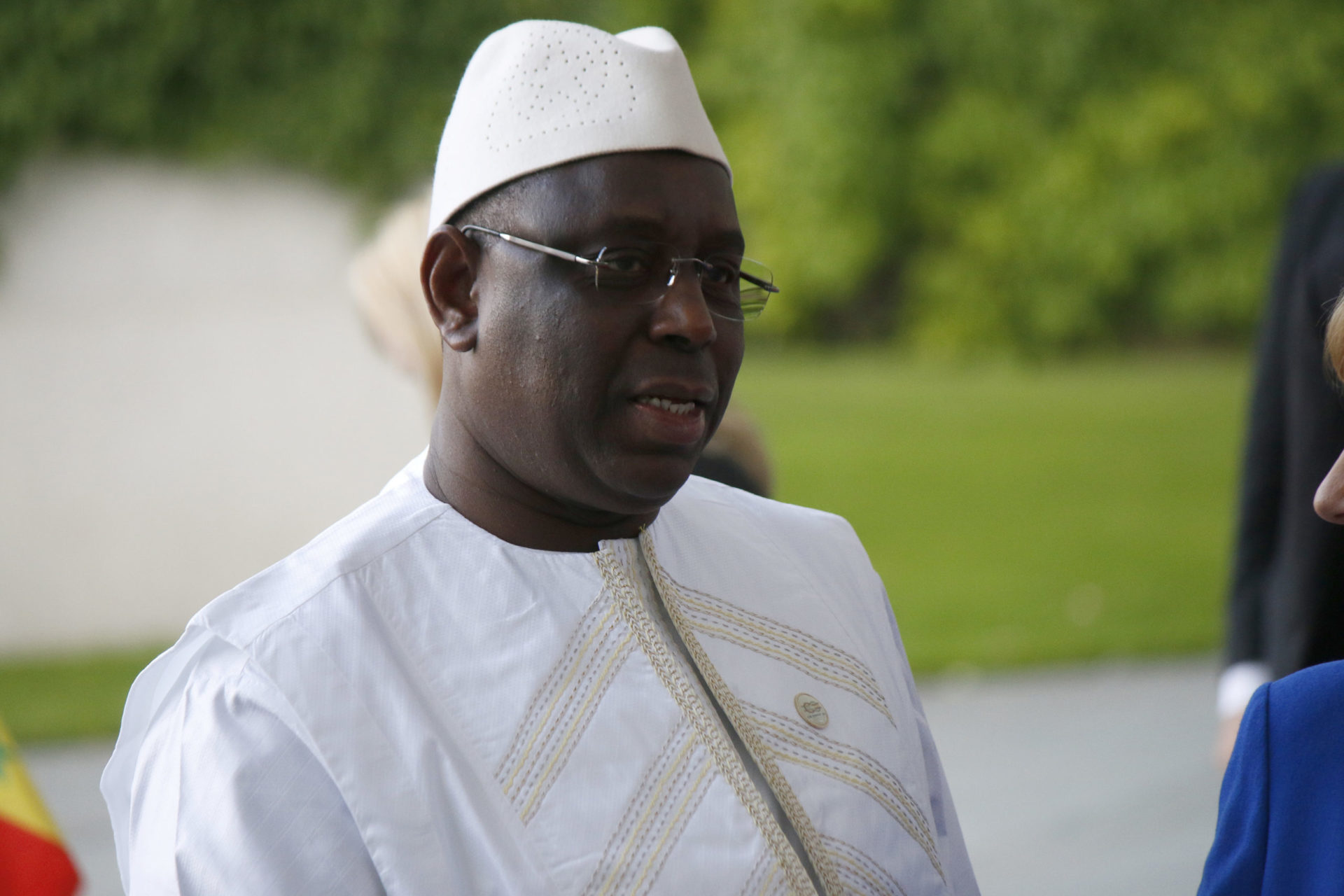
*Macky Sall, former president of Senegal (2012-2024), is the special envoy for the Paris Pact for People and the Planet

 French
  English
  Chinese
  Arabic