
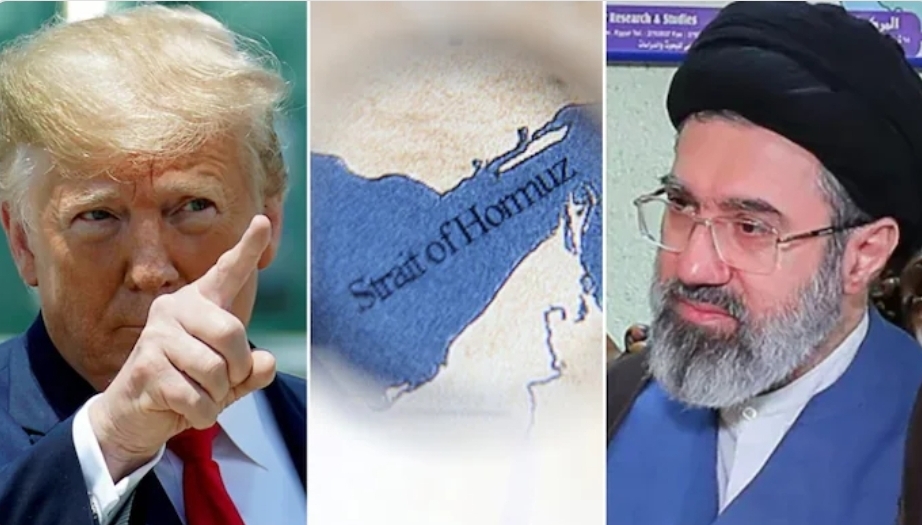
The timeline of a shift
On 28 February 2026, the United States and Israel launched Operation «Epic Fury», a joint air and naval campaign against Iran. The opening salvo eliminated the heart of the Iranian regime, Supreme Leader Ali Khamenei, triggering in response a torrent of hundreds of Iranian missiles and thousands of drones across the Middle East. This operation caused thousands of deaths in Iran, Lebanon, Israel and the Gulf states, and displaced millions of people.
The Israeli-American strikes officially aimed to bring about regime change and destroy Iran's nuclear and ballistic missile programme. They followed the failure of indirect negotiations in February 2026 on a nuclear deal. The Omani mediator had nevertheless reported «significant progress» and a willingness on Iran's part to make concessions, but Trump had stated that he was «not enthusiastic».
On 8 April, a conditional ceasefire brokered by Pakistan halted the fighting. On the same day, Secretary of State Marco Rubio declared Operation Epic Fury concluded, formally signalling the end of the US military campaign. However, he set the «complete, immediate and safe» reopening of the Strait of Hormuz as a prerequisite.
The Gordian knot: Hormuz and nuclear power
Two files are blocking any way out of the crisis, and how they are linked is the heart of the strategic problem.
The Strait of Hormuz
The strait, a vital passage for oil, fertilisers and other goods, has indeed been closed since 28 February. This situation is disrupting global energy supplies and driving up fuel prices. Washington is demanding its reopening immediately, while Tehran is holding it as a negotiating lever. Iran has described the US counter-blockade targeting ships seeking access to Iranian ports, in place since 13 April, as a «potential prelude to a ceasefire violation».
The Iranian proposal, transmitted via Pakistani mediators, consists of resolving the crisis in the strait and the US blockade as a priority. Tehran explicitly wishes to leave the nuclear issue to a later phase. The regime has indicated that there is no consensus within the Iranian leadership on how to respond to US demands on the nuclear file.
Nuclear power
Washington has articulated maximalist demands. The US plan submitted at the beginning of May demands a 20-year moratorium on uranium enrichment, the transfer abroad of Iran's stockpile of highly enriched uranium (estimated at around 400 kg enriched to 60%), and the dismantling of the nuclear facilities in Natanz, Isfahan and Fordow.
On the Iranian side, the position is firm: at this stage, Tehran is not willing to negotiate its nuclear programme. First of all, the war must be ended on all fronts. Tehran is demanding direct guarantees from the UN Security Council against further strikes, and the lifting of sanctions.
On the 11th and 12th of April, following 21 hours of negotiations that were initially indirect and then direct, the teams managed to reach agreement on most points of the ceasefire, with the precise exceptions of the Strait of Hormuz and the nuclear programme. The talks broke down without an agreement or a memorandum.
The new Iranian power: a fractured architecture
The elimination of Ali Khamenei did not produce the collapse of the regime expected by Washington. It brought about something more complex: a high-risk reshuffling of power.
On 9 March 2026, the Assembly of Experts elected Mojtaba Khamenei, the uncompromising son of the assassinated Supreme Leader, as the new Supreme Leader. This is a strong signal that Tehran does not intend to back down in the war.
Yet in the post-Ali Khamenei reality, power in Tehran has not recentred around a single, dominant leader. Power was formerly concentrated in the office of the Supreme Leader. It is now distributed within a tight circle of military, security and political figures with increasingly overlapping portfolios. What has emerged is a collective leadership architecture. Authority is exercised through institutions and networks reconfigured to meet the demands of war.
Historically, the Iranian system has demonstrated a considerable capacity to reproduce itself through intertwined institutional and security mechanisms. However, this capacity remains conditioned by the limits of external pressure and the degree of discipline maintained within the regime's inner circle. This is precisely what the coming weeks will test.
The geometry of perpendicular bisectors
The crisis has brought to light a constellation of mediators whose presence reveals both the weakness of the international system and the ambitions of regional powers seeking to position themselves.
Pakistan achieved the April ceasefire, a rare diplomatic feat for Islamabad, which is capitalising on its credibility with both Tehran and Washington. Saudi, Turkish and Egyptian intermediaries were also mobilised.
France and Europe are trying to insert themselves into the process. Macron stated that the European surveillance mission could help to «restore the confidence of shipowners and insurers» and called on both sides to lift their blockades of the strait «without delay and without conditions». He affirmed that «the Europeans, upon whom the lifting of sanctions depends, will play their part».
China is playing a more discreet but structurally significant role. US officials have openly urged Beijing to use its influence over Tehran to reopen the strait. This request puts Xi Jinping in an uncomfortable position. Indeed, cooperating too much with Washington means validating American coercion. But resisting too much means running the risk of renewed economic confrontation.
The danger zone: May 2026
The situation at the end of May 2026 is one of an unstable balance between formal ceasefire and creeping escalation.
The Pentagon has prepared target lists including Iranian energy and infrastructure facilities. The spokesperson for the Iranian armed forces has warned that any resumption of strikes would trigger «more intense counter-attacks». Analysts have warned that a direct naval clash could trigger a rapid escalation within «48 to 72 hours».
Trump stated that «most points had been accepted, but that the only point that really mattered, the nuclear one, had not been.» He described Iran as ’inflexible.« Iran said that an agreement was »a few centimetres away« while condemning the »maximalist demands« of the American negotiators.
Three scenarios now shape analysts' expectations.
The first is that of a sequenced Hormuz-first agreement, nuclear then
It fits the Iranian logic that Washington seems to be tacitly accepting, at the cost of partially abandoning its initial objectives.
The second is that of a resumption of strikes
Trump brandished it as a credible threat on 18th May, before suspending it under pressure from regional allies.
The third, perhaps the most likely in the short term, is that of a prolonged freeze
A ceasefire that holds without a substantive agreement, while both sides test each other's resilience. For global markets, the Strait of Hormuz remains a 34-kilometre-wide Sword of Damocles.
What this war changes permanently
Regardless of its outcome, the 2026 conflict has already produced several irreversible structural effects.
He put an end to deterrence through nuclear ambiguity. Washington and Tel Aviv demonstrated that they were prepared to strike militarily a state on the threshold of nuclear capability. They thus challenged the logic that had prevailed until now, with North Korea.
The conflict has reshuffled the deck in the region.
A weakened Hezbollah, Iranian proxies in Iraq destabilised, but Tehran still standing: an ambiguous outcome for Israel. It has revealed the limits of UN mediation and the rising influence of alternative mediators—Pakistan, Qatar, Oman—in a Middle East where the US security order can no longer be taken for granted.
And he has opened, in the heart of Iran, a question of legitimacy and succession that will not be resolved solely by the designation of Mojtaba Khamenei.
The war is officially over. But what comes after, the peace negotiation, could turn out to be even longer, more complex and more dangerous.

 French
  English
  Chinese
  Arabic