
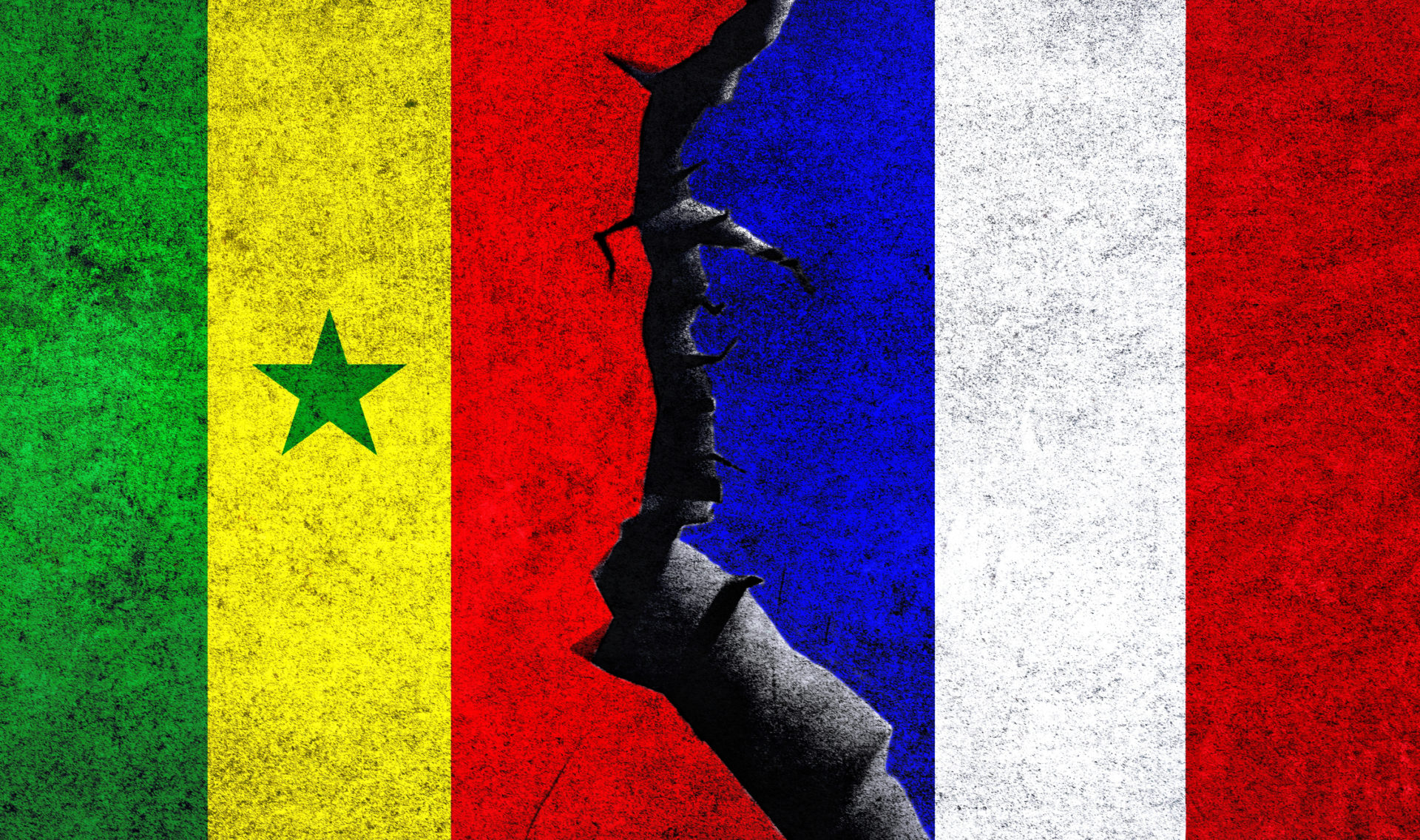
In a global context marked by the reconfiguration of alliances, Senegal seeks to diversify its partnerships while preserving its sovereignty. The reorganization of bilateral relations between Dakar and Paris has recently manifested itself in the end of more than 60 years of French military presence in Senegal. This situation presents a potential opportunity for Russia and China, which seek to expand their sphere of influence in West Africa.
These two powers are intensifying their presence there through diverse strategies of influence that combine cultural, informational, educational, and economic instruments. Faced with the war of influence and the erosion of its position, France has become aware of the need to redefine its engagement in Africa, particularly in Senegal, which appears as the laboratory of post-Francafrique influence diplomacy. In this context, influence diplomacy, understood as the ability to influence preferences through non-coercive means, in other words soft power, becomes a central tool for competition between powers on the African continent.
China in Senegal: a multidimensional influence expanding
A leading partner of Senegal, the Middle Empire maintains close relations with Dakar, as evidenced by the volume of trade. In 2023, Senegal’s exports to China amounted to 223.79 million US dollars, while imports from China reached 1.29 billion US dollars. On the economic front, the intensification of trade exchanges between China and Senegal is accompanied by a growing structural presence. Beyond the economic aspect, it is in the cultural, media, and educational spheres that Beijing consolidates its influence. The establishment of the Confucius Institute contributes to the promotion of the Chinese language and culture. The Middle Empire also supports Senegalese artists and funds study or training trips for Senegalese journalists, thus contributing to strengthening exchanges between the two countries.
In the media sphere, initiatives such as Radio China International contribute to the dissemination of narratives that value South-South cooperation while also helping to build a positive image of Beijing. It stands out for its diverse programming, combining local information and cultural content, while emphasizing Chinese values and culture. Radio China International’s media strategy is to disseminate Chinese narratives while promoting the positive aspects of cooperation in order to influence local perceptions.
Education constitutes another pillar of this influence approach. China stands out for the significant number of study grants it provides to Senegalese students, allowing many young people to continue their studies in Chinese universities every year. Beijing offers the State of Senegal 60 study grants for the 2026/2027 academic year.
While Chinese influence remains primarily economic, its cultural, educational, and media dimensions are experiencing significant growth.
Overview of Russian soft power in Senegal
Russia remains a secondary economic partner for Senegal, with relatively modest trade. In an interview given in early 2025 to Dakartimes, the ambassador of the Russian Federation in Dakar, Dimitri Kourakov, indicated that trade between Senegal and Russia was estimated at 850 billion FCFA (1.3 billion euros) for this year, compared with approximately 700 billion FCFA for 2024 (1.07 billion euros). It is mainly through the expansion of its soft power that Moscow is asserting itself, relying in particular on its cultural and educational instruments such as the federal agency Rossotroudnitchestvo («Russian Cooperation»), the Russkiy Mir Foundation («Russian World») and its international media outlets Sputnik and RT.
After a period of decline following the end of the USSR, educational cooperation is experiencing a resurgence today. Education and culture are at the heart of Russia’s African policy. The number of scholarships offered by Russia to Senegal has then increased sharply. Less than 20 scholarships were offered per year in the early 2000s. This figure has continued to rise, reaching 130 for the 2026-2027 academic year. Just like models such as the Alliance française, the British Council, the Confucius Institutes, or the Russian Houses in other countries, Russia is currently focusing on establishing a media library in Senegal. In Dakar, the Innopraktika Foundation is providing a media library at Cheikh Anta Diop University to promote the Russian language and culture… The federal agency and the Russkiy Mir Foundation are collaborating with the association of Russian teachers and the CCR Kalinka cultural center to promote the Russian language and culture in Senegal.
Increasingly, the media are becoming indispensable actors in the diplomacy of states. In this context, Russian media outlets such as RT and Sputnik play a central role in disseminating narratives often critical of the West and appealing to part of the Francophone African public opinion. Russia has reoriented its media efforts towards African countries where rejection of neocolonialism and the challenge to the Western order resonate strongly. In Senegal, these narratives can find favorable resonance in part of the Senegalese public, particularly among segments sensitive to sovereignist and anti-imperialist discourses.
For several months, the Senegalese capital has been seeing an increasing visibility of RT through a large-scale billboard campaign deployed along the main urban axes. This media presence attests to a desire for lasting anchoring. Beyond a simple communication strategy, this dynamic is part of a broader approach to informational influence by the Kremlin. RT now has a correspondent based in Dakar, which attests to a more assertive territorial networking in West Africa. This presence allows for better coverage of local news, and implies a better understanding of Senegalese political and social dynamics, suggesting that RT is on a trajectory conducive to increasing its influence. However, Russian informational influence, in turn, remains more recent in Senegal compared to other Saharan states.
3. French strategies of influencing public opinion to regain it
Senegal maintains a historical and privileged relationship with France. This remains one of its main partners, particularly in financial and economic terms, even as Dakar gradually diversifies its partnerships in the face of the rise of other international partners. According to data from the General Directorate of the Treasury, Senegal’s imports reached 7,207 billion FCFA (or % % 11 billion euros) in 2023. Although down slightly from 4.5 in 2022, they remain at a historically high level, up 60.4 from 2020. At the same time, Senegalese exports amounted to 3,224 billion FCFA (4.9 billion euros), a decrease of 9.5 % compared to the previous year.
France’s influence in Senegal is being put to the test. French brands are targeted during demonstrations, while international French media, notably RFI and France 24, are wrongly perceived by some of the population as instruments of influence. At the same time, pan-African movements such as FRAPP/France dégage are taking the field and are proving their worth in their fight against neocolonialism. France’s influence in Senegal seems to be undergoing a phase of reorganisation, marked by more visible protests than in the past. In the face of these developments, Paris seems committed to a gradual adaptation of its methods, particularly towards public opinion.
In light of the influence war in Africa, President Emmanuel Macron emphasizes the need for France not to leave the field to its competitors. The French authorities have become aware of the central role that influence diplomacy now plays in contemporary international relations. Paris is no longer in a position of hegemony in Senegal, but is competing with other powers. In order to strengthen its influence in Africa, France has launched a mobilization drive aimed at containing the growing influence of China and Russia. The French president has called on French diplomats to be more responsive on social media.
Under Emmanuel Macron’s leadership, France’s strategy is evolving towards a more direct public diplomacy, embodied in figures such as Christine Fages, the French Ambassador to Senegal. Beyond traditional tools such as the Institut Français and the Alliance Française, Paris is developing new forms of influence by relying on popular figures from the sports world, notably Sadio Mané and Modou Lô, as well as influencers. This travel to religious communities in Touba and Tivaouane adds to this media visibility, reflecting a growing desire for personalization in French diplomacy, increasingly oriented towards public opinion.
This soft power strategy, based on football players, wrestlers, or content creators, is the new strategy of French public diplomacy, rooted in circles and activities highly valued by the Senegalese society, in order to rebuild a sense of proximity and improve the image of France. This approach of French soft power relies on a coordinated and proactive response in a context where inaction would risk losing influence. Paris is moving from a vertical model to a horizontal and interactive approach, focused on regaining public opinion. Increasingly, French influence diplomacy tends to redefine itself around new tools and modes of interaction aimed at engaging in a more direct dialogue with the public opinion.
The case of Senegal illustrates a broader transformation of the new power relations in France characterized by a multipolarization of influence. In this war of influence, no actor currently seems to impose itself in a hegemonic manner. France retains important structural advantages, notably historical, financial, linguistic, and educational ones. China asserts itself as a major economic partner, while Russia explores leverage points of influence that are still under construction. In this context, Dakar is no longer limited to being a battlefield for geopolitical rivalries but a strategic actor that seeks to diversify its partnerships while preserving its sovereignty. Therefore, the challenge for these major global powers today may no longer be solely to project their influence, but to adapt to more demanding African societies that prioritize sovereignty and diversification of their strategic alliances.

 French
  English
  Chinese
  Arabic