
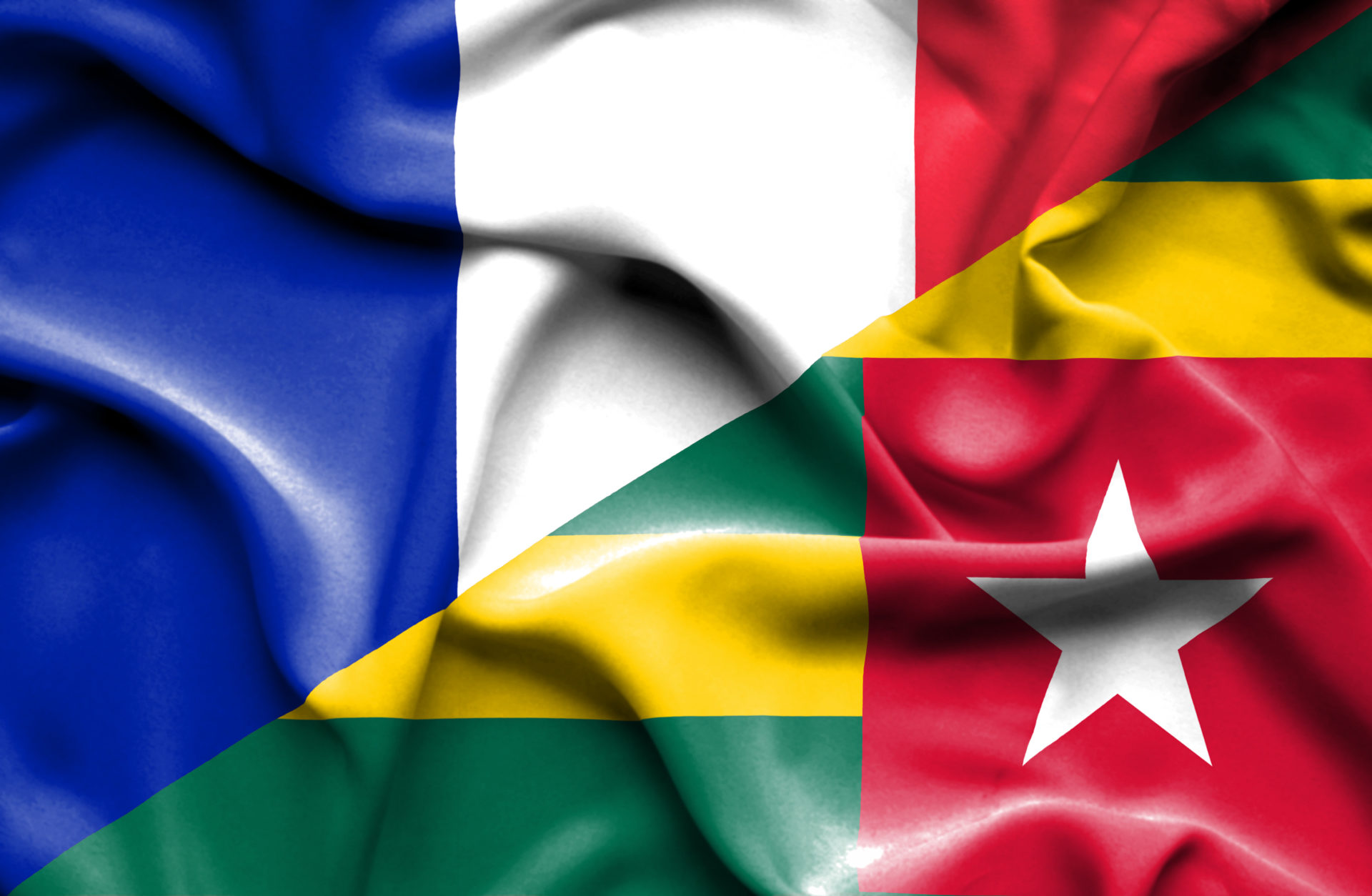
There is no doubt that the French Minister for Europe and Foreign Affairs is embarking on a trip of major strategic significance. According to credible information obtained by Confidentiel Afrique, the whistle-stop visit to Lomé by the head of the Quai d'Orsay is motivated by intelligence reports from the French secret services « worrying »on an imminent project for Togo to join the Confederation of Sahel States, which brings together Burkina Faso, Niger and Mali.
Very soberly, the website of the Togolese Ministry of Foreign Affairs reports that «the French Minister of Foreign Affairs is paying an official visit to Togo on 23 and 24 April, against a backdrop of intense bilateral cooperation and a persistent Sahelian crisis».
In a press release sent to Confidentiel Afrique, we learn that Jean-Noël Barrot « will hold talks with his Togolese counterpart Robert Dussey »and that« several key files are on the agenda: bilateral cooperation, the fight against terrorism in a turbulent Sahel, and the regional political situation »This last point is« particular importance », points out the press release, which recalls that« In recent years, Togo has established itself as a recognised mediator in Sahelian crises, leveraging its relative neutrality and diplomatic networks to maintain channels of dialogue where others have closed theirs. ».
Pivotal moment
According to several sources, one of the real issues of this visit concerns the «AES wishes from Lomé», a few days after the meeting on 18 April dedicated to a new strategy for a Sahel in crisis. This gathering, initiated by Togo, brought together ECOWAS, the countries of the Alliance of Sahel States (AES), the UN, and several European partners—an unprecedented format that confirms Lomé's rising diplomatic clout. According to exclusive information received by Confidentiel Afrique, in one of the wood-panelled offices at the Quai d'Orsay, at Place des Invalides, the work was meticulously prepared and vetted. Things have moved on. Minister Jean-Noël Barrot is taking action to defuse Togo's proposed accession to the AES.
In a context where France is seeking to redefine its partnerships following the ruptures with Mali, Burkina Faso and Niger, Togo appears as a point of balance, capable of engaging in dialogue with all parties, including the AES regimes. Paris cannot ignore this mediating capacity, especially since Lomé maintains open channels where other capitals have lost their grip.
Togo is actively diversifying its alliances: opening up to Moscow, consolidating ties with Europe, and acting as a regional mediator. This strategy of «nactive neutrality» reinforces its attractiveness. Moreover, Jean-Noël Barrot's visit comes after the more discreet one by the Russian Defence Minister a month earlier - a sign that the major powers are now vying for Lomé's attention.
Lomé, new regional diplomatic hub
In this reshaped game, France is seeking to preserve a political and economic presence, as well as to prevent Togo from shifting towards exclusive partnerships with other players. The country is perceived as stable in a sub-region marked by military transitions, political tensions and the expansion of armed groups. But behind this sectoral cooperation lies a broader issue: remaining an essential partner in a country that is redefining its external balances.
Barrot’s visit must be read as a signal: Paris recognises that the diplomatic centre of gravity in West Africa is shifting. Lomé, through its capacity to speak to everyone, is becoming a space for strategic negotiation in the Sahelian crisis. France, in search of a new role in the region, is seeking to anchor itself to this dynamic. In short, this trip is not merely a bilateral visit: it is a geopolitical manoeuvre in a sub-region undergoing recomposition, where every gesture counts and where Togo, long discreet, is now establishing itself as a key player.

 French
  English
  Chinese
  Arabic