
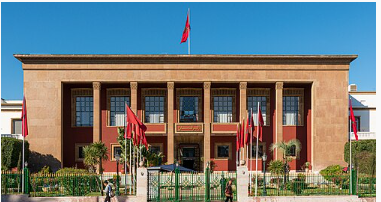
On 23 September, Moroccans are going to the polls to renew the 395 seats of the House of Representatives: a total of 305 elected representatives in local constituencies and 90 in regional constituencies. More than 15.8 million voters are registered on the electoral rolls, finalised on 10 July 2026 following an exceptional revision. Twenty-seven political parties are in the running, with 702 candidate lists submitted across the entire country. This is a dense party landscape, reflecting a Moroccan political life that continues to be reshaped election after election.
This is the first major national electoral test since the so-called «Gen-Z» mobilisations of autumn 2025, which brought economic and social demands into the public sphere. These are driven by an urban, connected youth who were previously little heard in institutional political debate.
A tight electoral calendar, a reinforced control mechanism
The 2026 election cycle was designed to leave little room for improvisation. Candidates were able to submit their applications online starting from 31 August at 8 a.m., with a deadline set for 8 September. The official campaign opened on 10 September at midnight and closed on 22 September at the same time. Just under two weeks during which twenty-seven political parties stepped up meetings, local tours and digital offensives to convince the electorate. Nearly 29 % of voters are over 60 years old and a significant proportion consists of first-time voters born after the major constitutional reforms of the early 2010s.
The legal framework governing the campaign is strict. Any public official using their position to influence a vote faces a sentence of six months to one year in prison and a fine of up to 100,000 dirhams.
The purchase of votes through donations, gifts or benefits is explicitly prohibited, as is any pressure, intimidation or threat aimed at influencing a voter's choice. Campaign accounts must be submitted in both electronic and paper format within 90 days following the declaration of results, prior to review by the Court of Audit.
To ensure compliance with this framework, the Special Accreditation Commission selected 26 national and international associations, mobilising more than 3,000 observers across the entire country. This electoral monitoring mechanism is on an unprecedented scale for a Moroccan legislative election.
The diaspora is finally voting without travelling: the silent revolution of the 2026 ballot
The most structural innovation of this election is not taking place at rallies, but on a digital platform. For the first time in this form, Moroccans living abroad who still cannot vote in person in their country of residence have a fully digitalised proxy system at their disposal. Since 24 August, the Ministry of the Interior has launched the «E-procuration» platform, accessible via listeselectorales.ma and elections.ma. It allows any voter registered on the electoral rolls to appoint a proxy in Morocco without having to make a single journey.
For a diaspora scattered across the five continents, long faced with cumbersome consular procedures to exercise this right, this system responds to a demand made for years. Its smooth operation in practice will be closely scrutinised. This is a full-scale test before a potential rollout to other types of ballots.
A party political landscape looking for a language for the 2025 generation
On the programmatic substance, the 27 running parties almost all converge towards the same triptych: employment, purchasing power, and the middle class.
The Constitutional Union, for example, presented its manifesto on 7 September in Casablanca under the slogan «For a single-speed Morocco». It places emphasis on supporting the family and the middle classes, with a particular focus on youth employment as a pillar of economic policy.
Other political parties, originating both from the outgoing RNI, PAM and Istiqlal majority and from the opposition, are putting forward comparable proposals regarding job creation and the competitiveness of the national economic fabric. Each is attempting to demonstrate that it has heard the message conveyed by the autumn 2025 mobilisations, without, however, making a clean break with the record of the outgoing parliamentary term.
Voting takes place by direct universal suffrage, using a party list system with a single ballot paper on which each voter simultaneously expresses their choice for the local constituency and the regional constituency. This two-tier mechanism structures the distribution of the 395 seats between territorial anchorage and broader regional representation.
An appointment to be observed rather than commented on
On the evening of 23 September, the results will provide an initial indication of how successfully these 27 political parties have managed, or failed, to translate the expectations expressed by a generation that first made its voice heard on the streets into credible electoral promises. Beyond the mere verdict of the ballot box, this election will also be remembered as the moment when the Moroccan diaspora was able, for the first time on this scale, to exercise its right to vote. A seemingly modest technical development, but one whose symbolic significance, for millions of Moroccans living abroad, extends far beyond the scope of this single election.

 French
  English