
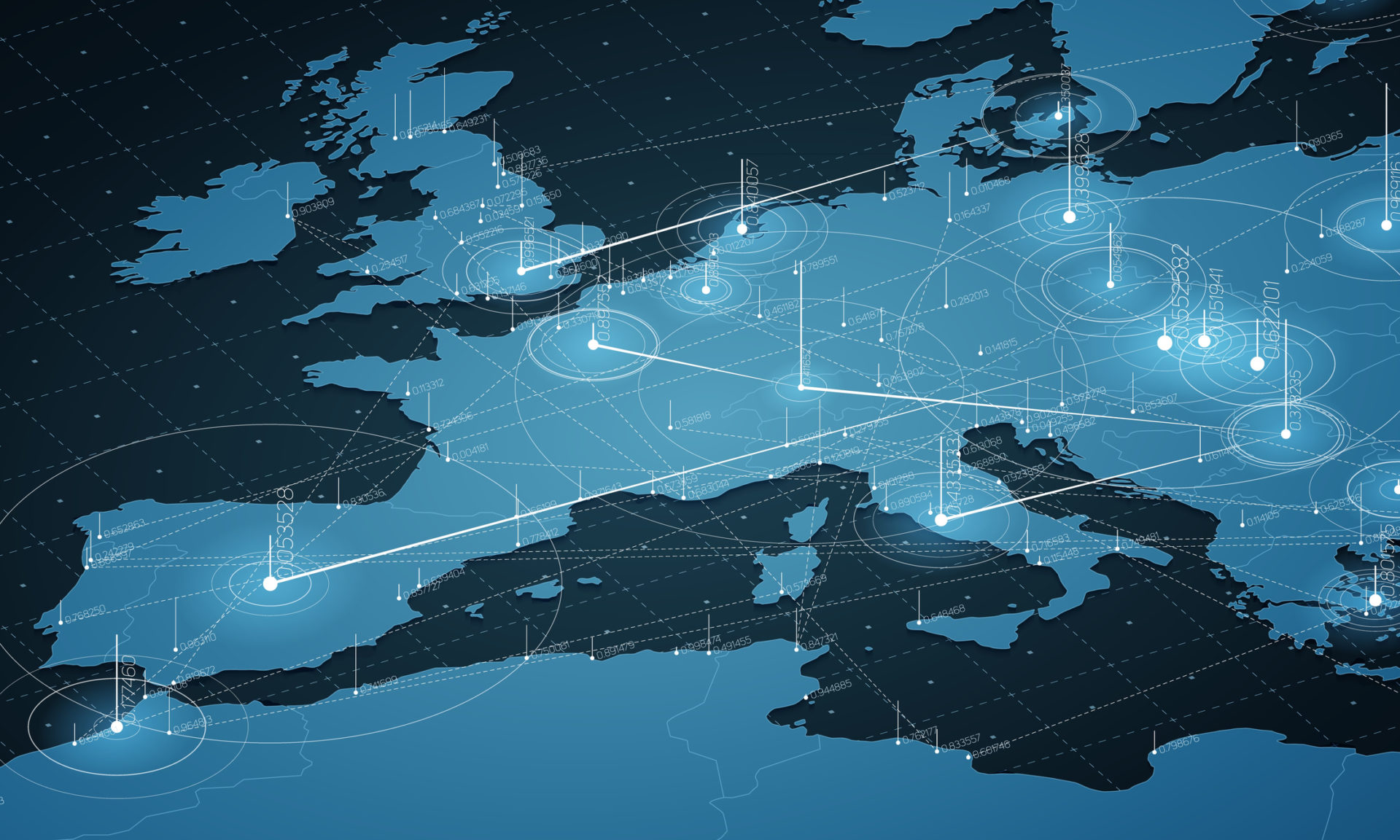
The openly hostile world
Russia's war against Ukraine, the rivalry between Washington and Beijing, uncertainty regarding the US commitment to Europe, trade tensions and technological competition have changed the game. The Union is discovering that it can be economically powerful whilst remaining strategically vulnerable.
It is in this context that Ursula von der Leyen delivered her State of the Union address on 16 September 2026. The message is clear: Europe can no longer simply defend its model; it must give itself the means to protect it.
The metaphor of the shield, which runs through the discourse, refers as much to military security as to the resilience of supply chains, the protection of critical technologies and the capacity of European societies to withstand crises.
One fundamental question remains: is the Union becoming a true power, or will it remain an incomplete power — rich in resources, but struggling to mobilise them collectively?
The security shield
The war in Ukraine has profoundly challenged the idea of lasting peace in Europe and revealed the limits of an architecture in which Europeans largely depend on American military capabilities, while bearing direct responsibility for the security of their continent.
Moreover, threats are no longer purely military. Cyberattacks, disinformation campaigns, sabotage of critical infrastructure and the weaponisation of migration flows now belong to the same strategic continuum. The border between war and peace is blurring, while the instruments of confrontation are diversifying.
The Commission proposes a European emergency safety protocol, presented as a complement to NATO Article 4. It would allow for rapid consultation between member states as soon as a serious threat looms, before it develops into an open crisis.
However, everything will depend on the actual scope of the mechanism: what threats could trigger it? Who would make the decision? Within what timeframes? And what concrete commitments would member states be prepared to make?
A consultation mechanism does not constitute a defence guarantee. It does not replace NATO, but could help to strengthen the European pillar of Euro-Atlantic security, particularly in areas where the Union must be able to act on its own.
The project of European Safety Council, associating notably the United Kingdom, Norway, Ukraine and Canada, follows the same logic. It aims to go beyond the institutional borders of the Union to build a space for consultation founded on shared strategic interests.
This approach reflects a reality: European security is not played out solely within the borders of the Union. It also depends on the evolution of the war in Ukraine, the stability of its neighbourhood, maritime security, the Arctic and the ability to coordinate responses with external partners.
The rise in European defence spending reflects a genuine awakening. But money is not enough. Industrial capacities, stockpiles, intelligence assets, operational mobility and a shared political will are also required.
The real challenge will be to transform the addition of national budgets into a European strategic capability. Without coordination of equipment, without pooling and without clarification of priorities, increased spending risks reproducing existing fragmentations rather than creating real autonomy.
The geo-economic shield
The European Union has long considered trade to be a factor of stability. However, recent crises — the pandemic, energy dependence and the Sino-American rivalry — have shown that interdependence can also become an instrument of coercion.
China illustrates this ambiguity. It is simultaneously a major trading partner, an industrial competitor, and an actor with significant leverage over rare earths and critical raw materials. The European trade deficit with Beijing, mentioned in the speech as being around one billion euros a day, highlights the scale of this asymmetry.
The European objective is not necessarily a break, but de-risking: reducing the most dangerous dependencies, diversifying suppliers and preserving the Union's decision-making capacity. This approach differs from decoupling, which would imply a much more radical separation of economies.
For Europe, the difficulty lies in protecting its interests without giving up the trade upon which part of its prosperity depends. The establishment of a European structure dedicated to critical raw materials Go in this direction. But a supply security policy cannot be limited to the search for new suppliers. It also requires recycling, the creation of strategic reserves, the development of long-term partnerships and the strengthening of European industrial capacities.
Economic security also requires strengthening the internal market, which remains fragmented in services, capital and technologies. The union of savings and investment addresses this weakness.
A Europe that regulates without investing enough, that innovates without managing to industrialise its innovations, will remain dependent on outside players. Economic sovereignty does not mean autarky: it consists in being able to choose one's dependencies, diversify them and have alternatives in the event of a crisis.
Canada: a new geography of partnerships
One of the most significant elements of the speech is the proposal to pave the way for Canada to become the first associate member of the European Union.
This would be neither a traditional accession to the Union, nor a simple free trade agreement like CETA, which primarily governs commercial and economic relations between Europe and Canada. The status of associate member does not exist in current treaties. Its creation would require the agreement of member states and would raise significant institutional questions concerning Canadian rights, obligations and participation in European mechanisms.
The political significance of the proposal is nonetheless real. It forms part of a potential Alliance for the Future, covering in particular defence, energy, critical raw materials, artificial intelligence and the Arctic.
Canada is therefore no longer viewed solely as a commercial partner, but as an actor with which the Union could share security interests, energy concerns and a common vision of certain strategic spaces.
This initiative comes amid a context of redefining transatlantic relations. Without signifying a break with Washington, it demonstrates the desire of Brussels and Ottawa to diversify their partnerships and strengthen their capacity for action in a more uncertain international environment.
For Europe, this approach raises a fundamental question: can it build a power that is not exclusively focused on its continental neighbourhood, but which also relies on structured partnerships with actors sharing some of its priorities?
Beyond Canada, this development raises questions about the future structure of European partnerships. Faced with a growing number of crises, the EU may be led to develop differentiated relationships with external actors, depending on their capabilities, interests and contribution to European objectives in the areas of security, energy and resilience.
This approach could also transform the Union's relations with its southern neighbours. Mediterranean partnerships could be examined more closely through the prism of regional security, energy transition, value chains, mobility and stability. Such a development would raise the question of the place these partners can occupy in a Europe seeking to better articulate its strategic interests and external relations.
Climate resilience and technological sovereignty
The speech broadens the concept of security to areas long considered economic or environmental. Heatwaves, fires and floods now affect infrastructure, agriculture and public finances. Proposals concerning a European insurance alliance and a heatwave response plan are part of this approach.
But it is the technological dimension that has the most direct impact on the international balance of power. Artificial intelligence, semiconductors, quantum computing, data and digital infrastructure are now key sectors.
Whoever controls these technologies holds an economic, political and military lever all at once. Yet Europe suffers from a persistent gap between its ability to set standards and its capacity to produce on a large scale the technologies it intends to regulate.
Technological sovereignty does not mean that everything should be produced alone. It entails mastering essential technologies, securing infrastructure, protecting data, supporting research, and retaining leeway in decisive sectors.
For the Union's external partners, particularly in the Mediterranean neighbourhood, this transformation opens up prospects: geographical proximity, human skills and European needs for diversification can foster the development of new value chains. But nothing is automatic. These opportunities will depend on the quality of infrastructure, training, regulatory stability and the ability to embed partnerships in a long-term vision.
Power as a discipline of achievement
Security shield, geo-economic shield, climate resilience and technological sovereignty: these dimensions are interconnected. A militarily dependent Europe remains vulnerable; economically exposed, it cannot sustainably guarantee its political autonomy; technologically dependent, it risks losing control of its strategic choices.
The Union has considerable strengths: a large market, regulatory clout, financial resources, scientific expertise and an extensive network of partnerships. Its main obstacle lies not so much in a lack of resources as in the difficulty of mobilising them in a coherent manner, given the fragmentation of national interests and persistent differences over strategic priorities.
Strategic autonomy does not mean isolation. It is not about cutting oneself off from the world, but about preventing critical dependence from turning into political vulnerability. It requires choosing one's partners, diversifying one's relations and having independent capabilities when circumstances so demand.
This transformation will have consequences for all of the Union's external relations. The Europe of tomorrow will be more demanding in terms of security, value chains, the energy transition, technologies and mobilities. Its partnerships with neighbouring countries and external actors will therefore need to be rethought in light of these new priorities.
For the Union’s partners, the challenge lies in better identifying their interests, anticipating European transformations and building a coherent strategic offer. It is no longer just a question of adapting to the Union's new priorities, but of actively seeking to integrate their own issues within them: industrial development, the energy transition, training, mobility, regional security and economic modernisation.
Europe is being put to the test. It has the resources it needs to become a power, but power cannot simply be declared: it is built through the consistency of choices, the continuity of action and the capacity to act collectively.
The issue is no longer whether Europe wants to become a power, but whether it will know how to act like one.

 French
  English