
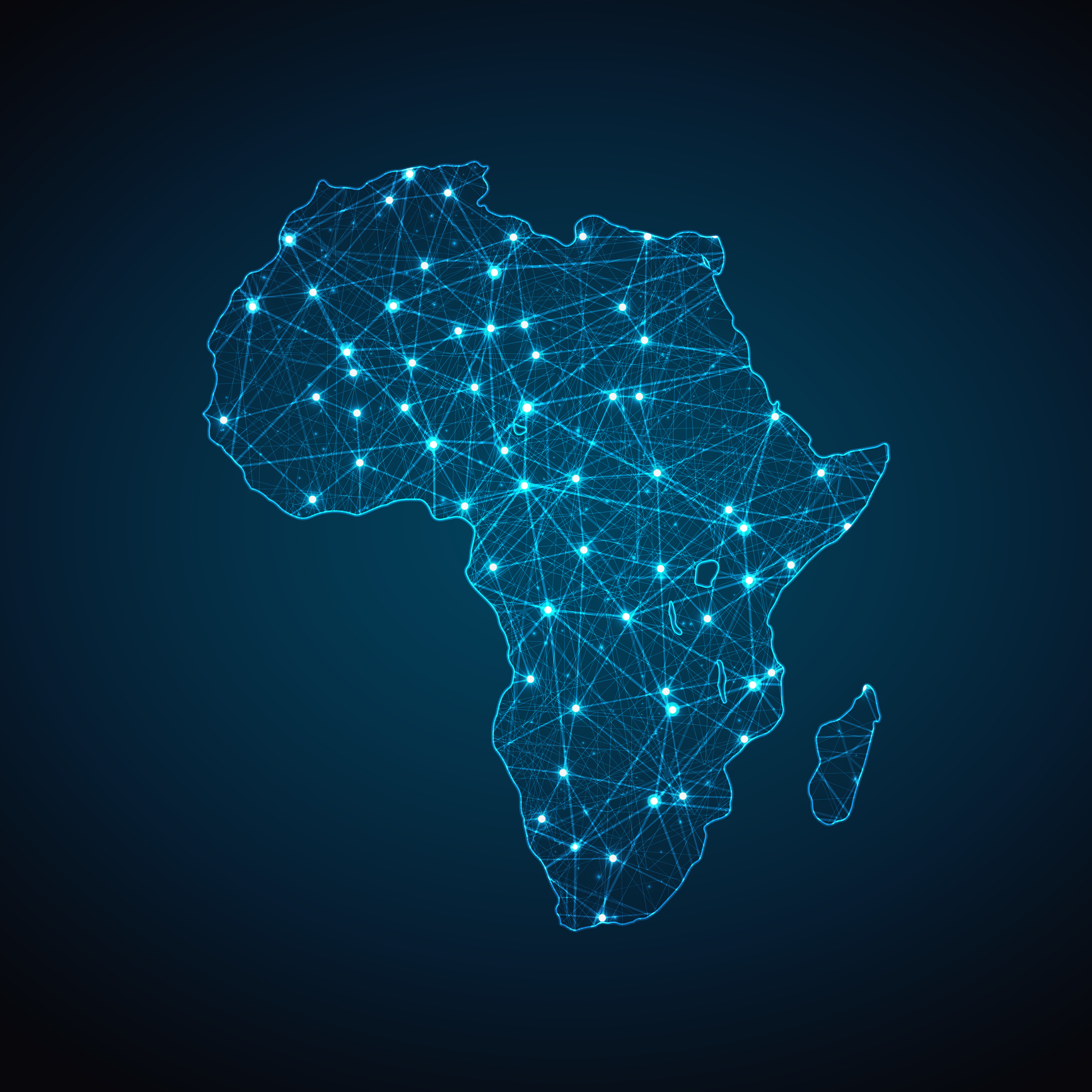
Growth announced in a world under pressure
In Washington, at the spring meetings of the International Monetary Fund and the World Bank, the figures were presented with caution. Officially, Africa is progressing. But the margins for maneuver are shrinking.
The global context weighs heavily. The war in the Middle East – involving the United States, Israel, and Iran – and the tensions around the Strait of Hormuz, through which more than 20 % percent of the world’s oil passes, have revived a feared scenario: that of an extended energy shock. In the corridors of Washington, an African economist slips: « We talk about growth, but nobody really controls the variables ».
A real increase, but marginal in the world
The projections are clear: African GDP: 3 120 billion $ in 2025 → 4 830 billion in $ 2031. That is an increase of 54.8%. % But the contrast is brutal: Africa’s share of global GDP: 2.64 → % only 3. % 05. In other words, despite its growth, the continent remains structurally marginalized in the creation of global wealth. Taken as a whole, Africa would rank:
- 8th power in the world in 2026
- 7th in 2031, just ahead of France
A symbolic increase, but far from a global economic turnaround.
The real issue: concentrated wealth
Behind the overall figures, a more harsh reality is emerging. In 2025, 10 countries account for more than 68 % % of Africa’s GDP: South Africa; Egypt; Nigeria; Algeria; Morocco; Ethiopia; Kenya; Angola; Democratic Republic of the Congo; and Côte d’Ivoire. And this concentration will hardly change by 2031. An African official said off the record: « Africa is not short of growth. It is short of the distribution of wealth ».
Egypt vs South Africa: a turning point on the horizon
This is one of the key lessons of the projections. Egypt will become the first African economy by 2030: GDP: +82 % between 2025 and 2031; drivers (energy, tourism, diaspora, agriculture).
In contrast, South Africa is slowing down: growth is limited to 35 % %; structural constraints (energy, unemployment, infrastructure). A revealing shift: diversified and reformist economies are gaining the upper hand.
Nigeria: An unstable power, a volatile wealth
The case of Nigeria intrigues analysts. On paper: strong growth; industrialization underway; massive projects (Dangote refinery). But in reality: GDP depends heavily on the exchange rate. The devaluation of the naira has lowered GDP: from 645 billion $ in 2022 to 252 billion $ in 2024. An African banker sums it up:« Nigeria produces, but its currency wipes out its wealth ».
Algeria: Oil dependence as a ceiling
On the Algerian side, stagnation is worrying: a projected growth of % only +14.6%; an economy still dependent on more than 95% % of hydrocarbons. Worse: the gap between the official rate and the parallel market distorts the figures. A rich but vulnerable economy to any oil shock.
Ethiopia and DRC: dynamic outsiders
Two countries attract attention: Ethiopia: +122 (% the highest growth); Democratic Republic of the Congo: +88. % Their common point: massive demographics; abundant resources; investments in infrastructure. But also high risks: political instability; monetary pressure; institutional fragility.
The invisible factor: currencies and GDP illusions
This is one of the dead ends of the debate. GDP in dollars depends on the exchange rate; inflation; and the financial markets. The result: a country can become richer and appear to become poorer. An IMF expert confides:« African GDP is sometimes more of a monetary snapshot than an economic reality ».
The shadow of geopolitical crises
The projections remain fragile. Three major risks:
- Global energetic shocks
- Dependence on imports
- Regional security instability
And a new factor: the impact of artificial intelligence. According to several studies, AI could generate more than 1 trillion $ in Africa by 2035. But on one condition: infrastructure, training, connectivity. Without this, the continent could… miss out on another revolution.
Real growth, but on condition
Ultimately, the International Monetary Fund’s projections paint a sobering picture: Africa is progressing; its major economies remain stable; new actors are emerging. But wealth remains concentrated; dependence on raw materials persists; monetary vulnerabilities distort perceptions.
The real question
Africa is going to grow. That’s a given. But the real question is no longer how much it will produce. The real question is who will capture this wealth… and how it will be transformed into real power. Because in the global economy, one rule remains: it’s not the resources that make the powerful, but the ability to convert them into influence.

 French
  English
  Chinese
  Arabic