
When form is no longer enough
Because a form only makes sense if it allows something to be achieved.
The question is therefore not whether a form is necessary.
The question is whether this form remains faithful to what it is supposed to serve.
This is perhaps where one of the great contradictions of our time lies.
Modern societies have perfected their institutions to the point that they can sometimes give the appearance of freedom without guaranteeing its reality, The appearance of participation without the expressed will always producing a political consequence, or the appearance of sovereignty when the material conditions for that sovereignty have shifted elsewhere.
A company can let its citizens speak without actually hearing them.
She can hear them without actually listening to them.
And she can even listen to them without changing her decision.
These three situations are not equivalent.
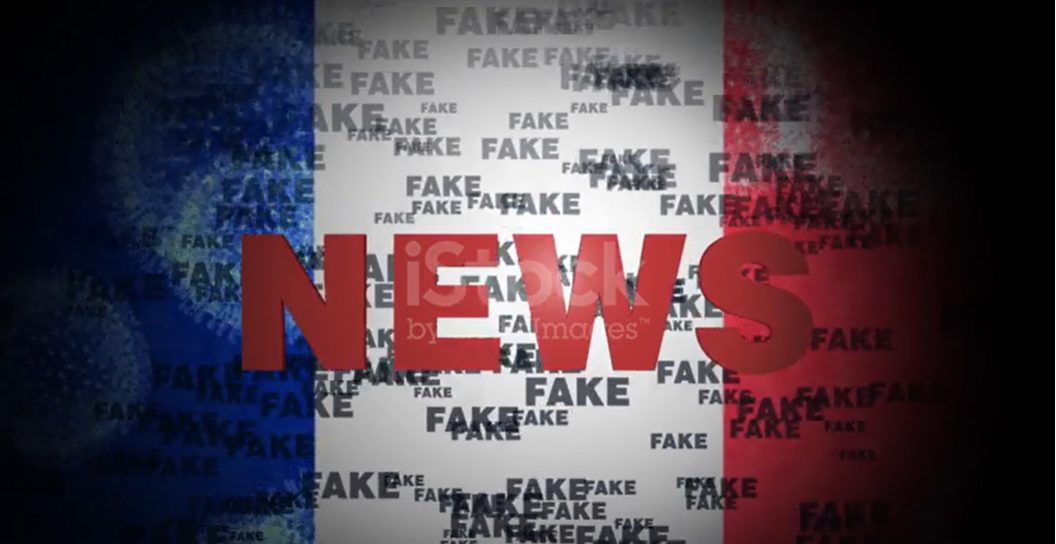
The 2005 French referendum on the Treaty establishing a Constitution for Europe provides an illustration. The «no» won with 54.67% % of the votes cast. The project was therefore rejected by the French electorate.
However, a substantial part of its provisions was subsequently incorporated into the Lisbon Treaty, which France ratified by parliamentary means in 2008.
The referendum had indeed allowed the people to express their views. But what does a popular consultation mean when the expressed will is not enough to change the political direction being pursued?
Understanding already implies something else: taking in the other person’s words, without necessarily giving them any real weight.
Sincere listening goes further: it involves accepting that the other person’s words may contain a truth that the power had not considered, or a will that may compel them to reconsider their own decision.
But even listening does not necessarily mean that the decision will be changed.
It is when what has been expressed can actually weigh on the actions of those who govern that the form takes on its spirit.
A democracy, therefore, cannot be reduced to the possibility of voting.
Freedom cannot be reduced to the ability to speak.
Sovereignty cannot be reduced to its proclamation.
And an institution cannot be judged solely by its existence.
We must look at what it actually allows those it claims to serve.
Because it is ultimately in the passage between words and action that the sincerity of a system is revealed.
A government can tolerate dissent because it is legally bound to do so.
He can also listen to it because he understands that a society that he no longer understands becomes a society that he will soon no longer be able to govern.
The difference is fundamental.
In the first case, the form is respected.
In the second, the spirit remains alive.
The mind is measured by actions
This is where the question of legitimacy arises.
Legality and legitimacy do not necessarily coincide.
A decision may be perfectly legal and yet be perceived as deeply illegitimate by a part of the population. Conversely, a decision may be challenged on its legality while enjoying genuine legitimacy among those who consider it necessary for the preservation of the nation.
The procedure is essential.
But it's not enough.
An election establishes that a power has been designated according to certain rules. It does not, by itself, guarantee that this power will meet the expectations of those who brought it to power.
Similarly, the absence of competitive national elections does not automatically mean that all relations between power and the population have disappeared.
Political regimes must therefore be observed in a way that goes beyond their mere institutional appearance.
This distinction is particularly important when comparing liberal democracies with large, highly centralized states.
It would be illusory to think that one governs a country of several hundred million or more than one billion inhabitants in the same way as one governs a small state. The demographic, territorial, historical and social dimensions impose different forms of government. They above all impose on the power a permanent capacity to know the real state of the society it governs.
In a highly centralized regime, the responsibility of power is all the greater as the institutional counterpowers are reduced.
Whoever concentrates the decision also concentrates the responsibility for the result.
It is more difficult for him to reject or permanently dilute the responsibility for his failures on a previous government, on a parliamentary coalition, on the opposition, or on the constraints of an institutional system over which he does not control the main aspects.
He must therefore respond differently to society: through security, stability, development, the improvement of the standard of living, the ability to protect the territory, and, more broadly, by demonstrating that he is capable of leading the country in the direction he has promised.
The result then becomes itself a form of political contract.
This does not mean that a temporary economic difficulty would be sufficient to render a regime illegitimate. No power can be judged on a single crisis, nor does a brief period of prosperity suffice to establish its legitimacy.
But when difficulties become persistent, when poverty sets in and the system proves incapable of correcting them, the question changes in nature: it is no longer only the government that is at stake, but the capacity of the political system itself to produce the conditions for its own success.
Legitimacy therefore does not rest on the mere procedure or on the immediate results alone.
It also measures the ability of a system to respond sustainably to the challenges it faces.
A regime that claims the ability to decide must accept being judged on the results of its decisions.
It can be expressed through adherence, consent, social stability, or the power’s ability to correct its mistakes. It can also manifest itself, in its subtler form, in the gradual emergence of a disagreement that it is no longer able to contain.
The absence of an election does not mean the absence of any consultation. Modern large states have considerable administrative networks, local organizations, mechanisms for reporting back, and numerous means for the authorities to gauge the reactions of the population.
The real question then becomes less about whether the people vote: «Do they vote?» but whether the will of those who are governed has any real capacity to act on those who govern.
This may be the simplest criterion for effective democracy. For if this ability rests on weak, illusory, or purely formal means, the procedure remains, but popular sovereignty loses part of its reality.
Liberal democracy possesses considerable strength: it has institutionalized the principle that power must periodically ask citizens to renew their trust.
But she also has a weakness when it ends up confusing this procedure with the entire sovereignty of the people.
Because the citizen does not necessarily choose the conditions in which the choice is offered to them.
He chooses between candidates, parties, programs, and policies that have already passed through numerous political, financial, media, and institutional filters.
The procedure remains.
The vote remains.
The alternation remains.
But there is still a deeper question to be answered: what is it that, between two elections, really allows the will of the people to weigh on the direction of the country?
In France, the Fifth Republic was carved out to fit the profile of an old oak tree: General de Gaulle.
The problem is that a constitution designed to give power to a statesman can become dangerous when it falls into the hands of the greedy.
The Covid crisis It was a brutal demonstration: faced with the shortage of masks, self-interest prevailed within the European Union itself. And France, with only 65 million inhabitants, had to turn to McKinsey to support a vaccination campaign.
The architecture of Western power represented by NATO It absolutely could not do anything to address the health vulnerability that has paralyzed societies. Here we have a power supposed to be capable of dealing with the most extreme forms of biological warfare, and yet, faced with a virus, Western societies have found themselves left to their own devices, in a chaos without a name.
When acts reveal the spirit
There remains, however, one final criterion for distinguishing the form of the mind: the acts.
Because a political system can proclaim freedom, sovereignty, pluralism or equality. It can even multiply the institutions designed to guarantee its existence. But the spirit of a system is not found in what it claims to be. It shows in what he does.
Freedom of expression provides a particularly revealing example in this regard.
In the United States, The Constitution protects the freedom of the press with particular force.
But this freedom is exercised within a media space whose material conditions are profoundly structured by economic concentration, the power of large groups, and the financial interests that organize its functioning.
The American media landscape is therefore not one of a multitude of perfectly independent actors from each other. It is crisscrossed by concentrations of ownership and by mergers and acquisitions that continue to transform the sector.
In such a system, it is not necessary for a censor to designate daily what can be published.
This means that The conditions of existence of the media space are never neutral.
And it is precisely there that form can give the illusion of fulfillment.
Freedom exists.
Newspapers do exist.
The channels exist.
Opinions are being expressed.
But the essential question remains: Can this word really change power?
It is here that the concept of a system becomes essential.
Governments change. Majorities change. Parties change. Leaders change.
But behind these changes, other realities persist.
Selection can take place upstream.
Who owns the media?
Who finances them?
Who has the means to broadcast?
Who gives access to the sources?
Who has the means to impose a narrative in the public space in a lasting way?
A free and independent press then supposes that these reports of dependency are reduced to a minimum. The Munich Charter I lay the foundation for it in a journalistic sense.
However, I add that this independence must also be material: no subsidies or funding that could place the media under the influence of political or economic interests, and, when advertising does occur, a clear identification of the groups to which it belongs.
Legal freedom remains intact. But Legal freedom does not erase the power relations that determine the real power of speech. One opinion can be free to express itself and remain virtually without means. Another can benefit from resources, networks, access to decision-makers, and an incomparably greater ability to disseminate its message.
We often talked mainstream media functioning as a resonance box.
In addition to the echoes, It can also be seen that a «stereoscopic» effect» : Some small phrases are repeated over and over again, more about form than substance. Depending on the circumstances, the objective may be demining or diversion.
It is therefore not surprising that a growing part of the public is turning away from television and certain newspapers, while their sales and audience are declining.
The media hype and repetition can then give the information an appearance of being self-evident. This is where the mystification begins: not only informing, but also orienting the perception of reality.
France provides an illustration of this
The State has been supporting the press for several decades in the name of pluralism, dissemination, and modernization. In 2024, direct subsidies amounted to 175.2 million euros, to which were added approximately 300 million euros in indirect subsidies, including fiscal and postal subsidies. The Ministry of Culture explicitly supports this policy and presents it as a means of preserving the diversity of opinions.
But one question remains: Why does a structurally deficitary sector continue to attract large private groups, if not for the power of influence it provides and its ability to attract other investors? to create a magnetic field around the political sphere?
The paradox is then unique: a considerable influence, largely financed by the citizens themselves.
This does not mean that the state dictates to journalists what they should write. The editorial line of the media that employs them is already taking care of it.
This means that The conditions of existence of the media space are never neutral.
And it is precisely there that form can give the illusion of fulfillment.
Freedom exists.
Newspapers do exist.
The channels exist.
Opinions are being expressed.
But the essential question remains: Can this word really change power?
But behind these changes, other realities persist.
Economic interests, large organizations, networks of influence, administrative institutions, intellectual habits, financial mechanisms, and international power relations can survive changes in power without disappearing with them.
The government changes. But the system, on the other hand, remains the same.
From then on, political alternation does not necessarily mean that the fundamental conditions for the exercise of power have changed.
That is why the spirit of a democracy cannot be sought solely in its elections or in the formal freedom of its citizens.
We must look at what happens when the people express a will that conflicts with established interests.
Does the power really accept to be transformed by what it intends to do?
It is in this very specific place that form meets the mind.
And it is also there that democratic regimes like authoritarian regimes can be judged according to the same criterion.
For a power never reveals as clearly what it is as when it has to choose between preserving its own form. and loyalty to the end for which he claims to govern.
What is it that we are trying to preserve?
Then the most important question remains.
What is really meant by seeking to preserve power?
Because behind institutions, ideologies, and regimes there is always a purpose.
A power may seek to preserve its own existence. It may seek to maintain an elite, an economic system, a dynasty, or a particular organization of power.
But he can also consider that he has a responsibility that goes beyond him. : to preserve a nation, its independence, its territory, its historical continuity, and, beyond that, a civilization.
It is here that the contrast between the great civilisations and liberal democracies becomes particularly interesting.
Russia, China and Iran have experienced periods in the 20th century during which their sovereignty, independence or identity were deeply threatened.
Each of these civilizations experienced a different experience., But all of them have retained a particularly vivid memory of foreign domination, humiliation or dependence.
This memory has no small impact on their conception of power.
In these three states, we can observe a conception of economic power that closely links it to sovereignty.
It can also be conceived as a tool of sovereignty. Technology, industry, the military, infrastructure and financial reserves then take on political value in the capacity they give the state the ability to decide for itself.
This may be the reason for part of their behavior in the face of sanctions and external pressures.
When political independence is placed above financial interests, A state can accept to sacrifice part of its wealth to its sovereignty.
When financial interests, on the contrary, acquire sufficient weight to condition political choices, It is politics that may eventually adapt to their demands.
This difference is fundamental.
The great liberal powers also experienced periods when economic power was put at the service of a national project. Their industrial, scientific, and military history bears witness to this.
But a transformation has taken place gradually: economic and financial power has become internationalized, while the interests of large corporations and investors have detached themselves, at least in part, from national borders.
Globalisation has not eliminated states.
However, it has changed the relationship between political power and economic power.
Davos is perhaps the most visible representation of this. Every year, political, economic, and institutional leaders gather there to reflect on the major trends in the world.
On January 16, 2009, in Paris, Nicolas Sarkozy declared: «We will go together towards this new world order, and no one, I mean no one, will be able to oppose it.»
Such a statement raises a question that democracy cannot avoid: who decides the order that comes, and in the name of what legitimacy?
When economic power becomes sufficiently powerful to condition the choices of political power, an inversion can occur: The hand that gives ends up weighing more than the hand that decides.
The question is therefore not whether money is powerful.
It is necessarily so.
The real question is: who orders when the financial interest and the national interest cease to coincide.
It is also for this reason that we must be wary of simplistic judgments about authoritarian regimes. Their lack of political pluralism does not automatically make them disinterested., Nor do elections automatically make a democratic regime disinterested.
A leader can invoke the nation to preserve his power.
He may also sincerely believe that he is fulfilling a historic mission for his country.
The difference therefore cannot be established from the discourse.
It must be sought in the acts.
A leader who claims to defend the independence of his country while personally organizing his fortune, that of his family or his entourage abroad offers a contradiction that History will eventually reveal.
It is therefore necessary to apply to the powers that idealizes, the same requirements to those who are condemned.
Proclaimed patriotism is not enough. Sovereignty itself can become a pretext if it no longer serves to protect those who claim it.
The real question is what leaders are willing to sacrifice for their country, what they build for those who come after them, and, above all, what they refuse to sell when an external power offers them the price.
Perhaps this is where the difference lies between a regime that seeks only to endure and a power that considers itself to be the custodian of a historical continuity.
The first one seeks to preserve its form.
The second one seeks to preserve something that will survive him.
Vladimir Boukovski, A Soviet dissident once delivered a scathing judgment on the European Union: «I lived in your future and it didn't work out.»
And it is ultimately at this scale that history judges states.
She is not just asking them whether they were rich, powerful, democratic, monarchical or authoritarian.
She asks them what they have done with the power that had been entrusted to them.
Because no political form is eternal.
Institutions can disappear. Dynasties can fall. Constitutions can be replaced. Borders themselves can change.
But a civilization can survive the disappearance of its institutions when it has retained what gave meaning to those institutions.
Conversely, a system can retain all its appearances of stability while it has already lost the reason for which it existed.
The form can then survive for a long time in the mind
It may be the most difficult lesson in history.
A civilization does not necessarily begin to disappear when its institutions collapse.
They can begin to disappear when those who make them live no longer know very well how to do so. why they exist.
And when this question ceases to be asked, the form becomes its own goal.
She protects herself.
She justifies herself.
It perpetuates itself.
Until the day when history reminds him of a truth that no institution can abolish:
What no longer serves its raison d’être always ends up losing its raison d’être.
Conclusion
It would be vain to ask the liberal democracies To learn from other political, economic, and sovereignty models. They would first have to recognize that they were wrong. Yet it is never easy for a civilization to look at its own idols and admit that it sacrificed part of its future to them. Moreover, the price of this mistake would not be only political or economic: it would require accepting the consequences of several decades of choices.
The United States They will not make an exception.
War is the continuation of politics by the worst means; when the military is no longer able to achieve the desired political outcome, illusory declarations of victory cannot change the reality.
Then there remains the spectacle, the communiqués, and the proclamations.
But falsifying the thermometer of war does not change either its course or its outcome.
When is the worst?
It would be just as futile to ask the Gulf monarchies to abandon the path they have chosen. Convinced of their own historical and political mission, they also made their prosperity their goal. and their ability to consume are the visible signs of their success.
How can we ask them to recognize that this model, which has brought them so much wealth and apparent power, may contain the seeds of their own dependence?
And it might be even more vain to ask Israel to seek durablely peace with its neighbors and a political solution with the Palestinians, whose popular wisdom nevertheless reminds us of an elementary truth: «He who wants everything loses everything.» But giving up a logic of war implies giving up part of the certainties on which the system has been built.
Accepting to live in peace with its neighbors would not only be a diplomatic choice.
It would be accepting to look at one’s history, one’s security and the place it intends to occupy in a different way.
in the region. Perhaps this is the paradox of our time. Everyone seems to have good reasons to continue on the path they have chosen.
Everyone has their own history, their injuries, their interests and their certainties.
Therefore, everyone can explain why they cannot change.
But history, for its part, does not negotiate with certainties.
Iran, Russia and China They also pay the cost of their political choices. But when a price is paid in the name of independence and sovereignty, it is a matter of trial, not necessarily of failure.
Because everyone can make mistakes. «To err is human; to persist is diabolical.»
Everyone can get locked into their own certainties. But the real one, on the other hand, does not negotiate.
He always ends up presenting the bill.

 French
  English
  Chinese
  Arabic