
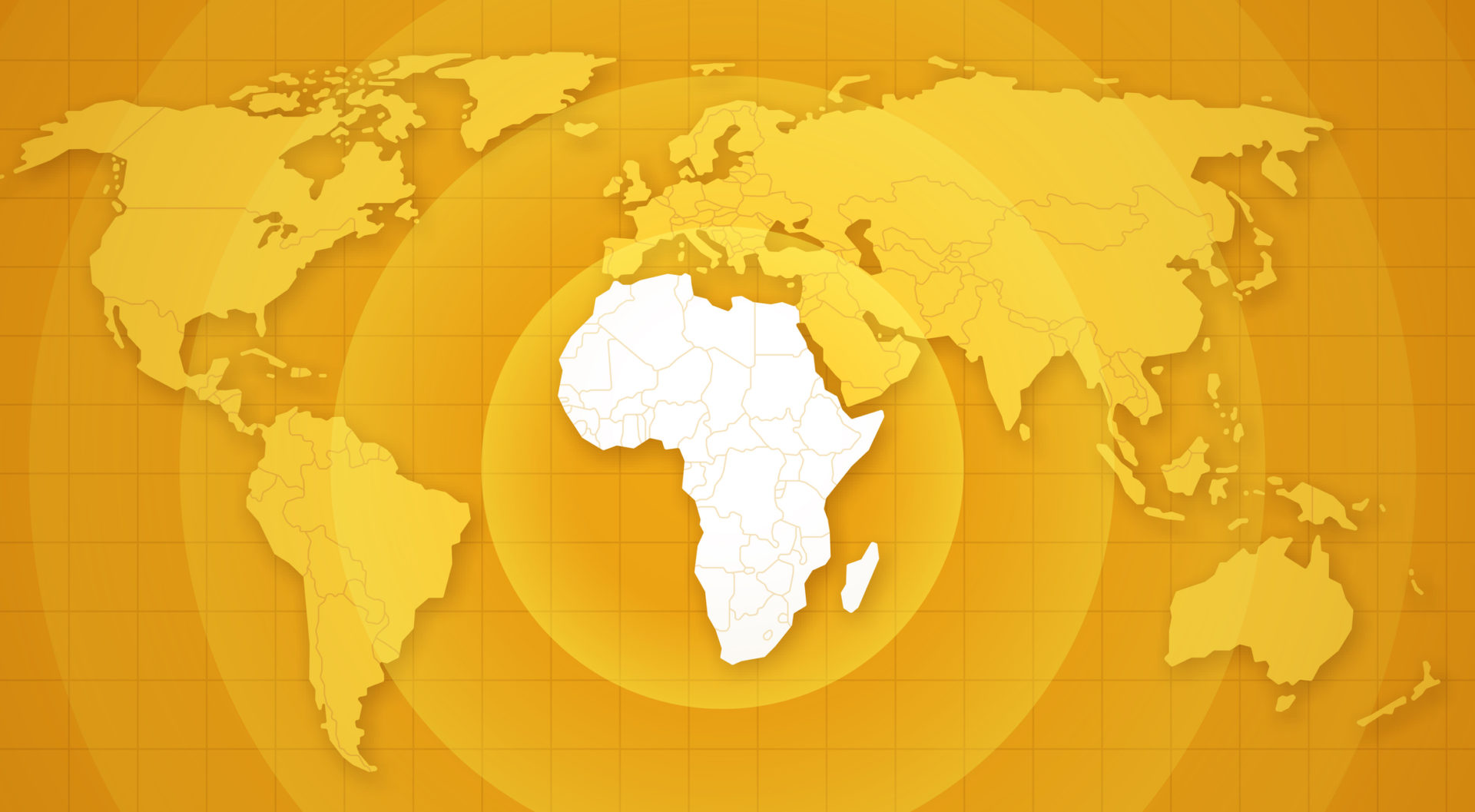
Official development assistance (ODA) from Development Assistance Committee countries has begun a continuous decline
The OECD figures leave no room for doubt. After reaching a record level of $223.3 billion in 2023, the ODA of the Development Assistance Committee countries began a continuous decline: -6 % in 2024, down to $214.5 billion, followed by a collapse of 23.1 % in 2025, to $174.3 billion. Never since the creation of modern ODA has such a contraction been recorded. Over two financial years, global aid has thus returned to its 2015 level, the very year the international community adopted the Sustainable Development Goals. What could still appear as a cyclical slowdown is now asserting itself as a deliberate disengagement. Beyond its social consequences, this evolution reflects a deeper mutation: international solidarity is gradually giving way to the imperatives of security, sovereignty and strategic competition.
The main donors illustrate this trend, each according to its own constraints. France, which had committed to devoting 0.7 % of its gross national income to development aid, now devotes only 0.42 % to it, amounting to 12.9 billion euros in 2025, following a drop of 10.9 % in one year. Between 2024 and 2026, the budget for its ODA mission will have decreased by nearly 40 %. Germany is following a comparable trajectory: the Bundestag has reduced the BMZ budget to 10.06 billion euros for 2026, while its humanitarian envelope, cut in half since 2024, has reached its lowest level in a decade. A revealing paradox: Berlin has nevertheless become, for the first time in its history, the world's leading ODA donor with 29.1 billion dollars, not because it increased its effort, but because the United States withdrew even more brutally.
In the United States, the decline now goes beyond the logic of budget restrictions. US official development assistance collapsed by 57 % in 2025, single-handedly accounting for three quarters of the global decrease.
USAID, a pillar of American aid in over a hundred countries, officially ceased operations on 1 July 2025, with its remaining programmes being integrated into the State Department. The initiated withdrawal from the World Health Organization confirms this same logic: multilateral instruments are gradually being replaced by a more selective approach, directly subordinated to American strategic priorities.
The picture is not uniform, however. The Netherlands, Finland and Switzerland are also continuing their budget cuts, whereas, going against the grain, Norway, Sweden, Denmark and Luxembourg increased their efforts in 2025. Rather than being an exception, these four countries serve as a reminder of how the historical commitment made at the United Nations in 1970 — to devote 0,7 % of gross national income to development aid — has become marginal within the main donor countries themselves.
Beyond the figures, a reality asserts itself. The decline in official development assistance does not merely reflect a contraction in available resources; it reveals a shift in the hierarchy of priorities. As major powers favour their national interests and security imperatives, aid is gradually ceasing to be a privileged instrument of solidarity and becoming one lever among others in geopolitical competition. It is this transformation, as much as its consequences for the most vulnerable countries, that is currently redrawing the balances of international cooperation.
Declining solidarity, an expanding competition for influence
The reduction in official development assistance is not the result of a simple budgetary trade-off. It reflects the convergence of two profound developments. On the one hand, economic slowdown, inflation and rising public debts are driving governments to review their priorities. On the other hand, the multiplication of geopolitical crises – from the war in Ukraine to tensions in the Middle East and the Indo-Pacific – is mobilising growing resources for defence, security and the support of strategic allies.
This development marks a break in the very philosophy of international cooperation. Aid is increasingly tending to follow the diplomatic and security priorities of donor states rather than the needs of the most vulnerable countries. This logic of friend-shoring a gradual shift in official development assistance (ODA) from an instrument of solidarity to a foreign policy tool serving national interests.
The consequences are particularly severe for developing countries. Falling funding undermines vaccination campaigns, health systems, access to education, drinking water supplies and sanitation infrastructure. Beyond essential services, it is the very capacity of many states to maintain their economic and social stability that is weakened. Poverty, unemployment and a lack of prospects in turn fuel forced migration, making local instability an international security issue.
Yet this contraction of Western commitment produces another effect, more discreet and undoubtedly more lasting: it frees up a strategic space that other powers are quick to occupy.
China is the most visible example. For two decades, Beijing has been investing massively in African infrastructure – roads, railways, ports, power plants – through cooperation closely linked to the Belt and Road Initiative. The Mombasa-Nairobi railway in Kenya and the port facilities in Djibouti illustrate this strategy. By prioritising investments and loans rather than grants, and by refraining from any conditionality linked to governance or human rights, China is meeting the expectations of many African governments. But this approach also pursues strategic objectives: securing supplies, strengthening its diplomatic influence and consolidating its presence along the continent's main trade routes.
Russia follows a different yet equally political logic. Its influence relies less on infrastructure than on military cooperation, security and the exploitation of natural resources. In the Central African Republic, as in several other African countries, security assistance has been accompanied by agreements granting access to mineral or energy resources. Here too, the absence of political conditionality constitutes an argument appreciated by governments anxious to preserve their leeway in the face of demands from Western partners.
These approaches do not mechanically replace traditional official development assistance. They nevertheless bear witness to a profound transformation in international power dynamics. As Western powers reduce their commitment, cooperation with countries of the Global South ceases to be dominated by a single model. It is becoming a competitive arena where infrastructure, security, trade, financing and diplomatic influence are now intertwined in a single strategy of power.
Africa at the heart of a new geography of influence
The decline in official development assistance does not merely create financial difficulties: it is accelerating a restructuring of international partnerships. In Africa, where investment needs remain immense, the gradual withdrawal of several Western donors is opening up a space that other powers are working to occupy according to their own priorities. International cooperation is thus entering a new phase, less dominated by a single model than by the coexistence of competing strategies.
This evolution invites us to move beyond the dichotomy between old and new partners. The traditional ODA model, often criticised for its administrative burden and conditionalities, no longer always meets the expectations of African states. The approaches proposed by China, Russia and other emerging actors offer greater flexibility, but in turn raise questions regarding debt, governance, control of strategic resources and the preservation of state autonomy. The real challenge is therefore not to substitute one model for another, but to build cooperation capable of responding to the development priorities of partner countries without creating new forms of dependency.
Whilst this competition for influence unfolds, the effects of Western disengagement are already becoming visible. What still appeared as a risk until recently is now translating into concrete consequences. USAID, a major player in American aid for over six decades, officially ceased its activities on 1 July 2025.
PEPFAR, which has helped save several million lives in the fight against HIV since 2003, has seen its funding slashed by 75 % and its future deeply compromised in South Africa, despite being one of the countries most affected by the epidemic. Initial assessments already report a decline in antiretroviral coverage, the closure of healthcare centres and the loss of thousands of jobs, while projections suggest several hundred thousand additional infections and deaths by 2028-2029.
The consequences go far beyond the health sector alone. In Nigeria, vaccination campaigns against polio and cholera are suspended. In the Democratic Republic of Congo, the risks of a resurgence of Ebola and cholera are increasing. In Tanzania, Bangladesh and Sudan, access to safe drinking water, primary healthcare and school canteens is deteriorating. More broadly, the slowdown in funding for the Sustainable Development Goals, combined with the growing use of loans rather than grants, is increasing the debt burden of many countries, some of which are already devoting more resources to servicing their debt than to healthcare or education.
Conclusion: solidarity is changing in nature, power is changing its face
Official development assistance is not disappearing; it is changing its function. The 2025 figures do not reflect a simple budgetary adjustment, but rather a geopolitical rupture. The model that established itself after the Cold War, where aid served simultaneously as an instrument of solidarity, influence and the projection of Western values, is gradually giving way to a logic more directly founded on strategic interests.
In this context, Africa appears less as a field for assistance than as one of the main spaces where the balances of the multipolar world are being redrawn. Aid is no longer merely a mechanism for financing development; it is becoming one lever among others — alongside trade, infrastructure, security, energy, or access to critical resources — in the competition between powers.
The real question is therefore no longer whether international solidarity will survive the decline in Western funding. It is to determine who will define the rules of future global cooperation, to the benefit of which interests and according to which values. For, in the emerging new international order, influence is no longer measured solely by military or economic power: it is also built through the ability to sustainably support the development of others. States that give up this instrument today may discover tomorrow that by reducing their aid, they have also reduced their capacity to shape the world.

 French
  English
  Chinese
  Arabic