
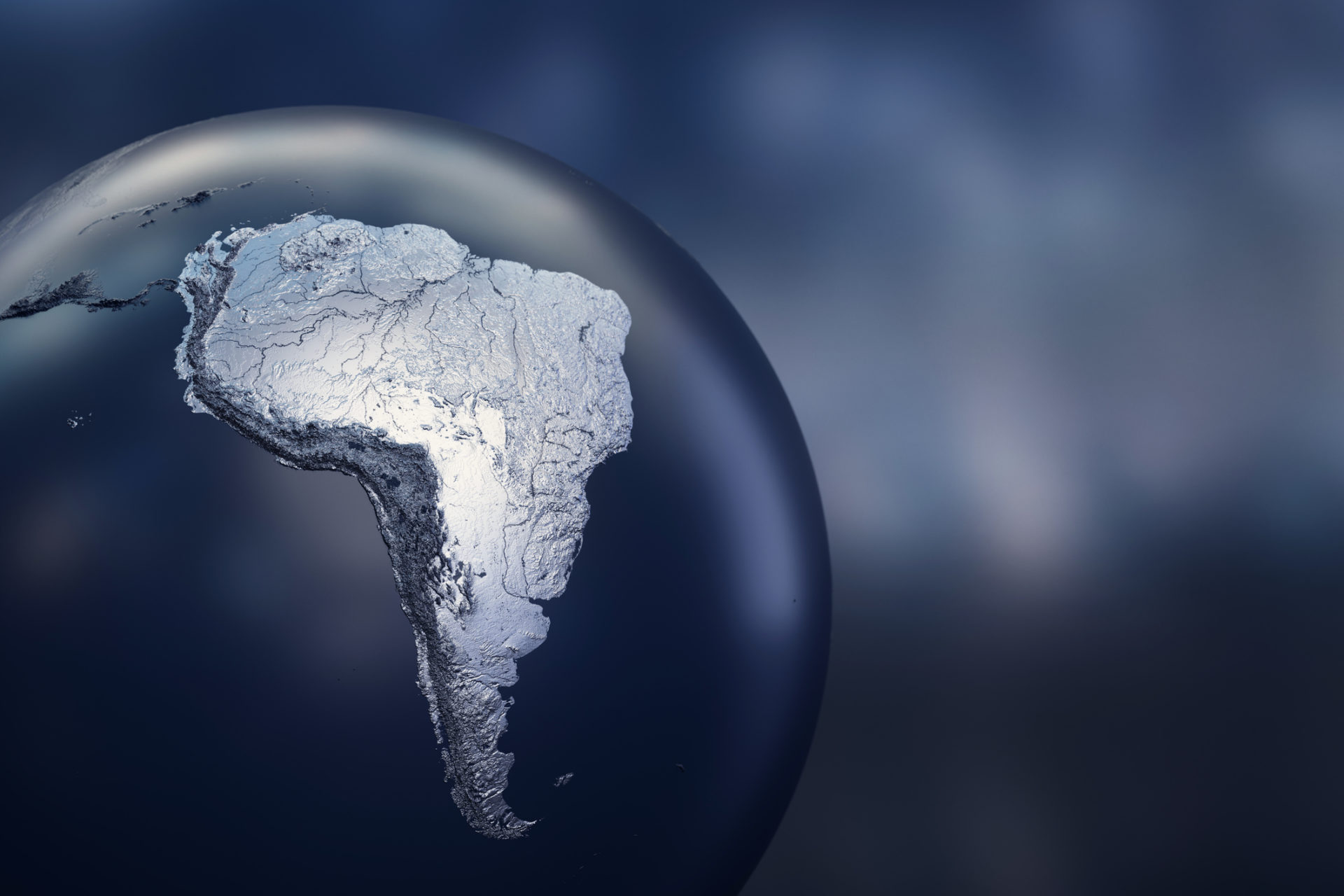
The question deserves to be asked with caution. Right-wing governments do not form a homogeneous bloc. The left retains important positions, notably in Mexico and Brazil. The rise of the new rights reflects a political realignment rather than a general ideological alignment. The latter is driven by internal crises, new modes of communication and the more pronounced return of American influence.
A surge for the right, but a region still politically fragmented
Different national trajectories
The rise of the radical right in Latin America does not correspond to a uniform movement. Behind common concerns – a demand for order, distrust of traditional elites and the return of security to the centre of public debate – very different national trajectories are emerging. Some forces are part of longstanding political traditions; others rely on new figures, often outside traditional party apparatuses.
In Colombia, the rise of Abelardo de la Espriella highlights this new generation of leaders. Stemming from a logic of disruption rather than partisan inheritance, «El Tigre» has built his narrative around the denunciation of the elites, the rejection of the traditional political system and the promise to restore state authority in the face of insecurity. His victory, achieved without an absolute majority, does not, however, reflect a general shift of Colombian society to the right. Rather, it highlights the fragmentation of the political landscape, the growth of a disruptive right wing and distrust of traditional forces.
The Peruvian case points to a political trajectory of a different nature. Keiko Fujimori embodies a right-wing faction that is the heir to a current deeply rooted in national political life since the 1990s. Her accession to the presidency marks the return of Fujimorism to the top of the state, several years after her father, Alberto Fujimori (1990-2000). The legacy of the latter, however, remains highly divisive. For a section of Peruvians, the «Fujimori years» are associated with the return of order in the face of the Shining Path, a Maoist insurgent organisation at the root of the internal armed conflict that marked Peru between 1980 and 2000, as well as with economic stabilisation. For her opponents, conversely, they remain marked by authoritarianism, the weakening of checks and balances, and attacks on democratic institutions. Keiko Fujimori draws upon this divided memory and places security, state authority and a tougher penal response at the heart of her rhetoric.
These two trajectories highlight the diversity of the Latin American right. Javier Milei embodies in Argentina a «libertarian» and ultra-liberal right, which radically challenges the role of the state and traditional political elites.
In El Salvador, Nayib Bukele has built his legitimacy around the fight against gangs and the restoration of public authority.
José Antonio Kast combines security, migration control and the defence of traditional values in Chile.
In Honduras, Nasry Asfura represents a more conventional right wing, linked to historical political networks.
It is therefore difficult to speak of a Latin American right in the singular. These forces share neither the same conception of the State, nor the same relationship with the economy, nor the same reference points. Their diversity constitutes precisely one of the features of the current political realignment. Behind a shared electoral advance lie different projects and political traditions.
The rise of the right does not mean the marginalisation of the left
The rise of the right does not mean, however, that the demand for law and order, security and state efficiency belongs exclusively to them. In Mexico as in Brazil, the left remains a major political force, and shows that these issues can also be addressed by progressive governments.
Mexico demonstrates that the left can place the fight against drug trafficking and violence at the heart of action. Elected in June 2024 and from the left, Claudia Sheinbaum has made security a priority of her government. Since her rise to power, the average daily number of intentional homicides has reportedly decreased by 49 % between September 2024 and May 2026. Claudia Sheinbaum is thus seeking to strengthen state action against organised crime whilst firmly defending Mexican sovereignty.
Furthermore, this dual priority is also evident in her relationship with Washington. When facing Donald Trump, Claudia Sheinbaum favours negotiation without renouncing her principles. However, the fentanyl issue has strained relations with the United States. Donald Trump has described the drug as a ’weapon of mass destruction«, while the United States has designated several cartels as terrorist organisations. Claudia Sheinbaum seeks to preserve cooperation with the United States in this area. Yet she refuses any questioning of the principle of non-intervention.
The Mexican case thus makes it possible to distinguish between two elements often confused in the Latin American political debate: the social demand for authority and the ideological response provided to it. The former does not necessarily lead to the latter. Voters may demand security, a stronger state presence and better protection of the territory without necessarily endorsing the agenda of the new right. The demand for order therefore does not belong exclusively to the right. It can be championed just as well by left-wing forces as by right-wing ones.
Brazil, for its part, points out that the rise of the right does not mean the disappearance of the left. The presidential election scheduled for October 2026 will serve as a new test. What will the balance of power be between Luiz Inácio Lula da Silva's Workers' Party (PT) and the Liberal Party (PL), which is linked to Jair Bolsonaro's camp and a conservative right close to Bolsonarism? In a country whose demographic, economic and diplomatic weight gives it major influence over regional balances, the left therefore retains a capacity for political resistance. It could continue to influence the future of Latin America.
The drivers of political realignment
Socio-economic vulnerability that fuels the demand for change
One explanation for the rise of the populist right lies in the gradual deterioration of the Latin American socio-economic context for over a decade. Following the expansionary cycle of the 2000s, driven in particular by rising commodity prices, several economies in the region have experienced a lasting slowdown. Growth has run out of steam. Inequalities have persisted, and social expectations have progressively collided with weak economic results. According to the Economic Commission for Latin America and the Caribbean (ECLAC), regional poverty reached 32.8 % of the population in 2020, before declining gradually. It still affected 27.3 % of Latin Americans in 2023, representing around 172 million people, while 66 million were living in extreme poverty.
The Covid-19 pandemic revealed and amplified these fragilities. It also exposed the limits of many states when faced with a shock of exceptional scale. The pandemic has reinforced the sense of a certain powerlessness on the part of governments when faced with a sequence of crises. Social unrest is therefore not only explained by the persistence of poverty or inequality. It is also due to the growing gap between the expectations of populations and the ability of governments to produce visible improvements.
The rise of the radical right in Latin America cannot be understood without taking socio-economic fragilities into account. These have contributed to weakening trust and fuelling a growing demand for change. However, this distrust is not limited to economic results. It affects citizens' relationship with politics and the institutions supposed to respond to crises more broadly.
A performance and political representation crisis
Mistrust is no longer just about the economic performance of governments. It has gradually spread to the very functioning of the political system. Successive crises have fostered a sense of decline, abandonment and powerlessness among a section of citizens. Governments are judged incapable of providing convincing responses to economic, social and security problems. In several Latin American societies, this perception has been accompanied by a growing sense of vulnerability and questioning regarding the actual ability of states to protect.
In Colombia, Chile and Peru, for example, this situation has fuelled a form of «democratic fatigue». This is linked to the wear and tear of the mechanisms by which democracy functions, the weakening of traditional political mediations and the feeling that the ruling elites are out of touch. Part of the citizenry remains attached to democracy but increasingly doubts its ability to address their concerns. In 2023, only 48 % of Latin Americans stated that they supported democracy, whilst 28 % said they were satisfied with how it functioned.
The issue is therefore no longer just one of economic performance. It touches upon representation itself. Who speaks on behalf of society, who is capable of acting, and who can still be believed? And it is precisely on this ground that the new populist rights have found a political space.
They present themselves as a break and promise to restore authority, effectiveness and the state's ability to regain a grip on crises. Their rise therefore reflects not only a demand for change. It also reveals a crisis of confidence in the political forces that have governed the region. A section of the electorate feels that they are no longer capable of meeting the expectations of the moment.
The exhaustion of the progressive cycle and the search for a political alternative
For nearly two decades, much of Latin America was governed by left-wing forces. In a period often described as the «pink tide», Hugo Chávez in Venezuela, Luiz Inácio Lula da Silva and Dilma Rousseff in Brazil, Néstor and then Cristina Kirchner in Argentina, Evo Morales in Bolivia and Rafael Correa in Ecuador embodied this political cycle. It was marked by the strengthening of the state's role, social policies and the desire to break with previous economic models.
However, this cycle started to show its limits: wear and tear of power, economic difficulties, corruption scandals, institutional tensions... The Covid-19 pandemic then accentuated some of these fragilities, without, however, being solely responsible for the left's decline. For a section of the electorate, the issue was therefore not necessarily to question policies, but to punish governments seen as incapable of meeting expectations that had become a priority.
In Colombia, the difficulties faced by Gustavo Petro's government have helped to weaken the left in power. Despite the historic significance of his coming to power, his mandate has encountered obstacles in implementing his reforms, tensions with Congress and the persistence of security concerns. The election of Abelardo de la Espriella in June 2026, defeating the left-wing candidate Iván Cepeda, marks the return of the right to lead the country.
Similarly, in Ecuador, the dramatic worsening of the situation regarding drug trafficking, the expansion of criminal groups and the loss of control over certain territories has profoundly transformed the political debate. Following the era of Rafael Correa, a major figure of the Latin American left, came the re-election of Daniel Noboa, a centre-right candidate driven by a security-focused discourse that illustrates the growing weight of this issue.
Whilst these two trajectories are not identical, they nevertheless reveal the same phenomenon: the weakening of the capacity of progressive forces to appear as the main bearers of responses to crises. The new rights have moved into this space by denouncing the progressive heritage and promising a break with the established political order. The denunciation of «socialism», «twenty-first-century socialism» or «wokism» thus constitutes a mechanism for mobilisation.
Javier Milei has particularly spearheaded this criticism of the left. In late December 2025, the Argentine president announced his intention to create a regional bloc aimed at defending «the ideas of freedom» and fighting against what he described as «the cancer of socialism in all its forms», targeting both «21st-century socialism» and «wokeness».⁶
Latin American political realignment therefore stems neither from a simple ideological shift nor from a conversion to the right. It is rather the product of several evolutions. The wear and tear of political forces in power, the crisis of confidence, and the search for new answers to the region's difficulties. Among these new expectations, security now occupies a central place.
New security expectations: the demand for the return of the State
Among the factors driving the rise of populist right-wing movements in Latin America, the security issue occupies a unique place. In several societies, the growth of drug trafficking, the rise of organised crime, urban violence and the lack of control over certain territories have profoundly changed citizens' relationship with the State. In 2024, Latin America recorded nearly 122,000 homicides (20 homicides per 100,000 inhabitants). Organised crime is therefore no longer perceived merely as a threat to public security. In several countries, it challenges the State's ability to fully exercise its authority and provide protection. It thus becomes a factor of political and institutional destabilisation.⁷
Long restricted to Mexico and Central America, this concern has spread to South America.
The new rights have found in this anxiety a particularly fertile political ground. They have made security, the restoration of order and the hardening of criminal policies the central axes of a discourse that promises to restore the state's capacity to act. In societies where a section of citizens feels that public authorities are no longer succeeding in containing violence and new forms of criminality, the feeling of insecurity has become much more than a social concern. It has transformed into an electoral force.
Ecuador provides a concrete way of measuring this transformation. The rise of criminal groups linked to drug trafficking, the explosion of prison violence and the weakening of state authority in certain areas of the country have made security the central issue in political debate. Daniel Noboa's hardline rhetoric fitted into this evolution by responding to an expectation that had become a priority: that of a state capable of taking back the initiative against criminal organisations.⁸
The migration issue is part of this same dynamic. In Chile, the rise in irregular migration flows at the northern border has placed border control at the heart of the debate. José Antonio Kast made it one of the core pillars of his manifesto. He closely linked irregular immigration, insecurity and the restoration of state authority. Once in power, this approach translated into the launch of the «Plan Escudo Fronterizo», which combines physical barriers, surveillance technologies and the deployment of security forces in order to strengthen control of the northern border.
The rise of José Antonio Kast to power also marks a turning point in the Chilean political landscape. His stances on the legacy of the Pinochet dictatorship have sparked fierce debates in a society still deeply scarred by the memory of the military regime. However, these controversies have not stopped a section of the electorate from prioritising more immediate concerns, thereby relegating historical debates, at least in part, behind the urgencies of the present. The memory of the past remains present in Chilean society, but it now finds itself confronted with other political urgencies.
In Colombia, Abelardo de la Espriella has also made a tough stance on insecurity one of his main priorities. A supporter of the right to bear arms, he has displayed his admiration for Nayib Bukele and claimed elements of the Salvadoran security model. He has stated his desire to govern with an «iron fist», promised the construction of mega-prisons inspired by the Salvadoran model, and defended a particularly firm response to armed groups. His rhetoric is thus based on the rapid restoration of order and the strengthening of the state's coercive capabilities. This promise of toughness has found a certain resonance among a section of the electorate, which is sensitive to insecurity.¹⁰
The protest vote: ideological alignment or desire for sanction?
Finally, the rise of populist right-wing parties cannot be understood without taking into account the negative dimension of voting. A section of the electorate does not necessarily vote in favour of an entire programme or ideology. Above all, it expresses a desire for punishment: against a government, a party, a political class, or an economic and security situation.
The new rights thus manage to capture a demand for upheaval that sometimes goes beyond their own ideological base. Their strength lies in their ability to transform various frustrations — insecurity, a feeling of abandonment by the state, economic difficulties, distrust of elites and political fatigue — into a «legible» political promise. That of changing direction, restoring authority and taking back control.
This reversibility of electoral choices helps to explain the region's political volatility. A society may support the left for its social policies, and then turn to the right when security and state efficiency become priorities. Voting therefore does not necessarily reflect ideological conversion or loyalty. Above all, it can express a demand for results.
Thus, the current rise of the Latin American right does not necessarily rest on adherence to a homogeneous ideological project. It is also due to their ability to seize a political moment marked by insecurity, mistrust and a feeling that the existing order is exhausted. By aggregating frustrations that are sometimes different, or even contradictory, and giving them political expression, these forces have managed to transform a diffuse social demand into an electoral dynamic. Their success thus stems from the ability to occupy the space left vacant.
The influence of Trump: towards a new American pre-eminence?
The rise of the Latin American right is also taking place in a regional context marked by the return of a more assertive American influence. Since January 2025, several countries in the region have brought to power leaders whose orientations are compatible with those of the new US administration.
This rapprochement is not only due to the political proximity of certain Latin American leaders with Donald Trump. It also reflects the return of a more asymmetrical relationship between Washington and the region. The United States is seeking to exert greater influence over the political and electoral choices of its southern neighbours. Donald Trump has sometimes intervened directly in certain elections. He has taken public stances in favour of candidates or used American aid as a means of pressure. In Argentina, for instance, he gave his backing to Javier Milei ahead of the October 2025 mid-term elections. Trump made this support conditional on continued American backing for the victory of the presidential camp: «If he wins, we'll stick with us [...] Our support is in a way linked to who wins the election.»¹¹ A statement that was followed by a 20 billion dollar swap agreement between the United States and Argentina, which helped to stabilise the Argentine financial markets.¹²
One can also read into it a logic of American pre-eminence. Washington's objective is not merely to spread a certain political vision. It is to build a regional environment more favourable to its economic, strategic and security interests. Particularly in the face of China's growing influence.
Certain new Latin American rights thus share several priorities with Washington. Security, the fight against drug trafficking, the militarisation of the fight against organised crime, tougher penal policies, migration control and criticism of the left feature prominently. However, these close alignments are not enough to shape a unified, homogeneous political front. Each capital retains its own interests, its own constraints and its own relationship with the United States. Relations are negotiated on a case-by-case basis.
Yet the battle is not fought solely in presidential palaces or around diplomatic tables. It is also waged in the spaces where perceptions are shaped, narratives circulate and mobilisations are built.
Social media: a new player in political transformation
New spaces for political conquest
Social media are no longer simple campaign tools. They have become spaces for mobilisation, the construction of public opinion and, in some cases, the legitimisation of power. Politics is no longer played out solely in meetings or the mainstream media. It now extends to a permanent digital space, punctuated by posts, videos, short messages and live streams to millions of subscribers.
In the past, political parties, trade unions and the media structured political life. They are no longer the only ones playing this role. Digital platforms enable candidates to address citizens directly. And to «bypass» the traditional intermediaries of political representation.
To emerge rapidly in the public sphere, it is therefore no longer always necessary to have an old party apparatus, a dense activist network or a historical territorial base. A strong digital audience and the ability to impose a narrative can henceforth constitute major political resources.
The rise of Abelardo de la Espriella clearly illustrates this evolution, this shift away from the traditional paths to power. Outside of the major traditional political parties, this lawyer and entrepreneur built a significant part of his rise through a strong presence on social media. There, he broadcast his positions on security, state authority and the fight against organised crime. The use of the Colombian national football team's shirt also contributed to the construction of his image, associating the candidate with national and emotional references that are immediately recognisable to a section of the population. 64 % of Colombians state that they use social media as their main source of information (compared to 66 % in Peru, 65 % in Chile, 63 % in Mexico, 61 % in Argentina and 57 % in Brazil). These platforms represent a strategic space for political conquest.¹³
The personalisation of power and the transformation of political leadership
Beyond electoral conquest, social media has also shifted the place where power is constructed. The leader no longer appears merely as the representative of a party, the defender of a manifesto or the bearer of an ideology. They also become an image, a voice, a style and a daily presence. The exposure of their life, their appearance and certain fragments of their personality creates a new kind of closeness with the public. It also enables the candidate to become a figure with whom people identify and form an attachment.
Nayib Bukele is a prime example of this new form of political communication. Highly active on social media, the Salvadoran president has himself described as «the world's coolest dictator». He has developed a style of communication far removed from the traditional codes of the presidential office. His posts combine political announcements, personal footage and more informal content. His often casual clothing style helps to build an image of a leader who is close to the people.
Javier Milei in Argentina, José Antonio Kast in Chile and Abelardo de la Espriella in Colombia exemplify this personalisation of leadership. Javier Milei has made X a central instrument for direct communication with his supporters. He regularly posts, shares and retweets content that is sometimes virulent. He thus maintains an ongoing relationship with his audience outside of traditional political channels. Digital communication thereby becomes a daily extension of political action.
The electoral campaign no longer really ends with the closing of polling stations. It continues to the rhythm of publications, videos, short messages and live speeches. Some leaders even switch from one language to another, particularly to English, to broaden their audience beyond national borders. They no longer wait for the media to relay their words. They can now produce, stage and broadcast them themselves. Little by little, power is also being built through this continuous presence, made of words, images and narratives.
From social concerns to political narratives: social media as accelerators
Social media now play a major role in the circulation of political models from one country to another. The security model associated with Nayib Bukele in El Salvador is thus finding an echo among several Latin American right-wing movements. Elsewhere, it is Donald Trump who serves as a reference. His direct communication, his critique of traditional elites, his sovereignist discourse and his intensive use of social media have largely crossed American borders. Political strategies and discursive repertoires now circulate from one society to another.
The very way platforms operate also favours certain types of messages. Algorithms prioritise visibility, speed of circulation and content capable of provoking an immediate reaction. Simple, emotional and easily «shareable» messages often benefit from greater exposure than complex analyses. Indeed, fear, anger and outrage circulate faster than reasoned arguments. Security, immigration, corruption, the restoration of law and order, and the rejection of elites thus find particularly favourable ground in this digital environment. .
As these narratives circulate, the political debate is also changing its face. Citizens gather around digital spaces, «cocoons» that often reinforce their own convictions. The confrontation between programmes can then give way to an opposition between identities, allegiances and worldviews. Social media do not necessarily create these divisions, but they can make them more visible, faster and harder to overcome.
Latin America provides particularly fertile ground in this regard, as the region ranks among the highest in the world for social media usage, with daily use averaging about 3 hours and 32 minutes. Yet, nearly 63 % of Latin Americans state that they do not trust the information circulating there. Beneath this contradiction lies a deeper vulnerability: the massive use of digital platforms coexists with a still uneven digital culture and a limited ability to verify sources. As a result, a portion of the population is left more exposed to disinformation campaigns and simplified political narratives.
Social media are therefore not the primary cause of the rise of Latin American populist rights. The essential factors remain economic, social, institutional and security-related. Their role lies elsewhere. They give shape, speed and a force of dissemination to anxieties already present in society. These anxieties, hitherto dispersed, can then be transformed into simple, personalised and highly mobilising political narratives. The demand for authority, order and a break with the past thus more swiftly finds its way to the ballot box.
What challenges lie ahead?
The rise of the Latin American right raises several questions about the political and strategic future of the region.
Firstly, the ability of governments to maintain a common voice appears increasingly uncertain. Ideological differences are significant. The policy directions of Javier Milei, Nayib Bukele or certain conservative leaders are not necessarily compatible with those of other governments in the region, such as that of Delcy Rodríguez in Venezuela. The formation of a genuine political grouping of the Latin American right therefore seems difficult in the short term. Mercosur itself could face increasing tensions if its members adopt increasingly divergent economic, diplomatic and foreign policy directions.
Secondly, the issue is that of the regional balance of power. Brazil, the traditional engine of South American leadership, could encounter greater difficulties in imposing a common direction in the face of the proliferation of governments close to Washington. The risk would be that of a more fragmented region, where states would negotiate their relations with the major powers separately.
Thirdly, the return of Washington directly raises the question of Latin American strategic autonomy. Following several years of relative disengagement, the United States now appears to be giving renewed priority to the region. The issue is also linked to the rise of China. It has become a major commercial, financial and technological partner for South America. Beijing has filled part of the space left vacant by Washington and has built up an economic presence over the years. The United States is now seeking to contain it.
Trump's strategy aims to put American interests back at the heart of the region's economic and strategic choices. The National Security Strategy of the United States of America, published in November 2025, asserts in this regard that the United States must «reaffirm and enforce the Monroe Doctrine» in order to «restore American pre-eminence in the Western Hemisphere».¹⁵
Latin American governments can move closer to Washington without entirely bowing to its priorities. The region therefore does not appear to be heading towards a new multilateralism, but rather towards a constellation of bilateral relations. Each government is trying to take advantage of the rivalry between the major powers. One question then remains: is Washington merely seeking to regain the influence it has lost, or does it intend to place Latin America back in a relationship of dependency? The boundary between influence and neo-imperialism can thus become particularly thin.
Finally, a final challenge concerns political memory and the relationship with past authoritarian experiences. The election of José Antonio Kast in Chile raises an important question. How did such a comeback become possible in a society that experienced dictatorship and human rights abuses? This development shows that historical memory is no longer enough. The Chilean case thus serves as a reminder that the rise of the new Latin American right does not merely pose a question of policy or ideological orientation. It also calls into question the ability of societies to pass on their history and prevent the political normalisation of certain authoritarian legacies.
Footnotes
¹ AFP, «Mexico: homicide rate halved in two years, according to the presidency», TV5MONDE, 14 July 2026.
² The White House, «Fact Sheet: President Donald J. Trump Designates Fentanyl as a Weapon of Mass Destruction», 15 December 2025.
³ Economic Commission for Latin America and the Caribbean (ECLAC), Social Panorama of Latin America and the Caribbean 2024: challenges of non-contributory social protection to advance towards inclusive social development, Santiago, United Nations, 2024.
⁴ Manuel Alcántara Sáez, Cristina Rivas Pérez and Cecilia Graciela Rodríguez Balmaceda, «Sociedades cansadas y democracias fatigadas en América Latina», Revista Mexicana de Sociología, vol. 86, June 2024.
Latinobarómetro, Latinobarómetro Report 2023: Latin America's Democratic Recession, Santiago, 2023.
⁶ CNN Chile, «Milei, in interview with CNN: “It seems the region has awoken from the nightmare of 21st-century socialism”», interview by Andrés Oppenheimer for CNN en Español, 1st January 2026.
⁷ United Nations Office on Drugs and Crime (UNODC), Global Study on Homicide 2023: Homicide and Organised Crime in Latin America and the Caribbean, United Nations, 2023.
⁸ Breaking news, « The 2025-2029 Comprehensive Security National Plan becomes public policy following Daniel Noboa's decree », 14 July 2026, regarding Executive Decree No. 448 and the objectives of the 2025-2029 National Comprehensive Security Plan.
⁹ Government of Chile, «President José Antonio Kast arrived in Arica to oversee the implementation of the Border Shield Plan against irregular migration», 16 March 2026.
¹⁰ Norberto Paredes, «Pourquoi les méga-prisons du Salvador deviennent un modèle pour de nombreux responsables politiques de droite à travers le monde», BBC News Mundo, 9 July 2026.
¹¹ Le Monde with AFP, «Donald Trump conditions the continuation of aid to Argentina on the political survival of Javier Milei», 14 October 2025.
¹² Central Bank of the Argentine Republic (BCRA), «BCRA and United States Department of the Treasury sign USD 20 billion exchange rate stabilization agreement», 20 October 2025.
¹³ Reuters Institute for the Study of Journalism, Digital News Report 2023, University of Oxford, 2023
14 United Nations Development Programme (UNDP), Democracies under pressure: Reimagining the futures of democracy and development in Latin America and the Caribbean, chapter 5, «Democracias bajo presión digital: IA, desinformación y un ecosistema informativo en transformación», 2026.
¹⁵ The White House, National Security Strategy, Washington, D.C., November 2025, p. 15, section «Western Hemisphere: The Trump Corollary to the Monroe Doctrine». The strategy asserts: «After years of neglect, the United States will reassert and enforce the Monroe Doctrine to restore American preeminence in the Western Hemisphere.»

 French
  English
  Chinese
  Arabic