
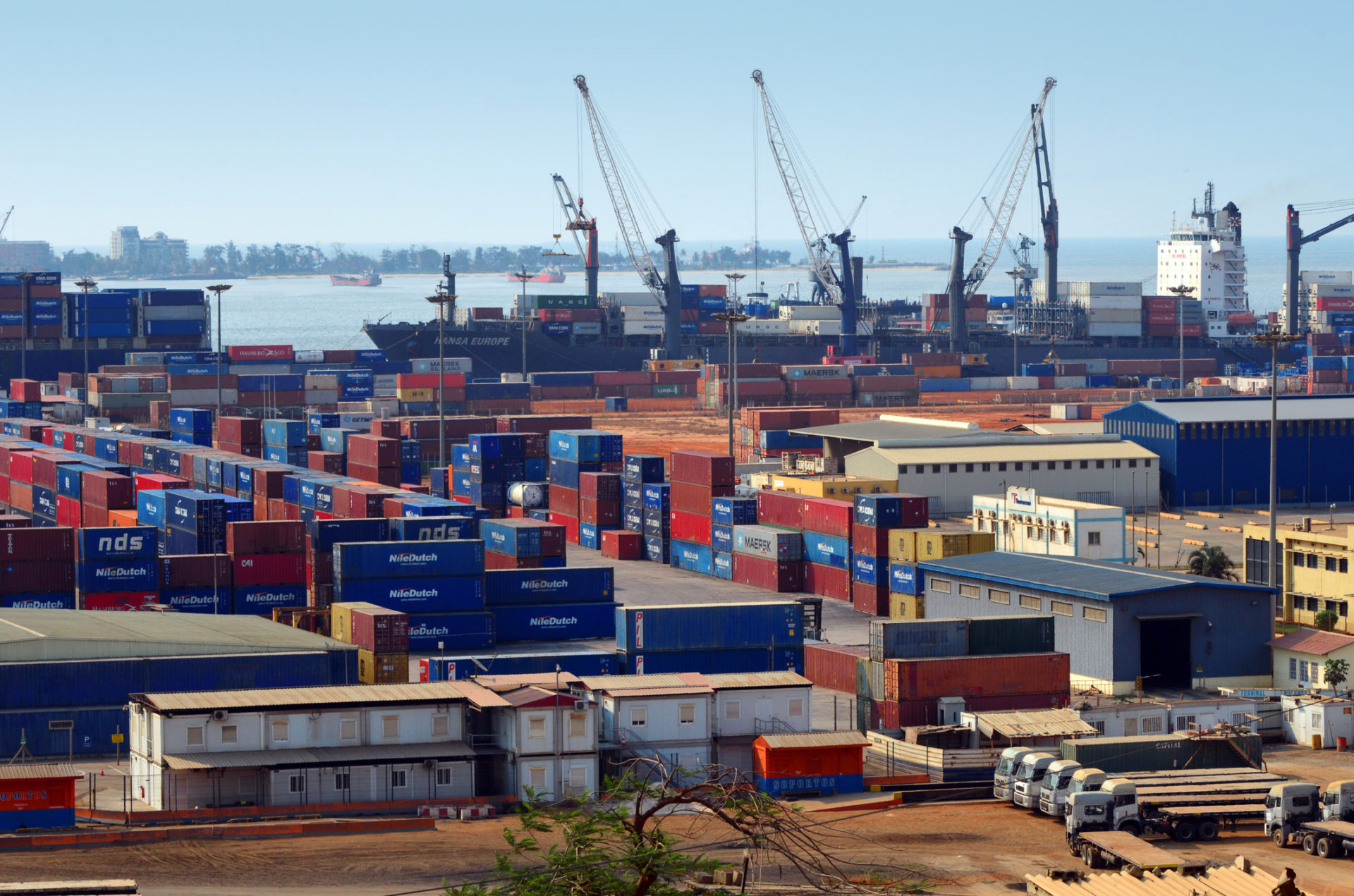
The global battle is no longer fought solely over territories, but also over corridors
Geopolitics has changed its face. For several decades, globalisation gave the illusion of a world where trade flowed freely and supply chains seemed guaranteed. This certainty has been shattered. The war in Ukraine showed that a trade route could be cut off overnight. The rivalry between the United States and China has transformed technical products such as semiconductors, batteries and rare earths into genuine issues of sovereignty. From now on, securing supplies has become as essential as protecting borders.
This resurgence of geoeconomics has produced a subtle yet decisive shift: mastering a corridor can now prove more strategic than controlling a territory. For a corridor is not merely a transport infrastructure — it is a tool of influence. It directs trade, secures supplies, and brings certain partners closer while bypassing others.
This logic can be observed on all continents. Lobito, the Trans-Caspian corridor designed to bypass Russia, the India-Middle East-Europe Corridor, China's Belt and Road: these projects, separated by geography, respond to the same strategic intuition.
Corridors have thus become the new front lines of power.
The Lobito Corridor: an old infrastructure that has become a strategic issue
Few infrastructures illustrate the return of geopolitics to Africa quite as well as the Lobito Corridor. Its history dates back to the early 20th century, with the construction of the Benguela railway by the Scottish engineer Robert Williams in the service of British mining interests: to transport the wealth of the Congo and Zambia to the Atlantic, prior to their export to Europe. The Angolan Civil War, starting in 1975, put an end to this purpose for nearly thirty years. Its reconstruction, financed by a two-billion-dollar Chinese loan and completed in 2015, brought it back to life. But the real turning point came in 2022, when the operation of the line was entrusted to a predominantly European consortium — Trafigura, Mota-Engil, Vecturis. The corridor then ceased to be a mere infrastructure project and became an object of competition between major powers.
Because the Lobito Corridor is no longer just a railway. It is a vast logistics system: a deep-water port with a mineral terminal, multimodal platforms, investments in energy and digital technology, and major international funding mobilising the World Bank, the US DFC and the African Development Bank. To the east, a new 800-kilometre section, backed by the Africa Finance Corporation, is set to directly connect the corridor to the Zambian rail network.
This outlines a strategic axis linking Angola, the DRC and Zambia — one of the main gateways to Central Africa's vast mineral resources. But if so many powers are rushing there today, it is not for the railway itself: it is for what it carries.
Why critical minerals changed the rules of the game
Copper, cobalt, lithium, graphite and rare earths are no longer mere industrial raw materials. They go into the manufacture of batteries, electric vehicles, electrical grids, wind turbines, but also, increasingly, the defence industry, semiconductors and satellites. This dual dimension, both civilian and military, has changed their status: their supply now falls as much under national security as commercial policy. In Washington and Brussels alike, the fear is no longer just of running out of resources, but that excessive dependence might become a lever of pressure in the hands of a rival.
It is in this context that the Central African Copperbelt — straddling southern DRC and northern Zambia — has acquired global significance. It concentrates a considerable share of the reserves of copper and cobalt, two minerals essential to the low-carbon economy. Yet their extraction, and even more so their processing, remain largely dominated today by Chinese operators — an advantage that Beijing has spent twenty years building, and that Western countries are now seeking to reduce.
Because the balance of power is no longer decided deep down in the mines. Extracting a mineral is only the first step; the bulk of the value — and the influence that comes with it — is concentrated downstream, in refining, metallurgy, component manufacturing and battery assembly. In other words, power no longer lies solely in the possession of resources, but in the ability to control their transformation.
The Lobito Corridor fits precisely into this logic. It aims not only to accelerate the transport of raw minerals: it forms part of a strategy to diversify Western supply chains, designed to reduce a dependency on China deemed excessive and to strengthen the industrial resilience of European and North American economies. Behind the investments in ports, railways and terminals, a competition of an entirely different nature is thus emerging: it is no longer just a matter of securing access to resources, but of organising flows and controlling the resulting value chains.
It is therefore not just a battle for resources. It is a battle for value chains — and it is this geopolitics of transformation, much more than the rails themselves, that explains the strategic importance now assumed by the Lobito corridor.
A competition between powers: corridors as instruments of influence
Three major powers are competing for the same railway today. Yet each is pursuing a different goal there. That is the entire lesson of Lobito: a single railway line, three ambitions that have nothing to do with one another.
Europe sees it first and foremost as a showcase. The corridor has become the flagship project of Global Gateway, its programme intended to rival Chinese financing in Africa. Brussels is also seeking secure access to critical minerals there, following the supply disruptions revealed by the pandemic and the war in Ukraine — a further step towards its strategic autonomy. Along the way, it wants to impose social and environmental standards more demanding than those associated with Chinese investments. But Europe itself acknowledges the limits of its project: the corridor remains tailored for export to the Atlantic, not for industrialising the territories it crosses. Europe is funding a pipe. It is promising a value chain.
Washington, for its part, does not hide its intentions. The corridor is openly conceived as a tool to reduce Western dependence on minerals refined in China, without, however, breaking off trade with Beijing. American loans, partnerships with mining groups, the visit of a president to the line itself: everything presents Lobito as a deliberate piece of the economic rivalry with China.
China, for its part, is approaching this competition from a position of strength. Twenty years of investment in mining and refining has given it vertical integration — from extraction to battery manufacturing — that neither Washington nor Brussels can catch up with overnight. Losing control of the line has changed nothing regarding this fundamental advantage. It has merely prompted Beijing to react by reviving the competing Tazara railway to the Indian Ocean, so as not to depend on infrastructure now in Western hands.
Three powers, a single track — but three different ways of defining power and three competing visions of the global economic order. Each is building infrastructure. Each, in reality, is pursuing a project of its own.
African states: from a terrain of rivalry to actors in the competition
One question remains: what are Angola, the DRC and Zambia doing with this rivalry that is currently attracting all the major powers? Reducing them to a mere arena for confrontation between Brussels, Washington and Beijing would be a mistake. These states are no longer just the objects of the competition; they are seeking to become its arbiters and beneficiaries.
Their method is simple: depend on no exclusive partner. Angola welcomes Western as well as Chinese capital. The DRC is renegotiating its contracts with Beijing whilst opening its mining sector to American and European companies. Zambia is playing upon this same competition to secure better financing conditions. This diversification is no longer a simple precaution: it has become a genuine negotiating lever.
These governments are no longer content with just exporting their ore. They want more: local content, technology transfers, special economic zones, local processing plants. A single objective: finally keeping a share of the wealth generated by their subsoil at home.
Some talk, to describe this posture, of Non-alignment 2.0 ; others prefer multi-alignment — every partnership measured by what it yields. In both cases, the idea is the same: great power rivalry becomes a diplomatic resource that these states put at their own service.
But this strategy has its limits. Reliance on external funding remains massive. Local refining capacities are progressing slowly, and the bulk of the ore continues to leave in raw form. Added to this are governance issues, an uneven distribution of mining revenues, and social tensions surrounding certain projects.
These states have real leeway. The question lies elsewhere: will they manage to turn it into sustainable economic dissonance? No, wait: economic sovereignty? Let me retranslate properly: These states have real leeway. The question lies elsewhere: will they manage to turn it into sustainable economic sovereignty? Juggling multiple partners is not enough to master a value chain. The rivalry of the great powers opens doors — but it does not, on its own, build development.
Therein lies the entire ambiguity of African corridors: an unprecedented lever of power that could just as easily reproduce old dependencies in a new guise. The question is no longer who controls the corridor. It is whether it will finally make Africa a power, and no longer merely a supplier.
Strategic break or continuation of the extractive economy?
The question arises: does Lobito mark a real break in the development of Central Africa, or is it simply modernising a model inherited from the colonial era?
History counsels caution. As early as 1902, the Benguela railway was designed for a single function: transporting the riches of the interior to the coast, for the benefit of European industries. A century later, the players have changed, the financing too, and the rhetoric is now dressed in the vocabulary of the energy transition. But the underlying logic could remain the same: exporting raw materials faster to be processed elsewhere.
The real issue therefore goes beyond the railway itself. It lies in the development model that this railway promotes. A corridor can accelerate extraction and export; it can also become a lever for industrialisation, skilled jobs, and moving up the value chain. Everything depends on the ability of states to make it not only an outlet for minerals, but a gateway for productive investment and industrial know-how.
To date, there is no guarantee of this development. Refining and local processing are progressing slowly; the vast majority of the ore continues to be exported raw or only slightly processed. As for the added value, it remains largely captured outside the continent.
This is where the African Continental Free Trade Area (ZLECAf) can change the game. By integrating African markets with each other, it opens up the possibility of distinctly African value chains — where Congolese or Zambian copper would be refined, processed, and integrated into local production before being exported. The challenge is no longer just connecting mines to ports; it is connecting African economies to one another.
Ultimately, Lobito raises a question that goes far beyond its route: will Africa remain a supplier of raw materials for the global energy transition, or will it seize this transition to build its own industrial base?
The success of Lobito will be measured neither by the number of trains nor by the tonnage transported. It will be measured by the ability of African states to translate control over their resources into economic sovereignty. Only on this condition will corridors cease to be the extensions of an extractive economy and become the foundations of a new geography of African development.
From Lobito to IMEC: the emergence of a global corridor diplomacy
Viewed in isolation, Lobito could pass for just another regional project. Placed back in the global context, it is merely the African expression of a much broader phenomenon. Everywhere, major powers are now investing in transport infrastructure with an objective that goes beyond development: securing flows, reducing dependencies, and extending their influence.
The Trans-Caspian Corridor links Central Asia to Europe while bypassing Russia — the same logic. The India–Middle East–Europe Corridor, IMEC, launched at the New Delhi G20, aims for the same goal between India and Europe. China’s Belt and Road paved the way for this infrastructure diplomacy — and those seeking to counter it are now imitating it. Even Beijing’s relaunch of the Tazara follows this rule: preserving access to the Indian Ocean, now that Lobito has passed under Western control.
These projects differ in their geography and partners. Yet they are based on a shared conviction: in a world of sanctions, trade tensions and strategic rivalries, controlling routes matters almost as much as controlling the resources themselves.
A historical shift has thus taken place, almost silently. Yesterday, power was measured by the military bases installed on an ally's territory. Today, it is measured by the ports one finances, the tracks one lays, the submarine cables and the pipelines one secures. Infrastructure has replaced the garrison as the basic unit of influence.
Lobito is therefore not an African exception. It is one of the most visible expressions of a single global reconfiguration, in which infrastructure becomes the vehicle for competition between major powers: the map of power is now drawn along roads rather than along borders.
In the 21st century, borders continue to matter. But it is now corridors that increasingly determine the ability of states to project their influence, secure their interests and shape the international economic order.
Mastering one's corridors, or being merely a point of passage
To finish, let us return to that century-old railway line that crosses Angola from west to east. Revived by Chinese capital, taken over by a Western consortium, disputed today by three powers and skilfully maneuvered by the three countries it connects: Lobito alone sums up the major changes of our era.
States are no longer just seeking to control territories or resources. They are trying to master the flows that connect them. From Lobito to the IMEC, via the Tazara or the Trans-Caspian routes, corridors have become the new architectures of power. Influence today is no longer built solely through armies or treaties — it is built rail by rail, port by port, contract by contract.
For Africa, it is both an opportunity and a test. The rivalry of the great powers offers it unprecedented room for manoeuvre: a continent long courted for its subsoil is now courted for its routes. But this competition will not be enough, on its own, to produce industrialisation or sovereignty. Everything will depend on the capacity of African states to turn these infrastructure assets into levers of value — rather than mere export routes.
Ultimately, it is Africa's place in the new world order that is at stake here. A continent that controls its corridors carries weight in negotiations. A continent that is subjected to them remains a mere transit point between powers that make the decisions themselves. Nothing has been written yet — and that is precisely what makes this moment decisive.

 French
  English
  Chinese
  Arabic