
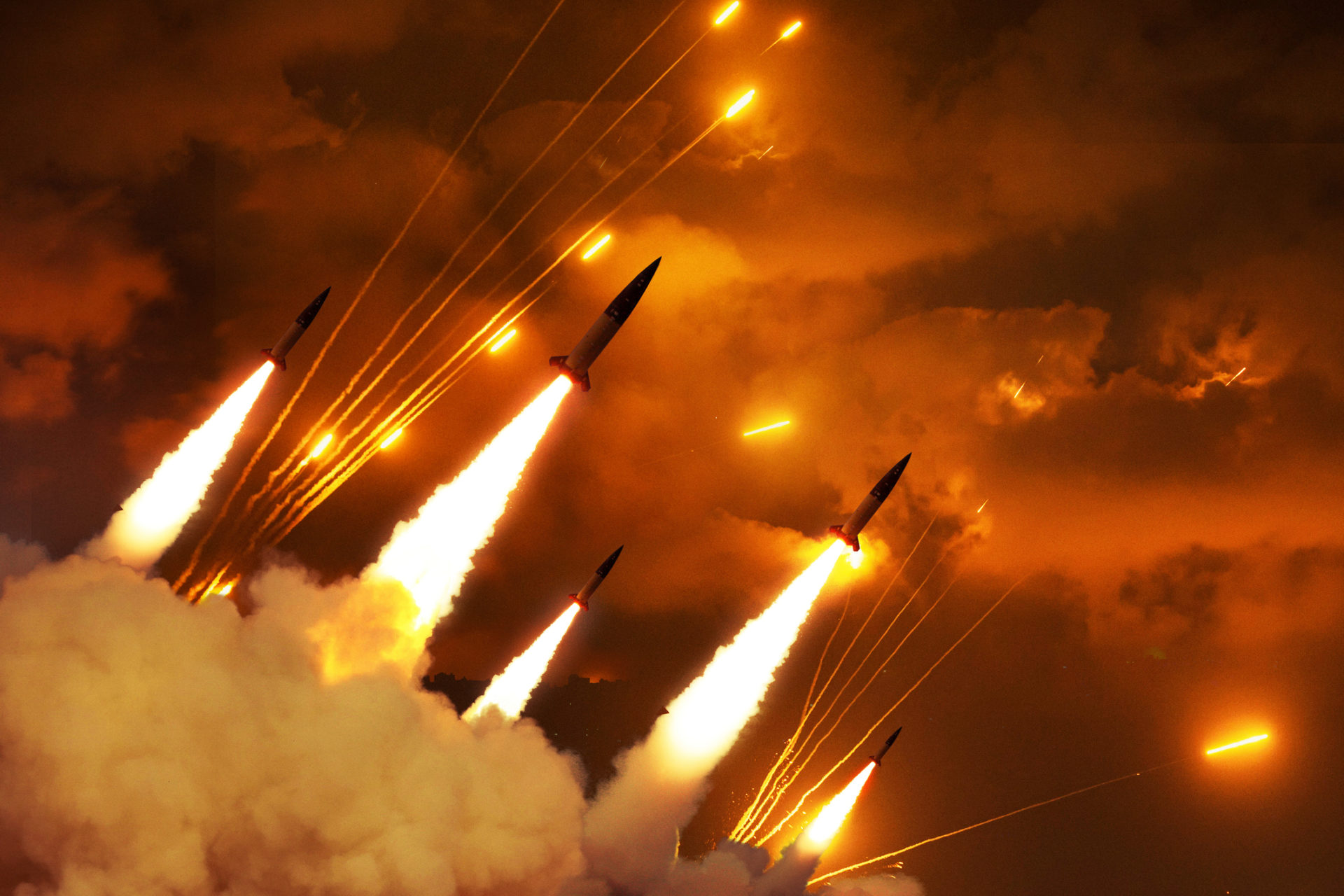
Tehran has managed to institutionalise permanent administrative control over the Strait of Hormuz through the creation of a maritime toll authority and the development of an insurance market operating on a tacit logic of non-disclosure.
This Iranian strategy follows a logic of geographic compensation. The Strait of Hormuz, through which around 20 % of the world's oil passes, constitutes a choke point. Iran can activate it even though it has not previously controlled it administratively. Faced with massive investments by the Gulf states in bypass infrastructure such as pipelines towards the Red Sea or the Indian Ocean allowing hydrocarbons to be evacuated without passing through Hormuz, Tehran has sought to re-establish lasting leverage. The toll authority functions as a de facto right of passage imposed on ships transiting through the strait. Avoiding it would lead to various complications that shipowners prefer to spare themselves.
The «don't ask, don't tell» insurance market forms the other pillar of this mechanism. Marine insurance companies have developed specific products whose terms are not made public. This system allows operators to continue shipping their cargo while indirectly paying Iranian entities. This legal and commercial grey zone thrives all the more easily because the alternative—a confrontation with Iran or a diversion of shipping routes—proves more costly.
The Putin-Xi summit: rebalancing within the Sino-Russian axis
The Iranian dimension of the conflict cannot be understood in isolation from the broader reconfiguration of relations between major powers. The summit between Vladimir Putin and Xi Jinping illustrates the complex diplomatic manoeuvring that accompanies the conflict.
For Moscow, Iran represents a strategic partner of prime importance. It is a supplier of drones used in Ukraine, an outlet for circumventing sanctions and a key player in an anti-Western front.
The Chinese position is proving more nuanced. Beijing depends heavily on oil imports transiting through the Persian Gulf and has every interest in the stability of the region. An uncontrolled escalation of the Iranian conflict would directly threaten Chinese energy security. The mediation efforts deployed by Xi Jinping's diplomacy can thus be explained. Simultaneously, China does not wish to see Iran collapse or be completely marginalised. Indeed, this would offer the United States a major strategic victory in a region where Beijing seeks to increase its influence.
This complex equation explains the ambiguity of the signals emitted by the Putin-Xi summit. On the one hand, a reaffirmation of Sino-Russian solidarity in the face of what the two leaders present as American unilateralism. On the other, probable divergences over the scale of support to be given to Tehran and the red lines not to be crossed. For Iran, this configuration represents the opportunity for support from two major powers. But also a constraint. That of dependence on partners whose priorities do not necessarily coincide with its own.
The Gulf monarchies and the security dilemma
For the Gulf states – Saudi Arabia, the United Arab Emirates, Qatar, Kuwait, Bahrain and Oman – the Iranian conflict poses an existential dilemma. Their security has historically relied on the American guarantee, formalised by defence agreements and a massive military presence. However, the reliability of this US commitment has been called into question for several years, with successive administrations in Washington having sent contradictory signals regarding their regional priorities.
Investments in infrastructure to bypass the Strait of Hormuz demonstrate this growing awareness. Saudi Arabia has developed the East-West pipeline, linking the Gulf oilfields to the Yanbu terminal on the Red Sea. The Emirates have built a pipeline from Abu Dhabi to Fujairah on the Gulf of Oman, outside the strait. These projects reduce the vulnerability of oil exports to Iranian threats, but do not eliminate it entirely. The capacity of these pipelines remains lower than the volumes exported by sea, and onshore infrastructure presents its own vulnerabilities.
The normalisation of relations between several Gulf states and Israel, as part of the Abraham Accords initiated in 2020, responds in part to this logic of security diversification. Israel has significant military capabilities, particularly in terms of intelligence and missile defence, which complement the American offering. However, this Arab-Israeli convergence in the face of the Iranian threat is running up against the massacres committed in Gaza.
Towards a new regional architecture?
The ongoing conflict is accelerating a structural transformation of the Middle East that began several years ago. The regional order that had prevailed since the end of the Cold War, characterised by American hegemony, the marginalisation of Iran, and the centrality of the Israeli-Palestinian conflict, is gradually eroding. In the emerging system, several regional powers (Iran, Saudi Arabia, Turkey, Israel, Egypt) are competing for influence. Major external powers are intervening in a more selective and transactional manner.
This regional multipolarity carries considerable risks. The absence of a dominant actor capable of imposing the rules of the game increases the likelihood of open conflicts between rival powers. The Middle East could experience a prolonged period of instability, with proxy wars, arms races, and attempts at mutual destabilisation. The current Iranian conflict, whatever its immediate military outcome, will not resolve these structural dynamics. It could even exacerbate them if the defeat of one side generates lasting resentment and a desire for revenge.
In the longer term, the emergence of an inclusive regional security architecture, involving all actors, including Iran, in a negotiated framework appears to be the only sustainable solution. Such arrangements have been raised on several occasions by various mediators. However, they face considerable obstacles: the depth of the antagonisms, the asymmetry of military capabilities, and the lack of mutual trust. The interference of external powers pursuing their own agendas contributes to this. The Middle East of 2026 resembles less the European Concert of Nations of the nineteenth century than the Europe of the Wars of Religion of the seventeenth. This is a historical warning that should urge caution upon all those who hope for quick solutions to the region's torments.

 French
  English
  Chinese
  Arabic