
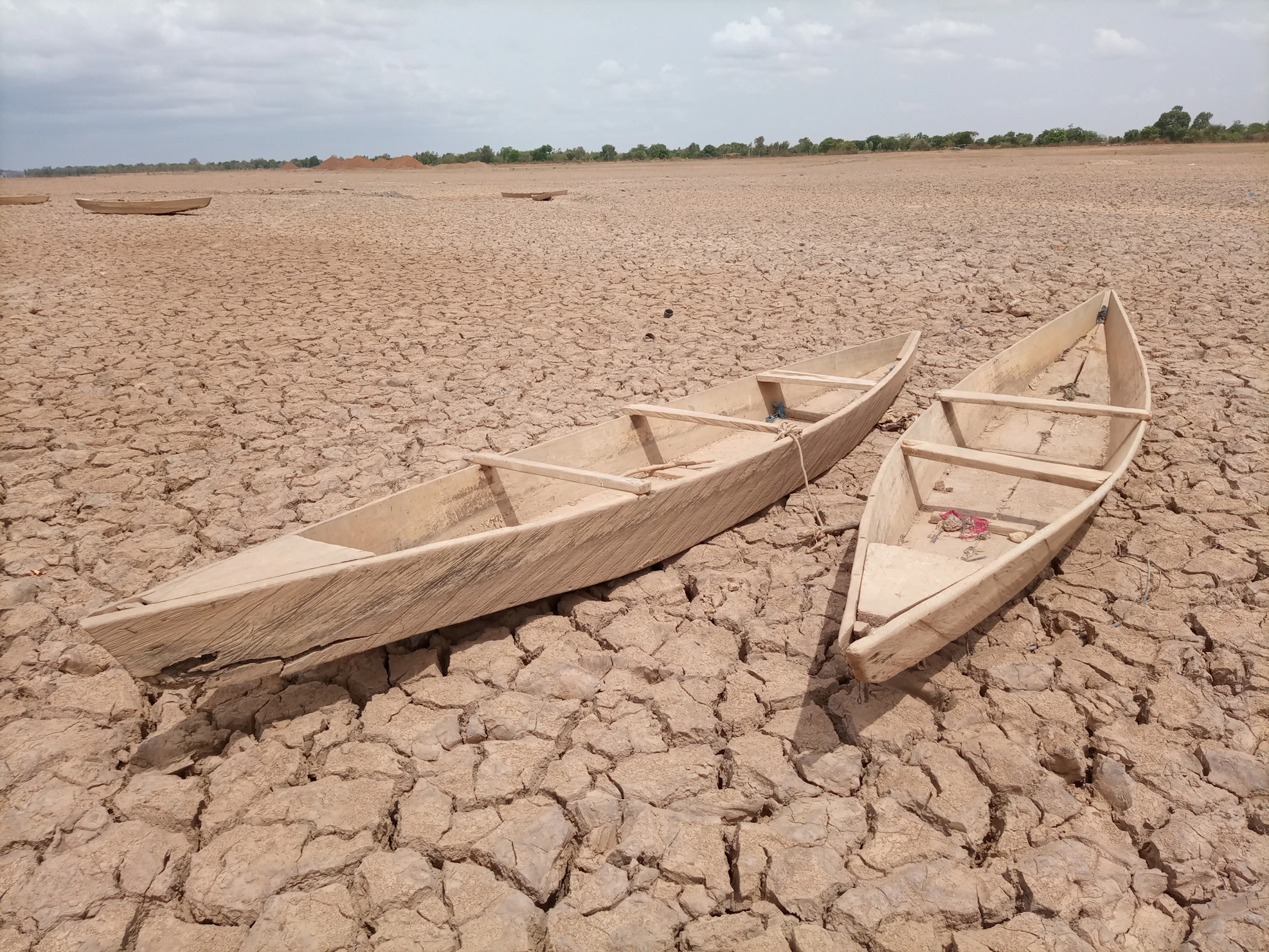
Freshwater on the planet is becoming increasingly scarce. Climate change and poor management of the «blue gold» resource could well lead to numerous global problems. The widening of inequalities between populations, the development of geopolitical conflicts, severe economic disruptions, including the imminent privatisation of water resources, would be the gloomy agenda for our shared future, if nothing changes.
Back in 2019, UN figures were already warning of an increasingly concerning context. Experts now state that by 2030, water scarcity will affect nearly 40 % of the global population. Still according to the UN, «the metropolitan areas of Cape Town, Karachi and Casablanca are already threatened by what is known as «Day Zero», the day when water will no longer flow from the tap... Along with Mexico City, Madrid, Barcelona, Berlin, Rome and London in the longer term.» This is a serious warning against water stress specific to major cities that spend too much water resources without replenishing stocks. Agriculture, which is very demanding in terms of water, represents the most problematic sector for the management of this resource. This is a major drawback that particularly affects developing countries like Morocco, where agriculture remains an essential activity. The poorest populations in these regions are reportedly already the first victims.
The situation in Morocco
Facing strong pressure due to climate change, the Kingdom finds itself in a concerning situation today. A recent report by the Ministry of Equipment and Water highlighted the importance of shifting perspectives in the face of a drought that is expected to progressively worsen in Morocco until 2050, driven by a drop in rainfall (-11 %) and a rise in temperatures (+1.3 °C). Fortunately, Morocco is not defenceless against these natural disruptions. As a pioneer in the field of prevention, all efforts have been underway for several decades. Here, the fight against drought mainly translates into the construction of dams, the exploration of new groundwater deposits, the treatment of wastewater for reuse, and the conservation of water tables. Finally, having been postponed several times, the construction of water desalination plants is expected to be imminent. Indeed, the project currently features among the minister's priority objectives. «Thanks to its two coastlines, Morocco has made significant progress in the field of renewable energies, both solar and wind, which should make it possible to desalinate water at a lower cost,» he explains.
Faced with drought, innovation and new technologies therefore have an important role to play. Morocco has distinguished itself through the development of its Al-Ghait project, which involves artificial weather modification through cloud seeding. Morocco's expertise in this field is recognised. Consequently, Moroccan experts are frequently called upon in sub-Saharan Africa, particularly in countries suffering from prolonged periods of drought (Senegal, Mauritania, Guinea, etc.). Burkina Faso was the first country to benefit from Morocco's support in carrying out cloud seeding operations. As a reminder: «The method consists of injecting artificial condensation nuclei into the cloud, explained weather expert Abdalah Mokssit. But this technique only works under certain conditions: «You need clouds, of course, but above all a certain type of cloud. The clouds we are interested in are those that are already heavy enough to be likely to precipitate. It is not enough for there to be clouds in the sky to carry out seeding.». To bolster the arsenal against drought, the most promising project for the future lies in the construction of water desalination plants, a venture that could benefit a Morocco with 3,500 km of coastline to exploit. This is a projection that likely forms part of a broader drive for overall independence regarding water «harvesting», at a time when water is becoming the world's most coveted resource.
Geopolitical tensions are increasing
In 2010, the UN declared access to safe drinking water a fundamental right: «The right to clean and safe drinking water and sanitation is a human right, essential for the full enjoyment of the right to life. As blue gold has become a scarce commodity, there was an urgent need to enable better balancing of water management policies worldwide. However, recent years have not failed to worry specialists, who have noted a clear increase in disputes and tensions linked to the distribution of this natural resource. For its part, the United Nations world report records a significant rise in the number of geopolitical conflicts linked to water. Specialists nevertheless welcome the single, fine example of a historic agreement around the Senegal River. The river is managed by an independent body, and the 4 riparian countries (Guinea, Senegal, Mali and Mauritania) are therefore co-owners of the infrastructure, sharing both costs and benefits according to a distribution key. This independent structure helps maintain harmonious management of the river's resource, distributed across the various border countries. Apart from this happy exception, the challenge remains huge: in future, the aim will be to defuse the increasingly numerous disagreements over precious water, which has become an instrument of power in the hands of better-endowed countries than others. Alas, the situation is not expected to improve anytime soon. By 2030, water demand could be 40 % higher than the planet's availability, according to World Bank projections, for which the causes of this sharp upcoming shortage must nevertheless be put into perspective. Indeed, according to this body, «development problems or conflicts arising from difficulties in accessing water are issues of resource management rather than resource availability. These problems take various forms depending on the situations in question: they may involve a lack of investment in infrastructure to improve access to water, a lack of cooperation in the transboundary management of water resources, or wastefulness in the various uses of the resource.»
The financial markets for blue gold
Now new capitalist theories are gaining ground. Mike Young, an Australian economist, is the pioneer of the theory of selling water on markets. As fresh water is becoming increasingly scarce, the economist insists: «This resource must be managed in the most optimal way possible. The only way to regulate this optimality is through the markets. Markets thus make it possible to influence water consumption while promoting the competitive market. Today, the stock market flotation of short-term water contracts is already underway and points to a frightening future, based on the privatisation of water as the new black gold of the 21st century. Despite everything, certain economists are fighting for free access and against the commodification of this essential resource, arguing that the planet's resources are limited and therefore that growth, as it is promoted today, is under threat.
It was in November 2002 that the International Criminal Court (ICC) officially defended the right to water for all. Already holding jurisdiction over crimes against humanity and serious violations of international humanitarian law, the body finally imposed a new status on fresh water, which was recognised as one of the fundamental human rights. This was enshrined in the General Comment on the Right to Water, adopted by the International Covenant on Economic, Social and Cultural Rights (CESCR), which itself has been ratified by 145 countries. Yet certain regions have defied these good intentions. Water has already become a financial product in the UK, Australia and the United States. Alas, it is no longer at all certain that tomorrow, water will remain that «untouchable heritage of humanity» that we all so fervently hope for.
Valérie Morales Attias is a resident in Morocco, a journalist and author, and she teaches at the École Supérieure de Journalisme in Paris.

 French
  English