
A simple contract... or a strategic turning point?
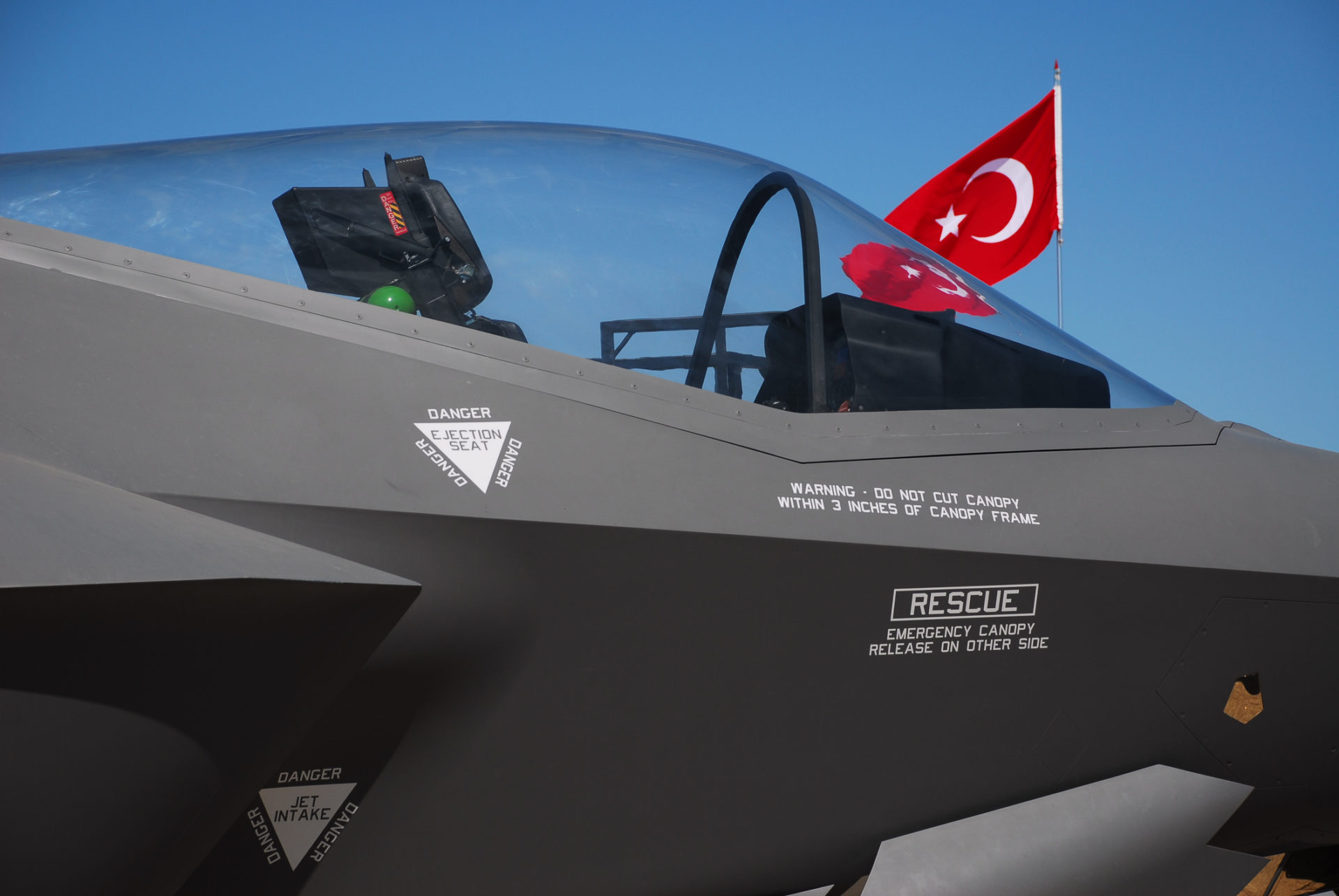
Certain diplomatic sequences speak louder than a lengthy expert report. The one playing out today regarding a potential sale of F-35s to Turkey is one of them. Washington had excluded Ankara from the programme in 2019, following the acquisition of the Russian S-400 system — a decision presented at the time as definitive. The fact that this file is back on the table reveals in itself a shift: the uncertainty of American policy under Donald Trump, Turkey’s return as an unavoidable regional player, and Israel’s concerns over a potential challenge to one of the pillars of its security — the maintenance of its qualitative military edge.
Benjamin Netanyahu is not worried about a simple arms contract. In his eyes, the issue goes far beyond the acquisition of a fifth-generation fighter jet. Such a decision would alter the strategic balance in the Middle East. More than a technical choice, it would constitute a strong political signal. Yet, in this region, signals often matter just as much as military capabilities themselves.
Why Turkey is concerning Israel in this matter
To understand the Israeli reaction, one must start from a simple observation: in this matter, Turkey does not represent the same type of challenge as Iran.
Iran remains Israel’s declared adversary. Its positions are well known and its strategy has long been factored into Israeli calculations. Turkey presents a challenge of a different nature. A NATO member and partner of the West, it nevertheless pursues an increasingly autonomous foreign policy that regularly leads it to distance itself from its allies.
It is precisely this intermediary position that feeds Israeli concerns. In the eyes of Tel Aviv, a Turkey fully reintegrated into US military programmes would be a more influential, more credible and harder-to-anticipate actor.
Ankara's strategy: staying in the game without aligning
Even so, Ankara is not seeking to break with the West. Its goal is rather to redefine the rules. Turkey intends to remain an ally while preserving a high degree of autonomy in its decision-making. It negotiates without fully aligning itself, cooperates without giving up its freedom of action, and uses its geographical position and strategic weight to strengthen its influence.
This approach is characteristic of so-called «middle» or «threshold» powers: they take advantage of rivalries between major powers to increase their own room for manoeuvre. From this perspective, the F-35 issue goes far beyond the military question. For Ankara, it also constitutes a symbol of political rehabilitation and a return to the forefront within the Western camp.
Washington changes its approach
It is in this context that Donald Trump comes into play. More than the F-35 dossier itself, it is his manner of approaching international relations that raises questions. His approach is based more on personal relationships and shifting power dynamics than on long-established diplomatic equilibria.
His relationship with Recep Tayyip Erdogan illustrates this logic. Both favour direct diplomacy, attach great importance to personal relations between leaders, and often show themselves to be wary of traditional decision-making mechanisms.
This development is fueling questions among many of the United States' allies. When the rules appear less predictable, everyone questions the steadfastness of American commitments. It is precisely this uncertainty that today gives the F-35 dossier a significance far broader than a simple arms sale.
The real issue: the credibility of American commitments
When international relations rely more on personal relationships than on stable rules, uncertainty grows. Allies no longer know how far American commitments go. Adversaries are tempted to test the limits.
As for middle powers, such as Turkey, they quickly perceive the new room for manoeuvre that is opening up to them.
Israel has understood this perfectly. By publicly expressing its opposition to a potential return of Turkey to the F-35 programme, Benjamin Netanyahu was not simply seeking to prevent this sale. He wanted to recall that, beyond the aircraft, it is the credibility of American commitments that is at stake.
The pillar of Israeli security
At the heart of this matter lies a principle that has guided the relationship between Washington and Tel Aviv for decades: the United States ensures that Israel's qualitative military edge over other powers in the region is preserved.
This guarantee is one of the cornerstones of Israel's deterrence strategy. Israel has long relied on technological and operational superiority to compensate for its geographical vulnerabilities.
In this context, the F-35 is not an aircraft like any other. Thanks to its stealth, detection capabilities and upgrade potential, it represents a true force multiplier. Its potential delivery to Turkey would therefore have far more political than military significance. Beyond its current performance, it is the strategic potential it opens up for the years to come that is attracting attention.
The signal sent to the whole region
In Israel's eyes, the risk is twofold. The first is a gradual reduction in its technological edge. The second is the political message that such a decision would send to the entire Middle East: what had been presented, after the S-400 episode, as a permanent exclusion would once again become negotiable. For many regional players, this would mean that American red lines are now more flexible than they used to be.
Ankara seizes a strategic opportunity
Turkey sees this development as an opportunity. Thanks to its geographical position and its role within NATO, it remains an essential partner on several security issues. This situation allows it to engage with Washington from a position of strength.
Recep Tayyip Erdogan knows that regaining access to the F-35 programme would have a value that goes far beyond the military aspect. It would be a sign that Turkey is finding its way back to a central place in American strategic calculations — no longer a difficult ally to manage, but a partner that Washington once again considers indispensable.
It is precisely this perspective that fuels Israeli concerns. An autonomous Turkey is already a major actor. A Turkey fully returning to American military cooperation would wield even greater influence, from the Eastern Mediterranean to the Levant.
Consequences well beyond the F-35 dossier
The repercussions of such a decision would extend far beyond relations between Washington, Ankara and Tel Aviv. Greece, which is itself engaged in a modernisation programme for its F-16s, would follow this development with particular attention, given its rivalries with Turkey in the Aegean and the Eastern Mediterranean. Several Arab capitals, from the Gulf to Egypt, would also observe the evolution of the balance of power in the region.
A more general question arises for American diplomacy: Can the United States simultaneously reassure Israel, reconnect with Turkey and preserve the coherence of its regional strategy?
Beyond the F-35s, a new logic of power
Beyond the debate over the F-35s, a more profound evolution is taking shape in the Middle East. The region is no longer merely the theatre of military clashes. It is also a space where balances are built through technology transfers, defence partnerships, sanctions, political signals and diplomatic choices.
In this context, a combat aircraft like the F-35 represents much more than military equipment. It symbolises a level of trust, privileged access to the most advanced technologies and political recognition. In the Middle East, the status it confers can sometimes weigh as heavily as its operational performance.
Red lines that have become more flexible
However, it would be overly simplistic to view Donald Trump as the sole factor of uncertainty. This affair highlights a broader evolution in international relations: red lines are not disappearing, but they are becoming negotiable. What yesterday seemed definitively ruled out can today become conceivable once more under the influence of a changing context, a convergence of interests or a new political approach — blurring the benchmarks upon which allies and partners had built their strategies.
When everyone seeks their own security
Ultimately, everyone acts according to their own logic of security — what international relations theorists call a security dilemma: the measures a state takes to reassure itself end up alarming others, who retaliate in turn. Israel is defending the strategic advantage that underpins its defence doctrine. Turkey is consolidating its status as a regional power. Washington is seeking to preserve its freedom of action while maintaining its partnerships.
These rationales, which are coherent from each individual perspective, do not necessarily produce stability once they are superimposed: for want of a shared vision, they fuel an atmosphere of uncertainty instead — and in the Middle East, uncertainty often precedes a new episode of tensions.
A lesson that goes beyond the Middle East
The F-35 affair is thus revealing of a more profound transformation in international politics. Power is no longer measured solely by the number of aircraft, tanks or missiles; it also depends on access to advanced technologies, the trust of allies, and the position a state occupies in major strategic balances. It shows that a partner can become, not through declared hostility but simply by its own rise in power, a subject of concern for its own allies. Finally, it serves as a reminder that diplomacy based on permanent adjustments and personalised decisions can, unintentionally, accelerate regional realignments that are difficult to control.
The real issue in this affair is perhaps not the potential return of Turkey to the F-35 programme. It lies elsewhere: in the way the United States is gradually redefining the rules of the game with its allies. For when the rules become uncertain, everyone is tempted to revise their own calculations. And that is often how regional balances begin to shift.

 French
  English
  Chinese
  Arabic