
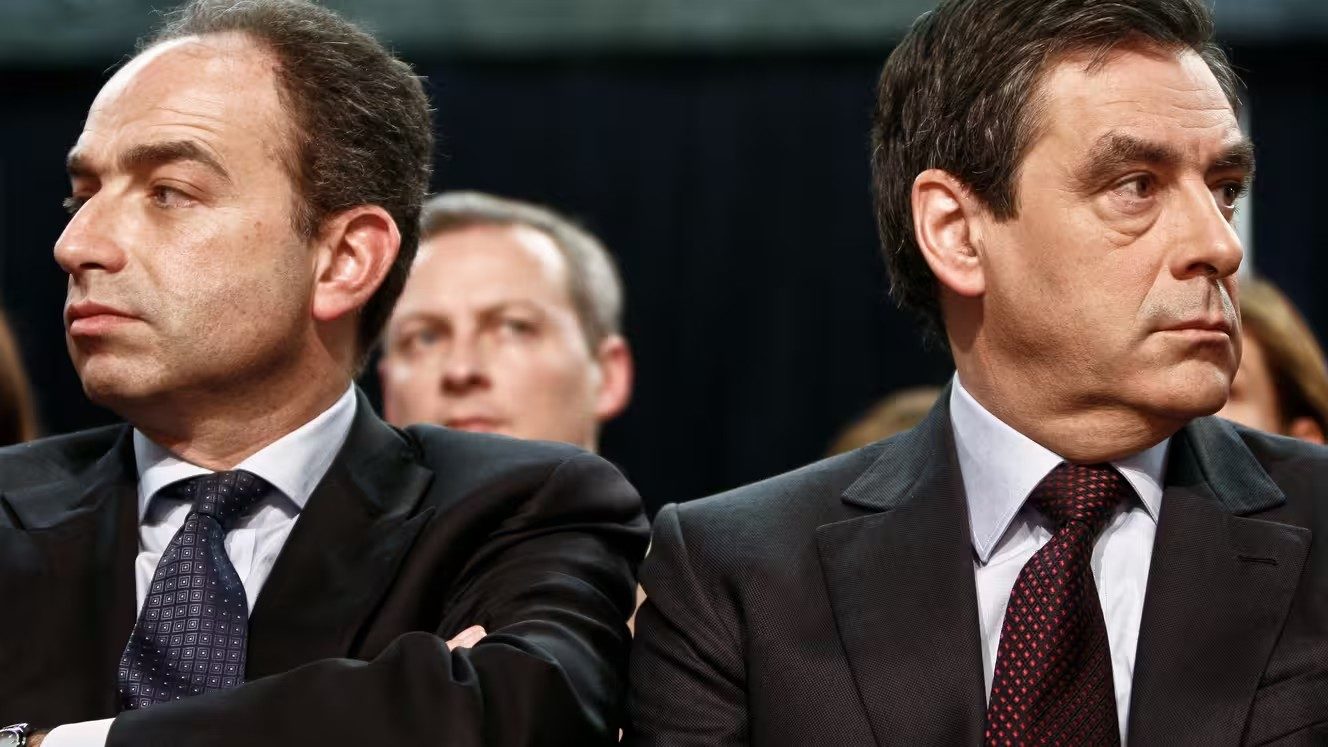
Episode 3 – And the Fillonists sank the Titanic…..
In the summer of 2012, La droite did indeed lose the presidential election and the legislative elections that followed, but its situation is paradoxically rather good.
Indeed, the 2012 defeat was largely due to the rejection of Nicolas Sarkozy’s person or personality. The UMP was then a strong party with more than 300,000 members and well «led» by Jean-François Copé, who is relentless and imposes a frenetic work and travel schedule that matches his ambitions.
François Hollande's five-year term has been calamitous from the start, There is no surprise here. Having entered at least two competitions for the Elysée (the elimination of DSK and the rejection of Nicolas Sarkozy), he will never hold the office. From this point onwards, the return of the right to power seems likely and the Copé 2017 hypothesis is becoming increasingly credible.
Jean-François Copé is now the sole master at the helm, but he has one main problem: he has never been a Sarkozy supporter. or reluctantly and on the tip of the lips. But the activists and members remain very Sarkozy-friendly. How to break with a (already) condemned political line without offending the base while the election of the President of the UMP is looming?
The UMP presidential election: the clash of ambitions
A clash of titans is looming. Indeed, François Fillon seems to have been tempted by the conquest of the City Hall of Paris. But the battle ahead is tough and the uncertainty is great. The polls seem to indicate that he will easily win the presidency of the UMP. He opts for caution rather than fanfare What would have been the battle to try to retake the capital that has been sliding to the left for 11 years now?.
The battle on both sides is very (too) right-wing. It aims to attract members and activists who are often more willing to support clear, concise, and less elaborate ideas than those that are strong but nuanced. Jean-François Copé is conducting a frantic campaign, sometimes holding three meetings in the same day and the activists appreciate it.
Of course, all his potential rivals from the same generation chose to support François Fillon: Baroin, Wauquiez, Pécresse. Including the Chiracians of course... Ideas don’t matter; they saw Copé take such a lead that their only goal is now to block him. The Mousquetaires team is disintegrating; it cannot withstand personal ambitions. The party is tearing apart; the vote seems uncertain because the momentum is undeniably on the side of Copé.
The worst-case scenario
On Sunday, November 18, 2012, it was the worst-case scenario for a right-wing party that is not accustomed to this great democratic exercise. (55% of the activists participate in the vote, totaling approximately 175,000 voters). Indeed, the two candidates are neck and neck; the electoral body puts them almost side-by-side. It is a political defeat for Fillon, who was widely considered the favorite. Assuming that we have a few dozen votes ahead of us, Jean-François Copé declares his victory at the end of the evening. The Fillon camp was about to do the same. The new president of the UMP is all the more justified in doing so, given that numerous irregularities have been uncovered in the Alpes-Maritimes, where the bitter enemies/Siamois brothers Estrosi and Ciotti have both chosen to support François Fillon and will stop at nothing.
Fillon himself seems resigned to reluctantly accept his defeat. The right has a great opportunity to move forward, to pass a generation, to break with Sarkozyism. which, after the resounding victory of 2007, has only recorded defeats since then. This opportunity will be spoiled by personal ambitions.
Indeed, the converts to Fillonism, Wauquiez, Pécresse, and Ciotti will, at a press conference on November 21, 2012, which will remain in history as the first significant step in the suicide of the right, break up the UMP. They cannot accept that Jean-François Copé is blocking their path for 2017. They denounce the omission of the votes from New Caledonia and Wallis and Futuna in the count of votes. In reality, these votes were indeed counted but not added to the final tally. A manipulation error that would be the perfect opportunity to strike a major blow to Jean-François Copé.
The party finds itself in a violent and lasting crisis. After several mediations, an agreement on exiting the crisis is reached. A new election is envisaged the following year. Ultimately, all the party’s functions will be duplicated and will turn the UMP into a Mexican army. The Plenary Political Bureau that will emerge from it will more closely resemble a National Council than a strategic body. The right no longer has an undisputed leader But Copé continues to lead the party without really being supported. The Fillonists are not very involved in the life of the party and often practice the policy of the empty chair. They temporarily put the knives back in their place, but intend to take them out again, the first chance they get.
The rejection of Nicolas Sarkozy's campaign accounts
On July 4, 2013, the Constitutional Council rejected Nicolas Sarkozy’s campaign accounts. It is a thunderbolt, unprecedented in history for a major candidate. The UMP, which was leading with all its might, like all the ruling parties, had already had to significantly reduce its budget after the legislative elections defeat. But the aura that Nicolas Sarkozy still has among the base, as well as the «Copé machine,» will do wonders and the calls for donations will make it possible to clear the debt. Nevertheless, the financial situation of the party remains fragile due to the drastic reduction in the number of parliamentarians and the withdrawal of funds that did not contribute to financing actions but only to avoid a financial disaster.
The repeated shots fired at Jean-François Copé finally have an effect.
The shooting angle is getting closer. Not the March 2014 municipal elections that constitute a triumph for Jean-François Copé and the UMP; a blue wave of unprecedented scale which rewards hard fieldwork. But the European elections are looming on the horizon. A traditionally difficult election for a right-wing party that is far from being anti-European but is not euro-friendly either. A non-monolithic stance that is difficult to convey to the electorate. Despite the competition from a centrist list, the UMP comes in second place with 20.8% % of the votes (which is twice the score the party will achieve in 2019).
Having failed to take Copé down the first time, His opponents seize the pretext of an insufficient score to bring the final blow to him. This time, the Juppes leave Copé behind on June 15, 2014. He understands that he no longer has a majority within the party. He resigns, thinking that the journey through the desert will be short.
Meanwhile, the Bygmalion affair (system of overcharges during the presidential campaign of Nicolas Sarkozy) Significantly weakened by Copé. Revealed by « Le Point» in a damning investigation in February 2014, the newspaper names a culprit, Jean-François Copé. Franz-Olivier Giesbert launches extremely violent attacks against him, which will result in a defamation conviction for him, while Copé will eventually be acquitted. But the damage has been done. Jean-François Copé’s integrity is in question, and his image has been severely damaged. The European election and the Bygmalion affair cause uproar The fall of Jean-François Copé. The right will not recover from it.
A triumvirate of former Prime Ministers takes the lead of the party: Juppé, Raffarin, Fillon. Juppé in a rallying spirit aimed at saving what can be saved and restoring the status quo. Raffarin with his sense of conciliation, moderation and appeasement. Fillon a revenger whose only concern is to get Copé’s head in the judicial court.
International issues, a major investment of Copé, completely abandoned by his successors.
As for me, as Jean-François Copé’s diplomatic advisor, I have worked hard to contribute to building an international career for a political figure who had a keen interest in this field. Jean-François Copé will have made many trips (Morocco, Algeria, United States, Canada, China, Singapore, Ivory Coast, Senegal, United Kingdom, Germany, European Popular Party summits) and has always been received at the highest level. He had fully understood, unlike most of his peers, that investing internationally is time-consuming but indispensable. To not be content with announcing slogans but to form personal ideas. Indeed, the international community demands regular travel, constant reactions to international news, and trusting contacts with counterparts; it also requires a sensitivity to the culture of others. This is the sine qua non for being up to the standard of French diplomatic tradition. Copé, whose only concern was to serve France to the best of his ability, understood that perfectly. His successors absolutely did not. Unfortunately, the news proves it cruelly enough.

 French
  English
  Chinese
  Arabic