
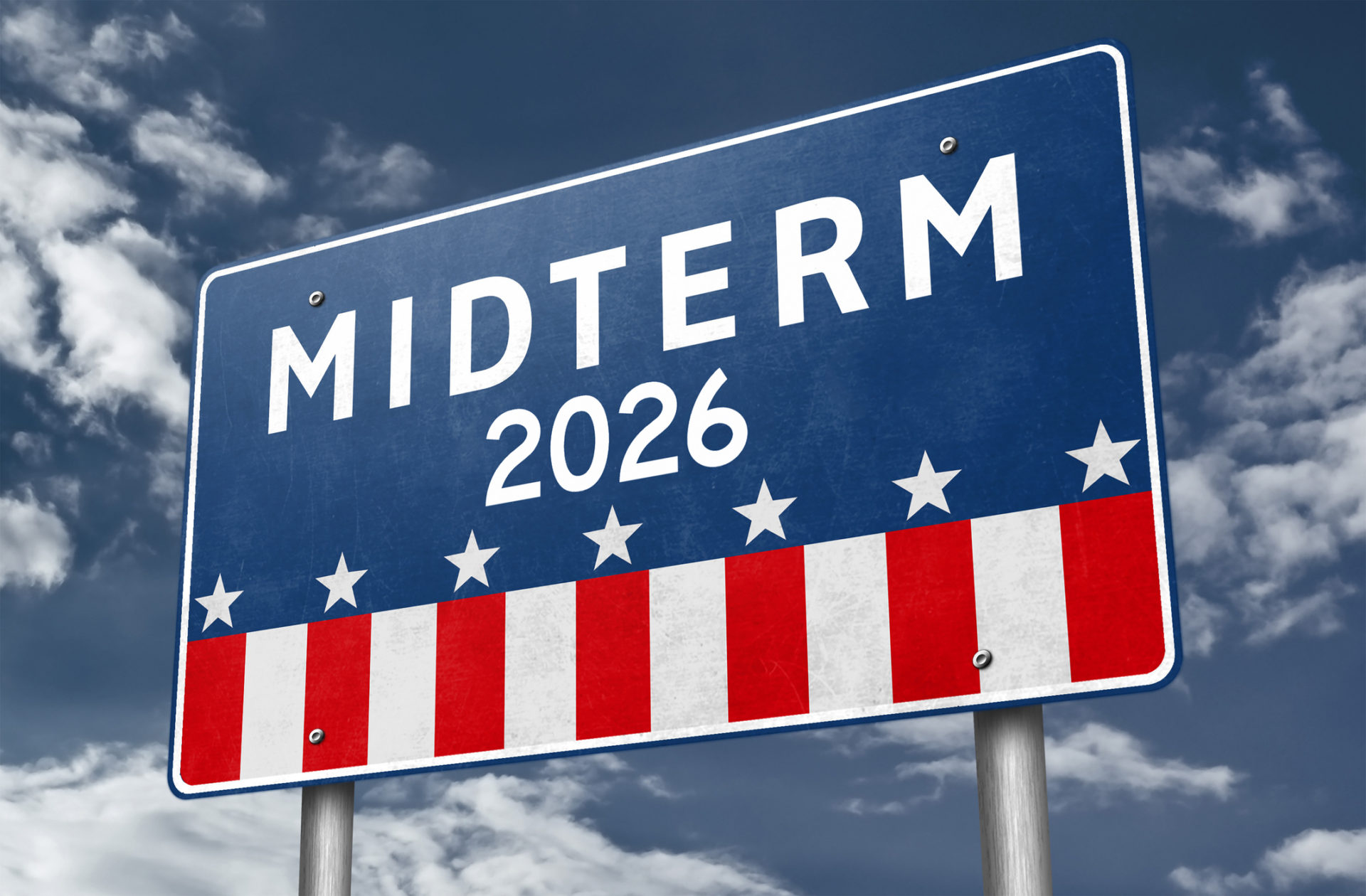
In the vast industrial plains of the Midwest, where America's electoral destinies are forged and undone, a new, almost heavy silence is settling in. The blue-collar voter who, in November 2024, sealed a pact with Donald Trump on the promise of restored prosperity is now gazing at a singularly hazy horizon. In the spring of 2026, the much-touted radical break seems to have bogged down in the quicksands of stubborn core inflation and resurgent tensions in the Middle East. Doubt, that slow poison which ends up paralysing the most audacious of mandates, is beginning to creep in: was the triumphant momentum of 2024 the beginning of an enduring cycle or the final death rattle of a system on its last legs?
The fragile architecture of a past triumph
It is necessary to return to the genesis of this second term to understand its current fragility. Donald Trump's re-election, although politically spectacular, was based on balances of surgical precision. Victories were snatched by a breath in the critical bastions of the «Blue Wall» and the South: barely +1.2 % in Pennsylvania, +0.8 % in Wisconsin and +0.9 % in Arizona. This success, which some described as a «historic realignment», relied on a bold recomposition of the electorate. According to analyses, the Republican Party had achieved the feat of broadening its base thanks to unprecedented gains among traditionally volatile segments: a 13-point increase among Latinos and a 10-point increase among 18-29 year olds compared to the 2020 ballot.
Yet, two years on, the edifice is showing structural cracks that strategists in Washington can no longer ignore. The latest Harvard CAPS/Harris poll, conducted in mid-April 2026 amongst a representative sample, is a wake-up call: the President’s approval rating has plateaued at 45 %, whilst 52 % of those polled openly express their disapproval, citing the economy and the direction of foreign policy as the main reasons.
More worrying still, the YouGov institute highlights a massive disaffection among independent voters — the true pivot of the system — whose support has melted by fifteen points in one quarter. Experts now consider that 25 Republican seats are in grave danger. For the party, this election is no longer a simple administrative step, it has become a true test of political survival.»
The «intermediate zone» trap: the economy between statistics and sentiment
In the United States, it is the wallet that causes the greatest disappointment. In 2026, the economy is not in total crisis, but neither is it «boosted» as Donald Trump had promised.
The Americans find themselves stuck in a sort of « grey area » It is not a disaster, but neither is it the expected success. It is precisely this treading water that irritates citizens.»
Official statistics do not tell the whole story of everyday life for Americans. While the inflation monitored by the Central Bank appears to be under control (around 2,8 %), the reality on shop shelves is much harsher.
In fact, the price of eating out has climbed by more than 4 %, and certain fresh products in-store have become genuine luxury items. As for housing, the pressure remains high with a 3 % increase weighing on already tight budgets. But it is at the pump that the shock is most brutal: with international instability, a gallon of petrol is close to or exceeding $5.50 in many regions. Every tankful has become a stinging reminder that, despite promises, the cost of living is not falling and wallets remain under intense pressure.
The labour market remains strong, with 178,000 new jobs created in March and unemployment stagnating at around 4.3 %. However, the policy of import tariffs (protectionism) is starting to hurt. The 2025 tariffs on steel, aluminium and Chinese products are weighing heavily: the price of cars and household appliances has risen by 3 to 7 %, which cancels out the effect of tax cuts.
This situation creates real political unease. According to a recent NBC News poll, nearly half of Americans reject current economic policy. More worrying for Donald Trump, 38 % of his own 2024 voters are starting to doubt. In politics, when the promised «miracle» fails to materialise, voters are quick to see it as a failure.
The illusion of «Pax Trumpiana» put to the test in the Levant
Candidate Trump's core promise — to restore national greatness while extricating America from foreign quagmires — is now colliding with the implacable reality of geopolitics. His ’selective isolationism« software aimed to close the era of post-9/11 interventions. However, the spring of 2026 marks a brutal return of force.
On 12 March, the sound of bombs falling on Isfahan and Bandar Abbas broke a taboo. Behind the technical term «preventative defence», these US-Israeli strikes mark a brutal escalation that is causing unease in Donald Trump’s camp. For many supporters, this return to muscular diplomacy feels like a betrayal: the shadow of the neoconservatives of old appears to have returned, eclipsing the promise of an American withdrawal. The dream of an America disengaged from global conflicts is now colliding with the reality of new fronts.
This change of course is already exacting a heavy toll: donations from the grassroots to Republican committees recorded a significant fall in March. In the minds of Americans, the link is now crystal clear: every bomb dropped in the Middle East seems to drive up the price of a tank of petrol in Ohio or Arizona. For a president who promised to put «America first», this feeling of becoming bogged down abroad once again is a genuine electoral poison.
America: the weak link of the West?
This loss of momentum in Washington does not remain confined to American borders. America is not an isolated island; it remains the engine of the world. In Europe, anxiety is spreading through every capital, regardless of the political stripe of their governments. What is feared in Paris, Berlin or Brussels is not so much the name of the future winner, but rather the image of a weakened and indecipherable America.
A White House paralysed by a failure in Congress would be incapable of standing up consistently to the ambitions of Moscow or Beijing.
For Europeans, the American ally has changed its face: it is no longer just the indispensable partner, it has become a source of unpredictability. The customs duties imposed by Washington are now forcing European industries to cope on their own to protect their economy. Above all, this political instability is jamming the works of the Atlantic Alliance. How can the continent's long-term defence be planned when the command centre in Washington seems more fragmented every day? More than an election, this November ballot has become a test of reliability for American leadership in Europe.
Three scenarios for a raw world
Six months out from the vote, America is hesitating on the brink of the abyss. Three paths are emerging, and each of them will have a direct impact on world peace:
- The return to calm: If inflation finally falls and Washington manages to calm things down with Tehran, Donald Trump could salvage the situation. By avoiding getting bogged down in an all-out war in Iran, he would keep control of Congress and finish his term from a position of strength.
- The massive rejection: If young people and undecided voters turn their backs on the president — weary of high prices and the smell of gunpowder in the Middle East — the Democrats could take back full control of Congress. Result: an America paralyzed by infighting, incapable of deciding anything on the international stage.
- The unpredictable spark: An election can turn overnight. A brutal economic collapse or, conversely, a lightning-fast military victory in Iran could sweep away all predictions and give the presidential camp an unexpected second wind.
The verdict: a test for world peace
In reality, these 2026 elections are much more than just a simple match between Republicans and Democrats. It is a referendum on the very future of the country. Donald Trump has promised a strong and peaceful America; yet, with the strikes on Iran, he is playing his high-stakes gamble.
If its working-class base sees its purchasing power devoured by the price of petrol because of this war, its 2024 success will be nothing more than a distant memory. For the rest of the planet, the message is clear and worrying: when America fractures and doubts its own military choices, the balance of the entire world becomes fragile. The main danger today is not just the conflict in Iran, it is America's inability to know where it wants to go.

 French
  English
  Chinese
  Arabic