
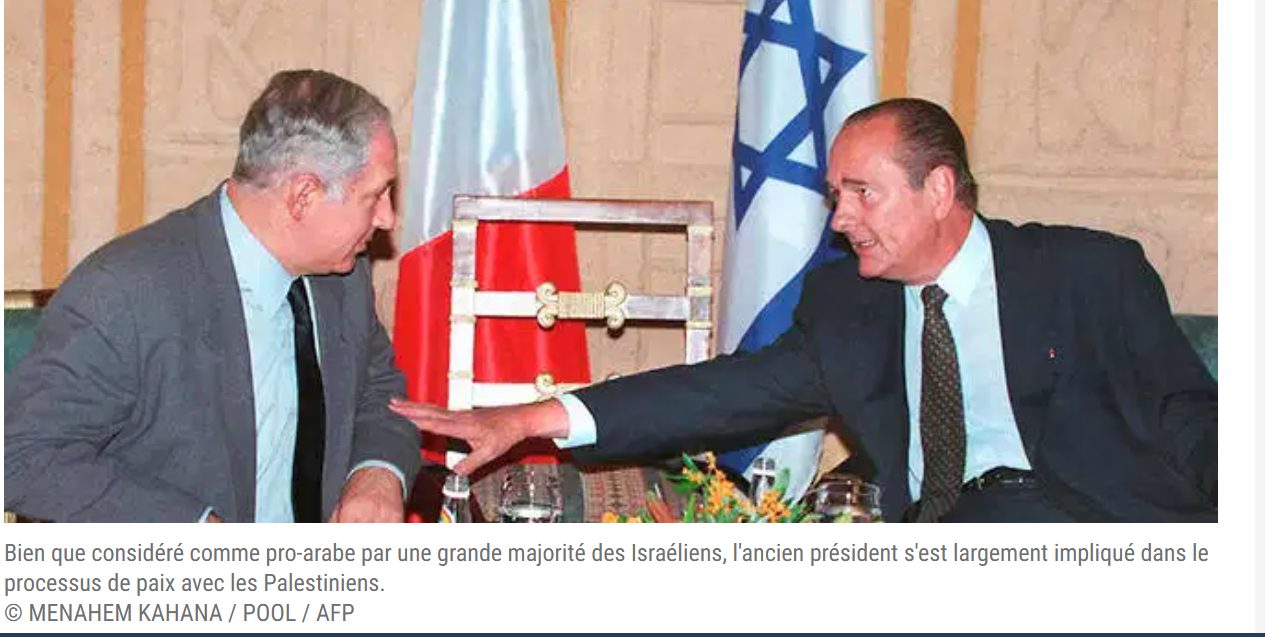
Long seen as a singular power in the Arab world, France has cultivated an image of an independent, sometimes courageous, partner within the Western camp. From General de Gaulle — who confronted the OAS and turned the page on the Algerian War — to Jacques Chirac, whose refusal to follow Washington into Iraq in 2003 remains etched in the memory, Paris has often distinguished itself through a diplomacy deemed more balanced on major Middle Eastern issues, notably the Palestinian question.
Yet this tradition of excellence has gradually chipped away, to the point of tarnishing France's image in the region. At a time when the Élysée is considering recognising the State of Palestine, a central question arises: will this gesture, symbolic though it may be, suffice to restore the aura of a power whose influence in the Arab world has largely declined.
From mutual respect to distrust
France has long occupied a special place in the Arab world. Its Gaullo-Mitterrandist policy gave it the capacity to dialogue with all actors and the status of a respected interlocutor, including with civil societies. However, this situation has evolved over time.
The shift was gradual, but profound. The military intervention in Libya in 2011, led by Nicolas Sarkozy, marked a major turning point. Behind the fall of Gaddafi, the collapse of the Libyan state and the security chaos that followed severely tarnished France's image. The increased flow of weapons to the Sahel, enabled by the institutional vacuum in Tripoli, fostered the revival of dormant jihadist cells. France was accused by the affected populations of bearing a share of responsibility for triggering this lasting security crisis. For Arab societies, and those of the Global South more broadly, the intervention in Libya, followed by the one in Mali for nearly a decade, embodied a return to a logic of neo-colonial interference that French diplomacy had nevertheless seemed keen to move beyond. This loss of credibility has allowed powers such as China, Russia and Turkey to align their rhetoric with the new aspirations of local populations.
On the Israeli-Palestinian issue, Paris’s current caution contrasts with the intransigence of President Chirac, whose trip to the Middle East in 1996 made a positive impression on Arab public opinion. Moreover, the refusal to take concrete measures to put pressure on the Netanyahu government—which has already expressed its intention to empty Gaza of its population—reinforces the idea of a French alignment with the most conservative Western positions. This double standard, highlighted in particular by contrast with the firmness shown by Paris in the face of Russian aggression in Ukraine, weakens French discourse on international law and contradicts the universalist principles that France claims, both by virtue of its Enlightenment heritage and its commitment to human rights.
In the Maghreb, France is also losing ground. By breaking with its traditional posture of balance on the Western Sahara issue in favour of clear support for Rabat, Paris can no longer aspire to the role of mediator between the two Maghrebi rivals. While Emmanuel Macron succeeded in generating a revival of sympathy in Rabat — albeit late in the day, following the American stance of 2020 — this diplomatic shift has heightened tensions on the Algerian side, where other sensitive subjects, such as colonial memory, continue to shape the relationship with France. On the Algerian side, the memory issue remains at the heart of national identity and constitutes the founding bedrock of a nation-state born out of a war of liberation. The initial symbolic gestures undertaken by Emmanuel Macron — the restitution of the skulls of resistance fighters or the recognition of colonial crimes long denied or disguised as suicides — are often perceived as belonging to a transactional logic and a policy of small steps. Paris indeed seemed to expect some form of recognition from Algiers in exchange for the memorial efforts it was consenting to. Yet, from the Algerian perspective, these steps constitute a bare minimum moral imperative which, as such, cannot be accompanied by political expectations or reciprocity.
Finally, certain internal debates within French society have had international repercussions. Controversies surrounding the teaching of the Arabic language at school, or the growing confusion between Islamism, Islam and traditions originating from the Arab-Muslim world in certain media and political discourses, are widely commented on and often misunderstood in Arab societies. France is thus perceived there as being in the grip of an inward-looking identity, fuelled by a growing distrust of Arabness and its cultural and social expressions.
L’emergence of new European players
Faced with the erosion of French influence, other European states appear to be coming out on top. Spain, Ireland and Italy are experiencing a notable diplomatic rise in the Mediterranean and the Middle East. The official recognition of the State of Palestine by Madrid and Dublin, as soon as the crimes committed by the Israeli government were confirmed and its leaders implicated by international courts in 2024, constituted strong signals. Spain and Ireland also distinguished themselves through their participation in international forums on the Israeli-Palestinian conflict, notably within the Hague Group meeting in Bogotá in July 2025, where they were among the rare European representatives. This ministerial conference, organised by a coalition of Global South states, aimed to coordinate concrete measures to strengthen the effectiveness of international humanitarian law in the face of ongoing events in Gaza. Twelve countries — including South Africa, Bolivia, Colombia and Malaysia — signed a joint declaration proposing actions such as freezing arms exports to Israel, refusing the transit of military equipment through their ports, and explicit support for the proceedings initiated before the International Criminal Court. The presence of Ireland and Spain at this summit was particularly noted, and reinforced their image as actors committed to a diplomacy of principles.
At the same time, Italy has boosted its bilateral partnerships with several North African countries, principally Libya, Algeria and Tunisia. Rome has managed to adopt an approach focused on energy, migration and trade issues, thereby fostering its regional establishment. It has also succeeded in moving past the issue of memory by presenting, in 2008, official apologies for its colonisation of Libya, which enabled it to establish a treaty of friendship with Tripoli — a framework for cooperation that Paris is still struggling to build with Algeria. This situation illustrates a broader redistribution of European roles in the region, at a time when France appears increasingly challenged.
The conditions of’a repositioning
Despite the decline of its influence in the region, France retains several structural assets that could enable it to reposition itself. Its cultural and educational network, notably its French institutes and schools in the Maghreb and the Levant — including the French Institute in Gaza, the sole foreign cultural establishment in the Gaza Strip — continues to be viewed positively and to fuel its soft power. The French language, although facing competition, remains a vehicle for exchange and influence in several Arab societies, offering Paris a unique capacity for dialogue.
However, simply preserving the status quo is no longer enough. While France remains a major power, a member of the Security Council, and maintains good relations with certain Arab regimes, the expectations of civil societies do not appear to be heard. French diplomacy is coming up against a growing demand for consistency between its rhetoric and its actions. Without a significant shift in its approach, France risks permanent marginalisation in a region where it has nevertheless long held a privileged position.
The official recognition of the State of Palestine, announced for next September, could constitute an important milestone. But such a decision, if not accompanied by concrete measures, risks being perceived as a mere formality undertaken belatedly. In a context where many Arab actors consider that the simple act of recognition no longer responds to the realities on the ground, France is expected to adopt a more assertive stance: condemnation of violations of international law, implementation of targeted sanctions, and active contribution to the emergence of a peace framework enabling the emergence of a viable Palestinian state.
For now, no coercive measures have been taken against the Israeli authorities, despite the numerous reports documenting the war crimes and the ongoing famine in Gaza. If it wishes to regain credibility with Arab public opinion, France will need to commit beyond mere rhetoric, and take on a leading role in the enforcement of international law, even when this leads to opposing the practices of its strategic partners.

 French
  English
  Chinese
  Arabic