
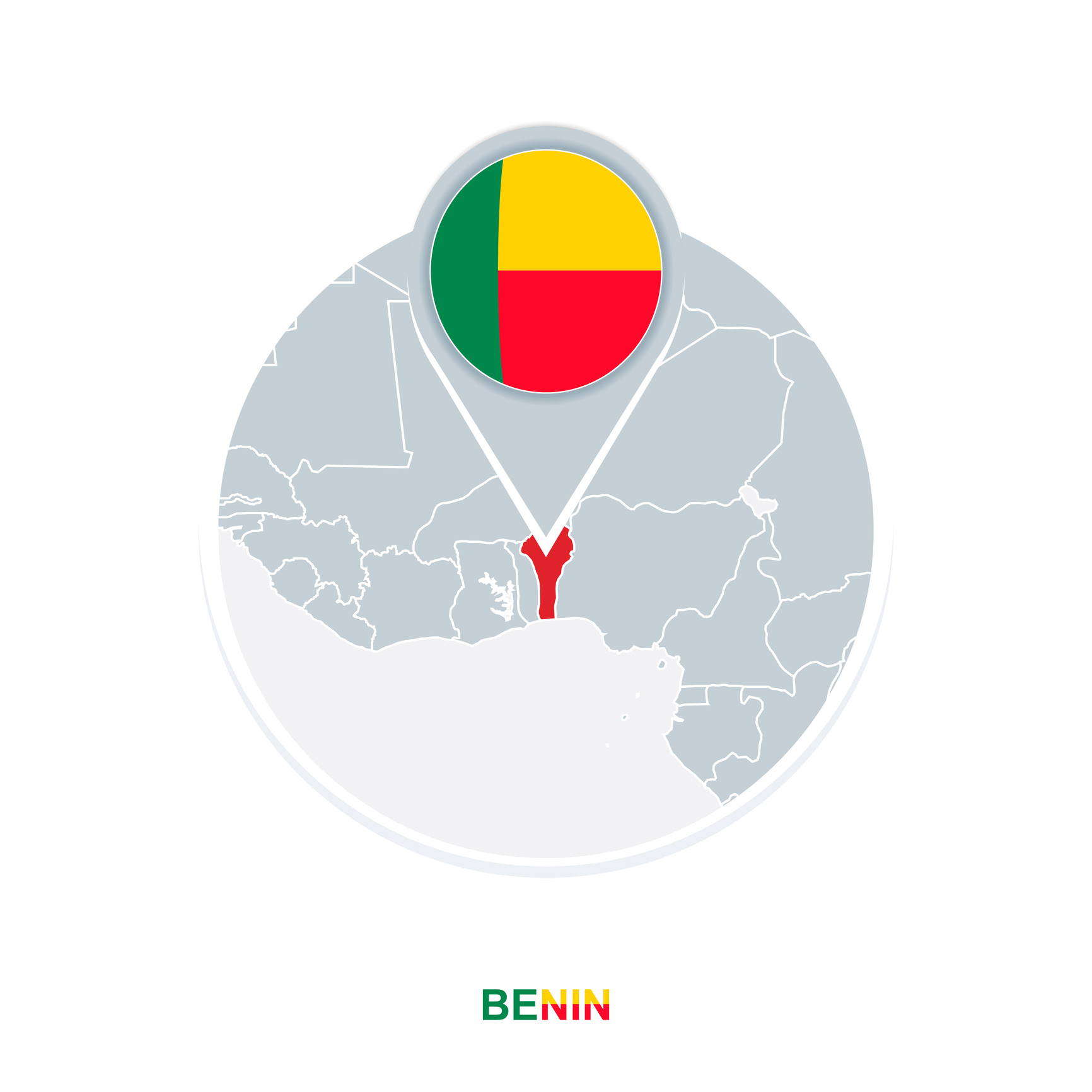
Benin's contemporary state action constitutes a developmental experiment
intriguing, reflecting a promising form of challenge to systemic subordination through what has been described as an «intentional industrial revolution» (1). With annual growth reaching 7.5 % in 2024, the highest since the 1990s, the World Bank estimates that poverty could fall by 9 % by 2027 (2). What promises and challenges are emerging for this small West African economy, and what lessons does Benin's trajectory offer for economic development in sub-Saharan Africa?
Context: systemic constraints linked to cotton monoculture and financial subordination
Like most emerging economies, Benin has historically been forced to
a peripheral position in the global economy through the colonial experience. This structural subordination is manifested in its persistent dependence on cotton farming and cotton exports. Under the French colonial administration, the authorities actively encouraged the cultivation of cotton in order to supply the mainland textile industry, permanently embedding this crop at the heart of the national economy (3).
The imposition of this monoculture has entrenched a path-dependent economic development model, with cotton accounting for up to 65.7 % of exports and around 13 % of GDP in 2020 (4). Today, Benin alternates with Mali as Africa's leading cotton exporter (5).
This productive dependency is exacerbated by monetary constraints resulting from
Benin’s membership of the West African Economic and Monetary Union (WAEMU) and its use of the CFA franc, a colonial monetary architecture still in force. Pegged to the euro, the CFA franc offers a fixed exchange rate regime and free movement of capital, considerably reducing exchange rate risk and thereby encouraging foreign direct investment (FDI) and capital flows. However, this arrangement comes at the expense of monetary policy autonomy, illustrating a classic application of the Mundell-Fleming «impossible trinity». Indeed, the peg prevents Benin from devaluing its currency in order to improve the competitiveness of its exports, a constraint that is particularly damaging in the context of cotton markets denominated in dollars. When the euro
appreciates against the dollar, as is currently the case, Beninese cotton exports become relatively less attractive, which reduces sovereign revenues.
Dynamics of the Beninese cotton sector
From independence in 1960 until 1974, the Beninese cotton sector remained under
control of the French semi-public company Compagnie Française pour le Développement des Fibres des Textiles. While the latter actively encouraged the cultivation of cotton and its processing into fibre, seeds and oil, it discouraged domestic textile manufacturing. The higher value-added segments of the textile value chain thus remained externalised.
Following the Marxist-Leninist coup d'état by Lieutenant-Colonel Kérékou in 1974, the
sector entered a phase of instability. State agencies, lacking sufficient financial and technical capacities, struggled to manage production effectively, leading to a decline in cotton production and mediocre overall economic performance. In the 1990s, Benin's democratic transition coincided with the liberalisation of the cotton sector within the framework of structural adjustment programmes driven by the IMF. Cotton profitability improved during this period, largely supported by the devaluation of the CFA franc in 1994 (6). However, this adjustment came at a considerable social cost: import prices doubled, sharply reducing citizens« purchasing power. In 1995, the supply of cotton inputs was entirely privatised. Notably, 46 % of this market was seized by Patrice Talon, later nicknamed the »Cotton King" (3). This concentration of economic power fostered a form of state patrimonialism based on cotton. Talon financed the electoral campaign of President Yayi Boni, who in return granted him a 66,5 % stake in the Cotton Development Company as well as control of the Import Verification Programme,
responsible for the evaluation of imports (ibid.). Through this accumulation of power
policy of private wealth concentration and external dependency, Benin remained incapable of catalysing industrialisation and moving up the ranks within global value chains. It is precisely these historical constraints that the current administration claims it wants to tackle through an assertive industrial policy.
Breaking path dependency through state capitalism?
The election of Patrice Talon to the presidency in 2016, then his re-election in 2021,
marked a turning point in Benin's development strategy. Under the leadership of the «Cotton King», cotton production and exports reached record levels, supporting an average annual growth rate of 6 % between 2019 and 2023. This performance exceeded the WAEMU average of 4.5 %, despite the shocks caused by the Covid-19 pandemic and the war in Ukraine (7).
At the heart of this economic renewal lies the National Development Plan
(NDP) 2018-2025, which sets out three central objectives: strengthening the foundations
economic development, the promotion of pro-development growth, and the reconquest of the external environment (IMF Country Report, 2024) (8). The PND aligns with the emerging paradigm of «new state capitalism» (9). Paradoxically, this global economic configuration is the result of the state's subordination to market forces under the Washington Consensus, establishing its role as «promoter, supervisor and owner of capital» (ibid.). The Beninese strategy reflects this paradigm by granting the state a renewed mandate in economic planning. Does state capitalism finally enable the «developmental catch-up» long denied to Benin by history? While initial results are generally encouraging, they nevertheless remain ambiguous.
Promoter, supervisor, but partially owner
Overall, Benin's economic foundations have undeniably strengthened. The state has established itself as an active promoter of capital accumulation through major infrastructure investments, notably the rehabilitation of the North-South «cotton road» and the modernisation of the Port of Cotonou (8). Similarly, the digitalisation of the tax administration and business registers has stimulated overall private investment, which rose from about one-sixth to one-third of GDP between 2016 and 2023 (7).
However, constrained by limited fiscal capacity, the State had to rely heavily on foreign capital and on the free movement of capital permitted by the currency peg in order to finance its ambitious PND. This dynamic is reflected in the
creation of a Special Economic Zone (SEZ), operated as a joint venture with the Emirati firm Arise IIP. Structured around a 65/35 capital distribution in favour of the private partner, the SEZ concentrates the gains from productivity growth in the hands of transnational capital, to the detriment of domestic egalitarian distribution (3). The IMF has moreover highlighted Benin's low overall capacity to absorb spillover effects (7), with only a limited share of the enhanced technological knowledge generated by this project having been transferred elsewhere in the economy.
Consequently, the extent to which the NDP truly «reconquers the environment"
outer» remains subject to debate. Benin's economic upgrading remains largely driven by market-oriented state action, shaped by tax reforms and a monetary regime favouring FDI flows. Between 2016 and 2023, private investment was strongly stimulated, increasing manufacturing value added by 3 % between 2018 and 2024 (10).
However, the distributive impacts of this growth are profoundly uneven, with poverty rates remaining high across the country. While the northern cotton-growing region of Atacora records a poverty rate of 53,1 %, this figure is only 16 % in the industrialised and export-oriented southern region of Ouémé (11).
Furthermore, economic informality continues to hold back development. Around
94 % of non-agricultural labour remains employed in the informal sector (12), which limits the effectiveness of taxation and perpetuates informal cross-border trade, particularly across the porous border with Nigeria despite its closure in 2019 (7). Benin's economic development is further distorted by the monetary structure of the CFA franc, the value of which remains misaligned with the economic fundamentals of WAEMU, weakening export competitiveness (13). Thus, predatory monetary structures and economic informality constitute two core obstacles that the market-actor State of the 21st century has yet to overcome.
Call into question the international hierarchy, but perpetuate hierarchies
domestic?
Ultimately, Benin's industrial policy represents a rare and ambitious developmental experiment with considerable potential. Estimates suggest that the domestic processing of all cotton into apparel could add 12 billion dollars to a Beninese economy valued at 17 billion dollars (1). The progress made in terms of infrastructure, integration into global value chains and export diversification is impressive. However, serious shortcomings remain regarding the social distribution and long-term sustainability of this growth model.
While Benin appears to cosy up to state capitalism, the monopolistic organisation of the cotton sector has engendered a political system characterised by patrimonialism, «in which the accumulation of wealth is conditioned by political power, and where the interests of state authority and the private sector are deeply intertwined» (3). In this sense, the capitalist state, rather than state capitalism strictly speaking, seems to remain the dominant paradigm. Indeed, Benin displays the characteristics of a continuation of market-oriented policies rather than an effective discipline of capital.
Moreover, this state action is embedded within powerful structural constraints, including global market hierarchies and a restrictive monetary order. As global trade enters an era of intensified «external shocks» (14), Benin's ability to build value chain resilience and sustainable economic sovereignty will be put to the test. Hickel et al. (2022) argue that strengthening regional solidarities is essential to preserving the industrial and fiscal sovereignty of emerging economies seeking to integrate into the globalised economy (15). Benin is sending encouraging signals in this regard, having returned to the WAEMU domestic capital market in November 2025 after a two-year hiatus (16). By issuing bonds to the amount of 100 billion CFA francs, it aims to finance increased industrialisation and lay the groundwork for a regional drive towards cooperative, solidarity-based development (ibid.).
Ultimately, the success of Benin's current developmental efforts will depend on its
ability to resolve three major dilemmas:
Firstly, channel foreign investment and industrial policy in such a way as to sufficiently boost productivity in order to absorb the output value constraints imposed by the CFA franc.
Secondly, deploy sufficient state capacity to discipline the «animal spirits» of the market, which are capable of eroding national economic sovereignty and an egalitarian distribution of wealth.
Thirdly — and more controversially — limiting capital-based patronage relations within the state apparatus, which bias developmental action in favour of portfolio growth rather than the socio-economic prosperity of the population. Much will depend on the outcome of the May 2026 election, as constitutional term limits prevent Patrice Talon from running for a third term (17).
References:
1: Pilling, S. (2024): “Could t-shirts be the way to industrialise an African nation?” –
Financial Times. Could T-shirts be the way to industrialise an African nation?
2: World Bank (2025): “Benin Economic Outlook 2025: Raising domestic revenue
mobilisation while protecting the poor” – World Bank Group. Benin Economic outlook 2025:
Raising domestic revenue mobilisation while protecting the poor
3: Honfoga et al. (2023): “State Capture and Rent Seeking in Benin” – Cambridge University
Press. State Capture and Rent-Seeking in Benin
4: SikaFinance (2022): “Cotton generates more than 300 billion FCFA every year for
Benin” – SikaFinance. Cotton generates over 300 billion FCFA for Benin every year
5: Kohan Textile Journal (2025): “Africa's Cotton Sector in 2025: Mali leads top producer
amid resilience and risk”. – Kohan Textile Journal. Africa Cotton Production 2025 – Top
Producers and Outlook
6: Hofonga et al. (2019): “Benin institutional diagnostic. Regulation of a dominant sector: a
case study of cotton.” – Economic Development and Institutions. OPM Report Template
version 5
7: IMF (2024): “Benin Economic Transformation and Industrial Policy.” – International
Monetary Fund. Benin: Selected Issues in: IMF Staff Country Reports Volume 2024 Issue 339
(2024)
8: IMF (2023): “Benin: Poverty reduction and growth strategy.” – International Monetary
Fund. Benin: Poverty Reduction and Growth Strategy; IMF Country Report No. 23/382; May
10, 2023
9: Alami, I and Dixon, A. (2024): “The Spectre of State Capitalism” – Oxford University
Press. The Spectre of State Capitalism | Oxford Academic
10: IMF (2023): “Benin Poverty reduction and Growth Strategy” – IMF Library. Benin Share
of industry – data, chart | TheGlobalEconomy.com
11: World Bank (2024): “Benin Poverty and Equity Brief: October 2024.” – World Bank
Group. documents.worldbank.org/en/publication/documentsreports/documentdetail/099932001032536652
12: Kiaga and Leung (2020): “The Transition from the Informal to the Formal Economy in
Africa.” – International Labour Organisation. wcms_792078.pdf
13: IMF (2005): “Benin: Request for a Three-Year Arrangement Under the Poverty Reduction
and Growth Facility.” – International Monetary Fund. Benin: Request for a Three-Year
Arrangement Under the Poverty Reduction and Growth Facility—Staff Report; Press Release
on the Executive Board Discussion; and Statement by the Executive Director for Benin; IMF
Country Report 05/288; 22 July 2005
14: Milanovic (2024) “The three eras of global inequality, 1820–2020 with the focus on the
past thirty years.” – World Development. The three eras of global inequality, 1820–2020 with
the focus on the past thirty years – ScienceDirect
15: Hickel et al. (2022): “Imperialist appropriation in the world economy: Drain from the
global South through unequal exchange, 1990–2015” – Global Environmental
Change. Imperialist appropriation in the world economy: Drain from the global South through
unequal exchange, 1990–2015 – ScienceDirect
16: Kalpo, F. (2025): “Benin Returns to Regional Market After Two Years with 100 Billion'
CFA Francs Bond Issue” – Ecofin Agency. Benin Returns to Regional Market After Two
Years with 100 Billion CFA Francs Bond Issue – Ecofin Agency
17: Aplogan, Jean-Luc (2025): “Benin: the opposition reacts to the timetable announced by the
Electoral Commission for 2026. – Radio France International.

 French
  English
  Chinese
  Arabic