
The ICC under pressure
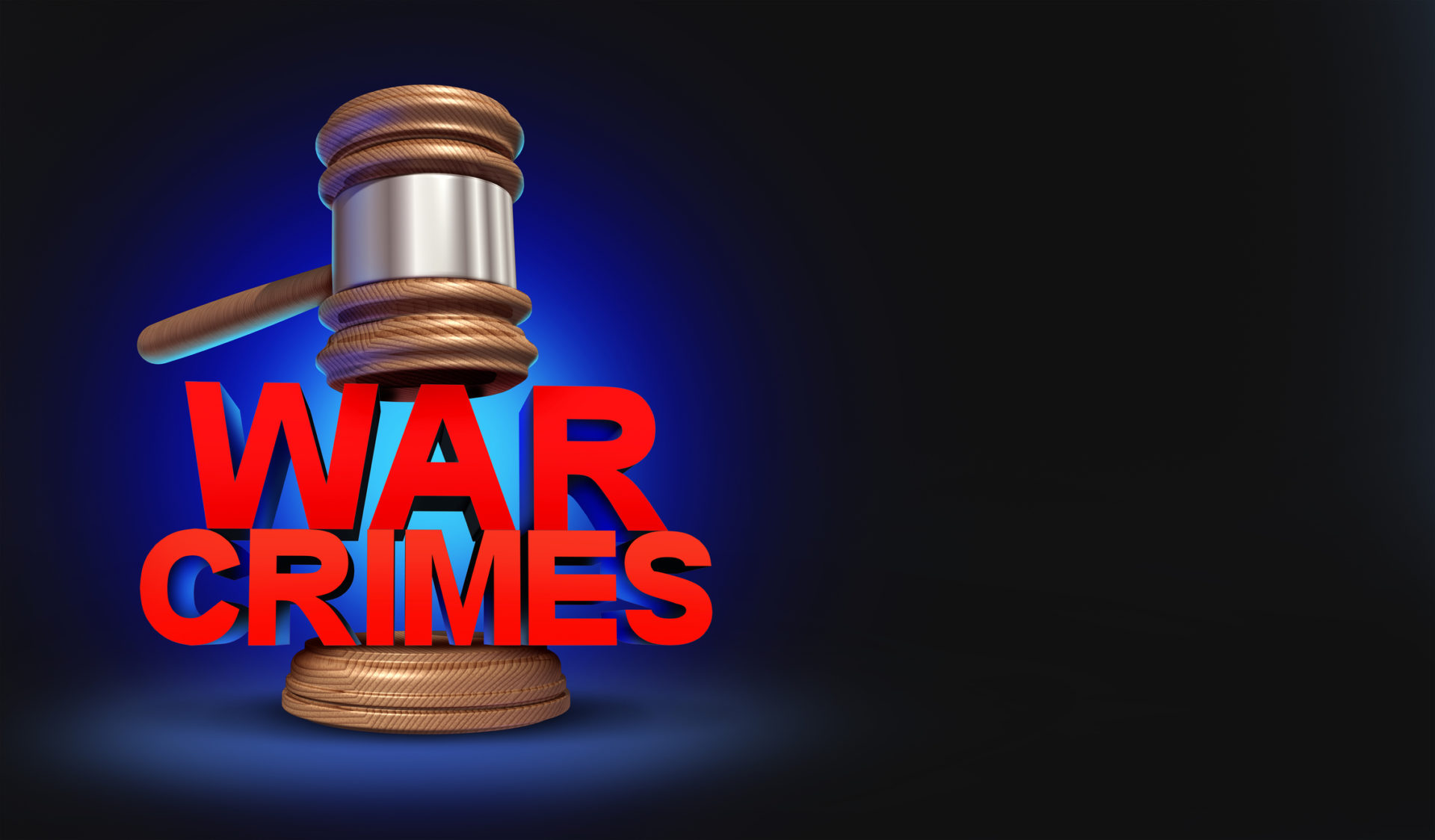
The International Criminal Court (ICC) finds itself at the heart of growing geopolitical tensions. The United States recently imposed sanctions on ICC judges for investigating US military actions in Afghanistan and targeting Israeli leaders. Meanwhile, Russia is strongly opposed to an arrest warrant issued against Vladimir Putin, who is accused of deporting Ukrainian children. These actions, taken by powers that are generally rivals but united in their opposition to international justice, are turning the ICC into a battlefield for the future of international cooperation.
In November 2024, arrest warrants were issued against Netanyahu and Gallant for alleged war crimes in Gaza. In June 2025, the United States imposed sanctions on four judges in The Hague. These events revealed an underlying crisis. The ICC, created after the Cold War to symbolise impartial justice, now reflects the divisions of a bipolar world.
A crucial question arises: how did a judicial institution, designed to punish the most serious crimes, become an arena where national sovereignty and universal justice clash?
The geopolitical dynamics at play
The US and Israeli offensive: a new precedent
For several months, the United States has taken strong measures to protect its interests and those of Israel, its main ally in the Middle East. By sanctioning ICC judges, Washington is using asset freezes and travel bans to deter judicial investigations. These sanctions threaten the independence of judges and their ability to conduct sensitive investigations. The objective is clear: to discourage any legal action that could harm American or Israeli interests.
The coordination between Washington and Tel Aviv is evident. The Israeli Foreign Minister has supported the US sanctions, describing them as a response to an «abuse of power». This alliance is also demonstrated through official visits, such as Netanyahu's to the White House, reinforcing the image of a joint front against the ICC. Together, these countries are seeking to establish de facto immunity for their leaders and military personnel.
This offensive sets a dangerous precedent. By showing that major powers can neutralise an international institution through targeted sanctions, Washington and Tel Aviv are sending a strong message. International criminal justice, designed to be universal and impartial, is running up against a geopolitical reality where power often prevails over the law.
Russia and China's resistance: a challenge to the ICC
Facing this Western offensive, Russia and China are adopting a posture of resistance against the ICC. The arrest warrant issued against Vladimir Putin in March 2023 marked a turning point in relations between Moscow and the Court. In response, Russia denounced the «politicisation» of international justice and threatened military retaliation in the event of any attempt at arrest. This conflict illustrates Russia's determination to evade any external jurisdiction.
China supports this position by calling for «objectivity» and criticising double standards. Beijing denounces selective international justice, which it claims targets emerging powers whilst sparing Western allies. This rhetoric is part of a strategy aimed at promoting a multipolar international order, where state sovereignty takes precedence over supranational institutions.
Thus, despite their differences, Moscow and Beijing are united in their rejection of universal jurisdiction. They uphold a fundamental principle: national sovereignty cannot be subordinated to an international justice system that they consider to be biased and politicised. This alliance reinforces the fragmentation of the global judicial system and complicates the task of the ICC.
The EU and African states: between moderate support and historical distrust
At the heart of these tensions, the European Union and several African states are adopting nuanced positions. They are oscillating between formal support for the ICC and discreet criticism. The EU regularly expresses its regret over US sanctions and the questioning of the Court, but remains cautious. It avoids any concrete measures likely to aggravate tensions with Washington. This attitude reflects an internal division: certain countries defend international justice, whilst others favour a pragmatic approach.
On the African side, mistrust of the ICC is longstanding. Several countries, such as South Africa and Sudan, have expressed their dissatisfaction through symbolic withdrawals or calls for reform of the Court. They condemn the disproportionate targeting of the continent, where the majority of investigations concern African leaders. This reinforces the feeling of a two-tier justice system, which complicates the ICC's legitimacy and weakens its standing in certain key regions.
In short, the EU and African states find themselves in a delicate position. They are torn between the need to preserve an international judicial system and the political and historical realities that fuel distrust. Their role will be crucial for the future of the ICC in this tense geopolitical context.
The institutional and legal challenges of the ICC
Threats to judicial independence
Recent US sanctions against four ICC judges and Prosecutor Karim Khan illustrate unprecedented pressure on the institution. These measures, including asset freezes and entry bans to the United States, directly target magistrates involved in sensitive investigations. This strategy aims to undermine the independence of international justice by intimidating judges.
Beyond the individual impact, these sanctions threaten to paralyse the functioning of the ICC. By targeting those leading the investigations, Washington is sending a deterrent signal to witnesses and partner States. This compromises the gathering of evidence and the operational effectiveness of the Court, confronting the ICC with a major risk of gridlock.
Crisis of legitimacy and accusations of politicisation
The ICC is also facing a crisis of legitimacy. Its detractors denounce a double standard: the court has historically targeted African leaders while struggling to prosecute powerful states such as the United States, Israel or Russia. This perception fuels the feeling of a two-tier justice system.
Moreover, the ICC is caught in a dilemma between universal jurisdiction and respect for national sovereignty. Investigations into the Palestinian situation and in Afghanistan are provoking strong opposition. They illustrate the difficulty of reconciling its international mandate with political realities. In this context, the ICC must navigate between defending its independence and preserving its role in a fragmented international system. It faces accusations of politicisation that threaten its legitimacy and effectiveness.
Future scenarios: towards a new balance of power?
Increased fragmentation of the international system
Growing tensions surrounding the International Criminal Court appear to be steering the international judicial system towards increased fragmentation. On the one hand, the multiplication of conflicts and distrust towards the ICC are encouraging the creation of ad hoc tribunals, such as the one proposed to try crimes committed in Ukraine. These tribunals respond to a need for targeted justice but risk competing with the ICC and weakening its central role.
On the other hand, the growing influence of the BRICS countries is paving the way for judicial alternatives. These powers, often critical of the ICC, could promote parallel judicial mechanisms based on a greater respect for national sovereignty. This dynamic could lead to a proliferation of standards and the coexistence of competing legal systems, reflecting a multipolar world order in which international criminal justice would lose its universality.
Resilience or reform of the ICC
Despite these challenges, an optimistic scenario remains plausible. The ICC still benefits from the formal support of 125 States Parties. This mobilisation could enable the Court to strengthen its capacities, improve its governance and adopt reforms to better respond to criticism. By consolidating its political grounding and improving its communication, the ICC could regain legitimacy and continue to play its essential role in the fight against impunity.
However, the most probable scenario seems to be a gradual marginalisation of the Court in the face of pressure from major powers. Without strong political support and profound reform, the ICC risks finding itself isolated, incapable of effectively investigating crimes committed by the most influential states. This marginalisation could lead to a two-tier justice system, where only the weakest countries are truly judged, thereby widening international divisions.
Ultimately, the future of the ICC will depend largely on the international community's ability to overcome geopolitical rivalries to preserve a universal system of justice, which is a guarantor of peace and fundamental rights.
Conclusion: The ICC at a crossroads
The International Criminal Court, much more than a simple tribunal, reflects today the deep fractures in global governance. It embodies the tensions between national sovereignty and universal justice, between major powers and an international community aspiring to impartiality. US sanctions against its judges, Russian resistance to arrest warrants, and the ambiguous positions of other global actors illustrate a crisis where criminal justice becomes a battleground for major geopolitical clashes.
In an increasingly bipolar world, the future of legal multilateralism is uncertain. The ICC finds itself at a historical crossroads: either it reinvents itself and adapts, becoming a pillar of a world order based on the rule of law, or it sinks into marginalisation, a victim of power plays and strategic interests.
This test is also an opportunity. The current crisis could catalyse a profound reform of the international justice system, making it more inclusive and resilient. But to achieve this, it will be necessary to move beyond power politics and reaffirm that justice is a fundamental necessity for peace, human dignity and global stability. The destiny of the ICC is thus inextricably linked to that of a world order capable of reconciling sovereignty and responsibility, multipolarity and cooperation, power and the rule of law.

 French
  English
  Chinese
  Arabic