
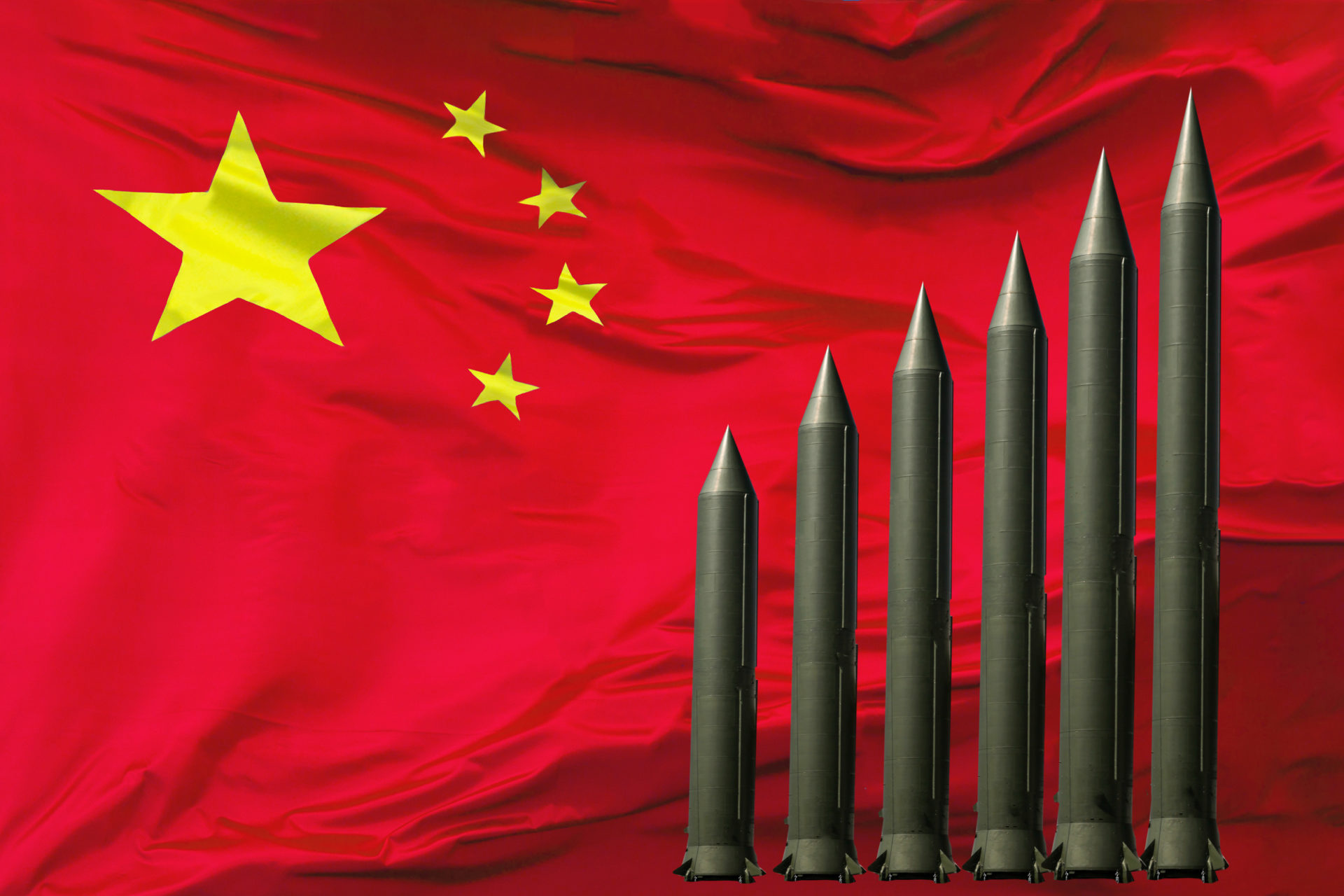
In May 2025, a Pakistani JF-17 Thunder fighter jet, the result of a Sino-Pakistani partnership, shoots down an Indian Rafale during an aerial incident above the Line of Control in Kashmir. This widely publicised event illustrates the growing capabilities of the Chinese defence industry, which is now competitive in strategic markets. Over the past decade, China has established itself among the world's leading exporters of military equipment, gradually altering the balance of defence trade and redefining geopolitical dynamics. Its approach combines pragmatic diplomacy with contractual flexibility, challenging the historical positions of the United States, Russia and European countries.
A quiet yet sustained industrial ramp-up
Structural reforms and accelerated innovation
Since the 1990s, China has undertaken massive investment in the modernisation of its military-industrial sector. The 14th Five-Year Plan (2021) formalised the objective of «civil-military integration», aiming to link civilian and military innovation to strengthen its industrial competitiveness. Like previous Western models, this strategy aims to build an exportable technological base.
Among its priorities, Beijing is integrating emerging technologies: drones, hypersonic missiles and weapon systems incorporating artificial intelligence. In the long term, the 2050 horizon, the centenary of the founding of the People's Republic, marks a symbolic objective: to elevate the People's Liberation Army to the level of the most advanced military forces. This ambition, inscribed in the «Chinese dream», seeks to align military power and global influence with the country's economic trajectory.
From technological catch-up to strategic autonomy
The Chinese defence industry has evolved from a historical dependence on Russian technologies towards growing autonomy, illustrated by flagship programmes such as the J-20 fighter. This transition relies on a synergy between the civil and military sectors: groups such as AVIC (Aerospace Industry Corporation of China), initially specialised in civil aeronautics, now actively participate in strategic research, optimising costs and lead times.
At the same time, Beijing is using the infrastructure of the New Silk Roads to test and deploy its equipment, notably via logistical facilities in Pakistan and Myanmar. These initiatives are strengthening its presence in critical geographical areas, while supporting the operational logistics of its forces.
Export strategy: bypass the West, conquer the South
Sales mapping: alliances and dependencies
China is establishing itself today as a key player in the global arms market thanks to a pragmatic and targeted strategy, which enables it to bypass the restrictions often imposed by Western powers. In South Asia, its partnership with Pakistan is a prime example: in 2025, nearly 68 % of Chinese arms exports are destined for Islamabad, where technological and military cooperation is reflected in particular by the joint development of the JF-17 Thunder light fighter. This partnership creates a strategic dependency, strengthening Beijing's influence in a region marked by Indo-Pakistani rivalries.
Beyond this area, China is expanding its sales to countries wishing to diversify their sources of military equipment and strengthen their strategic autonomy. It is thus offering CH-4 drones to Saudi Arabia, supporting the modernisation of the Algerian navy with frigates, and supplying Serbia with HQ-22 anti-aircraft systems. These types of cooperation respond to the specific needs of its partners, adapting to their defence priorities and taking into account the geopolitical constraints specific to each region.
Furthermore, China integrates its arms exports into a global strategy, drawing on the infrastructure developed as part of the Belt and Road Initiative (BRI). This model closely combines economic and military cooperation, as shown by the example of Angola, which was able to acquire armoured vehicles thanks to Chinese loans. This approach allows Beijing to strengthen its presence in strategic regions where traditional powers are seeing their influence wane, thereby consolidating its geopolitical role on a global scale.
Competitive advantages: the «no questions asked» doctrine»
China's success in the international arms market is built on a clear doctrine, based on three complementary levers: competitive prices, the absence of political conditionalities, and flexible financing. Economically, China offers military equipment at costs significantly lower than those of Western suppliers.
For example, a Wing Loong II drone is sold for around one million dollars, compared with nearly ten million for an American Reaper drone, making these technologies accessible to many countries with limited budgets. This aggressive pricing policy allows China to capture emerging markets that are often excluded from traditional channels.
Politically, Beijing adopts a «no questions asked» stance, avoiding any pressure related to human rights, institutional reforms or international sanctions. This approach is particularly appealing to isolated or embargoed regimes and reinforces China's reputation as a reliable and pragmatic partner in a rapidly changing global order.
Finally, China is securing its contracts through flexible and conditional financing mechanisms. The case of Sri Lanka is emblematic: the accumulation of debt linked to military acquisitions is increasing Colombo's economic and political dependence on Beijing, guaranteeing China privileged access to strategic port infrastructure in the Indian Ocean. This model, which combines trade, finance and geopolitical influence, is redefining the rules of the diplomatic game in the Global South, offering China a powerful lever to expand its presence and influence on a global scale.
Geopolitical impacts: strategic evolutions and realignments
Complexities for non-proliferation regimes
The expansion of Chinese exports raises challenges for international arms control mechanisms, due to the increasing diffusion of military technologies in complex geopolitical contexts. For example, certain models of drones used in recent conflicts, such as the Shahed, exhibit technical similarities with Chinese technologies, illustrating the proliferation risks associated with the cross-border movement of strategic equipment. In areas of tension such as Libya or Yemen, the availability of affordable armaments can influence local dynamics, necessitating an adaptation of multilateral approaches to preserve regional stability.
Strengthening regional co-operation
China is forging partnerships in line with the strategic needs of its allies, contributing to a diversification of alliances in the defence sector. In the Middle East, it is supplying the Royal Saudi Air Force with advanced tactical drones, thereby meeting its desire to modernise its operational capabilities.
In Europe, its cooperation with Serbia is intensifying, notably through the delivery of air defence systems such as the HQ-22, tailored to the specific requirements of regional security. These initiatives are part of a reshaped geopolitical landscape where states, keen to strengthen their strategic autonomy, are seeking pragmatic and flexible partners.
Rebalancing of global strategic dynamics
China's emergence on the international arms market marks a turning point in 21st-century geopolitics. By 2025, Beijing accounts for approximately 12 % of global exports, compared to 5 % in 2015, consolidating an upward trajectory that is redefining traditional power balances. This rise not only challenges the historical dominance of the United States, Russia and European nations, but also questions the normative models that regulate the military trade. The ethical and political criteria long defended by Western powers — linked to human rights, regional stability or multilateral sanctions — are perceived by many countries in the Global South as instruments of selective diplomacy, contrasting with China's pragmatic approach.
Faced with this evolution, Western nations are oscillating between strategic adaptation and the assertion of their values. The European Union, via the «European Defence Fund», is seeking to strengthen the technological and industrial autonomy of its members, whilst informal coalitions (United States, Australia, Japan, India) are attempting to counter Chinese influence in the Indo-Pacific through security partnerships and targeted technology transfers. This dual movement reveals a fundamental tension: how to reconcile the need for competitiveness with the defence of normative principles in a multipolar world?
At the same time, a narrative battle is pitting the two blocs against each other. Western campaigns are warning against the risks of economic dependency linked to Chinese investments, whilst Beijing is promoting an image of a disinterested partner, positioning itself as a neutral mediator in regional conflicts. This rhetoric, combined with attractive economic offers, is appealing to states seeking to diversify their alliances without tipping over into an opposing camp. The 21st century thus promises to be a century of permanent restructuring, where power is no longer measured solely in terms of weaponry or military alliances, but in the ability to articulate technological innovation, diplomatic flexibility and international legitimacy.
Systemic risks and strategic adjustments
Despite its impressive growth, China's arms industry remains vulnerable, notably due to its reliance on sensitive electronic components imported from Europe and Taiwan, which limits its strategic autonomy.
Furthermore, the economic fragility of certain partners, such as Venezuela, can compromise the stability of export contracts and China's perceived reliability as a supplier.
Faced with this rise in power, Western powers are reacting with a combination of adaptation and rivalry. Informal coalitions bringing together the United States, Australia, Japan and India are seeking to offer technological alternatives in the Indo-Pacific, while the European Union is relying on the European Defence Fund to boost innovation and the competitiveness of its exports. At the same time, awareness campaigns regarding the risks of economic dependency bear witness to the intensification of informational warfare in this global competition.
The Chinese arms industry: a tool of power
China’s emergence on the global arms market is not just an industrial success: it marks a profound shift in the balance of power. Beijing is using its defence sector as a strategic lever, not only to strengthen its military, but above all to reshape a changing international system, where the bipolar world is giving way to a multipolar order currently being restructured.
This rise to power is part of a comprehensive strategy combining arms sales, economic alliances, infrastructure projects (such as the New Silk Roads) and active diplomacy promoting an alternative to Western models. China is reinventing the concept of power: less focused on traditional domination than on cooperation, technological innovation and strategic adaptation. A model tailored for the 21st century, where flexibility prevails over the rigidity of old hierarchies.
Facing this shift, Western powers face a major challenge: preserving their influence by modernising their industries while defending values such as transparency and international cooperation. Without clear coordination, they risk losing ground to a China determined to impose a new status quo.
By 2049, the centenary of the People's Republic, Beijing aims to elevate its military to the level of the greatest powers. This ambition heralds a strategic upheaval, where the ability to project its force, control key technologies and attract allies will define the map of global power.

 French
  English
  Chinese
  Arabic