
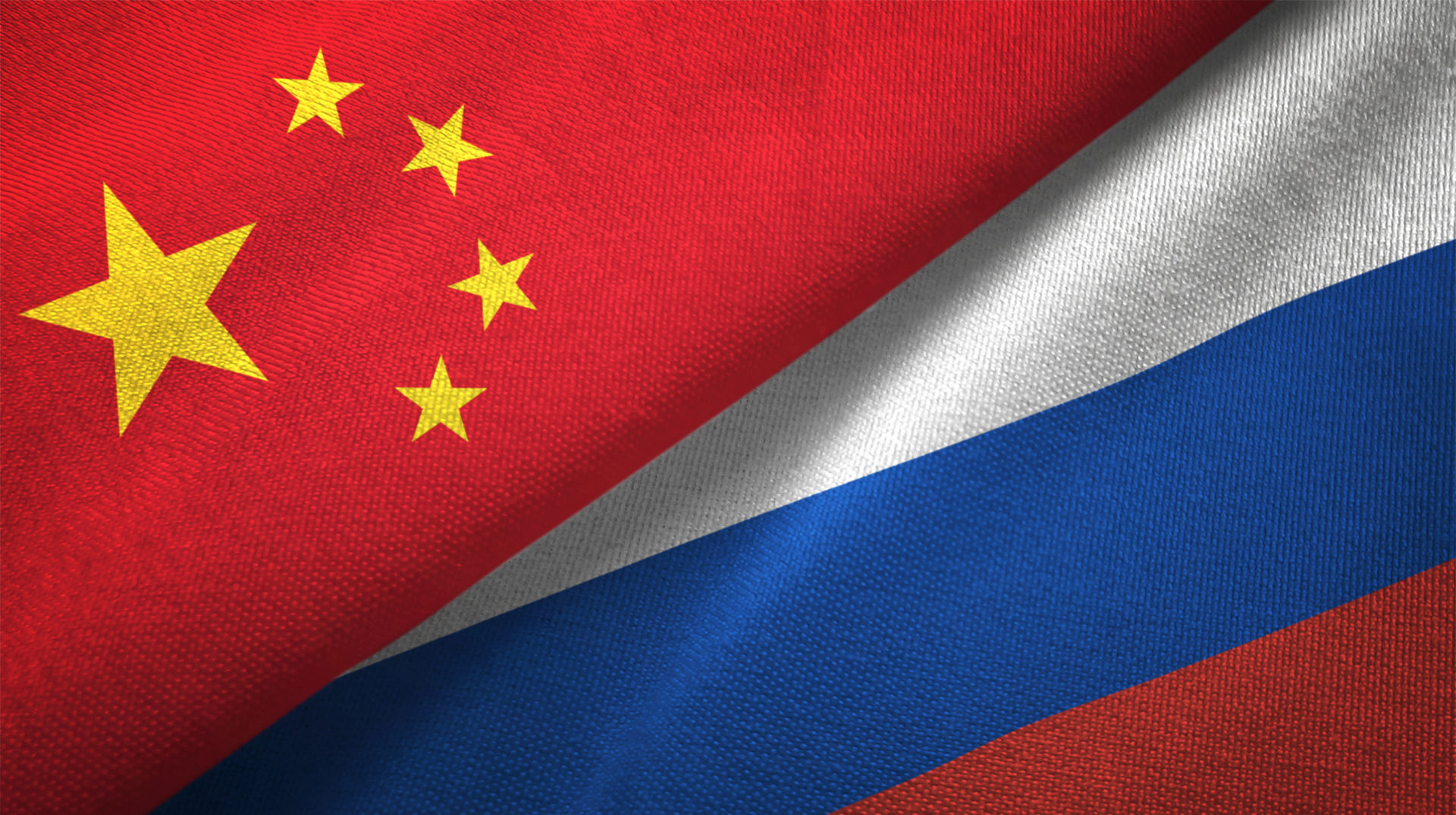
What role does the Russian-Chinese alliance play today in the reshaping of the international order? Should it be seen simply as a reaction to Western hegemony or as the sign of a profound geopolitical transition? What are the solid foundations of this strategic relationship, and how far can it go without buckling under the weight of potential divergences? At the dawn of an emerging multipolar world, Russia and China are together redefining their relations with Washington, with what objectives, what ambitions, and what limits?
A symbolic moment in a changing world
8 May 2025 marks a double commemoration. While the world celebrates the 80th anniversary of the victory over Nazism, Chinese President Xi Jinping is arriving in Moscow for a state visit that goes beyond the historical framework. The military parade on 9 May, attended by some twenty heads of state, embodies a determination asserted by Moscow and Beijing to strengthen their strategic alignment in an international context marked by growing tensions.
The speeches delivered during the ceremonies confirmed this shared direction. Vladimir Putin evoked the courage of Russian soldiers engaged in Ukraine, linking them to the fight against a supposed ideological resurgence of Nazism. For his part, Xi Jinping expressed clear support for Moscow, while highlighting the challenges posed by an international environment where certain actors are attempting, according to him, to impose a Hegemonic logic.
Behind this meeting lies a complex reality: Russia is facing increased economic sanctions from the West, whilst China is confronting a growing strategic rivalry with the United States. Although their interests are not perfectly aligned, they converge sufficiently to justify a partnership based on complementary needs — securing energy flows for China, and access to markets and technologies for Russia.
Thus, beneath the cold Moscow sky and in the shadow of a revised history, this bilateral summit is part of a joint endeavour: that of exerting influence together on a rapidly changing world, where American hegemony is increasingly being challenged.
The consolidation of a Sino-Russian strategic partnership
History and evolution of the political, economic, military and technological partnership
The partnership between China and Russia stems from a history of back-and-forth between cooperation and mistrust. Following a treaty of friendship in 1950, relations quickly became strained, marked by political and border disagreements that culminated in the 1960s. This conflict weighed heavily on their relationship for a long time, before a gradual return to dialogue began.
A major turning point occurred in 2001 with the signing of the Treaty of Good-Neighbourliness and Friendly Cooperation, reaffirming the principles of mutual respect and non-interference. Renewed in 2021, this text embodies a shared desire to move beyond past disputes. In 2005, a definitive agreement on the disputed border areas sealed this commitment to lasting trust.
The institutionalisation of their cooperation reached a new level with the creation of the Shanghai Cooperation Organisation (SCO) in 2003, a key platform in Central Asia for coordinating regional security and encouraging strategic dialogue.
Economically, their relationship is based on natural complementarities: Russia supplies China with energy and raw materials, whilst Beijing exports manufactured goods, technologies and modern infrastructure to Moscow. This dynamic intensified after 2014, when Western sanctions pushed Russia to refocus its alliances towards the East.
Finally, the military dimension of this cooperation has seen a notable escalation. Joint exercises such as Vostok-2018 illustrate their growing coordination. Russian arms sales to China, which began in the 1990s, have contributed to the modernisation of the Chinese military. Today, their collaboration extends to sensitive areas such as artificial intelligence, cybersecurity and advanced defence systems.
Thus, this once hesitant partnership has transformed into a solid alliance, anchored in a revisited history, convergent interests and a shared vision of a more balanced world order.
Shared objectives: construction of a multipolar world and challenge to American hegemony
The partnership between Russia and China is based on a shared vision: to promote a more balanced global system in which power is shared among several influential poles, thereby limiting the unilateral initiatives of dominant major powers.
This convergence translates into increased coordination on the international stage. Together, they reject Western-imposed economic sanctions, which they consider detrimental to global stability. They also display a convergence on the need to preserve their political autonomy by rejecting outside pressures linked to human rights or democracy issues.
To give substance to this ambition, Russia and China are relying on multilateral formats such as the BRICS and the Shanghai Cooperation Organisation (SCO), offering alternatives to institutions traditionally dominated by the West.
The symbolic dimension of their rapprochement is no less significant. The joint celebration of the 80th anniversary of the victory over Nazism provides an evocative setting, rooted in a shared memory. These commemorations serve to legitimise their current alliance and to mobilise a sense of belonging around collective values.
Thus, far from being a circumstantial alliance, it is part of a profound movement blending revised history, economic pragmatism, growing military cooperation and a convergent vision of a fairer, more diversified world less dominated by a single power.
Deepening of the forms of opposition to the West
Multilateral instruments: construction of alternatives to Western-dominated institutions
Faced with an international order perceived as unbalanced, Russia and China are developing multilateral initiatives aimed at offering credible alternatives to twentieth-century structures, often considered to be too closely aligned with Western interests.
BRICS countries are at the forefront of this approach. The New Development Bank (NDB), established in 2014, embodies this effort by financing infrastructure projects in emerging countries without imposing the traditional conditions associated with the IMF or the World Bank.
Furthermore, the Shanghai Cooperation Organisation (SCO), founded in 2001, plays an increasing role in consolidating regional security and promoting sustainable economic cooperation.
These initiatives reflect a shared strategy: strengthening the capacity of states to act according to their own priorities, while contributing to a gradual reshaping of global power dynamics.
Cultural and economic diplomacy: promoting an alternative narrative
Beyond the institutional level, Moscow and Beijing are deploying an active economic and cultural diplomacy. One of the most visible expressions is the Belt and Road Initiative (BRI), a Chinese project aimed at connecting Asia to Europe and Africa through a network of modern infrastructure. Russia sees this as an opportunity to strengthen continental interconnection.
Culturally, the two countries are increasing academic, media and artistic exchanges. Public media outlets collaborate closely to produce content promoting their political and economic models, while questioning the logic of unilateralism and interference.
Rejection of sanctions and denunciation of unilateralism
In the political sphere, Sino-Russian convergence is demonstrated by a clear opposition to certain practices deemed coercive. Together, they reject the economic sanctions imposed on Russia since 2014, viewing them as an infringement upon national sovereignty.
China is pursuing growing economic ties with Moscow, particularly in the energy sector. Both countries also strongly denounce the expansion of NATO and the pressure exerted on their tech companies, which they perceive as forms of pressure driven by a hegemonic logic.
Thus, the Russian-Chinese opposition to the dominant international order is not limited to mere rhetoric. It is translated into a coherent combination of multilateral initiatives, soft diplomacy and pragmatic resistance.
Impacts of the Russian-Chinese partnership on US policies
The strengthening of the military partnership between Russia and China was illustrated by large-scale exercises, such as «Northern/Interaction-2024», mobilising more than 90,000 troops.
These operations aim to respond to the rise in the American military presence on the Russian and Chinese borders. Beyond the bilateral, their cooperation extends to tripartite formats including Iran, materialising a tactical rapprochement in the face of Western influence.
Operationally, China is adopting a low-key but sustained posture in the Ukrainian conflict. At the same time, it is coordinating shows of force with Moscow around Taiwan, sending Washington a clear signal as to its strategic determination.
This dynamic is helping to accelerate the transition towards a multipolar international order, where Russian and Chinese soft power is gaining ground, particularly among countries in the Global South.
In response, the United States is adapting its posture: it is intensifying its presence in the Asia-Pacific region, actively supporting Taiwan, developing regional coalitions (Quad, AUKUS) and increasing targeted sanctions designed to undermine the strength of the Sino-Russian tandem.
Specific challenges in the military technology sector
One of the most strategic areas of Russian-Chinese cooperation is in the technological field. Their closer alignment in the design and development of advanced weaponry reflects a resolute desire to reduce their dependence on the technological leadership traditionally held by the United States, while gradually building an alternative military-industrial pole.
The rapid modernisation of their nuclear arsenals is redrawing the global strategic balance. A three-way arms race — Washington, Moscow, Beijing — appears to be gradually taking hold, increasing the risks of escalation.
US planners must therefore revise their classical doctrines. Crisis management is becoming more complex, requiring increased anticipation in the face of possible Russian-Chinese coordination across multiple simultaneous theatres.
Regional and global geopolitical consequences
Impact on regional conflicts
The Russian-Chinese partnership is exerting a growing influence in several sensitive areas. In Ukraine, China is adopting a nuanced position, seeking to preserve its political interests without provoking a direct confrontation with the West.
In South Asia, Russia and China play distinct but complementary roles, respectively supporting India and Pakistan, while working to stabilise the region via the SCO.
In the Middle East, their presence is gradually growing, marking a diversification of international actors. Their involvement is contributing to a subtle rebalancing of regional relations, despite the complexity of local conflicts.
Thus, this Russian-Chinese tandem embodies a blend of strategic and stabilising roles, at the heart of a rapidly changing multipolar world order.
Conclusion: A future full of twists and turns
The alliance between Russia and China is shaping up as the backbone of the emerging multipolar world. Driven by common interests, a shared distrust of the West and a desire to redraw the rules of the international game, it embodies a new geopolitical reality.
Yet, this alliance is not without cracks. In Central Asia, the ambitions of the two giants can come into conflict. And the war in Ukraine has increased Moscow's dependence on Beijing, subtly altering the balance of power.
Beyond this, powers such as the European Union, India and Brazil are proceeding with caution, seeking not to throw themselves entirely into one camp or the other, while keeping their freedom of manoeuvre.
While rivalry with the United States is intensifying on several fronts, limited areas for cooperation remain on universal issues such as climate change or global health. Thus, tomorrow's world order will be shaped as much by competition as by dialogue.
Ultimately, the Russian-Chinese agreement reveals a broader truth: that of a world undergoing profound change, where the old landmarks are disappearing, replaced by fragile, shifting, and sometimes unpredictable balances. For this new world is not being built in calm, but through quiet confrontations, amidst rival ambitions and difficult choices.

 French
  English
  Chinese
  Arabic