
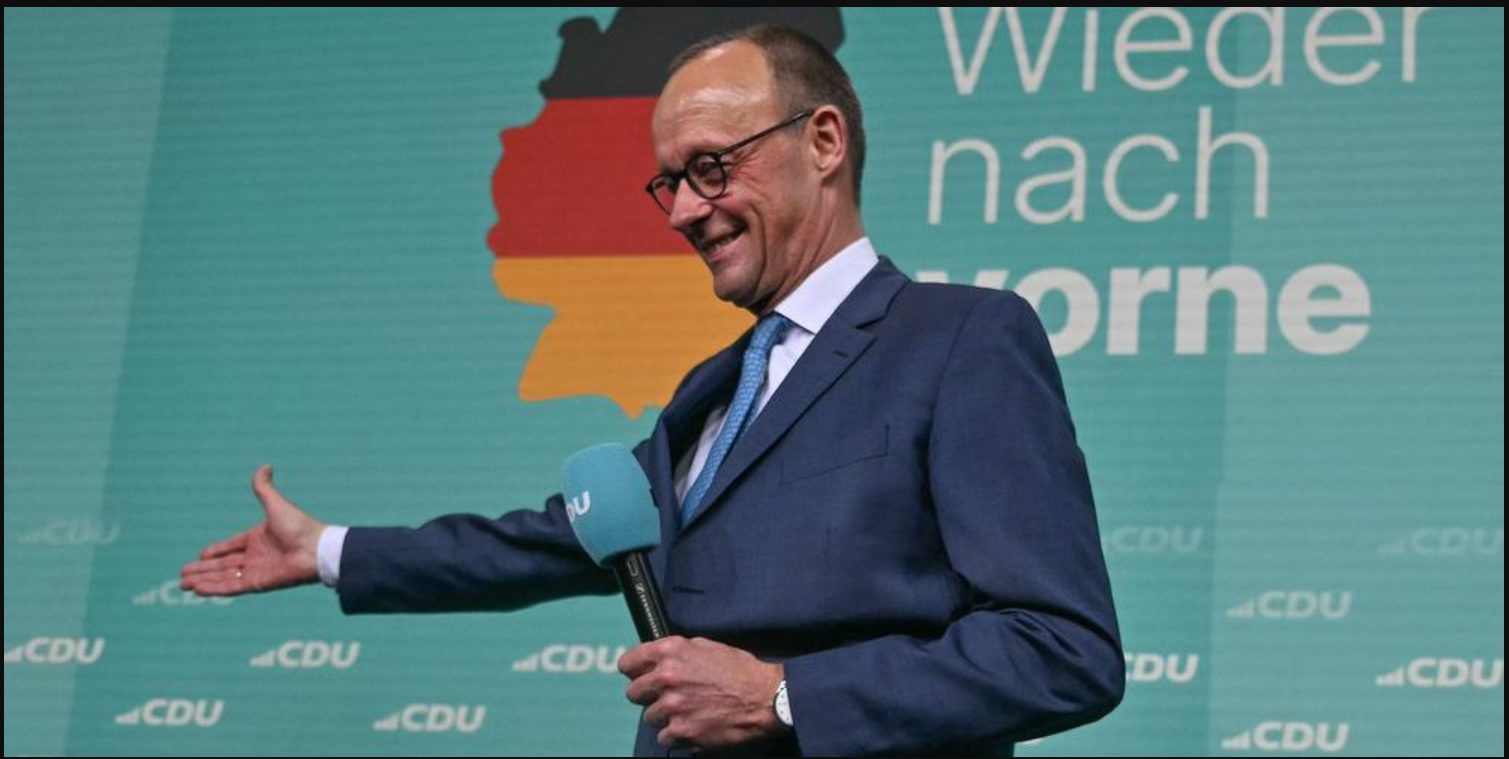
A major political turning point in Germany
The early legislative elections of February 2025 profoundly reshaped the German political landscape and influenced the European balance of power. The victory of the Christian Democratic Union (CDU/CSU) under Friedrich Merz (28.5 %) and the historic breakthrough of the far-right populist formation AfD (20.8 %, up from 10.3% in 2021), now the first opposition force, illustrate a reconfiguration of alliances.
Merz’s arrival at the chancellery marks a clear break with the Merkel era and its centrist approach. He campaigned on three major axes: strengthening European sovereignty, reviving the industrial sector, and toughening migration policies. However, the coalition with the SPD Social Democrats, weakened by its worst score since 1949 (16.4 %%), looks difficult due to disagreements over energy transition, the labor market, and defense policy.
Beyond the national framework, this upheaval occurs in an unstable international context – war in Ukraine, economic crisis and transatlantic tensions – placing Germany at the heart of European strategic reconfigurations.
A CDU focused on conservatism
A break with the Merkel era
Merz’s accession to power marks an ideological shift for the CDU, which moves away from Merkel’s moderate pragmatism. Its more conservative stance, particularly on immigration and energy, has created internal divisions, with some cadres remaining attached to the legacy of the former chancellor.
Three priorities structured his campaign:
- Asserting European sovereignty, notably against the United States, in response to Trump’s statements about NATO.
- Restarting the industry thanks to a pragmatic energy policy, including the maintenance of coal-fired power plants.
- Strengthening border control and reforming asylum, In response to concerns of part of the electorate.
This strategy enabled him to win over the conservative electorate, while limiting the growth of the AfD. However, this ideological shift risks weakening the internal cohesion of the CDU.
A fragile coalition with the SPD
The victory of the CDU/CSU leads to the formation of a new grand coalition with the SPD, which recalls past alliances but is particularly fragile. Despite a parliamentary majority, deep divisions between the two parties risk hindering government action.
Four main points of friction emerge:
- Reform of the labor market The SPD opposes the liberal reforms of the CDU.
- European defence The divergence between the Atlanticist alignment of the CDU and the multilateral approach of the SPD.
- Energy transition Disagreement over the extension of coal-fired power plants, in contradiction with the EU’s climate goals.
- Rise of the AfD The CDU is tempted to take up some of the AfD’s immigration policies, which is causing criticism within the SPD.
Weakened and losing momentum, the SPD could be marginalized in the face of a CDU determined to impose its economic agenda. The CDU-SPD differences over labor market reform (25% program points difference according to the «Institut der deutschen Wirtschaft (German Economic Institute),” undermine the government’s cohesion, as Germany faces significant national and European challenges.
The historic breakthrough of the AfD
An electoral rise in power
With 20.7 % of the votes, With this result, the AfD has achieved an unprecedented result for a far-right party in Germany.
By focusing its campaign on immigration, energy and euroscepticism, He managed to broaden his electoral base well beyond its traditional core. His leader, Alice Weidel, who benefited from the support of Donald Trump’s entourage, capitalized on Inflation and the industrial crisis, especially in the Eastern Länder, where the party exceeds % 30 votes. By positioning itself as the spokesperson for «forgotten» by globalization and the energy transition, The AfD is strengthening its presence in the rural and working-class areas, It is appealing to an electorate seeking alternatives to traditional parties.
An institutional and societal challenge
From now on First opposition group in the Bundestag, The AfD is gaining in influence despite the maintenance of a health cordon by the other parties. However, its rise to power raises serious concerns: it remains under surveillance by internal intelligence due to his alleged links with extremist movements.
On the societal level, this progression accentuates the divisions around immigration and national identity, This further polarizes the public debate. The strong presence of the AfD in Parliament also risks influence certain government decisions, raising the question of the balance between Taking into account the popular vote and maintaining constitutional control mechanisms in the face of the 47 legislative proposals from the AfD that are deemed incompatible with Article 21 of the Basic Law, which defines the legal framework for political parties in Germany.
The European and international stakes
A new balance in Europe
The 2025 elections strengthened Germany’s position in the EU, while accentuating internal tensions. Friedrich Merz advocates strengthened European sovereignty, rebalancing power between Brussels and the national capitals. This approach, dubbed «variable geometry federalism,» risks exacerbating divisions, particularly over industry and defense.
In a context of war in Ukraine and transatlantic uncertainties, Berlin must juggle support for Kiev, economic imperatives, and strategic repositioning in the face of Donald Trump’s statements on NATO.
The shadow of Euroscepticism
The rise of the AfD, now the main opposition party, undermines European integration. The MPs from the far-right populist party systematically block European deepening projects.
In the European Parliament, the AfD risks aligning with populist forces such as the Rassemblement National or the League, complicating decisions on major issues such as lThe Migration Pact and the ecological transition. The EU must therefore find a balance between community cohesion and the rise of nationalisms.
Economic and energy tensions
Berlin is pursuing an industrial revival that conflicts with European standards. Merz advocates environmental deregulation and increased support for heavy industry, causing tensions between:
- The supporters of protectionism (France, Italy), in favor of supporting strategic industries.
- The advocates of free trade (The Netherlands, Scandinavian countries), opposed to questioning the rules of the single market.
Against legal winds and tides, Berlin is sticking with coal until 2038, defying the twelve appeals filed by environmental advocates. This decision, taken despite massive investments in green hydrogen, illustrates the German dilemma: ensuring energy security without giving up on its climate ambitions. A delicate balance that tests the country’s leadership on the European stage.
Foreign policy: between Atlanticism and strategic repositioning
An assumed trans-Atlantic realignment
Friedrich Merz's foreign policy marks a clear rapprochement with the United States, Breaking with the caution of Olaf Scholz, he believes that Germany’s economic and military security rests on a strengthened partnership with Washington. He advocates a revitalized NATO and largely aligns with American positions, despite the unpredictability of the Trump administration.
This realignment translates into increased support for Ukraine, notably with the delivery of the Taurus missiles, a controversial decision in Germany. In Europe, Emmanuel Macron denounces a «subordination to American interests” », claiming that this weakens the continent’s strategic autonomy. Germany thus finds itself divided between son the Atlantic engagement and its leading role within the EU.
However, Washington adopts an ambivalent stance: while encouraging an increase in European military spending, Trump reiterates his skepticism about NATO, weakening the European security framework. Berlin must therefore find a balance between closeness to the United States and European strategic autonomy.
Between firmness towards Moscow and pragmatism with Beijing
Under Merz, Germany adopts a double approach towards Russia and China. It is tightening its sanctions against Moscow and intensifies military aid to Ukraine, while seeking to preserve its economic links with Beijing, its main commercial partner.
This stance is strongly criticized by the countries of Central and Eastern Europe, who accuse Berlin of neglecting their security concerns vis-à-vis Russia. Moreover, its refusal to break certain industrial collaborations with China, notably in the automotive sector, is causing tensions, particularly with Washington, which advocates a strategic decoupling.
In this context, Germany tries to navigate between economic interests and strategic commitments:
- Facing Russia, It displays a firm line while avoiding an uncontrolled escalation.
- With China, It favors an economic dialogue without alienating the United States.
This pragmatic approach, while economically defensible, raises the question of the overall coherence of German foreign policy, which oscillates between European solidarity and commercial imperatives.
The future of Franco-German leadership in Europe
A partnership weakened
Longtime drivers of the EU, the Franco-German couple is going through a period of growing tensions, exacerbated by divergent visions:
- Defence : France advocates a European strategic autonomy, while Germany favors a Atlantic alignment.
- Energy Paris criticizes the German dependence on American gas and coal, considered incompatible with European climate goals.
- Economy : Germany defends a liberal and competitive politics, While France advocates for European protectionism and the mutualization of public debts.
These disagreements weaken their ability to drive reforms within the EU, risking to weaken the bloc’s unity in the face of geopolitical challenges.
A redefined European leadership
Facing tensions with Paris, Merz is looking to diversify its alliances, relying on a «expanded board» with the Poland, Italy and the Netherlands to strengthen German influence.
- Poland Key partner in defense matters, notably through a joint missile defense project.
- Italy and the Netherlands Strategic economic allies, supportive of a liberal industrial policy and the easing of regulatory constraints.
This approach aims to speed up decision-making within the EU, but it also risks isolating France and intensifying divisions in Europe. The Union will have to choose between an expanded German leadership or a strengthening of the Franco-German partnership despite their disputes.
Reconstructions of the German political landscape
Increased bipolarization
The 2025 elections have intensified the political polarization in Germany, marked by the collapse of small parties and the rise of large formations. The Liberals of the FDP, a historical pillar of German politics, as well as the Social Protection Movement (BSW), a new political force that did not exist during previous elections, have failed to break the 5-percent threshold % necessary to enter the Bundestag. This double disappearance has reduced the number of parties represented from seven to four, reflecting a radical simplification of the political landscape and a concentration of power in the hands of the large formations, to the detriment of more moderate or alternative voices.
A left seeking renewal
The SPD suffers its worst historical score (16,4 %), while the Greens (11.6 %) struggling to embody an alternative in the face of the rise of conservatism and populism. The left must to reposition facing a popular electorate attracted to the AfD and the conservative turn of the CDU. Divided between a social wing and an environmentalist wing, She struggles to define a clear line.
To regain political weight, SPD and Greens will have to propose a coherent project, conciliating social justice and security concerns, without succumbing to the temptation of populism.
The economic and social challenges
An industrial revival under pressure
At the heart of the program Friedrich Merz, Industrial revival aims to strengthen Germany’s competitiveness, But it clashes with the EU’s climate commitments. Faced with the energy crisis, Berlin is demanding a moratorium on certain environmental standards and a fiscal relaxation to support the heavy industry, in particularautomotive and steel industry. This approach is worrying Brussels, who fears a weakening of the Green Deal, which aims for carbon neutrality by 2050, and sparks tensions with the Unions, who denounce a lack of support for workers in transition. Germany will thus have to finding a balance between competitiveness, ecological transition and social protection.
A migration crisis at the heart of the debate
The Migration policyhas become a central issue for the government Merz, who wants Tightening asylum and strengthening border controls, In response to a part of the electorate, especially in the bastions of the’AfD. This closed line divides. The Left and NGOs they denounce a shift towards a policy Security: tripling the border budgets (4.2 billion € in 2026) at the expense of integration programs (- 18 % in funding).
L’AfD, She, on the other hand, advocates for even more radical measures, such as Total closure of borders and mass expulsions, forcing the CDU to finding a balance between firmness and respect for international commitments. This migration crisis will be decisive for lGerman social cohesion and European unity.
Key points to remember
The elections in February 2025 marked a turning point for Germany, revealing a deeply polarized country. The victory of the CDU/CSU converts to conservatism, while The breakthrough of the AfD It fuels a populist and Eurosceptic dynamic that is shaking the German democratic model.
Inside, Merz's mandate It promises to be a test for institutional stability, taken between the tensions of the coalition and the pressure of a growing populist opposition. Economy, ecology and social cohesion They will be at the heart of the balances to be found in a context where the CDU must avoid any slide towards the nationalist overreach of the AfD.
On a European scale, Berlin’s Atlantic alignment and the rise of nationalisms It further fragments the EU. Franco-German relations, In a state of crisis, this gives way to new power relations that could redefine the governance of the continent.
Germany oscillates between two contradictory roles : a pillar of European integration or a factor of fragmentation, If national interests come before community solidarity, the coming months will be decisive: Will Merz be able to reconcile German sovereignty and European leadership without compromising democratic values? This choice will not only determine the future of Germany, but also that of Europe.

 French
  English
  Chinese
  Arabic