
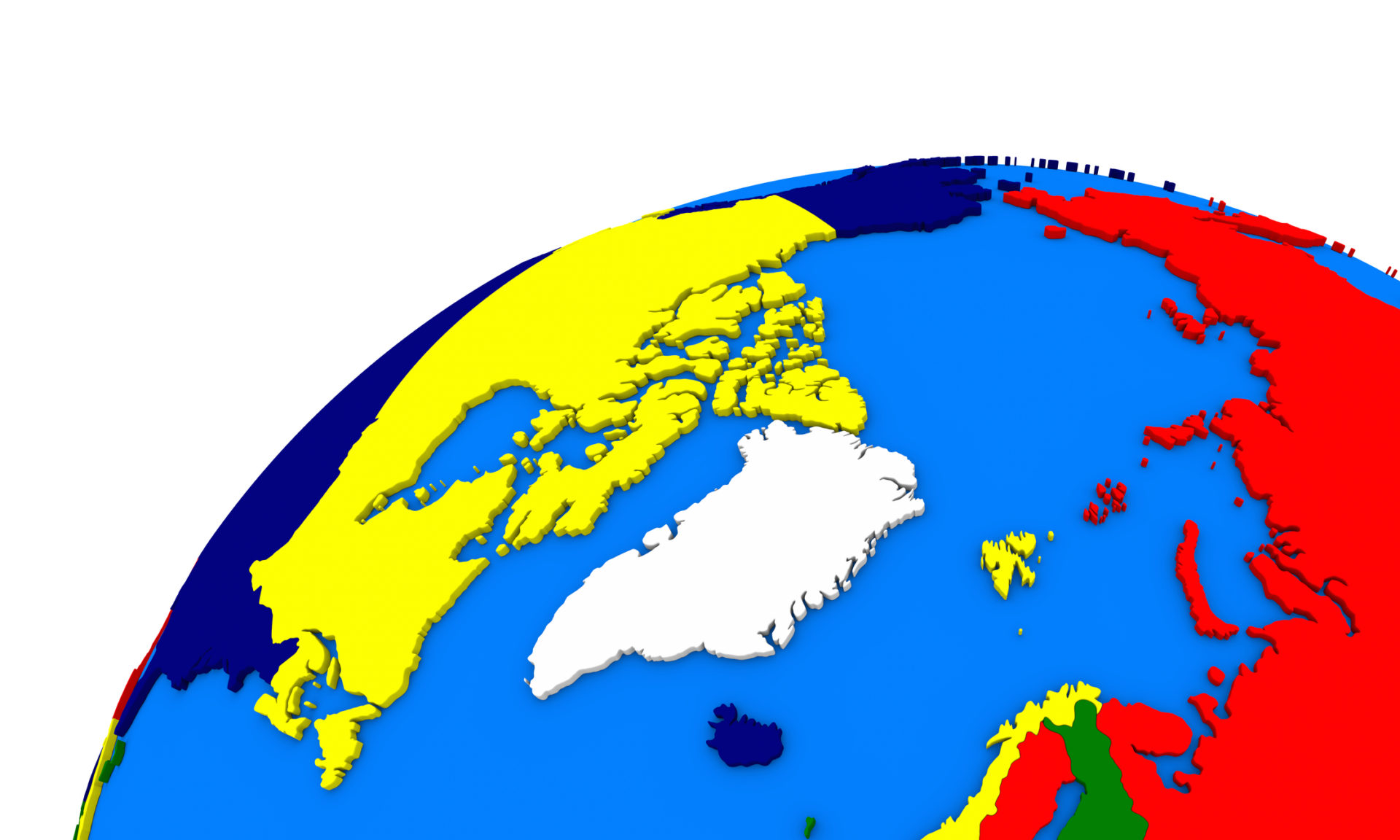
Donald Trump hammered it home: he wants to buy Greenland, «one way or another». Behind this seemingly whimsical ambition, which was categorically rejected by Copenhagen and Nuuk, lies a much broader reality: the Arctic has become the new chessboard for global powers. Long perceived as a frozen and distant land, this region is today the theatre of fierce competition, where the mastery of resources, control of sea routes and the redrawing of the balance of power are at stake.
Global warming is opening up strategic routes and revealing unsuspected riches, stoking greed. Washington sees Greenland as a major geopolitical asset, whilst Moscow is reinforcing its military presence and Beijing is making its moves through investments and scientific expeditions. Faced with these ambitions, Canada, Norway and Denmark are trying to defend their sovereignty and contain the escalation.
The Arctic is no longer an ice desert. It is a battlefield where the major balances of the 21st century are being played out – and Greenland is the centrepiece.
The Arctic: A Space for Military Power Projection
Russia's Arctic Strategy: Power and Presence
Russia has made the Arctic a central pillar of its military and geopolitical strategy. Since the 2000s, Moscow has undertaken a spectacular remilitarisation of the region, restoring 14 Soviet air bases and building 6 new ones, including the «Arctic Trefoil» base, located just 600 km from the North Pole. This facility, designed to operate in extreme conditions, symbolises Russian ambition to dominate the Arctic.
Russia has also deployed advanced defence systems, such as S-400 missiles on the Novaya Zemlya archipelago, and strengthened its surveillance using drones and satellites. The Northern Fleet, based on the Kola Peninsula, forms the core of its naval power, with two-thirds of Russian nuclear-powered ballistic missile submarines (SSBNs) stationed in Murmansk and Severomorsk.
This militarisation follows a clear logic: to protect the immense resources of the Arctic, to control the emerging maritime routes opened up by melting ice, and to assert a position of strength in the face of Western powers. For Moscow, the Arctic is no longer a mere peripheral zone, but a lever of influence and a potential field of confrontation, redefining global strategic balances.
The United States: From Indifference to Strategic Engagement
Long on the sidelines, the United States has made a strategic U-turn in response to Russia's growing power and the opening of new shipping routes in the Arctic. Washington is strengthening its alliances with Canada and Denmark to create a western Arctic front, combining aerial surveillance, naval presence and military cooperation. Aware of their technological lag in polar conditions, the United States is modernising its equipment, notably icebreakers and defence systems suited to the extreme climate.
The United States is stepping up its military exercises, affirming its determination to protect its interests and curb any hostile advances. The stakes are high: containing Russia, ensuring freedom of navigation and securing access to resources. Yet, maintaining a military presence in this extreme environment remains a challenge. For Washington, the Arctic is not merely a peripheral zone, but a strategic frontier where the global balance of tomorrow is being shaped.
Canada, Denmark and Norway: Between Sovereignty and Cooperation in the Arctic
In the growing rivalry between Russia and the United States, Canada, Denmark and Norway occupy a key position in preserving regional balance.
- Canada Boasting a vast Arctic coastline, Canada is asserting its sovereignty through a strategy combining military modernisation, diplomacy and cooperation with Indigenous populations. Ottawa is strengthening its Coast Guard and stepping up joint patrols with the United States and its Nordic allies.
- Denmark Thanks to resource-rich Greenland, Denmark plays a key role in Arctic governance. While strengthening its military presence, Copenhagen relies on diplomacy, notably within the Arctic Council, and favours dialogue to settle its territorial disputes, particularly with Canada.
- Norway: Directly bordering Russia, Norway is modernising its armed forces with advanced surveillance systems and equipment suited to extreme conditions. It is consolidating its presence in the Svalbard archipelago and intensifying its cooperation with Nordic countries to contain Russian influence.
These three countries, although less powerful militarily than Russia or the United States, rely on strategic alliances, a continuous presence and active diplomacy to protect their interests and maintain the regional balance. Their role is crucial in an increasingly coveted and militarised Arctic.
Economic Stakes and Control of Arctic Resources
Far from being an icy and isolated expanse, the Arctic has become a key arena for economic and strategic rivalries. With the melting of the ice, its vast reserves of hydrocarbons, strategic minerals and rare earths are whetting appetites. At the same time, the emergence of new shipping routes is redefining trade, intensifying competition between regional powers and global players.
According to the United States Geological Survey (USGS), the Arctic is thought to hold 13 % of the world's remaining unexploited oil and 30 % of undiscovered natural gas reserves. This energy wealth is fuelling ambition, particularly from Russia, which is on the front line of this hydrocarbon race. With projects like Yamal LNG, Moscow is deploying cutting-edge infrastructure to extract these resources under extreme conditions. Meanwhile, Canada and Norway are proceeding with caution, stepping up their explorations while seeking a balance between economic development and the preservation of the Arctic ecosystem, which is particularly vulnerable to industrial activity and global warming.
Yet the Arctic is not limited to its oil and gas reserves. Its subsoil is packed with strategic minerals: iron, copper, nickel and, above all, rare earths, which are essential for advanced technologies and the energy transition. In Nunavut, Canada, the Mary River deposit alone contains 365 million tonnes of iron, enough to supply Europe for twenty years.
For Western powers, these resources are not just an economic asset: they offer an alternative to their growing dependence on China, which dominates the rare earths market.
The rise of Arctic sea routes is also reshuffling the deck for global trade. The Northern Sea Route, hugging the Russian coastline, cuts transit time between Asia and Europe by up to 40 % compared to the Suez Canal.
Moscow, aware of this strategic asset, has invested heavily in its port infrastructure, particularly in Sabetta, while strengthening its control over the region. It relies on a fleet of nuclear-powered icebreakers, modernised military bases and strict regulations, requiring its authorisation for any commercial navigation in its Arctic waters.
Faced with Moscow's growing influence, the United States and its allies are championing freedom of navigation, fearing Russian dominance over this strategic route. This rivalry is part of a broader context of militarisation, territorial tensions and the struggle for resources, making the Arctic a new central arena for geopolitical competition.
In this climate of growing tensions, the Arctic Council is striving to maintain a balance between economic development, environmental preservation and international cooperation. However, in the face of the divergent interests of the major powers, its role is weakening, leaving the future of the region more uncertain than ever.
Arctic Maritime Routes: The Geostrategic Challenge of the Century?
The melting of the ice is redrawing the map of global trade, opening up strategic maritime corridors. The Northern Sea Route (NSR), running along the Russian coast, and the Northwest Passage, traversing the Canadian archipelago, promise to considerably shorten journeys between Europe and Asia. However, these routes remain hazardous: only reinforced vessels escorted by icebreakers can brave the extreme conditions of the Arctic.
Moscow, bolstered by its Arctic coastline, is imposing its control over the Northern Sea Route by multiplying strategic investments, as seen with the port of Sabetta, the key to the Yamal LNG project. Meanwhile, major shipping companies, such as Maersk, are testing these passages to assess their commercial viability. But beyond transport, the issue is above all geopolitical.
As Russia locks down its authority over this vital route, Western powers and China, which views the Arctic as an extension of its New Silk Roads, are seeking to carve a path through it, fuelling a rivalry with global repercussions.
The Arctic is now a field of tension where economic interests and power strategies collide. Between exploitation and regulation, rivalry and cooperation, its future rests on a precarious balance, the outcome of which will shape global stability.
Beijing's Arctic Offensive: A Quiet yet Ambitious Strategy
Although it does not border the Arctic, China is establishing itself there with a strategy blending economic investment, scientific research and diplomacy. Through the Polar Silk Road, integrated into its New Silk Roads, Beijing seeks to take advantage of new maritime routes and regional resources, while consolidating its geopolitical influence.
A Quest for Resources and Influence
The Arctic represents for China a strategic reserve of hydrocarbons and rare earths, which are essential for its industry and its energy transition. Its investments, notably in the Yamal LNG project in Russia and mining exploitation in Greenland, are worrying littoral states, which fear Beijing's growing economic influence in the region.
Science and Diplomacy in the Service of Expansion
Beijing is also strengthening its presence through scientific research, with stations such as Yellow River in Svalbard (an archipelago located in the Arctic Ocean, halfway between Norway continental and the North Pole) and polar expeditions focused on climate change. Its 2018 White Paper devoted it «Near-Arctic state», thereby legitimising its ambitions in regional governance.
By multiplying partnerships, particularly with Iceland and Norway, China is skillfully bypassing its lack of an Arctic coastline to establish its influence.
A Contested yet Essential Player
China's rise in the Arctic is worrying Washington and its allies, who view its investments as a threat to the sovereignty of the littoral states. Despite official rhetoric advocating «peaceful» exploitation, Beijing's intentions remain a source of mistrust.
Now a key player in the region, China will have to navigate growing rivalries and international expectations, proving that its commitment goes beyond mere strategic ambition to become part of a genuine dynamic of cooperation.
Who sets the rules of the game in the Arctic?
Once a symbol of cooperation, the Arctic is now the theatre of growing rivalries. Regional governance, formerly stable, is wavering under the effect of geopolitical tensions, particularly following Russia's exclusion from the Arctic Council in the wake of the invasion of Ukraine. Designed on the principle of consensus, this forum is now struggling to contain divergent ambitions that are redefining the balance of power.
In this changing context, new players are emerging. Quietly but methodically, China is expanding its influence through strategic investments and progressive integration into multilateral initiatives. The European Union, for its part, is relying on its expertise in climate governance to promote more regulated resource exploitation.
However, in the absence of binding rules, the Arctic relies on a tangle of international and bilateral agreements whose effectiveness remains uncertain. While the United Nations Convention on the Law of the Sea (UNCLOS) provides a legal framework, territorial claims continue to fuel tensions.
The 2018 moratorium on fishing in the central Arctic Ocean demonstrates a commitment to preservation, but struggles to limit the resource rush and the opening of new trade routes.
Russia, seeing the Arctic as a strategic lever, is accelerating its investments in the Northeast Passage and strengthening its military presence. In response, the United States and its allies are stepping up their efforts to counter this rise in power, reinforcing their presence and surveillance. Far from any peaceful dynamic, the region is militarising, reviving the tensions of a new Cold War. The future of the Arctic depends on two scenarios: either a multilateral momentum in favour of sustainable cooperation, or an escalation of tensions leading to a strategic standoff with uncertain consequences. In this fragile balance, indigenous peoples and environmental organisations are seeking to steer decisions towards more responsible governance.
Far from being an isolated land, the Arctic is emerging as a laboratory where the future balance of power in the 21st century is being shaped. It remains to be seen whether the actors involved will manage to favour dialogue over confrontation — or whether this region, once a symbol of peace, will become the theatre of new strategic divides.
Melting Glaciers, Rising Tensions
Long seen as an isolated and frozen territory, the Arctic has now become a strategic crossroads where economic ambitions, power rivalries and environmental issues intersect. Melting ice has transformed the region into a competitive arena: Russia is strengthening its control there, China is investing, and the United States are seeking to increase their influence. Donald Trump’s offer to buy Greenland embodies the growing interest in this zone, which is now at the centre of global strategies.
Beyond this struggle for control, the Arctic raises a crucial question: how to exploit its resources while preserving its fragile ecosystem? How to manage tensions between major powers without compromising regional stability?
The future of the Arctic will depend on the ability of nations to combine competition and cooperation, in a world where no country can act alone. The choice between confrontation and shared governance will shape not only the future of this region, but also the global balance of tomorrow.

 French
  English
  Chinese
  Arabic