
Or the heavy burden that has fallen on the French academic community regarding the Israeli-Palestinian conflict.
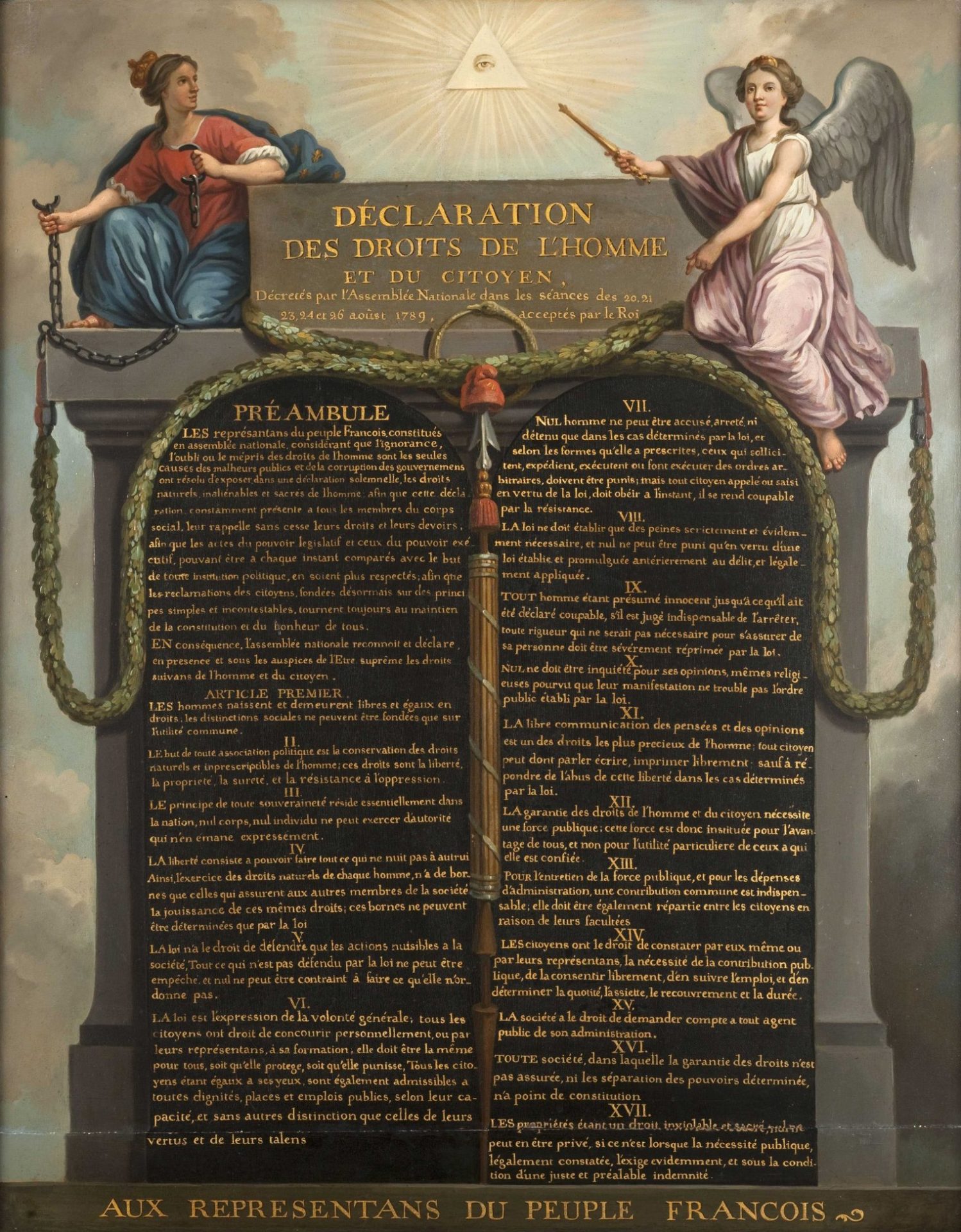
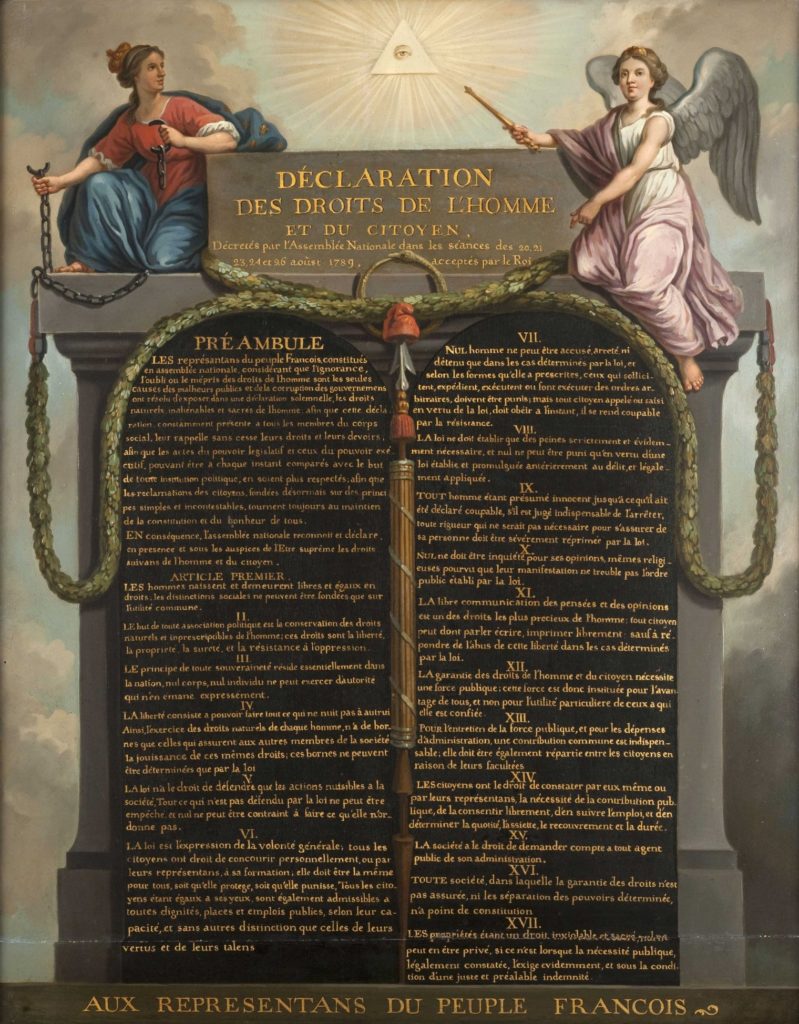
Article 11 of the Declaration of Human and Citizen Rights: «The free communication of thoughts and opinions is one of the most precious rights of man: therefore, every citizen may speak, write, and print freely, except for the abuse of this freedom in the cases determined by law.».
By «Nicomède», Universitaire
The silence—at least at the beginning of the Israeli air and ground intervention (Operation «Sabre of Iron»), by a large part of the media-political class (with a few notable exceptions)—on the massacres and a possible «genocide» committed in Gaza (it will be up to the International Court of Justice to determine whether or not this qualifies as such), and on the violence of the settlers in the West Bank, was accompanied by that imposed this time on the world of education and research. Indeed, by letter, the Minister of Higher Education, Sylvie Retailleau ordered, as early as October 9, 2023, that the presidents of higher education institutions «report and sanction» any «indecent» stance, in the context of, ,«all support for the Palestinian cause»[2]. At the same time, the general ban on any pro-Palestinian demonstration was decreed by the Minister of the Interior, Gérald Darmanin, on the grounds that they would necessarily constitute support for the terrorist movement Hamas (it should be noted that such demonstrations have taken place all over the world, including in the United States and the United Kingdom).
However, the very heavy human toll in Gaza and the persistence of organized colonization in the West Bank have prompted the French government and some media outlets to rebalance their positions and denounce the actions of the Netanyahu government, The researchers and teachers, on the other hand, are still bound by a «duty of reserve,» even though their words are more necessary than ever to shed light on the debates.. Because, in reality, the argument of «Israel’s security and its right to self-defense» has been distorted to allow one side in this conflict to speak more than the other. While the pro-Hamas verbal outbursts were logically sanctioned, it is little to say that the harsh remarks denying the rights of the Palestinians and their human dignity were not.
It is this somewhat biased framework that seems to have, at the outset, governed speech and/or position-taking within the research community; those known for their pro-Israeli sympathies being less hesitant to express their position. Retraction is the rule for the rest of the scientific community; the government pressure exerted on the heads of institutions and scientific trustees, the cases of colleagues being exposed to defection (at least two identified) have established a climate of caution, to say the least. The risk of being pointed out, or facing the accusation of anti-Semitism, a truly paralyzing weapon, has anesthetized any form of debate and reduced the freedom of scientific work, at least in the case of specialties related to the Palestinian issue. A researcher in Paris, who preferred to remain anonymous, attests to a heavy atmosphere within his institution, as evidenced by the form and substance of the discussions regarding violations of international law and human rights in the occupied Palestinian territories: the coercive framework outlined by Sylvie Retailleau’s letter, but also the media-political positions expressed throughout the day since the beginning of the «Iron Sabre» operation, have finally made any opinion that could be considered in the direction of denouncing Israeli crimes very sensitive. This other academic even mentioned an atmosphere of «French McCarthyism that doesn't say its name», noting in passing that academic discourse is much freer in the United States, ultimately.

Schools that employ intersectionality as a research method are stigmatized and presented as being, in principle, opposed to Israeli policy. In reality, it is possible to observe ultimately That only academics and researchers of Israeli nationality or of Jewish faith are allowed to give their valuable opinions on the matter openly and freely, their nationality or their religion providing them with the necessary protection from any accusations of anti-Semitism. Some do so without any concessions to the Netanyahu government, others support its actions. It doesn't matter ultimately. The academic sphere is currently muzzled in France, while in these tragic circumstances, the voice of researchers would be far more important than that of many politicians who take hard-line positions without any awareness of the cause. !
[1] Title of a work by Alain Finkielkraut.
[2] Everyone knows that there already exists an adequate legislative arsenal to condemn the advocacy of terrorism, racism, anti-Semitism, or discriminatory practices.

 French
 English
 Chinese
 Arabic