
FRANCE REMAINS A MAJOR STAKE IN THE COMPETITION BETWEEN MARITIME POWERS AND THE ISLAND-WORLD
We have just seen the importance of the theories of Mackinder for the worldview of Anglo-Saxons in general and Americans in particular. The economic resurgence of the Far East after a major century in the shadows gives fresh vigour to a theory developed at a time when the old European-dominated world order was shifting in favour of America, which nowadays appears to be showing signs of wear and tear. It also helps to explain why, regardless of the standard rhetoric about defending the universal values of democracy, both the Obama and Trump administrations made China their main enemy, with a consistency rare enough between two presidents who are polar opposites to be worthy of note.
First manifestation of the island world
What appears to be emerging in Eurasia is nevertheless not new. The Cold War takes on a completely different perspective if it is placed back within the paradigm of the founder of the London School of Economics. From 1949, with the victory of the communists over the Kuomintang, the communist bloc was on the verge of creating the world-island to its own advantage. With the benefit of hindsight, it is easy to consider that the type of economic development induced by Marx's theories did not allow for the birth of this supercontinent. The economic and political model proposed by the apparent uniformity of the Sino-Soviet alliance was not merely a peril to freedom. It also came to reject the United States on the margin of the world under construction.
The American policy of «containment» is merely the continuation of British policy regarding the continental blockade, on a larger scale. It is a strategy of maritime power versus a continental power. It aims to secure solid bases on the periphery of the Empire for want of being able to reach its core. Western Europe, Pakistan, Korea, Japan, Indonesia, the Philippines and Vietnam all share the common feature of being reachable from one or other of the American coasts.
America even went so far as to create enemies for its adversaries where nothing existed. All kinds of religious extremisms claiming to adhere to global jihad in order to convert unbelievers by the sword were brought to the baptismal font, so to speak, by the United States. Even before the end of the Second World War, America set about strengthening the fundamentalists to the detriment of nationalists suspected of communist sympathies. This blindness would drive the Ba'athists and other Nasserists into the arms of Moscow, whilst in the name of «liberty», resistance to the Russians was developed on a religious basis by organising the transit of jihadists to the valleys of Afghanistan. The Bin Laden and other fanaticised bearded men can thank the «Great Satan». Without him, they would still be herding their goats.
Yet the warning signs were not lacking. The Iranian debacle should have alerted White House strategists. The downfall of an increasingly uncontrollable Shah was becoming a priority. His replacement by the mullahs did not bring the desired serenity, to say the least. Admittedly, once masters of Tehran, the clerics did not rush to the Soviet infidels, but the assertion of Persian sovereignty did not benefit Uncle Sam. One cannot trust the spiritual to preside over temporal destinies, which is self-evident from the perspective of our old European nations riddled with religious conflicts. That is much less true for a nation founded by zealous Protestants expelled from’England, For this reason. The heirs of the pioneers of Mayflower are, ever since, convinced that they have a divine mission and they proclaim it to the face of the world by inscribing it on the currency with which they flood the planet: «In God we trust».
The American strategy regarding the World Island
Just as much as American efforts, political dissension between the two engines of this proto-world-island brought about the end of its rise. Success was not forthcoming, so obvious was the economic weakness of the actors. They were starting from too far back and had to face too stiff a competition in too short a time. It was concluded, a little too hastily, that the fall of communism heralded the end of history[1] and, consequently, to the insuperable nature of liberal democracy as the sole model of development.
America has triumphed over its enemies and remains the sole force standing. Then comes the theorisation of benevolent power. The United States have no imperialist intention, they seek the happiness of humanity as a whole. Reason prevails over passion. Yet, atavisms die hard and it takes very little for the kind and disinterested Bobby planetary becomes vile Tonton Macoute low-rent. There is no other way to analyse the Iraqi delusion.
Saddam's country was no longer a threat to anyone by the end of the twelve-year embargo that followed the thrashing administered by the international coalition, following its Kuwaiti misadventures. No objective reason justified this new expedition, other than the need to position oneself on the fringes of the resurgent world-island, at the heart of the Arab-Muslim soft underbelly.
In doing so, United States strengthened the fundamentalists. They finished off the secular regimes in the region that were still standing in the way of the bearded ones. They created a zone of instability on the doorstep of a Europe which could be tempted to turn towards the supercontinent, favoured by its recentralisation to the east, and they positioned themselves in the immediate vicinity of the pivot area. Afghanistan already afforded them this opportunity, except that two is always better than one, especially when Iran lies between the two... and bad things come in threes.
As we can see, the Americans are not as ignorant of the geopolitical realities of the contemporary world as people pretend to believe in Europe. Texans may not be very good at telling Brussels from Paris—and who could blame them these days—but they know full well that the Caucasus must be controlled and pacified if Mackinderian visions are to be realised. If they want to maintain their power, they must ensure the permanence of this focal point of instability.
Looking for new continental alliances
The Russia and especially that one China are well aware of this strategy. Their positions regarding Pakistan, Georgia, Ukraine, Korea, and even more recently Iran, should not be interpreted in any other way. The borderlands of their respective empires must be under their control in order to counter American ambitions. This is not a matter of Chinese nationalist blindness or Russian imperial atavism. The lessons of the Cold War have been learned. Above all else, one must remain master in one's own house. Everything is at stake in the pivot area, and from this perspective,’Iran is the «mother of all battles». It is not in the immediate vicinity of the two continental powers, but it is the gateway to the Caucasus. The continental powers must therefore imperatively find allies there and the maritime powers prevent them from doing so.
We must face the fact that choices in this area are limited. The’India has started its moult and is wary of its powerful neighbour, China, since its military setbacks in the 1960s. Moreover, it is too busy with its feuds with Pakistan and too dependent on United States to join them, she still retains, owing to her geographical location and British past, a pronounced maritime tropism. That leaves the’Europe.
Following the Second World War, the «Old Continent» was pacified, first in the West and then in the East under American leadership. This dominance was accepted, when it was not celebrated, by the local elites in the name of a community of interests symbolised by democracy as a vehicle for economic development. This unanimity of the «good and great» bears a striking resemblance to the conditions in which the Greeks joined the Romans. The dominant cultural power of antiquity submitted to the military power, because with it came the end of endemic conflicts between city-states. These fratricidal wars generated an instability that undermined the sustainability of the social order.
Same cause, same effect, the Pax Americana brings prosperity to the reigning oligarchies through the security of trade and commercial contracts. This axiom is unassailable as long as no alternative exists. We can see, with the China, that economic success can now be disconnected from political liberalism. Above all, the Middle Kingdom cares nothing for exporting a model of social organisation. Its goal is to find customers to trade with and suppliers to develop itself. The Russia is sitting on a geological mountain of gold and is located at the centre of a zone of potentially infinite trade between East and West. Its position is ideal. Nor is it intended to export a lifestyle. The alternative to Atlanticism will not turn our habits upside down; the «yellow peril» and the formidable «Ivan» do not aspire to slaughter our sons and our partners, but to ensure the security of their own.
The China and there Russia, this is not enough, however, and in order for the world-island to take shape, it is necessary to attract a Europe which looks almost exclusively towards the ocean. Of the three major local powers, only one is a relative exception. The United Kingdom is atavistically attached to United States. The economic power of’Germany renders it totally dependent, for its survival, on American weaponry, so much has it maintained itself in a state of military dependency through NATO.
France and the world island
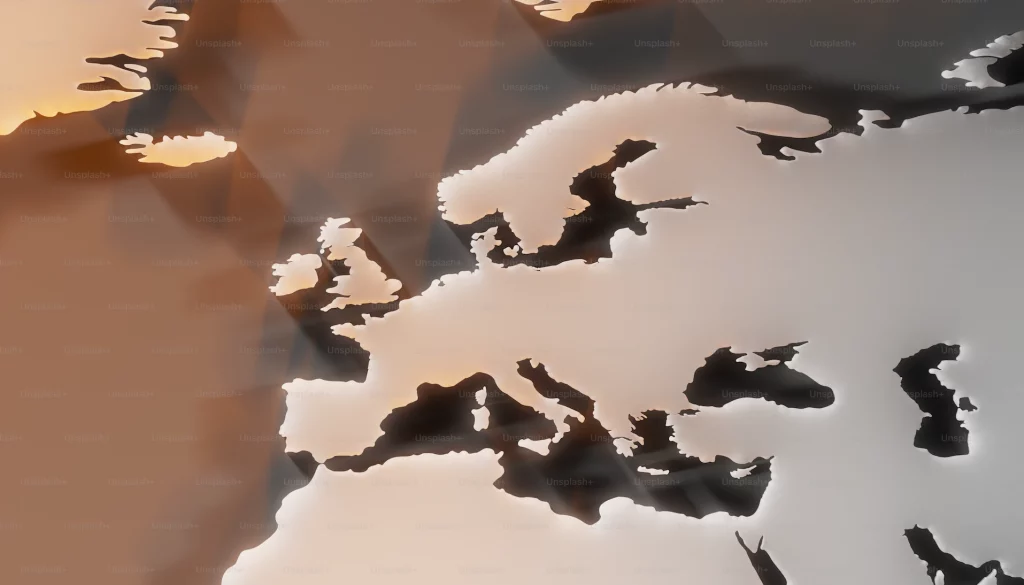
The France is a case apart. The great loser of the 19the century has not abandoned its dreams of glory and has never been fully satisfied with its role as a secondary power. What have we really gained since we fell in behind the banner of the maritime powers? A slow economic and political decline and the end of our cultural dominance.
Our elites are fiercely clinging to the American alliance. Since the end of the Second World War, to scoff at the capabilities, role, influence, weight and ambitions of the France in the world has become so common to everything that claims to proceed from intelligence in our country that one really wonders why the rising powers still bother to take an interest in so much insignificance. It is amusing to note that the Communist Left initiated this process at the end of the war, to hasten the victory of the «internationalist progressives» embodied by the Moscow apparatchiks by liquidating the nation for their benefit. It has recently been joined, in this «noble goal», by the Europhiles under the pretext, yet again, of the desirable and inevitable dissolution of the homeland within the «European project». In every case, the aim is to make the country disappear. Nowhere else is such a morbid fascination of elites with the end of the nation to be found. Such intense persistence must stem from a serious pathology, probably a tropism of a Greek oligarchy in the process of being Romanised.
It is undeniable that our international position has eroded since the Empire, and we have analysed the causes. However, we have maintained an astonishing combativeness. Of course, our strategists long endeavoured to prepare for the coming war on the basis of the one they had just lost. France's demographic decline certainly weakened our capabilities, but it never annihilated them. Cost what it may, we have maintained ourselves not as a principal actor, but as an indispensable entity. Strange though it may seem, it is difficult to do without France, even today.
This is even truer today, at the dawn of a new world. The France is the weak link in the American Empire and the conflict in Ukraine changes nothing about that. Of course, we have turned our back on our Gaullist doctrine of balance, by rejoining, without any notable concessions, the integrated command of the’NATO. Nevertheless, we are no less perceived as autonomous, and for several reasons. We did not follow the movement in Iraq. We maintain an independent nuclear deterrent force. Our defence industry is among the most efficient in the world, even if we need to move from the prototype stage to mass production. Lastly, we have already slammed the door on the Alliance once, without the sky falling on our heads as a result. These are the reasons that push the Russia, the China and to a lesser extent’India not to consider us, simply, as just any European state. Economy does not govern everything, politics still drives states forward. It is from the same logic that the recurrent attentions of American Presidents towards ours proceed. Humouring the ego of the President of a nation always quick to reconnect with its dreams of grandeur makes it possible to ward off the risk of those coming to pass. To ensure this and avoid a Gaullist resurgence that is ever-present beneath the surface among these« recalcitrant Gauls »it is enough at regular intervals to organise nice little campaigns of French bashing orchestrated with the active complicity of our globalist intellectuals whom the whole world envies us and Bob's your uncle, France stays well-behaved... and in its place
The France will not challenge the European order all by itself. It can merely help to crack the fine facade of Western unanimism which holds that there is no salvation outside of America. It does not need much more than that to interest people. We have not returned to the centre of the game for all that. We must be satisfied with being a regional power, but a decisive power, because we are at the centre of the region essential to the advent of the World Island. The world is changing fast. Let an alternative to this order—presented as immutable so as to better confine us to a role unworthy of our destiny—begin to show, and anything can happen. The World Island is not the most absurd of solutions for a country that has been searching for itself for nearly two centuries to finally find itself. To achieve this, it will be necessary to take up challenges that geopolitics.fr will modestly endeavour to present.
« Agrippa holds a postgraduate degree in geopolitics from the ENS. For over thirty years, he has held management positions in the service of elected officials, making him a seasoned observer of French political life and world affairs.
[1] Francis Fukuyama – The End of History and the Last Man – Champs Flammarion

 French
  English
  Chinese
  Arabic