
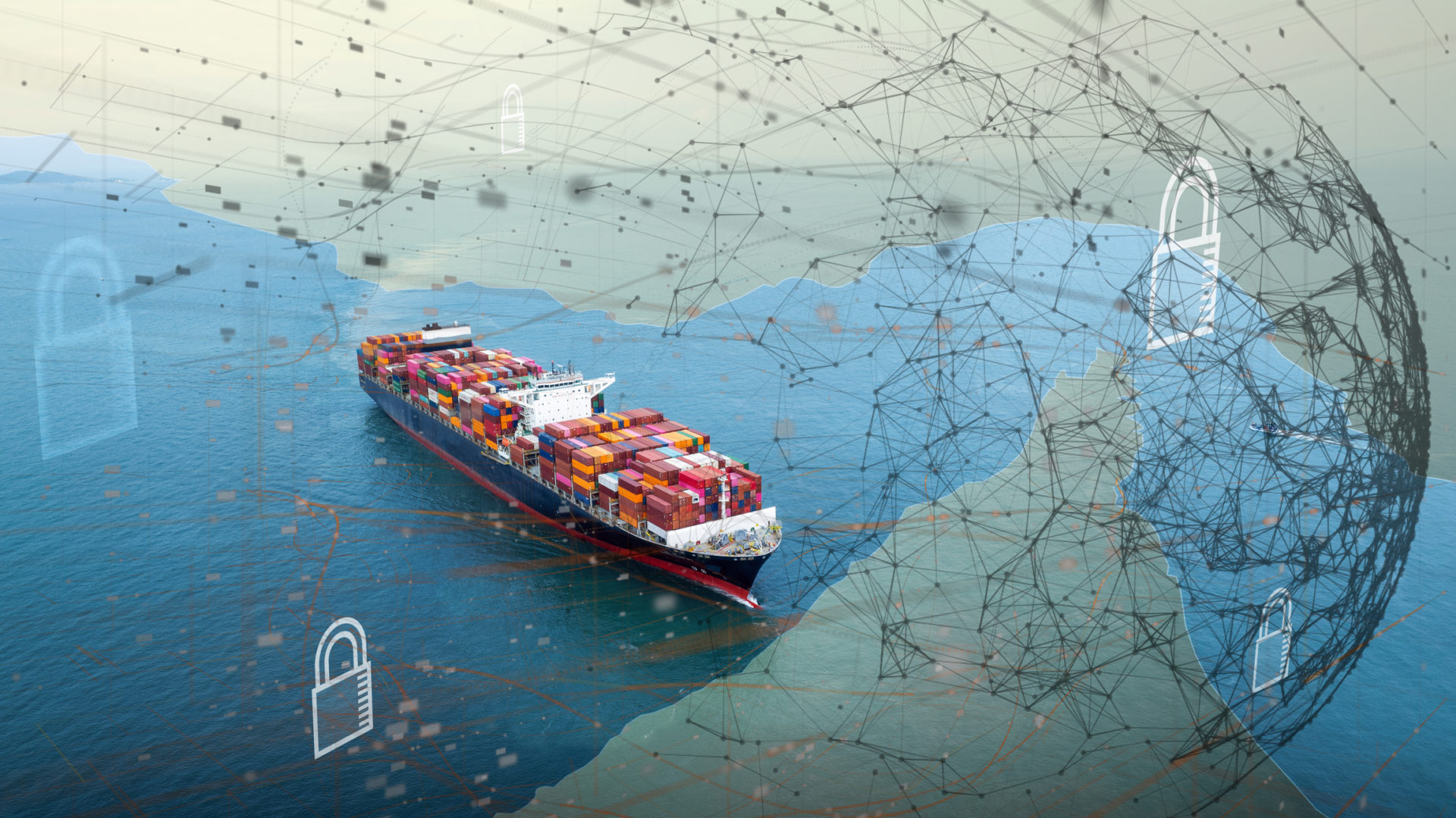
The strategic shift of 28 February 2026
The 28 February 2026marks a turning point in the strategic balance of the Middle East. Joint US and Israeli strikes against Iranian military and nuclear facilities result in the death of the Supreme Leader Ali Khamenei, a central figure of the regime for over thirty years. This event triggers an immediate military escalation in the Persian Gulf and plunges global energy security into a phase of deep uncertainty.
Iran is retaliating by activating one of its most sensitive strategic levers: the threat to navigation in the Strait of Hormuz. Naval mines are deployed, tankers linked to the US and its allies are targeted, and several US bases in the region are attacked. These actions immediately disrupt maritime traffic and lead to a partial closure of the strait, a vital artery of the global economy.
Hormuz concentrates 20 % of oil is consumed daily on the planet, mainly coming from Saudi Arabia, Iraq, Kuwait and the United Arab Emirates. Any sustained disruption to this energy corridor has an immediate knock-on effect on the entire international energy system.
The markets are reacting without delay. Brent crude, which was trading between $65 and $72 before the crisis, quickly crosses the mark of 90 dollars, with episodes of high volatility. This increase reflects less an immediate shortage than a anticipation of geopolitical risk, a determining factor in energy pricing.
The crisis is rapidly moving beyond the regional framework to become a global geoeconomic shock. It reveals the persistent vulnerability of the global energy system to geopolitical tensions, despite supply diversification and progress in the energy transition. Major economies remain dependent on some strategic maritime routes, the security of which conditions the stability of the markets.
The central hypothesis asserts itself beyond the military confrontation, the Hormuz crisis highlights structural vulnerabilities of the global energy system.
These vulnerabilities could benefit certain actors, notably the Russia and China, able to take advantage of rising energy prices and the restructuring of strategic dependencies. From this perspective, the crisis could accelerate the emergence of a new geoeconomic order.
The return of the oil shock: earthquake on the energy markets
The Hormuz crisis is not limited to a regional military confrontation. It triggers a global economic shock, the effects of which are spreading to the entire global economy. Within a few weeks, a barrel of Brent crude rose by over 40 %, moving from 65–72 dollars at over 90 dollars, with peaks exceeding £80. This volatility illustrates the central role of the geopolitical risk in energy pricing.
Faced with market nervousness, major energy institutions are trying to cushion the blow.’International Energy Agency coordinate an emergency release of strategic reserves, while’OPEC+ alliance announces a moderate increase in its production, of approximately 200,000 barrels per day. These measures help to contain the panic, without entirely dispelling the uncertainty surrounding the security of the Strait of Hormuz.
The crisis acts through three major economic mechanisms :
The risk of supply disruption:
The Strait of Hormuz is the focus 20 million barrels of oil a day, mainly from Saudi Arabia, Iraq, Kuwait and the Emirates. Any prolonged disruption directly threatens the balance global supply and demand.
The inflationary transmission :
The rise in energy prices is weighing on the real economy: maritime transport, aviation, agriculture and industry are experiencing inflationary pressure. As during the oil shocks of the 20th century, energy acts as a inflation multiplier.
Monetary policy
Central banks are facing a dilemma: fight energy inflation through high interest rates (at the risk of slowing down activity) or ease their monetary policy (at the risk of fueling price increases). This tension opens up the prospect of a dreaded scenario: the stagflation — a combination of low growth and persistent inflation.
In this context, the Ormuz crisis revives the memory of the 1970s oil shocks. But unlike those episodes, the global economy today is much more integrated and dependent on globalised supply chains. A major energy shock is no longer limited to oil markets: it spreads rapidly to the whole of international trade and can persistently undermine global economic stability.
The strategic winners: the windfall for Moscow and Beijing
Every major geopolitical crisis offers strategic opportunities to certain players. The Strait of Hormuz crisis is no exception: while energy-importing economies suffer from surge in oil prices, two powers profit from it: Russia and China.
Russia: a life-saving energy rent
For Vladimir Putin, the rise in oil prices represents a economic and strategic opportunity. The rise in the price of a barrel automatically increases Russia's energy revenues, whose hydrocarbon exports remain a pillar of the economy. In a context marked by the Western sanctions linked to the war in Ukraine, this energy rent contributes to stabilise public finances and to support the military effort.
The crisis is also strengthening the centrality of major hydrocarbon producers in the global energy balance. Despite progress in the energy transition, markets remain dependent on oil and gas. In this context, Russia retains a key role, particularly regarding Asian markets, to which it has redirected a growing share of its exports since the beginning of the Ukrainian conflict.
China: a strategy of resilience and industrial dominance
China, for its part, is banking on a different but equally effective strategy. Under the leadership of Xi Jinping, Beijing has built a energy security policy based on:
- The diversification of supply,
- The constitution of vast strategic reserves, helping to cushion fluctuations in the oil markets.
Above all, China has major structural advantage : its dominance in industries related to energy transition. Chinese companies hold a dominant position in the production of:
- Lithium-ion batteries,
- Solar panels,
- Electric vehicles.
This dominance gives Beijing a central role in the global energy system transformation.
A strategic paradox
The Hormuz crisis reveals a paradox: whilst the soaring price of oil accelerates the search for energy alternatives, it simultaneously reinforces the reliance of many economies to Chinese industrial chains, particularly in the sectors of batteries, solar panels and rare earths.
For the’Europe and a large part of the’Importing Asia, dependent on external hydrocarbons, the crisis translates into a inflationary pressure and one risk of economic slowdown. Even United States, despite their shale oil production, remain exposed to global price fluctuations, which directly influence inflation and domestic political stability.
Therefore, the Hormuz crisis is not limited to a rise in energy prices. It reconfigure the power reports in the global economy, by strengthening the position of actors capable of transforming energy tensions into strategic lever.
Energy transition and strategic dependencies
The Ormuz crisis is acting as a catalyst of an energy transition already underway. By brutally disrupting global oil supply, it serves as a reminder that dependence on hydrocarbons remains a major strategic vulnerability. However, unlike the oil shocks of the 20th century, the current response takes place in a different context: that of an accelerated global energy transition.
A historical response vs. a contemporary transition
In 1973, faced with the oil crisis, Western countries had reacted by diversifying their energy sources :
- France had developed its nuclear programme,
- Europe had increased its imports of Norwegian gas,
- Industrial economies had initiated energy efficiency policies to reduce their dependence on OPEC.
Today, the response is moving towards renewable energy and low-carbon technologies. But this transition comes with a new form of addiction industrial and technological.
A mobile outbuilding
An important part of value chains essential for the energy transition is currently concentrated in China. Strategic sectors illustrate this reality:
- Rare earths (essential for wind turbine and electric motor magnets) are largely dominated by Chinese industry.
- Lithium-ion batteries (heart of electric vehicles and energy storage) are predominantly produced by Chinese groups such as BYD.
- The photovoltaic panels China controls the vast majority of global production capacity.
This industrial concentration raises a major strategic issue. The energy transition, supposed to reduce dependence on Middle East hydrocarbons, risks creating a new dependency that of industrial chains dominated by Beijing. The geopolitics of energy does not therefore disappear with decarbonisation; ; she is moving into new industrial sectors.
Towards energy and industrial sovereignty?
Facing this risk, several powers are already acting to diversify their supply chains and reshore certain critical productions :
- The United States and the EU are increasing initiatives to secure access to strategic minerals (especially in Australia, Canada or Africa).
- They are also investing in the battery recycling and the development of new industrial capabilities.
Therefore, the Ormuz crisis is not limited to a oil shock. She reveals a deeper mutationthe energy transition is becoming a key issue of industrial power and sovereignty.
Strategic scenarios for the international system
The evolution of the Ormuz crisis remains uncertain and will depend on political and military choices of the main actors. Three strategic trajectories could redraw the balance of the international system:
1. Rapid de-escalation: gradual stabilisation
Under the pressure of marketsand some major energy-importing powers, international mediation could foster a gradual stabilisation :
- Regional actors like Oman Where is Turkey could play a facilitating role.
- L’UN would attempt to frame a de-escalation process.
- The naval mines would be neutralised, navigation secured, and the oil markets would regain a relative balance.
2. Prolonged crisis: an economic and social shock
A more concerning scenario would see a long-term disruption of the Strait of Hormuz, spanning several months, punctuated by’military incidents and limited naval operations. The consequences would be severe:
- Persistent rise in energy prices,
- Slowdown in global growth,
- Inflationary pressures and social tensions in major importing economies, notably in Europe and in Asia.
3. Tipping point: a global energy reorganisation
The crisis could act as a true turning point for the global energy system. The vulnerability revealed would accelerate:
- The energy diversification policies,
- The securing new supply routes (regional pipelines, LNG terminals, energy corridors connecting Asia, the Middle East and Europe).
Whatever the outcome, one conclusion is clear: lthe security of energy flows there is one left foundation of the stability of the international system.
Conclusion: Ormuz, symptom of a world in recomposition
The Ormuz crisis illustrates a constant in global geopolitics: energy remains at the heart of power relations. Despite progress in energy transition and the diversification of supplies, the global economy still depends on some strategic waypoints.
This crisis differs from past oil shocks in its context it occurs at a time when the world is experiencing double transformation :
- A global energy transition,
- A growing strategic rivalry between the major powers.
In this new environment, the energy question is no longer limited to production or where hydrocarbon transport. It now encompasses:
- The industrial supply chains for the energy transition,
- The critical minerals,
- The storage technologies,
- The electrical infrastructures.
Great power competition is played out just as much in these sectors as in the oilfields or the shipping lanes.
The Ormuz crisis is therefore not an isolated episode. It is the symptom of a wider reorganisation of the international system. It serves as a reminder that, in the 21st century, power is measured just as much by the ability to secure one's energy supplies than that of master the technologies that will make it possible to break free from it.

 French
  English
  Chinese
  Arabic