
Western Sahara, geopolitical fracture and Mediterranean challenge
The Mediterranean remains a strategic crossroads where geopolitical rivalries, security issues, energy challenges and migratory pressures intertwine. At the heart of this zone of instability, the Maghrebi fracture acts as a structural fault line that weakens the southern shore precisely at a time when it is seeking to stabilise itself.
The Western Sahara conflict, frozen for nearly half a century, is its most visible expression. Much more than a territorial dispute, it symbolises the deadlock of a regional integration that is nevertheless essential for the prosperity of the Maghreb and the balance of the Mediterranean.
Since 1975, this territory has been a point of contention between Morocco — which controls the major part of it — and the Polisario Front and the Sahrawi Arab Democratic Republic (SADR), backed by Algeria. Despite a fragile ceasefire and the presence of MINURSO, negotiations have never led to a lasting solution.
The resolution adopted by the UN Security Council on 30 October 2025, which supports the Moroccan autonomy plan under sovereignty, marks a major diplomatic turning point. Fifty years after the start of the conflict, the «cost of non-Maghreb» — economic, security and human — has reached an unsustainable level. Without political will on both sides, this divide will continue to weigh on the stability of the Maghreb and mortgage the future of the entire Mediterranean.
The cost of non-Maghreb: a sacrificed economic and human potential
An unfinished economic integration
The fragmentation of the Maghreb has a tangible cost: according to the World Bank, the «non-Maghreb» deprives the region of 13 to 16 billion dollars a year. This shortfall is the result of closed borders, the absence of cross-border infrastructure and paralysed regional value chains — a paradox in an area where geographical proximity should naturally foster trade.
A glaring symbol of this deadlock is the border between Morocco and Algeria, which has been closed since 1994. Beyond its symbolic weight, it embodies the absence of a shared vision for economic integration, which is essential to compete with other regional blocs. The harmonisation of customs policies, trade standards and logistics networks remains a major challenge, keeping the region in a state of chronic underperformance.
A hindered energy transition
The Maghreb conceals immense assets: abundant gas resources and an exceptional potential for renewable energies. Yet, for want of interconnections, its energy infrastructures remain fragmented and under-exploited. The Maghreb-Europe Gas Pipeline or LNG terminals are examples of this: their lack of coordination deprives the region of collective energy security and limits joint investments, notably in green hydrogen, solar and wind power.
This compartmentalisation is all the more regrettable since Europe, in search of energy diversification, could find a strategic partner in the Maghreb. The lack of regional coordination thus hinders a dynamic that could have benefited both shores of the Mediterranean.
A worrying human and social toll
The effects of the «anti-Maghreb» extend beyond the economic sphere:
- Tindouf camps thousands of Sahrawis have been living there for decades in persistent hardship, dependent on international aid and deprived of a stable future.
- Migratory pressures Tunisia, on the front line, is suffering the consequences of a lack of regional cooperation. Sub-Saharan migration flows, which are poorly managed, are exacerbating social tensions and insecurity, while the Mediterranean remains the scene of human tragedies.
- Brain drain each year, thousands of young graduates leave North Africa for Europe or the Gulf, depriving the region of its human capital and worsening the skills shortage.
Stalled regional cooperation
The Arab Maghreb Union (AMU), created to promote regional unity, remains paralyzed by divergences between member states, each prioritizing its national interests. For want of political will, strategic joint projects fail to materialize, depriving the Maghreb of any capacity to exert collective influence on the international stage.
An urgent finding
The «cost of the non-Maghreb» is not limited to financial losses. It translates to:
- missed economic opportunities,
- unresolved social crises,
- and a growing vulnerability to security and geopolitical challenges.
While other regions of the world are strengthening their integration, the Maghreb remains trapped by its divisions. The challenge is now clear: to renew dialogue, move beyond rivalries and transform this fracture into a lever for shared development.
From regional rivalry to security tensions in the Mediterranean: a fragile balance
Increasing militarisation and its regional repercussions
Persistent divisions in the Maghreb are fuelling a security escalation in which the rivalry between Morocco and Algeria occupies a central place. In recent years, the two countries have engaged in an arms race that goes beyond the regional framework to fit into global geostrategic logic.
Algeria has reinforced its military apparatus through the acquisition of advanced Russian equipment (Sukhoi Su-35s, negotiations regarding the Su-57), asserting a strengthened defensive posture. Morocco, for its part, is modernising its arsenal through strategic partnerships with the United States and Israel, and discussions for the acquisition of F-35s.
This re-armament dynamic, coupled with active security diplomacy, increases the risk of escalation around Western Sahara, where the ceasefire supervised by MINURSO since 1991 remains fragile. The proliferation of border incidents makes this balance precarious and threatens to spill over bilateral borders.
Libya, a hotbed of instability and foreign interference
The Libyan crisis exacerbates this fragility. Divided between a government in Tripoli and rival forces in the East, Libya has become a theatre of foreign interference where mercenaries and arms trafficking are proliferating. This chaos fuels an indirect rivalry between Algiers and Rabat, each seeking to safeguard its own interests.
Furthermore, the porosity of borders and the institutional weakness of Maghrebi states facilitate the entrenchment of transnational jihadist groups (AQIM, IS Sahel), which exploit security loopholes. These networks are extending their influence from the Sahel to the fringes of the Maghreb, further destabilising the region.
Tunisia, already facing an economic and migration crisis, is directly suffering from this widespread insecurity: pressure on its reception capacities, growing migratory flows and the persistent terrorist threat. Regional disorder thus hampers any attempt at concerted stabilisation.
The Mediterranean: theatre of a multipolar geopolitical competition
Maghrebi fragility is part of a Mediterranean region that has once again become an area of global competition. A strategic crossroads accounting for 25 % of maritime traffic and 30 % of oil trade, the Mediterranean basin attracts covetous eyes:
- The United States, despite their pivot to the Indo-Pacific, maintain a significant military presence, guaranteeing their influence.
- Russia, taking advantage of regional tensions, is strengthening its foothold in Syria, Libya and the Sahel, establishing itself as an alternative balancing power.
- China, for its part, favours an economic approach — port investments, trade corridors — and is increasing its influence without any stated military ambitions.
In this multipolar context, the stability of the Maghreb is becoming a central geopolitical issue. The ability of regional actors to overcome their rivalries will determine their capacity to meet the energy, security and migration challenges that condition the balance of the Mediterranean.
The diplomatic pivot: a resolution with contrasting interpretations
A Western strategic turning point
On 30 October 2025, the Security Council adopted a landmark resolution — number 2797 — supporting the Moroccan autonomy plan under sovereignty. Backed by Western powers (the United States, France, the United Kingdom), this initiative marks a major turning point in the quest for a solution to a conflict frozen for over fifty years, redefining diplomatic balances in the Maghreb.
This stance is grounded in a logic of realism: Morocco, which administers the major part of the territory, has since 2007 presented its autonomy plan as the most viable path towards a political solution. Moroccan diplomacy, backed by a network of alliances in sub-Saharan Africa and with Western powers, has successfully presented this project as a guarantee of stability and sustainable development.
Divergent readings, reflecting regional divides
Far from being consensual, this resolution revealed the persistent fracture lines.
- For the Morocco, it represents a major diplomatic victory and the recognition of its stabilising role in the region.
- For Algeria and the Polisario Front, it constitutes a violation of the principle of self-determination and an implicit legitimisation of the Moroccan occupation.
- L’EU and the’UN, for their part, are adopting a cautious stance, acknowledging the realities on the ground while reaffirming the need for a negotiated, inclusive solution in accordance with international law.
Between principle and realism: a balance to be struck
At the heart of this debate lies the tension between the principle of self-determination of peoples and diplomatic realism, which prioritises regional stability. This complex equation illustrates the difficulty of reconciling historical justice with lasting peace.
Abstentionist powers, such as Russia and China, are adopting an ambiguous stance, refusing to align themselves openly whilst seeking to preserve their levers of influence in the Mediterranean. This strategic vagueness reflects the silent rivalry of the major powers in a highly competitive arena.
Towards a pragmatic and constructive reading
This diplomatic pivot calls for a measured approach: after half a century of inertia, the resolution of the Western Sahara conflict appears as an essential condition for the emergence of a stable Maghrebi and Mediterranean dynamic. The issue is no longer to choose between principle and realism, but to find a new balance — founded on dialogue and the pursuit of a lasting compromise — to transform this historical fracture into a lever for stability and shared prosperity.
Towards a stable Mediterranean?
Two possible trajectories for Western Sahara
The year 2025, marked by the Security Council resolution, opens a window of opportunity — but also of vulnerability — for Western Sahara. Two scenarios are clearly emerging:
- Persistent inaction in the absence of diplomatic convergence, MINURSO risks remaining a mere observer, with no tangible progress towards peace. The conflict would remain frozen, perpetuating the «cost of non-Maghreb» — economic blockages, security tensions, and the radicalisation of young Sahrawis. This status quo would undermine the credibility of international institutions and pose a risk of lasting escalation in the region.
- The phased rollout if strategic conditions are right, a resumption of direct negotiations between Morocco and the Polisario Front, under UN auspices and with increased involvement from the African Union, could emerge. The gradual acceptance of the Moroccan autonomy plan, backed by robust guarantees for the political and cultural rights of the Sahrawis, would pave the way for a lasting settlement. The reopening of the Algerian-Moroccan borders would then constitute a strong signal of reconciliation, releasing currently stifled economic and diplomatic potential.
Recommendations for a reconciled Maghreb
- For Morocco turn the diplomatic victory into tangible momentum.
Implement credible autonomy, based on inclusive governance that respects human rights, while making the development of Western Sahara a lever for peace through structural projects — renewable energies, sustainable agriculture, integrated infrastructure. - For Algeria move beyond the logic of confrontation to become a stabilising actor once again.
The reopening of the borders with Morocco must become a strategic priority, not only to revive the regional economy, but also to ease the security climate. A constructive stance would enable Algiers to assert its role as a political pillar within a renewed Maghrebi dynamic.
- For the UN and the international community strengthen the mediation and protection framework. MINURSO should evolve towards a proactive mandate of dialogue facilitation, accompanied by credible human rights monitoring mechanisms, in order to guarantee trust and transparency in the process.
The Mediterranean, a laboratory for new cooperation
The stability of the Maghreb cannot be considered in isolation. It must be part of a rethought Euro-Mediterranean dynamic:
- The Mediterranean Pact (2025), initiated by the EU, could sustainably anchor the Maghreb in a logic of economic and social integration. Connectivity projects — transport, energy, digital — must be accelerated to create positive interdependencies and reduce tensions.
- The 5+5 Defence, bringing together European and Maghrebi countries, must be reinforced to counter hybrid threats, transnational terrorism and organised crime. Effective security cooperation would make the Mediterranean a model of shared stability.
A balance to be built: reconciliation or stagnation?
Western Sahara can remain the symbol of an endless conflict or become the catalyst for historic reconciliation. Everything will depend on the actors' ability to combine:
- realism, acknowledging power balances; ;
- inclusivity, while guaranteeing the legitimate rights of the Sahrawis; ;
- and regional cooperation, by focusing on gradual economic and security integration.
The Mediterranean will only recover its vocation for peace and prosperity if Western Sahara ceases to be a division and becomes a bridge. The coming years will be decisive in determining whether the region chooses stagnation or dares to reconcile.
Western Sahara: Mediterranean miracle or mirage?
Western Sahara is not merely a frozen territorial conflict; it has become the trial of truth for the Maghreb and the Mediterranean. Will we be able to transform this historic division into a lever for stability, or will we allow this crisis to mortgage the future of an entire region? The stakes now go beyond borders: it is a question of whether regional and international actors will know how to place the imperative for peace above rivalries, or whether the logic of blocs will continue to fuel division and instability.
A sustainable solution cannot be limited to a fleeting diplomatic victory; it must serve as foundation for a Maghrebi refoundation, capable of unlocking the geopolitical, economic and human potential of a region in search of coherence.
Imagine a united Maghreb, from Tangier to Tripoli — a Mediterranean pole of equilibrium, a crossroads for flourishing trade, a multi-sectoral cooperation force. This is not a utopia: it is a strategic necessity.
To achieve this, we must dare to be bold:
- Transform the autonomy plan into inclusive governance, guaranteeing the Sahrawis their rights through transparent and credible mechanisms; ;
- Reopen the borders not as a symbol, but as the founding act of a new era of economic and security cooperation; ;
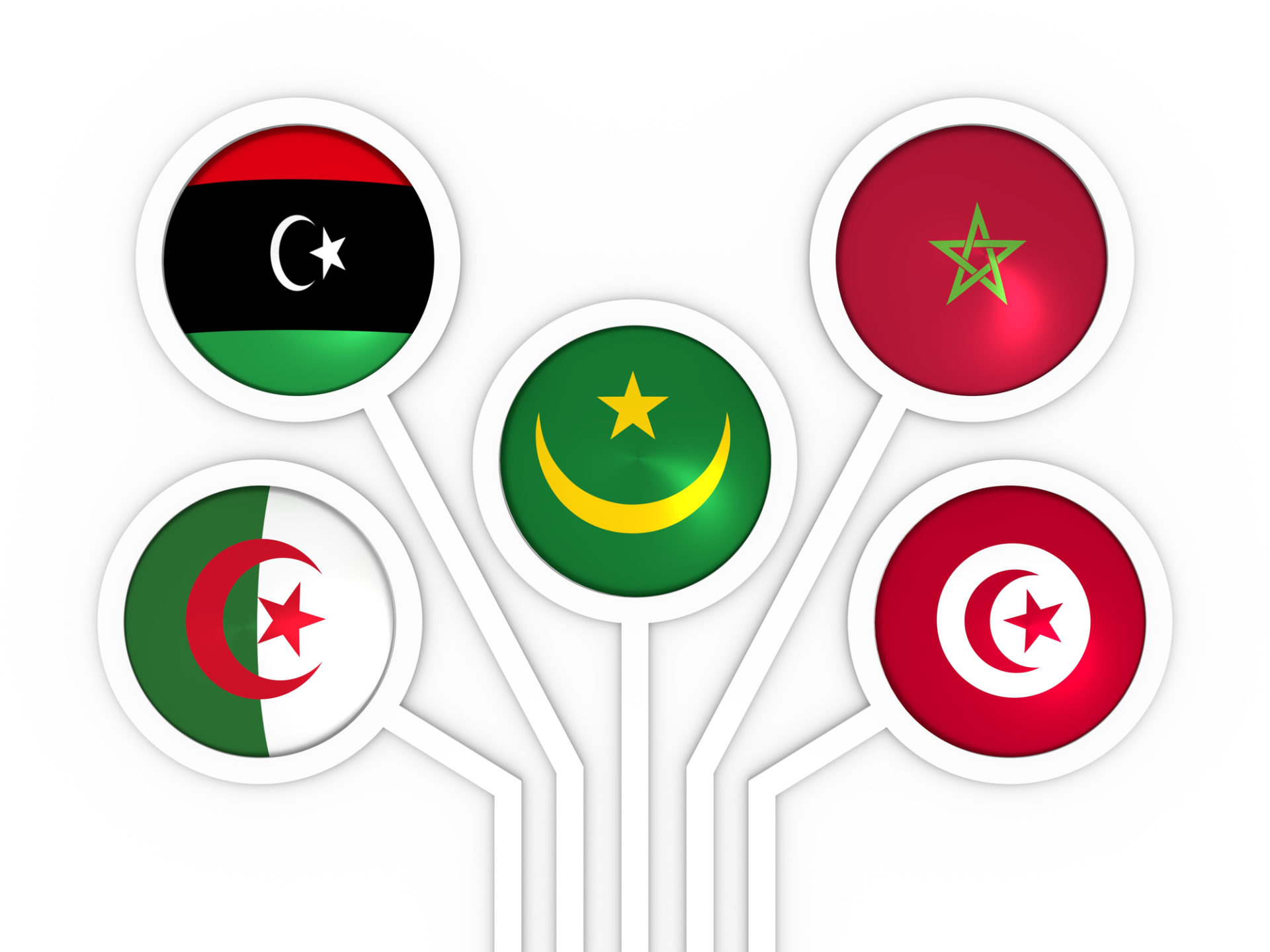
- Convenvene a Maghrebi conference under the aegis of the African Union, bringing together Morocco, Algeria, Mauritania, Tunisia, Libya and Sahrawi representatives, in order to define a joint roadmap. Backed by its pan-African legitimacy and its experience in mediation, the AU would provide the neutral and structuring framework necessary to overcome historical blockages.
The challenge is immense, but the stakes are even higherto make Western Sahara no longer a scar, but a hyphen, where political realism and historical justice finally meet.
The choice is now in our hands: perpetuate stagnation or write a new page in Maghrebi history. The time for tactical calculations is over, but for strategic vision. For, in the end, Western Sahara will not only be the mirror of Mediterranean ambitions — it will be the ultimate arbiter.

 French
  English
  Chinese
  Arabic