
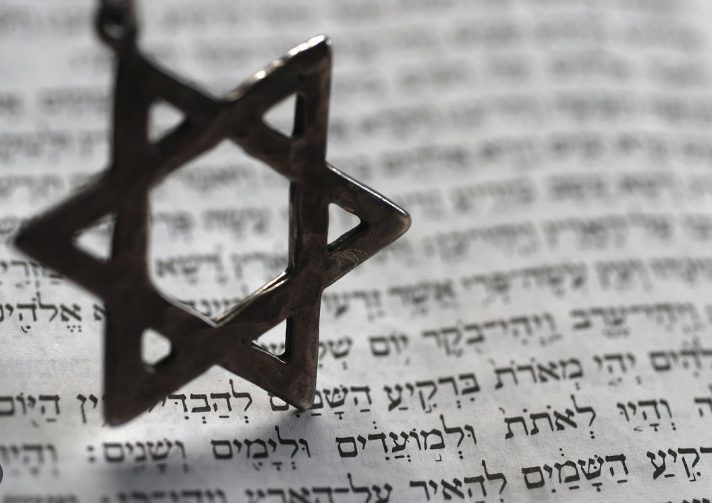
We are familiar with Greek rhetoric: ethos, pathos, logos. Three pillars of human speech that seek to convince, structure thought, and rationalize the world. For the Greeks, speech is a tool: an argumentative game, a way of ordering reality. It does not create the world; it illuminates it.
But Jewish rhetoric, on the other hand, is of a completely different nature. In Judaism, words are sacred, because they create. The divine word — «God said, and it came to be» — is performative. The biblical narrative does not merely tell a story; it forms the story. The Exodus is not an epic like the others: it becomes an ethical memory, an identity foundation, and a moral call. «Remember that you were slaves in Egypt…»: this is a word that engages, that judges, that compels. Judaism is a power of foundational narrative.
Every event, every drama, every victory or every defeat calls for a profound interpretation., In search of a divine meaning. The destruction of the Kingdom of Judah is not seen simply as a geopolitical consequence (a small kingdom defying an empire)—it must be sought in the trace of a higher will, a message. And this is where a tension lies: in this worldview, the narrative is everything. To touch it is to touch the very identity of the Jewish people. To challenge the interpretation, or even question the untouchability of the narrative, can quickly be perceived as an attack, sometimes perceived as anti-Semitic. This is not a «conspiracy,» but a profoundly sacralized relationship to the world.
From such a perspective, It becomes extremely difficult to think outside the text, outside the divine meaning, outside the infinite layers of interpretation. And therefore, sometimes, it is simply impossible to see the facts, or to place them within a universal reading grid, detached from the sacred. In this context, the conflict in Gaza reveals a major rhetorical problem. Even though it is Gaza that is being destroyed, even though the figures and images testify to an abysmal imbalance, the Israeli perception of the conflict is often read through the prism of existential survival. Zionism, especially in its revisionist form, is rooted in a strong religious dimension: the protection of the Jewish people becomes also a divine duty. The word, in this tradition, is not just meant to be heard; it questions the world. It works on the real as a mystery to be explored without end.
Scholarship, brilliant as it may be, is not put at the service of universal pedagogy, but of the inner dimension of meaning. The Tikkun Olam, the «repair of the world,» is rooted in this tension: to repair, yes — but according to what reading of the world? According to which interpretation of suffering, responsibilities, competing narratives? In a world where narratives confront as much as weapons, sacred speech sometimes becomes a weapon itself. It does not kill — but it obscures, confuses, immunizes against criticism. And so, for many, the world can become terrifying — not because of what it is, but because it escapes meaning, or refuses to submit to it. Perhaps this is the silent drama of the moment: the Israelis have not fully grasped that October 7th fractured something deeper than a border. It was not only security that was attacked, but the founding narrative of Israel itself — that of the protective bunker, the inviolable sanctuary born of the Shoah.
This narrative, forged in pain and in history, faltered abruptly, exposing a vulnerability that no one thought possible yet. And in the response, another misunderstanding emerged: the belief that the horror of an initial massacre can indefinitely justify massive civilian casualties.s. But in many cultures around the world, marked either by salvation or a more direct relationship with reality, this logic does not work. The disproportion, even justified by fear, no longer convinces.. The world no longer operates solely on sacred narratives: it also demands facts, law, and humanity. When sacred speech no longer meets universal emotion, it ceases to be heard — and becomes solitude.

 French
  English
  Chinese
  Arabic