
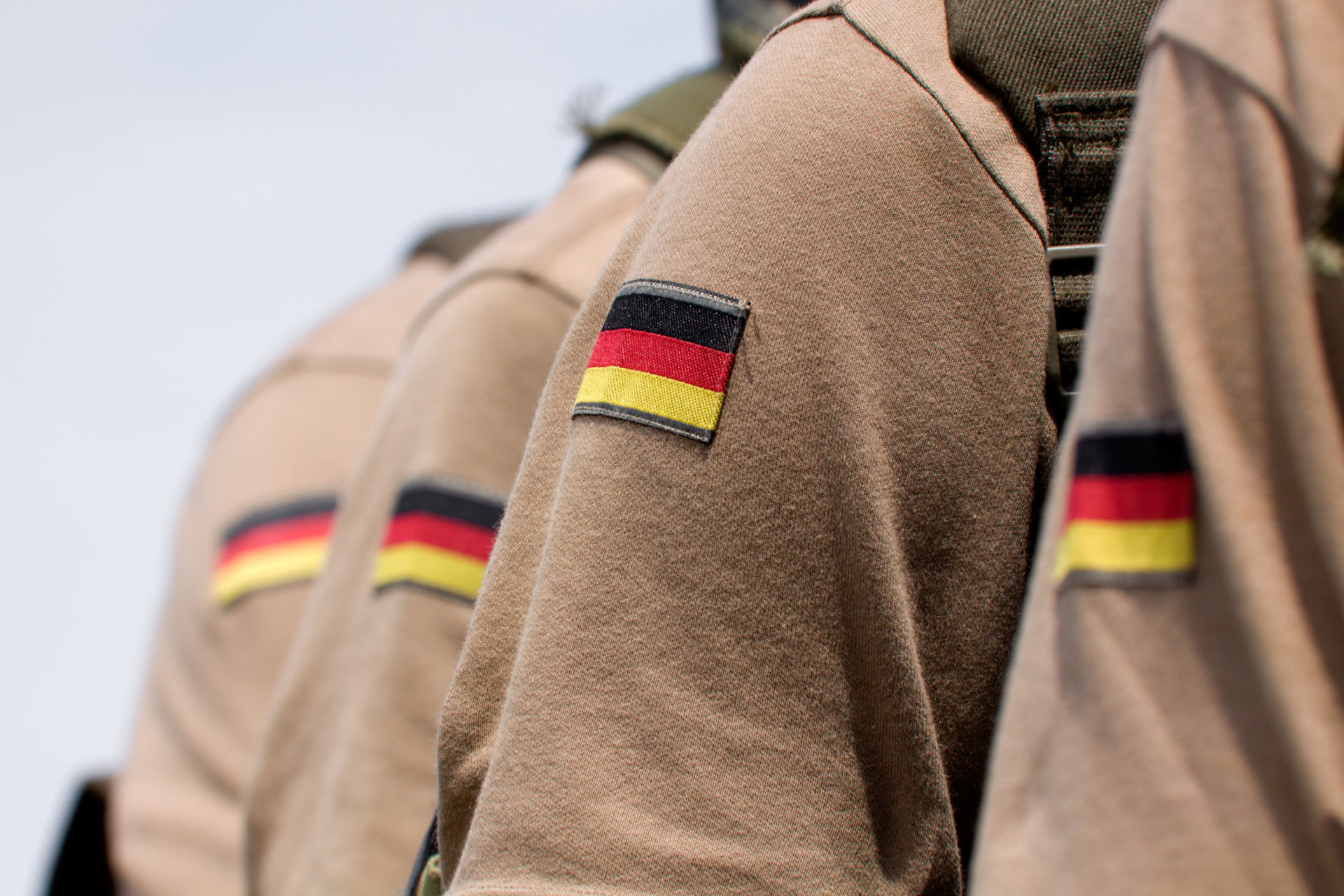
A decisive turning point for German defence
Since the summer of 2024, a single figure sums up a strategic shift: €13.2 billion in arms exports, a record high for Germany. This result is not just an industrial success: it marks the end of a tradition of military restraint and the entry into a new era.
Under the impact of the war in Ukraine and the reshaping of European balances, Berlin is now making military power a central lever of its policy. This evolution calls for an in-depth analysis: what are its origins, what are the implications for European security, and what geopolitical opportunities does it open up?
The Ukrainian shock, catalyst for a transformation
The invasion of Ukraine in February 2022 constituted a major strategic shock for Europe, and even more so for Germany: an undisputed economic power but a military power reined in by a historical consensus. This conflict forced Berlin to overcome its reluctance to engage in massive rearmament.
From the very outset, Germany has combined economic, political and strategic responsibilities. Military support for Kyiv has resulted in an unprecedented industrial mobilisation. In 2024, 64 % of the 13.2 billion euros’ worth of arms exports were delivered directly to Ukraine, evidence of a clear redefinition of Berlin’s strategic priorities.
This transformation was based on an unprecedented public consensus: 75 % from the Germans today support the rearmament effort, expressing both a desire to reduce dependence on external allies and political justification for increasing defence resources.
In practice, a €24 billion special fundhas been created, and the military budget reaches 95 billion in 2025. Beyond the figures, a genuine qualitative leap is taking place: a Germany ready to assume a major security role, driven by a revitalised defence industry.
Thus, Berlin is no longer just the economic engine of the European Union: it is becoming a central military actor, determined to play a significant role in redefining the continent's strategic balance. This shift from caution to military activism is already raising numerous questions about the future of European, transatlantic and regional stability.
The end of an era: Germany breaks with military restraint
Since 1945, Germany had imposed upon itself a strict self-limitation. Dictated by the weight of history and the desire to prevent any return to aggressive power, this restraint was expressed through essentially defensive or multilateral commitments, under the auspices of the EU and NATO. This choice had consolidated European stability and reassured its neighbours.
But in the late 1990s, this doctrine began to crack. In 1999, the intervention in Kosovo, under Gerhard Schröder, marked an initial turning point: for the first time since the war, the Luftwaffe was taking part in an overseas operation. Two years later, the commitment in Afghanistan confirmed the calling into question of the principle of restraint, revealing the limits of a doctrine ill-suited to a multipolar and unstable world.
On the intellectual front, voices were already being raised to denounce this «self-shackling» and to argue for an alignment of German military power with its economic and political weight. Long marginal, this idea gradually gained ground, driven by strategic circles who considered the resources dedicated to defence to be insufficient.
Under Angela Merkel, caution remained the rule. The Chancellor, oscillating between a desire for European leadership and respect for domestic consensus, embodied the ambivalence of a society torn between historical memory and new security threats.
Today, with record arms exports and one unprecedented defence budget, this era is coming to an end. Germany is now assuming its role as a military power, determined to defend its strategic interests and influence European and global security. This break calls for rethinking the European and transatlantic institutional balances, as well as Berlin’s place in a perpetually changing international order.
A new doctrine: proactive and industrial power
Germany is experiencing a true paradigm shift. From a defensive and cautious stance, it is now adopting a proactive, bold and industrial strategy. This turning point is not just about a budgetary increase: it reflects Berlin's ambition to strengthen its capabilities and establish itself as a central actor in the new European and global security order.
From now on, Germany is no longer just an economic powerhouse. It is positioning itself as pillar of European defence and a key partner in transatlantic alliances. Its technological and industrial might is becoming an instrument of influence, serving a reinforced security diplomacy.
The defence budget reaches 95 billion euros in 2025, supplemented by a special £24 billion fund intended to modernise the land, air and naval forces, develop cyber capabilities and strengthen missile defence. The objective is clear: to go beyond traditional capabilities to invest in cutting-edge technologies suited to contemporary conflicts.
This doctrine also relies on increased integration into the global weapons chains. Already a leader in military equipment, Germany is consolidating its technological partnerships in Europe and beyond, thereby strengthening its strategic autonomy and one more integrated European cooperation, where industry becomes a political lever.
Finally, Berlin is engaging more actively in collective security missions. Far from a symbolic presence, it is assuming a roperational role in the management of regional and global crises.
Yet this visibility also increases the expectations of its allies and attracts the attention of its rivals, placing Germany in a delicate position: an indispensable European power and the driving force behind a redefinition of global defence architectures.
This new doctrine reveals a forward-looking Germany, aware that military power and political stature are now inextricably linked, and ready to assume a leading geopolitical role.
A new geopolitical pivot in Europe and in NATO
Germany’s military build-up is redrawing the balance of power in Europe and reaffirming its role within the transatlantic security architecture. It is conferring an increased responsibility on Berlin, while at the same time raising questions about the limits of leadership that is now more assertive.
In Europe, Germany is becoming the strategic pivot towards a more integrated and autonomous defence. Its industrial, technological and logistical capacity shapes the cooperation of the European Union and Permanent Structured Cooperation (PESCO), a framework enabling EU member states to jointly develop coordinated defence projects, making Berlin a de facto leader in defining European security priorities.
On a transatlantic level, this turning point is seen as both a relief and a challenge. It responds to US calls for a more autonomous Europe, but raises potential tensions surrounding the sharing of responsibilities and decision-making within NATO. Washington remains attentive to the consistency between Germany's rise in power and its global commitments.
On an international scale, Germany now projects a more assertive and strategic. Its ability to provide cutting-edge equipment gives it leverage in security negotiations, feeding its ambition to act both as European balancing and as sought-after interlocutor of the major powers.
However, this repositioning carries risks. Germany's growing militarism is reviving certain historical sensitivities and fueling Russia's concerns.
A statement deemed too aggressive could undermine alliances or create new tensions. Berlin will therefore have to balance strategic assertion and diplomatic responsibility, in order to preserve the stability it wishes to defend.
Thus, Germany finds itself on the threshold of a major redefinition of its security role. This shift will have a lasting influence on European and transatlantic dynamics, while demanding constant vigilance in the management of regional and global balances.
Uncertain outlook: between leadership and risks
The rearmament dynamic initiated by Germany raises an essential question: that of the solidity of the consensus supporting it. Admittedly, 75 % of citizens approve of it, but this support remains dependent on the evolution of the international context and concrete results. A decisive breakthrough or, conversely, a quagmire in the Ukrainian conflict could sway public opinion and the political will to maintain this effort.
Economically, force modernisation and the development of cutting-edge technologies demand massive and sustained investment. The German defence industry must not only meet increased domestic demand, but also remain competitive in the face of demanding global competition. This implies strengthening research, securing supply chains and creating an organisation capable of adapting to constantly evolving strategic needs.
On the international stage, Berlin finds itself at the heart of rivalries between major powers. Its support for Kyiv is fuelling tensions with Moscow, while China's military rise makes it necessary to factor this variable into its strategic and technological choices. In this context, Germany will have to combine firmness and multilateral dialogue, to avoid a spiral of confrontation.
Three scenarios are emerging: a deepening of rearmament, establishing Berlin as leading force in European defence and NATO ; or a more cautious adjustment, dictated by economic or political conditions; or indeed external disruptions — de-escalation in Ukraine, transatlantic realignment — that would redefine its trajectory.
In this phase of uncertainty, Germany has room for manoeuvre, but also a major responsibilityto integrate its new role into a coherent vision, adapted to shifting realities, while preserving the internal balance of its political consensus. Its trajectory will have a lasting impact on the evolution of European and global security architectures.
Germany, the new juggler of global security
Germany is currently undergoing an unprecedented strategic shift. Long confined to its role as an economic power, it is now asserting itself as a central military actor, wielding influence over European, transatlantic and global balances. This pivot is not merely a matter of a doctrinal change: it is redrawing the balance of power on the continent and beyond.
Combining economic weight, industrial power and strategic influence, Berlin is transcending its national framework. It is reshaping the balances within the European Union, reorienting transatlantic dynamics and establishing itself as a military power whose choices will weigh directly on the international order.
However, this rise in power comes with heavy responsibilities. In Europe, Germany is both the engine of a more integrated defence and the guarantor of a fragile balance with its partners. Within NATO, it meets American expectations for a more autonomous Europe, while also raising questions about burden-sharing and decision-making equilibrium. On a global scale, its support for Ukraine places it at the heart of the confrontation with Moscow, whilst China's rise forces it to frame its choices within a game of global rivalries.
However, this repositioning is not without risk. The image of a militarily strong Germany once again can revive historical sensitivities and fuel regional mistrust. The challenge for Berlin will be to strike a balance between strategic assertiveness and diplomatic responsibility, so that its power does not become a factor of instability.
Therefore, the evolution of German defence policy goes beyond the European framework: it is helping to redefine the very foundations of collective security in a fragmented and unstable world. More than a military adjustment, it is a major geopolitical turning point, the effects of which will leave a lasting mark on the 21st century. Germany now appears as an essential strategic actor, called upon to transform its rediscovered military power into a lever for stability, balance and dialogue.

 French
  English
  Chinese
  Arabic