
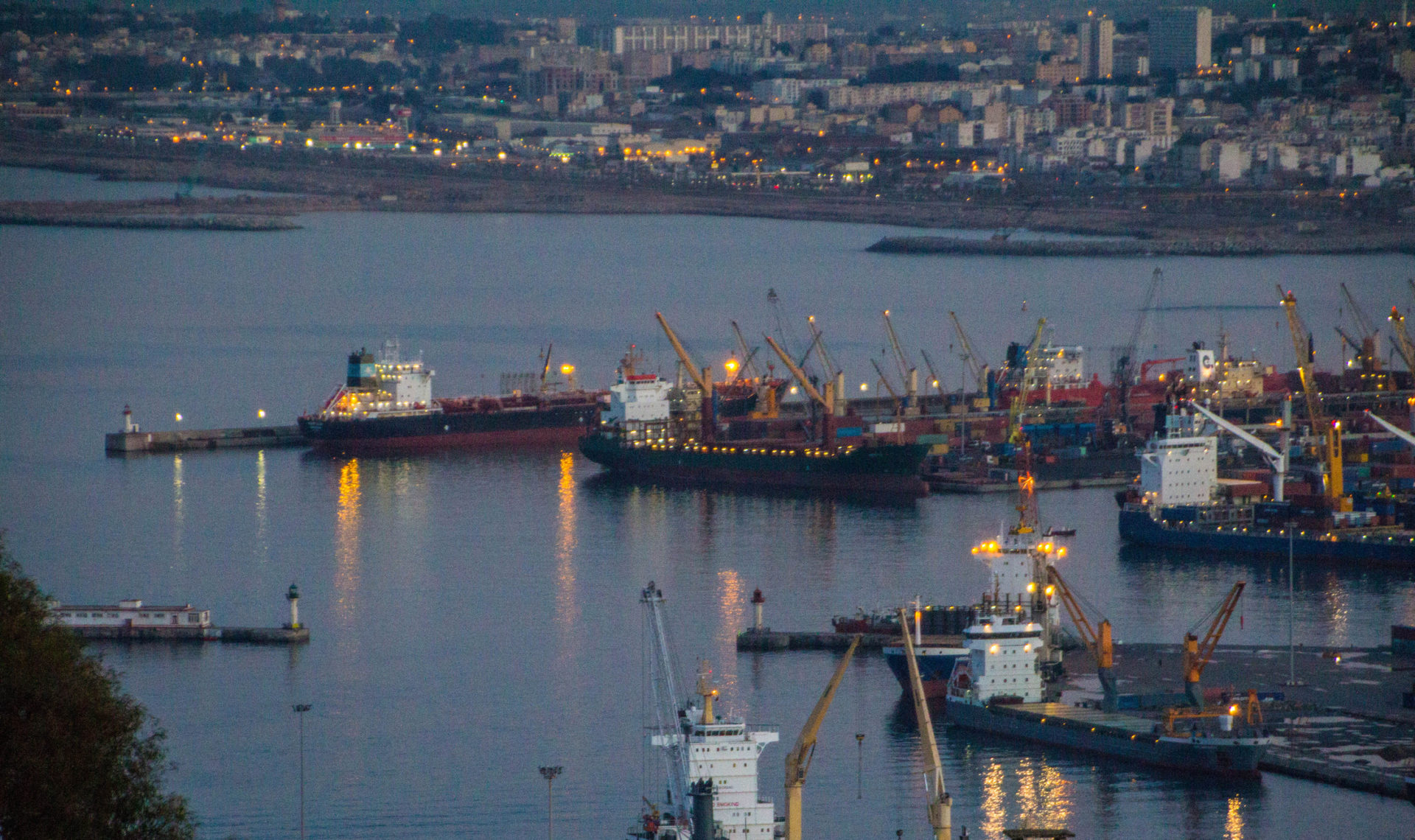
Algeria's liquefied natural gas (LNG) exports continue to play a crucial role in Europe's energy supply. Among Algeria's main gas trading partners, France occupies a strategic position, ranking as the second-largest importer in 2024.
According to a recent report published by the energy research platform «Energie», Algerian LNG exports reached 2.76 million tonnes between October and December 2024, representing an increase of 6 % compared to the previous quarter (2.61 million tonnes). This growth marks a recovery following a slight decline recorded in the third quarter.
However, over the whole of 2024, annual exports of Algerian gas marked a decline, falling from 13.45 million tonnes in 2023 to 11.62 million tonnes. This decrease is the result of several combined factors, notably maintenance work on the Arzew liquefaction plant, a key production site, as well as a significant increase in domestic demand due to exceptionally high summer temperatures.
At the same time, the breakdown of LNG exports highlights a predominance of European countries among Algeria's top clients. The other side of the Mediterranean thus absorbed the majority of Algerian exports, confirming the strategic importance of this market for the Algerian gas sector.
France, an essential and key client for Algiers
France established itself as the second largest importer of Algerian LNG in 2024, with an import volume of 3.26 million tonnes. It places second behind Turkey, which imported 4.05 million tonnes, but nevertheless ahead of other European partners such as Spain (1.66 million tonnes) and Italy (1.39 million tonnes).
This positioning in Algiers' order book is part of a context of strong European dependence on natural gas, but also of a strategy aiming to diversify its sources of supply. Indeed, for several years, Europe has been seeking to manage its dependence on historical suppliers such as Russia, thereby favouring the development of trade relations with African countries such as Algeria.
France's interest in Algerian LNG is further justified by the close geographical proximity of the two countries, and the existence of secure infrastructure facilitating the importation and distribution of gas. This reinforces France's role as a leading partner in the Algerian energy sector.
Faced with growing demand, the new challenges of the Algerian gas sector
Despite these positive results and faced with particularly growing demand on its market, the Algerian gas sector must nevertheless confront new challenges. Indeed, the fall in annual exports in 2024, although partially linked to multiple international short-term factors, highlights structural difficulties. One of the main questions focuses notably on the investments required for the modernisation of production and transport infrastructure.
Also, regular maintenance work, such as that observed at the Arzew terminal, temporarily slows down export capacity. This relative instability in production inevitably forces Algeria to invest in more robust and stable infrastructure, and then to diversify its facilities in order to guarantee a consistent supply to its customers.
Also, ever-increasing domestic demand constitutes another challenge for Algiers. Thus, during the summer of 2024, particularly high temperatures led to record local electricity consumption, thereby impacting the volumes available for export. This summer episode illustrates the urgent need for Algiers to achieve a balanced management between satisfying local needs and supplying international markets.
Sustainable prospects for Algerian gas in Europe despite diplomatic differences
Despite these essential structural conditions and beyond the recent political correspondence between Paris and Algiers, Algeria remains a key player in the European energy market. Reinforced by its position as Africa's second-largest LNG exporter, the country has undeniable potential to strengthen its position on the global gas market. The development of its infrastructure, backed by a targeted commercial strategy, could enable Algeria to increase its market share, particularly in Europe, where demand remains strong.
Furthermore, the energy transition in Europe, although geared towards renewable energy, maintains natural gas as an essential source for electricity generation and heating in the short and medium term. In this context, Algeria could capitalise on its geographical proximity and abundant reserves to meet the growing needs of European countries, and use this as a diplomatic weapon.

 French
  English
  Chinese
  Arabic