
Erwan DAVOUX, former policy officer at the Presidency of the Republic, has advised numerous right-wing political figures internationally
Renaissance and the PS, much of a muchness
With the European elections fast approaching, the choice facing voters is hardly appetising. And foreign interference is omnipresent in this campaign.
1.1 The broken Franco-German couple
The Dutch-Macronian Europe is first and foremost that of the broken Franco-German partnership. Under previous presidencies, France and Germany would agree beforehand on all subjects to speak with one voice at European Councils.
But the Franco-German couple did not withstand François Hollande's partisan diplomacy. This strong duo was built far beyond partisan differences. Giscard and Schmidt, Mitterrand and Kohl, Chirac and Schröder knew how to put Europe's interests before their political affiliation. François Hollande did not. He remained a socialist more than President of the Republic and will never have forged a relationship of trust with Angela Merkel. Thus, in April 2013, right in the middle of the German electoral campaign, he did not hesitate to host the SPD leader, Peer Steinbrück, Angela Merkel's rival for the Chancellor's office. He had done the same for his predecessor at the head of the SPD, Sigmar Gabriel, in June 2012. A diplomatic blunder that would undermine trust right from the start.
Nothing new under Emmanuel Macron. His remarks on a possible deployment of troops to Ukraine, without any consultation with his allies, and notably Germany, have once again highlighted the chasm between the two countries, whose interests no longer converge in any way. Like François Hollande, Emmanuel Macron has put electoral concerns before the European interest. Who cannot see that the President of the Republic's remarks on the subject are purely electoral? Is it once again a matter of exploiting the Russo-Ukrainian war for electoral purposes as he did, with a certain amount of success, during the presidential election? That is what you call being an arsonist firefighter, and when you are dealing with Vladimir Putin, it borders on recklessness...
Against his will, Emmanuel Macron has to deal with what is probably the worst German Chancellor of the post-war era.
Beyond its political blunders, the situation is now clear: France and Germany have divergent interests. The time when France politically embodied Europe with an economic weight that allowed it to do so is definitively over. Germany naturally looks towards the east of the continent, whereas France is above all a Mediterranean power. The way Germany torpedoed Nicolas Sarkozy's ambitious Union for the Mediterranean (UFM) project by Europeanising it to strip it of any real significance is particularly revealing. It was indeed under Nicolas Sarkozy that the first warning was given: Germany abstained during the vote on UN Security Council Resolution 1973 on the Libyan crisis (and what happened subsequently proved him right), a rude awakening for the Élysée, which was completely not expecting it. We are already then a long way from seeing eye to eye on opposing the war in Iraq, sequence where France could count on total German support. Whether on energy issues, industrial policy, defence or diplomatic priorities, disagreements are numerous.
Set in stone, the Franco-German couple certainly is no longer. The future does not encourage optimism : Never before have so few pupils in France learnt German (13.5%), nor have so few young Germans learnt French; the figure is almost the same across the Rhine.
Stéphane Séjourné's visit to Berlin on 15 January, two days after his appointment, praising the «Franco-German couple» (an exclusively French expression), therefore had a surreal or at least out-of-touch aspect, that of a pupil reading outdated revision cards, so much more important are the subjects of disagreement than those of convergence.
1.2 The end of the French exception
The problem is that no alternative solution is emerging and Europe is sailing on a stormy ocean like a cork bobbing on the waves it is subjected to. Would it not be appropriate to build closer cooperation with countries that share many of our concerns and challenges, such as Italy and Spain?
Europe in the «Renaissance» style is also one where the President of the European Commission, Ursula von der Leyen, presumes to take decisions and display foreign policy stances that she has no competence to take, in an alignment and subjugation to the United States that do not even ask as much. It is also one where Emmanuel Macron decides to take the President of the European Commission with him to China (April 2023) as if to dispel the French exception ever since General de Gaulle was the first Western head of state to recognise the People's Republic of China on 27 January 1964.
The continuity is so strong in foreign policy and on Europe between François Hollande and Emmanuel Macron that it is hard to see the fundamental differences between Valérie Hayer and Raphaël Glucksmann. Same eagerness to rush to the frontline on the Russian-Ukrainian conflict. Same celebration of NATO, same subservience to the United States. Same double standards regarding the application of international law. Supporting Ukraine in the name of international law yes, but casting it aside when Israel violates it morning, noon and night, and has been doing so for decades? François Hollande, like his successor, initiated and brought about a total turnaround in this region: the abandonment of France's Arab policy and friendship and support for the Israeli far right. In reality, the Renaissance and PS lists are the ones inspired by Bernard-Henri Lévy. It cannot be a coincidence when the talking points of «Renaissance» elected officials mirror word for word those of a mothballed BHL, who is supporting the actions of the Israeli army in Gaza.
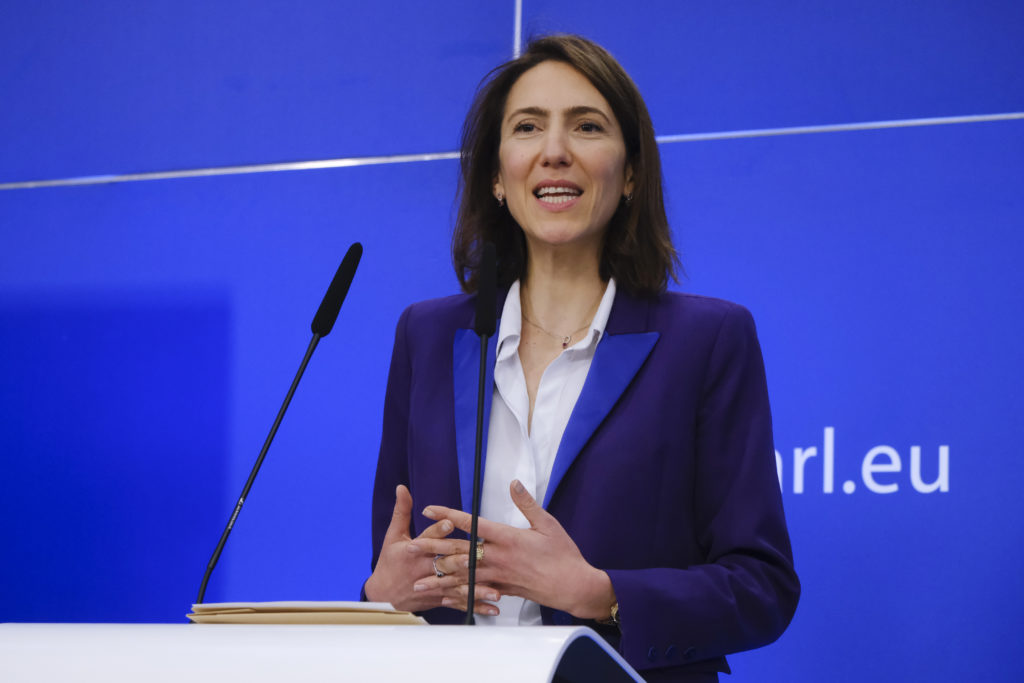
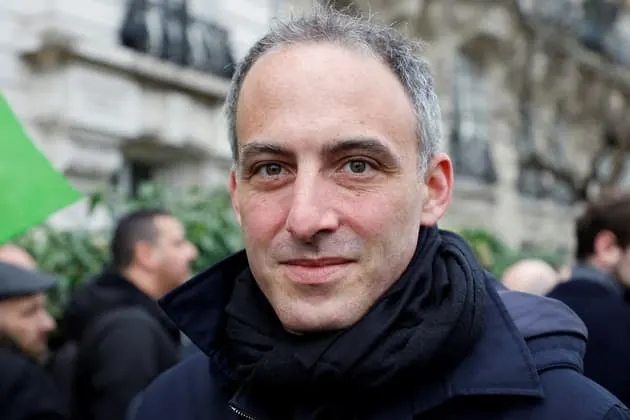
So we have two BHL lists for the European elections. A few caveats, though the Socialist Party is less supportive (with the exception of a few well-identified figures) of the possible genocide in Gaza and was late in correcting its stance, whereas Renaissance demonstrates a consistency in its support for Netanyahu.
1.3 Europe as a constraint
Macronian Europe is that of the «at the same time» where all «free trade» agreements are voted on in the European Parliament while pretending to oppose them in domestic politics. That of a France where it is decided that, European standards not being burdensome enough, it is necessary to make them even more complex when transposing them into French law. The crisis in our agriculture, the farmers' anger, stems in part from this complexity that the General Secretariat for European Affairs (SGAE) maintains. But who does this body report to? The Prime Minister! The SGAE must be instructed to ask the relevant ministries to do the exact opposite for each directive. Much like what Germany has long been doing: a flexible transposition that is as least restrictive as possible.
We don’t want that Europe, in which France loses its soul and its sovereignty! We don’t want that Europe focused on the east of the continent which abandons the Mediterranean and Africa. We don’t want that Europe, subservient to the United States for its strategic choices!

 French
  English
  Chinese
  Arabic