
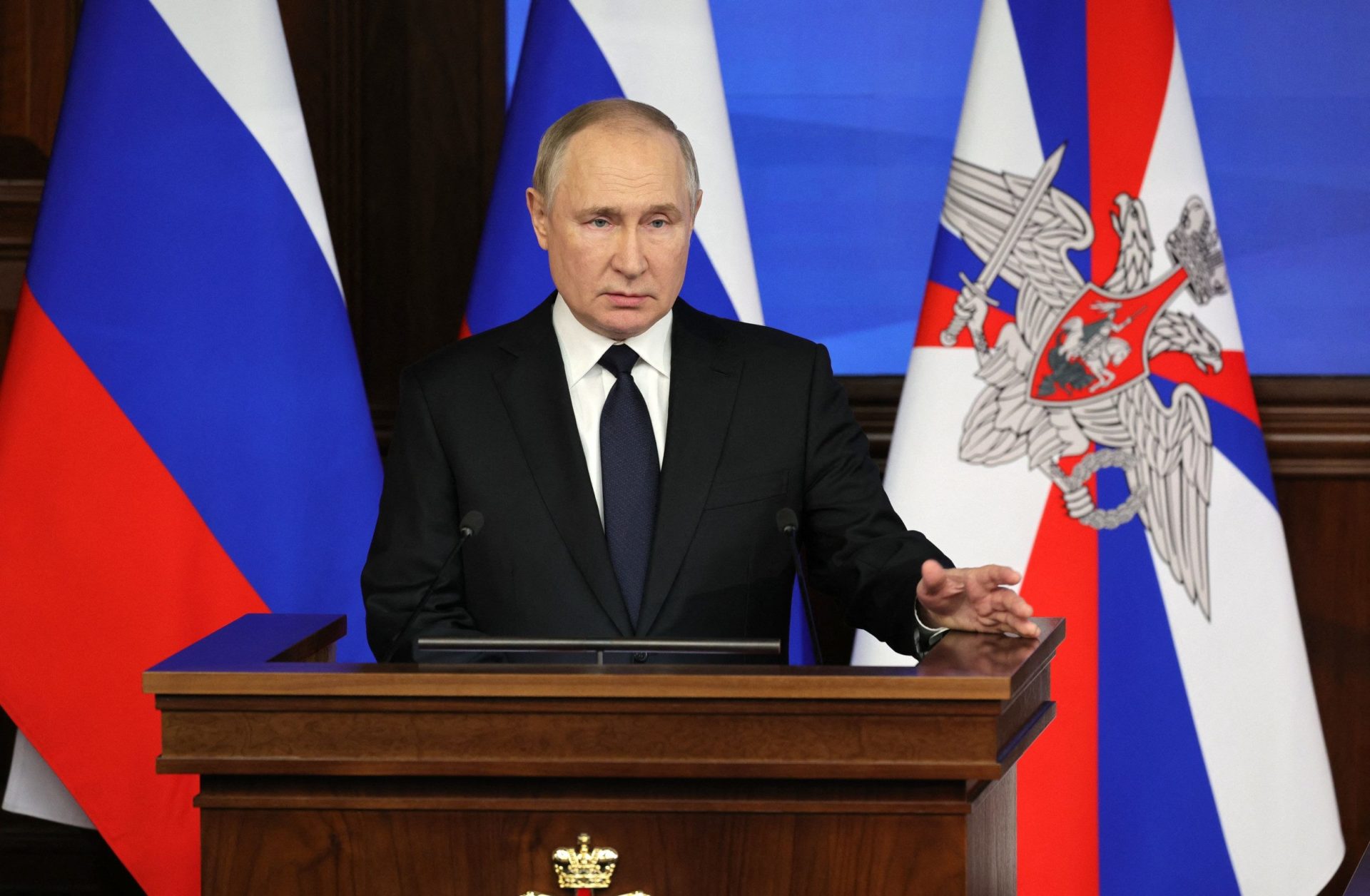
There is an intellectual temptation, understandable but misleading, to reduce Putin to a figure already catalogued in history, whether it be the nationalist dictator, the Soviet heir, or the 21st-century Tsar. Each of these analogies captures a fragment of reality, but they obscure what makes the phenomenon unique. Putin is above all the product of a specific strategic culture, that of the late Soviet security services:
- power is not a means but an end
- the legitimacy of a State is measured by its capacity to impose its will against the resistance of others
- any unforced concession is interpreted as a weakness inviting exploitation.
This analytical framework explains decisions which, seen from the West, appear irrational or self-defeating. The invasion of Ukraine in 2022 was not, within this logic, a miscalculation. It was the coherent culmination of a conviction forged over thirty years of resentment towards NATO enlargement, perceived as a systematic humiliation. But also of a partially accurate reading of Western disunity. What Putin underestimated was not Ukraine itself, whose resilience he knew, but the depth of the Euro-Atlantic response. And also, the duration of his own exposure to the costs of a war of attrition. «Putin does not aspire to recreate the USSR. His project is at once more modest and more destabilising. Russia must be a country whose interests cannot be ignored with impunity, and the global order must be negotiated between great powers rather than imposed by a single one.»
The war economy and its hidden limits
Russian economic resistance to sanctions caught a good number of Western observers off guard who were anticipating a rapid collapse. This resilience is real. Nevertheless, it relies on mechanisms whose long-term effects are profoundly negative for the country's productive structure. The pivot towards China, India and Iran as substitute trading partners has made it possible to maintain hydrocarbon flows and import some of the goods Moscow needed. But on increasingly unfavourable terms. Russia has become structurally dependent on partners that are skilfully exploiting its isolated situation to obtain tariff and geopolitical concessions.
The war economy itself is producing a massive distortion. The defence industry is running at full tilt, employment is being supported, and public consumption remains high thanks to unprecedented budgetary spending. But this mobilisation is consuming human and technological resources that will not be available for civilian modernisation. It is accumulating an implicit debt that future generations will have to absorb. It is accelerating the brain drain from a country that has already lost part of its intelligentsia since 2022. The question is not whether Russia can hold out, but in what state it will emerge from this period.
The multipolar project and its unexpected allies
One of Putin's least commented-on diplomatic successes is his ability to transform resentment towards the Western liberal order into a diffuse but real coalition. States that share the idea that the world must not be governed according to the norms of a single civilisation. This coalition is not a formal alliance. It brings together regimes as different as authoritarian China, democratic India, post-apartheid South Africa or Ethiopia in crisis... But it converges on one point: the rejection of Western universalism as a pretext for interference in internal affairs.
This multipolar project has found a resonance chamber in the institutions that Moscow has invested in or helped to create, whether it is the expanded BRICS, the Shanghai Cooperation Organisation or African partnerships. The operational effectiveness of these networks varies. Some partners maintain a cautious distance as soon as economic stakes with the West come into play. But the cumulative effect is a real erosion of Western capacity to speak on behalf of the international community without this claim being contested.
The post-Putin era, the system's unthought-of
The question of succession remains the structuring taboo of contemporary Russian politics. The system that Putin has built over twenty-five years is deeply personalised. Indeed, the balances between the factions of the siloviki, loyal oligarchs, managerial technocrats and ultra-patriots rely on a central figure who acts as the ultimate arbiter. It is not a totalitarian regime in the Stalinist sense, as it leaves room for competition between clans, but it is a regime that cannot function without its pivot. His political or physical disappearance would not automatically open the way to a democratic transition. It would trigger a competition for control of the state apparatus whose rules are written nowhere.
For Europe and its allies, this reality ought to lead to strategic thinking that goes beyond merely managing the Putin threat. The real question is not how to defeat Putin, but how to build the conditions for a lasting relationship with a post-Putin Russia. Nobody yet knows what it will look like. This reflection requires a form of strategic patience and an ability to think beyond electoral cycles. Western democracies have hitherto shown little aptitude for cultivating this. It is perhaps here, in this temporal asymmetry, that Moscow's true structural advantage lies.

 French
  English
  Chinese
  Arabic