
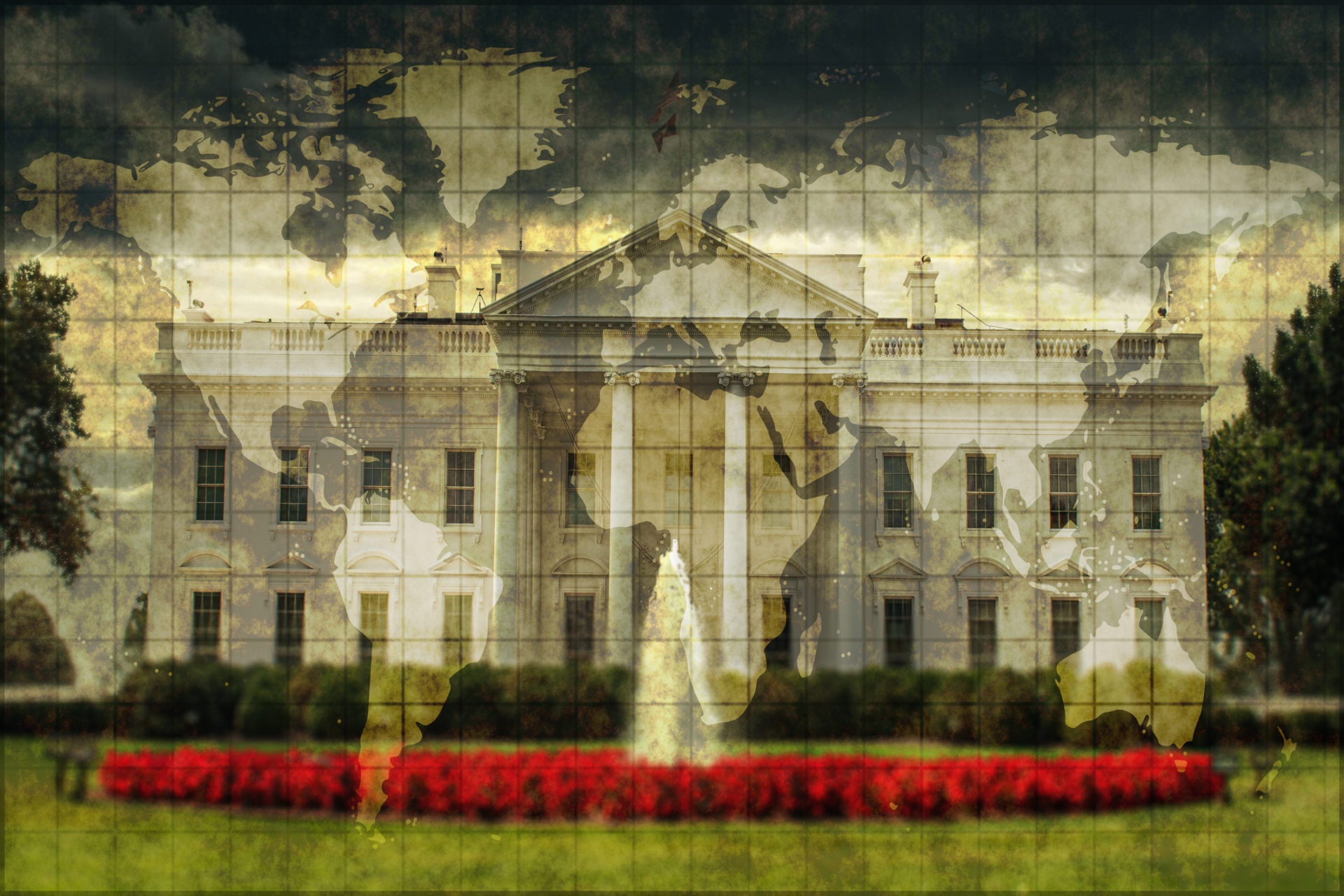
Emergence of the «Donroe» doctrine»
He liked the element of surprise. On the night of 3 January, US Southern Command forces, in coordination with special forces elements, entered Venezuelan territory to capture Nicolás Maduro. He was in his residence in Fuerte Tiuna, the Caracas military complex that he believed was impregnable. He was transferred to New York, where a federal indictment for drug trafficking and crimes against humanity awaited him.
The operation, as brutal as it was symbolic, propelled onto the global stage a concept exhumed from dusty archives. Standing in front of the Fox News cameras, Trump pronounced the word with undisguised satisfaction. He declared: «The Monroe Doctrine is a great thing, but we have largely moved beyond it.» And he immediately coined the phrase that now sums up his entire geopolitical vision: the Donroe Doctrine. This narcissistic contraction of his first name and the isolationist policy formulated by President James Monroe in 1823, in order to keep European powers out of the Western Hemisphere.
The National Security Strategy published a few weeks earlier had already laid the doctrinal foundations.
The administration calls it the «Trump Corollary». This is an explicit reference to the 1904 Roosevelt Corollary, which had extended the Monroe Doctrine, going as far as claiming for the United States a right of military intervention in the internal affairs of Latin American states deemed to be failing.
An updated, aggressive and overtly militarised version of this imperial tradition, the Trump Corollary asserts that the American continent constitutes an exclusive sphere of influence for the United States. Any Chinese or Russian economic, political or military presence must be proscribed not through negotiation, but by direct coercion. This is not domestic gallery-pleasing rhetoric: it is a structured programme of action. Washington has begun implementing it with methodical consistency, country by country, institution by institution.
Cuba is currently the focus of attention and concernsee https://www.geopolitics.fr/2026/05/20/apres-liran-cuba-la-prochaine-cible-de-donald-trump/)
In the political imagination of the Trump-Rubio team, the island represents far more than a geopolitical dispute. It is a generational obsession, a symbolic debt owed to the exiles of Miami. Their votes have built the careers of several prominent members of the administration.
Since the beginning of May, Trump has signed an executive order imposing economic sanctions of a severity that not even the coldest period of the Cold War had reached. Included is a formidable innovation borrowed from the model of secondary sanctions applied to Iran. Thus, any European, Asian or Latin American foreign bank maintaining trade relations with the Cuban government faces total banishment from the US financial system.
It is an economic nuclear weapon: it doesn't just target Cuba, it forces third parties to choose between Havana and Wall Street. The result is indisputable. The pressure is both economic and psychological. It is designed to produce a panicky effect within Cuban ruling circles.
In response, hundreds of thousands of Cubans marched through the streets of Havana, past the American embassy. This was a display of popular resistance that the Díaz-Canel regime immediately co-opted for its own benefit, with Washington handing it on a plate the external enemy that any struggling authoritarian regime needs to rally its people.
Washington's geopolitical logic is actually more elaborate than it appears at first sight.
By overthrowing Maduro, the United States cut off Cuba's main supplier of subsidised oil. For two decades, Chavista Venezuela had been supplying between 50,000 and 100,000 barrels a day on preferential terms, as well as a crucial source of foreign currency and logistical support.
The island, already economically suffocated by forty years of failing centralised planning and by the pandemic which destroyed its tourism sector, finds itself doubly vulnerable. Some economists in Barcelona or Mexico City, home to a growing intellectual Cuban diaspora, describe it as pre-collapse.
For Secretary of State Rubio, the son of Cuban immigrants from Cienfuegos and the main architect of this policy within the administration, this is precisely the goal. To precipitate, through a combination of internal economic collapse and maximum external pressure, what sixty years of direct pressure, embargoes, covert operations and assassination attempts have failed to bring about. The fall of the regime born from the Castro revolution is the objective. The question that remains unanswered, which his opponents insistently raise, is that of the aftermath. If the regime collapses, what happens? Who governs? With what order, what legitimacy, and what capacity to avoid Haitian-style chaos 150 kilometres off the coast of Florida?
However, while the «Monroe Doctrine» finds its most visible expression in the Western hemisphere, it does not deploy exclusively there.
It is now articulated around a post-war Iranian strategy which is, in many respects, its global extension. The same philosophy of maximum pressure, the same conviction that brutal coercion yields results more quickly than patient negotiation.
Following the February strikes and the April ceasefire, Trump has initiated a sequence of coercion against Tehran that structurally mirrors the Cuba model. It combines secondary sanctions against all of Iran's trading partners, a reinforced financial blockade, and repeated threats to resume military strikes if Mojtaba Khamenei does not commit to direct nuclear negotiations.
The stated objective is of maximum ambition, some would say disproportionate: to force the new Iranian leadership to negotiate a comprehensive agreement. This would include the definitive and verifiable abandonment of all enrichment capacity, the implicit recognition of Israel, an end to the financing of Hezbollah and pro-Iranian militias in Iraq, as well as a gradual normalisation of relations with the Gulf states.
Behind the scenes, American emissaries, some from Qatari business circles close to Jared Kushner, have stepped up discreet contacts with factions of the Iranian establishment deemed pragmatic. These include technocrats from the Ministry of Petroleum, members of the Expediency Discernment Council, and officials from the Central Bank. Washington is betting on a bold thesis. The new Supreme Leader, Mojtaba Khamenei—young, lacking his father's religious capital and political network, and faced with a ruined economy and a visibly weary population—would structurally be more receptive to a negotiated exit from the crisis. Tehran, for its part, publicly refuses any discussion under military coercion, whilst not ruling out, according to several consistent regional diplomatic sources, indirect contact via Oman, a traditional channel of proven diplomatic discretion since the 1980s.
Trump thinks in terms of pure power dynamics and short timeframes
His predecessors used the carrot and the stick while integrating moral, multilateral and long-term considerations,
This dual strategy, maximum economic pressure on Cuba and Venezuela in the Western hemisphere, combined military-diplomatic coercion on Iran in the Middle East, reveals doctrinal coherence. His opponents are quick to challenge it but struggle to completely invalidate it. He wields only the stick, banking on the adversary tiring quickly and on his own ability to hold out politically until the pressure takes effect. It is a method that can potentially produce short-term results. The capitulation of exhausted regimes, the signing of agreements under duress are conceivable. But, in the medium and long term, this generates lasting political antibodies. Coalitions of resistance and invigorated anti-Americanism are formed in societies that might otherwise evolve in a direction favourable to Washington.
International reactions ranging from condemnation to reconfiguration
President Petro's Colombia, Lula's Brazil, and Claudia Sheinbaum's Mexico are openly condemning
They condemn a return to big stick imperialism and take the debate to the United Nations with undeniable rhetorical success. Nevertheless, they know their capacity for action is limited in the face of American power.
China is watching with particularly close strategic attention
These developments explicitly exclude it from regions where it has invested heavily for two decades. In Latin America via the Belt and Road Initiative, in port infrastructure, in energy networks. And in the Middle East via cooperation agreements with Iran, Saudi Arabia and the United Emirates. Beijing has not responded publicly to the «Donroe Doctrine», but its diplomats are stepping up visits to Latin American capitals. Its think tanks are publishing analyses that describe a historic shift in the world order from which China intends to benefit.
And in several capitals, the same resentment is rising, dense and enduring: that of nations and peoples who refuse to be treated as variables to be adjusted in the power equation of an America that still believes it alone governs the world.
The Western hemisphere and the Middle East thus find themselves, for the first time since the Cold War, at the heart of the same strategic sequence
It is unified by a doctrine that appears coherent from Washington. Yet this coherence carries within it its own contradictions. Indeed, by trying simultaneously to dominate two distant theatres, impose its rule on recalcitrant regimes across three continents, and exclude China from areas where it is already deeply rooted, there is a risk of dispersing its power to the point of exhausting its leverage. The original Monroe Doctrine at least had the virtue of geographical modesty. The «Donroe Doctrine», on the other hand, has no borders, and that is perhaps its deepest Achilles' heel.

 French
  English
  Chinese
  Arabic