
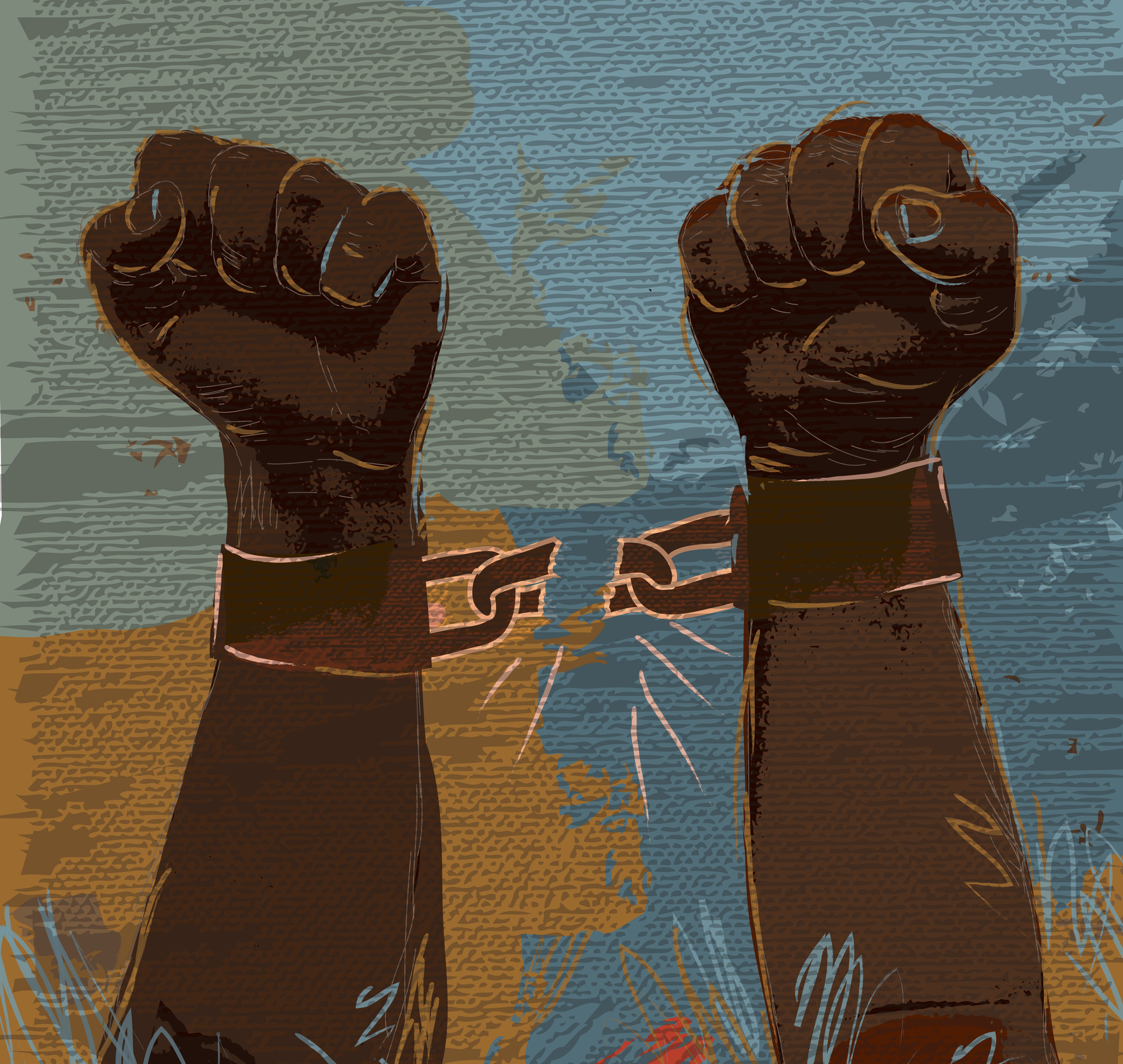
It took nearly two centuries after the final abolition of slavery for France to finally face up to one of the most violent texts in its legal history. By supporting the symbolic repeal of the Code Noir, debated in the National Assembly following a unanimous vote in the Law Committee on 20 May 2026, the French state is implicitly acknowledging that a memorial and political vacuum had persisted since 1848.
While the Code Noir had not been enforced since the abolition of slavery, it had never been formally repealed. This symbolic survival, long considered a mere legal anomaly, became over time a major moral issue. Behind this set of royal edicts promulgated under Louis XIV and drafted under the impetus of Jean-Baptiste Colbert lies, in reality, one of the legal pillars of the French colonial slave system.
The Black Code was not a simple administrative regulation intended to manage the colonies. It methodically organised the dehumanisation of human beings reduced to slavery. Its Article 44, probably one of the most infamous in the history of French law, classified slaves as «chattel personal». African men, women and children legally became objects that could be transferred, sold and seized.
Through this text, the monarchical state transformed racial domination into a legal norm.
The legal birth of colonial racism
The Black Code constitutes one of the founding acts of modern structural racism in the French colonial space. It is not content with merely organising the economic exploitation of the sugar, coffee or indigo plantations in the West Indies. The code constructs a human hierarchy based on skin colour.
In the French colonies, free white people became the exclusive holders of political, economic and social authority, while African and Afro-descendant populations were progressively locked into an inferior legal status. Racism therefore ceased to be merely a prejudice: it became an institutional architecture.
The text also imposes a permanent violence. Families can be separated by sale. Children are born slaves. Runaways – the «maroons» – risk mutilation, branding with a hot iron or execution. Slaves are deprived of religious freedom, subjected to forced conversion to Catholicism and excluded from any true legal personality.
Barbarity was not a deviation from the colonial system; it constituted its normal functioning.
French universalism and its contradictions
The history of the Code Noir also reveals one of the major contradictions in French political history. Even as Enlightenment France developed the universal principles of human rights, it maintained a system in its colonies based on the absolute denial of human equality.
Thinkers such as Denis Diderot, Guillaume-Thomas Raynal and Montesquieu partially condemned slavery and colonial violence. However, most 18th-century intellectual elites remained trapped in the ambiguities of their era. Even Voltaire, despite criticising the system in certain writings, invested in the colonial trade.
In 1789, the Declaration of the Rights of Man proclaimed that « Men are born and remain free and equal in rights », while hundreds of thousands of slaves continue to be exploited in the French colonies.
The proclaimed universalism stopped at the racial borders of the empire.
The slaves conquered their freedom themselves
The history of the Code Noir is also one of resistance. Despite colonial terror, the enslaved never stopped fighting.
Marooning, sabotage, insurrections, clandestine preservation of African cultures: forms of resistance emerged everywhere in the French colonies. In Saint-Domingue, future Haiti, figures like François Makandal became symbols of radical protest against the slave system.
This resistance reached its peak with the Haitian Revolution of 1791, led notably by Toussaint Louverture, Jean-Jacques Dessalines and Henri Christophe. As the first victorious slave revolution in modern history, it inflicted an immense shock upon the European colonial powers.
France first abolished slavery in 1794, before Napoleon Bonaparte re-established it in 1802. He abolished the slave trade during the Hundred Days. Final abolition did not actually take place until 1848, driven in particular by Victor Schoelcher and the struggles of the slaves themselves.
Colonial legacies are still alive
The current debate surrounding the Code Noir goes far beyond mere historical memory. This is because the legacies of slavery and colonialism continue to produce profound effects in contemporary French society.
The chlordecone scandal in the French West Indies brutally illustrates these continuities. Used massively in the banana plantations of Martinique and Guadeloupe despite health warnings, this toxic pesticide has lastingly contaminated the local populations, the majority of whom are descended from slaves. For many activists and researchers, this affair reveals the persistence of logics inherited from the colonial system: the protection of dominant economic interests, the underestimation of overseas lives and structural environmental inequalities.
In Mayotte, water shortages, massive poverty and inequalities in access to public services also serve as a reminder of how often overseas territories continue to be treated as subordinate peripheries of the Republic.
The repeal of the Code Noir will not heal these divisions. But it constitutes an essential symbolic act: that of a Republic which finally agrees to recognise that a part of its legal history was built against the very idea of universal humanity.
Emmanuel Macron is moving forward, but the debate on reparations is now imposing itself
During the ceremony organised at the Élysée for the 25th anniversary of the Taubira Law, Emmanuel Macron publicly supported the symbolic repeal of the Black Code. The Head of State acknowledged that « the silence »discussed around this text had become« a form of offence ».
But the president remains cautious on the explosive issue of reparations. Refusing any« ranking of crimes against humanity », he didn't announce any concrete measures regarding the demands made by several elected officials from the overseas territories or by Haiti concerning the « double debt »imposed by France following Haitian independence.
Facing him, Christiane Taubira recalled that recognition could not remain purely symbolic. For the memory of slavery does not solely belong to the past: it continues to question the distribution of wealth, racial discrimination, territorial divides and the power dynamics inherited from colonisation.
The repeal of the Code noir therefore opens a new phase. Not one of memorial closure, but one of a broader debate on the place of colonial history in the contemporary Republic. For a democracy is judged not only by its proclaimed principles. It is also judged by its capacity to recognise the crimes committed in its name.

 French
  English