
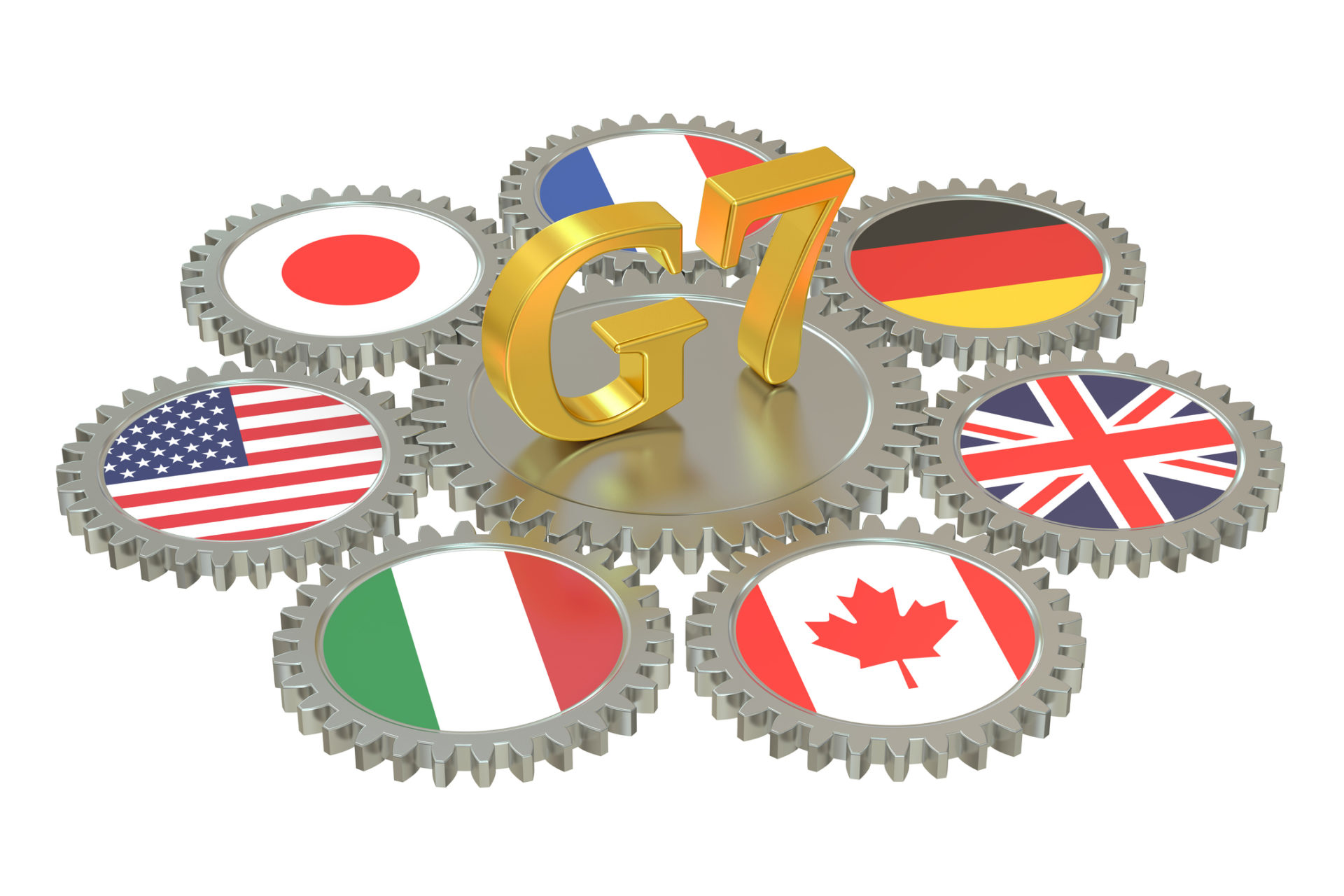
In the hushed drawing rooms of Évian-les-Bains, facing Lake Geneva, everything is ready to welcome the G7 powers from 15 to 17 June. Just after the Africa-France summit in Nairobi, Kenya. Officially, the agenda will cover artificial intelligence, the war in Ukraine and tensions in the Middle East.
But behind the scenes, another issue is already monopolising the preparatory discussions: Africa again. And in Paris, nobody is really hiding it: this summit is designed as an attempt to regain strategic initiative on a continent where French influence has seriously eroded.
«Africa has become a ground for direct competition»
« This is no longer a development issue. It is a matter of power », says a European diplomat involved in the preparatory negotiations.
For several weeks, those close to President Emmanuel Macron have been multiplying discreet meetings with financial institutions, mining groups and African partners.
Objective: to structure a credible offer in the face of the rise of China... but also of newer, more aggressive entrants.
Critical minerals: the battle for Africa's subsoils
First front, and not the least: strategic minerals. On 20 April, Paris organised an unprecedented format bringing together the G7, multilateral banks and African producer countries.
Behind this initiative lies a concern: the growing dependence of Western industrial chains on Beijing. For today, the reality is brutal:
- The Democratic Republic of the Congo supplies nearly 70 % of the world's cobalt.
- Guinea holds major bauxite reserves;
- Several African countries control key deposits of lithium, manganese and graphite.
« The G7 is arriving late. The Chinese are already settled in », says a mining sector expert.
Debt: the silent arm-wrestle with Beijing
Second battlefield: African debt. With over 1,100 billion dollars in outstanding loans, the continent has become a complex negotiation ground between Western creditors... and China, which is now the leading bilateral lender.
Paris is pushing behind the scenes for a new restructuring mechanism. The problem is that Beijing is imposing its own rules of the game.
« Discussions are extremely tense. Everyone is defending their financial and geopolitical interests », says a source close to the World Bank.
Result: behind the expected consensual press releases in Évian, the lines of fracture remain deep.
Sahelian security: a strategy to rebuild
Third file, even more sensitive: the Sahel. Following successive ruptures with Mali, Burkina Faso and Niger, Paris is seeking a new security architecture.
But without a direct military presence, the equation is a delicate one. It is in this context that a telling diplomatic choice intervenes: the invitation extended to Kenyan President William Ruto.
According to several leaks, this decision was made at the expense of South African President Cyril Ramaphosa. A far from trivial arbitration.
« Kenya is perceived as more aligned, more stable, and above all more operational on security issues »", explains an African diplomat based in Brussels.
Corridors and ports: the new strategic obsession
Fourth front: infrastructure. From Lomé to Djibouti, via the Atlantic seaboard and the Red Sea, African logistics corridors have become major strategic assets.
Amid maritime tensions and the fragmentation of trade routes, the control of flows is becoming a priority.
« He who controls African ports controls a part of tomorrow's global trade », summarises a senior European official. But here too, the competition is fierce:
- China is already financing and operating numerous pieces of infrastructure.
- Turkey is increasing its port positions.
- The United Arab Emirates are moving aggressively via their logistics giants.
Évian, or the G7 credibility test
In reality, the Évian summit poses a simple yet formidable question: can the G7 still wield influence in Africa?
The figures speak for themselves: trade between China and Africa now exceeds 295 billion dollars, compared with around 65 billion for France.
And above all, African capitals have changed their mindset.« They diversify, negotiate, arbitrate. The era of exclusive partnerships is over », observes an analyst.
A pressured offensive
In Evian, Paris will therefore try to regain the upper hand. But without excessive illusions. For behind the diplomatic initiatives, a reality is asserting itself: Africa is no longer a guaranteed sphere of influence. It is an arena of open competition. And in this game, the G7 no longer holds the advantage.

 French
  English
  Chinese
  Arabic