
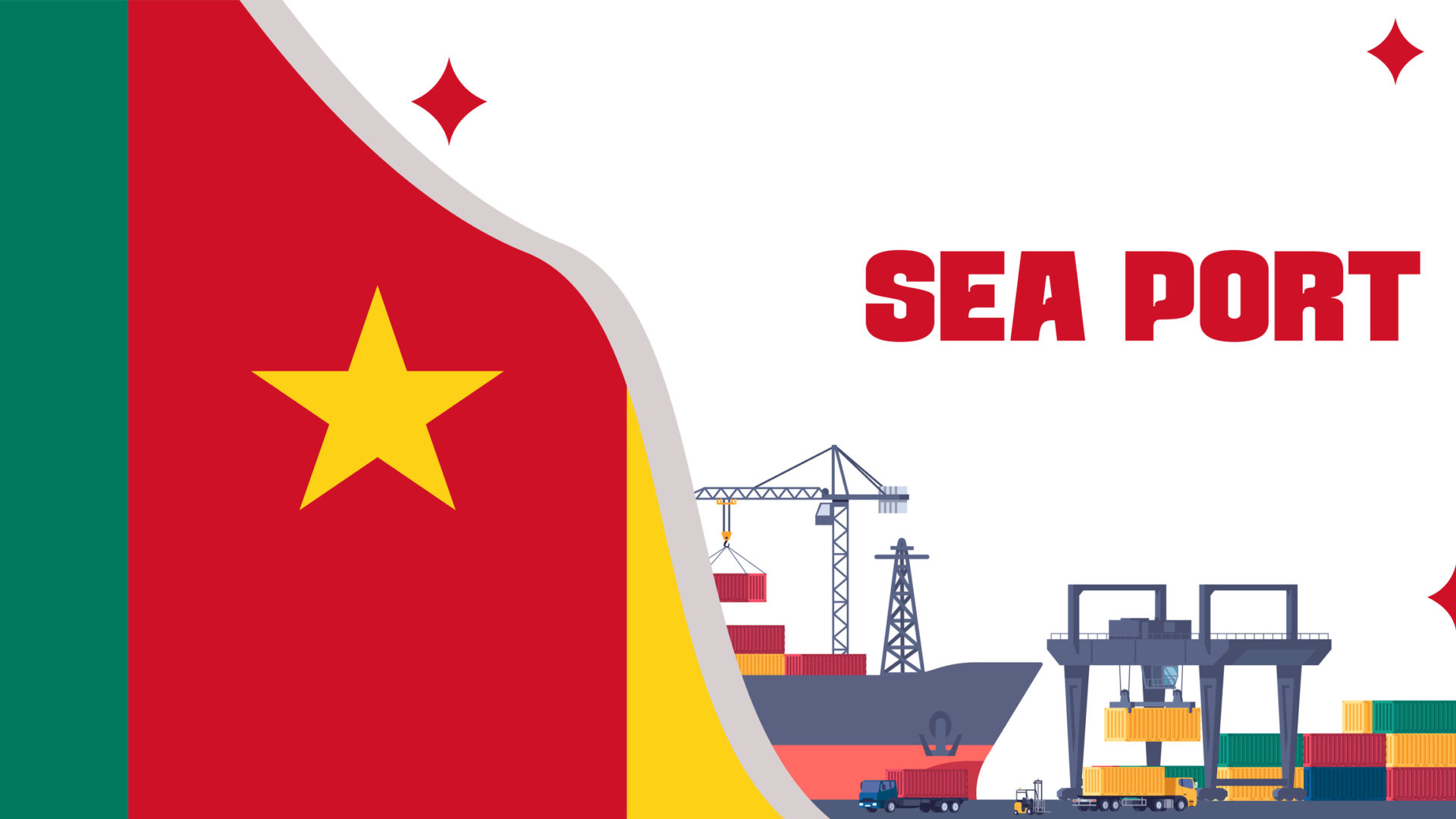
Revelations about a silent battle between great powers.
Officially, the Cameroonian Minister of Transport, Jean Ernest Masséna Ngallè Bibéhè, travelled to Saint Petersburg to take part in the international transport and logistics forum organised under the impetus of the Kremlin.
Unofficially, several African and European diplomatic sources describe a much more strategic sequence: that of a discreet Russian offensive on the critical infrastructure of Central Africa.
According to several forum participants, discussions between the Cameroonian delegation and Russian groups went beyond mere protocolary exchanges on technical cooperation.
« Russians no longer talk solely about security or defence in Africa. They now want to control flows », confided an African diplomat present in Saint Petersburg. And in this new global logistical battle, Cameroon occupies a central place.
Why Moscow is now looking towards Douala and Kribi
Cameroon controls one of Central Africa's most strategic maritime accesses. The Port of Douala still handles nearly 95 % of Cameroon's foreign trade and forms the main gateway to Chad and the Central African Republic.
Kribi Port, a deep-water port, has ambitions to become one of the major maritime hubs in the Gulf of Guinea. According to sources close to the matter, several Russian groups have shown interest in:
- port equipment
- railway modernisation
- aircraft maintenance
- digital logistics
- securing supply chains
A maritime executive confides: « Moscow is seeking new logistical outlets to bypass Western restrictions and secure new trade corridors ».
Behind the scenes at the Saint Petersburg Forum
The forum was far from trivial:
. More 80 countries represented
. Near 6,000 participants
. Approximately 1,250 businesses
. More 450 transport companies
. Around thirty departmental ministers
All under the watchful eye of Russian President Vladimir Putin.
According to several sources on the ground, the discussions with the Cameroonian delegation were closely monitored by European and Asian actors already present on the Cameroonian market.
An African observer claims: « China is watching. The Europeans are watching. The Emiratis are watching. Everyone understands that whoever controls the corridors controls a part of regional trade ».
The great Cameroonian logistics backlog
In private, several Cameroonian officials admit that the challenges remain considerable.
- port congestion in Douala
- rail ageing
- high logistics costs
- administrative delay
- insufficient digitalisation
In January 2026, Minister Jean Ernest Masséna Ngallè Bibéhè allegedly acknowledged the urgency himself: « It is necessary to step up efforts in trade facilitation and the digitalisation of port procedures ».
Another major ambition is to equip the ten Cameroonian regions with more efficient airport infrastructure in order to boost national connectivity.
A world war of corridors
Behind Russia, other powers are already advancing:
. China is heavily financing African infrastructure.
. Turkey is strengthening its port presence.
. The United Arab Emirates are ramping up their logistics investments.
. European actors are trying to maintain their historical influence.
The Gulf of Guinea is thus becoming one of the new epicentres of global geoeconomic competition.
The seldom-mentioned security factor
Behind the scenes, several experts are also pointing to the growing risks:
. maritime piracy
. illicit trafficking
. energy vulnerabilities
. regional instability
Control of logistics infrastructure is now also becoming a matter of national sovereignty.
What Yaoundé is really preparing
According to several regional analysts, the Cameroonian strategy is clear:
. depend on no single power
. increase partnerships
. turning its geography into an economic advantage
. establish itself as a major ECCAS hub.
A senior regional official summarises: « Cameroon wants to become the logistics Singapore of central Africa ».
The real battle begins now
The visit to Russia was therefore not a simple ministerial mission. It marks Cameroon's more visible entry into a silent war: that for the control of African ports, railways, air hubs and trade corridors. And in this new global game, Yaoundé wants to avoid being a spectator.

 French
  English
  Chinese
  Arabic