
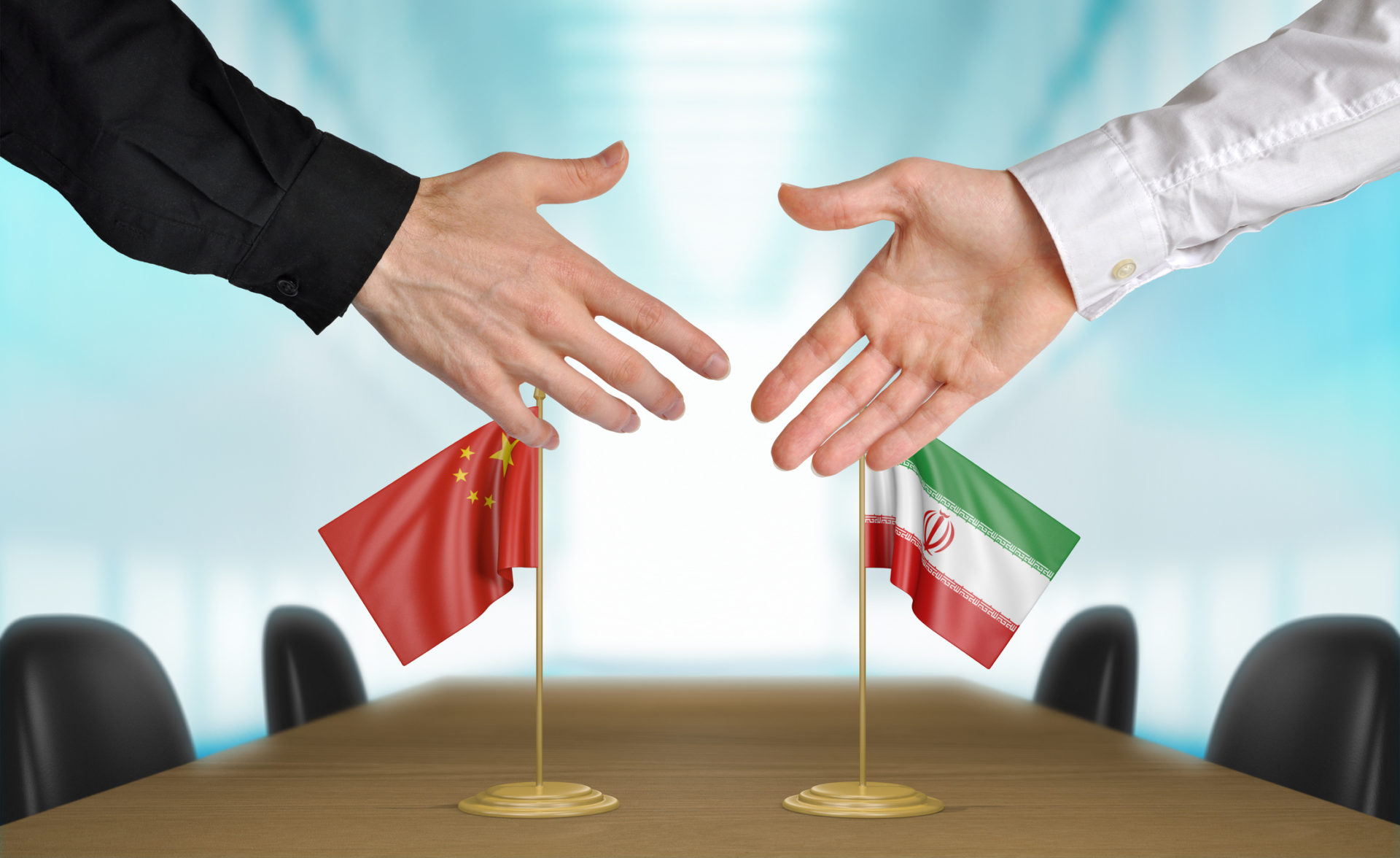
Held hostage by its own energy dependency, Beijing has secretly negotiated an exclusive transit corridor with Tehran while maintaining a facade of neutrality. It is this fiction that the Hormuz crisis has definitively exposed.
The figure that explains everything: 45 %
Before the US-Israeli strikes began on 28 February 2026, about 45 % of China's total crude oil imports passed through the Strait of Hormuz every day, amounting to 5 to 5.5 million barrels per day. Globally, the strait accounts for about 20 % of global hydrocarbon consumption, nearly 20 million barrels per day, plus Qatar's liquefied natural gas exports, from which Europe draws 12 to 14 % of its supply. No other geographical point on the planet concentrates so much energy value in so little space.
These 39 kilometres of minimum width between the Iranian coast and the Omani peninsula are not just a sea route. They constitute the Achilles heel of Chinese growth. As early as 28 February, with the closure of the strait by Iran in retaliation for the strikes, the flow of Chinese oil collapsed from 5 million to around 1.2 million barrels per day, according to March 2026 customs data. Beijing's National Bureau of Statistics immediately placed its teams on high alert. China drew upon its strategic reserves, estimated at around 90 days of normal imports, or nearly a billion barrels, to absorb the shock.
45 % of Chinese oil imports passed through Hormuz, as well as 20 % of global consumption.
This short-term resilience should not be deceptive. China remains structurally dependent on a maritime route that it does not militarily control, in a conflict zone where its allies are belligerents and its trading partners are held hostage. Neutrality, in this context, is not a stance: it is a necessity imposed by geography. And an imposed necessity is not a sovereign choice. «China is not neutral at Hormuz. It is the silent creditor of a war whose two sides it finances, one through trade, the other through oil.»
Constructive ambiguity: anatomy of a bluff
Since February 28, Beijing's strategy can be summed up in three words: constructive ambiguity. Not condemning the US-Israeli strikes, which would alienate Washington at the worst possible moment of the Sino-American trade war. Nor supporting them either, which would betray Iran, its main substitute oil supplier and BRICS+ partner. Presenting itself as a potential mediator, without ever taking the slightest concrete diplomatic risk.
The scene played out live on 16 March 2026 during the Ministry of Foreign Affairs« daily press briefing. To the direct question — »Will China help Donald Trump, as he is asking, to secure the Strait of Hormuz?" — the spokespersons evade, deflect, and do not answer. This institutional silence is an answer in itself: Beijing does not want to choose between Washington and Tehran, because to choose is to expose oneself. But not to choose is already to have chosen, in favour of the status quo that temporarily suits it.
Trump nonetheless made the choice explicit. In mid-March, he threatened to cancel his visit to China planned for the end of March if Beijing did not help to secure the strait. The Chinese response came via the Global Times, an unofficial organ of the Party: Trump was described there as having started a war he is incapable of finishing. This rhetoric is a substitute for a policy. It makes it possible to signal one's dissatisfaction without committing to the substance.
Yet Beijing possesses real capabilities that it chooses not to deploy. An operational military base in Djibouti, a seasoned fleet of destroyers and frigates capable of escorting convoys in the Gulf on the one hand; undeniable diplomatic influence over Tehran, a large part of whose war economy it finances, on the other. It makes use of neither. China is a power that pretends not to have the means to act so as not to have to bear the political consequences of its action.
The secret corridor: when neutrality becomes a bilateral agreement
On 5 March 2026, the IRGC officially announced that Iran will keep the Strait of Ormuz closed solely to vessels belonging to the United States, Israel and their Western allies. This decision is not unilateral. It is the result of discreet negotiations between Beijing and Tehran, conducted in the days leading up to the announcement.
Concrete proof: as early as that same 5th of March, the bulk carrier Iron Maiden, operated by Cetus Maritime Shanghai Ltd., crossed the strait explicitly signalling «Chinese owner». It was not hit. On 7 March, the Sino Ocean, sailing under the Liberian flag but also signalling its status as a Chinese vessel, crossed the passage in turn after loading its cargo in the Emirates. At the same time, 150 tankers flying other flags remained stranded outside the strait.
This is no longer neutrality. It is a bilateral maritime non-aggression pact, disguised as commercial pragmatism. China has secured an exclusive corridor from Iran in exchange for a guarantee not to join the American coalition.
The island of Larak, transformed into a toll station for vessels authorised according to opaque criteria, illustrates the new geography of global shipping: no longer freedom of the seas guaranteed by international law, but rights of passage negotiated on a case-by-case basis, granted or denied depending on current alliances. Lloyd’s List Intelligence has dubbed this arrangement the «Tehran toll». China is its primary beneficiary and therefore its primary accomplice.
In doing so, Beijing is crossing a major symbolic line: it is implicitly abandoning the principle of freedom of navigation which it nevertheless invoked to denounce US military exercises in the South China Sea. International legal consistency is being sacrificed on the altar of oil supplies. This is a sign that, for China, principles are only worth what barrels permit.
The Petroyuan: the crisis as a long-term opportunity
Behind the military crisis, another war is being played out in silence: that of the invoicing currency for global oil. Since the launch of the petroyuan in 2018, China has been pursuing a structural objective: to erode the dominance of the US dollar on international oil markets, reduce its exposure to US financial sanctions, and bypass the SWIFT system, access to which is controlled by Washington.
The 2026 Ormuz crisis significantly accelerated this dynamic. With the tightening of US sanctions on Iranian exports and the US maritime blockade decreed on 13 April in the Arabian Sea, oil transactions between Beijing and Tehran are now settled overwhelmingly in yuan. Bilateral banking mechanisms completely bypass Western financial infrastructure. Every barrel bought in yuan is one step closer to the de-dollarisation of the global oil market.
It is not an accident. It is a strategy. China is exploiting the disorder created by the war to advance its monetary pieces at a lower diplomatic cost. While Washington is absorbed by the military management of the conflict and Europe suffers the rise in gas prices, Beijing is quietly consolidating post-dollar infrastructure. The crisis in Hormuz is thus for China both a short-term energy nightmare and a long-term geopolitical opportunity.
Soft coercion: Beijing, war creditor
It would be inaccurate to present China as totally passive. Behind the scenes, Beijing is exerting real pressure on Tehran, but the pressure of a creditor, not a mediator. Executives from Chinese state-owned gas companies have explicitly asked Iran not to target Qatari oil tankers and LNG carriers transporting the LNG of which China is also a customer. Beijing has reminded Tehran that any total interruption of oil exports would turn Chinese neutrality into open economic hostility.
This is not mediation. It is soft coercion: the world’s biggest customer is laying down the law to its cornered supplier, without ever getting publicly involved in resolving the conflict. During the Twelve-Day War in June 2025, it was precisely this same pressure that had led Iran to abandon plans to close the strait. By 2026, the Iranian calculation has changed: Khamenei is dead, the regime is fighting for its survival, and Beijing’s leverage has eroded. China is discovering the limits of influence without commitment.
The question is being asked by several analysts: will China be the architect of a lasting peace or the silent financier of a prolonged resistance? No definitive answer yet. But the facts lean towards the second option: by maintaining its Iranian oil supplies, by financing yuan transactions that bypass sanctions, by refusing to join any maritime security coalition, China is objectively prolonging Tehran's capacity for resistance. «China's neutrality in the Strait of Hormuz looks less like the stance of a peace power than the calculated prudence of an actor who profits from disorder without wanting to take responsibility for it.»
What this reveals: three fractures in the international system
The Hormuz crisis is not an episode. It is a revelation. It exposes three structural fractures whose effects will be felt long after the ceasefire of 8 April 2026.
First breakup the end of Chinese paid neutrality. For two decades, Beijing managed to be everyone’s primary trading partner and no one’s adversary. This strategy required a world stable enough for its contradictory commitments never to collide head-on. Hormuz 2026 blew that lock off. Forced to choose between Washington and Tehran, China chose, but refuses to own it. This double game has a credibility cost that the coming decade will reveal.
Second break-up the fragmentation of freedom of navigation. Since 1945, freedom of movement on the high seas has been a global public good guaranteed de facto by the US Navy. Today, this principle is fragmented: Iran discriminates between flags according to nationality, China negotiates exclusive corridors, and shipowners pay «Tehran tolls». Maritime globalisation is entering an era of geopolitical feudalism where every passage is up for negotiation.
Third breakup Hormuz as an accelerator of chaotic polycentricity. The multipolar dream formulated by Beijing and Moscow implied stable poles regulated by shared norms. What the crisis produces is different: ad hoc micro-coalitions, corridors of exception, convenience insurances, a world where each actor negotiates their own exemption from common rules. Iran is not building an alternative order. It is demonstrating that no order is truly guaranteed.
Can China remain neutral in Hormuz? No.
She has negotiated an exclusive corridor with Tehran, that is not neutrality. She is financing Iranian oil transactions in yuan, that is not neutrality. She refuses to deploy her naval capabilities to secure the strait, but those capabilities exist and this refusal is itself a political choice.
Chinese neutrality in Hormuz is a fiction maintained to appease Washington without betraying Tehran. The 2026 crisis exposed this fiction to the light of day. The real question that now arises is not whether China is neutral – it is not – but what price it is willing to pay to continue pretending to be.

 French
  English
  Chinese
  Arabic