
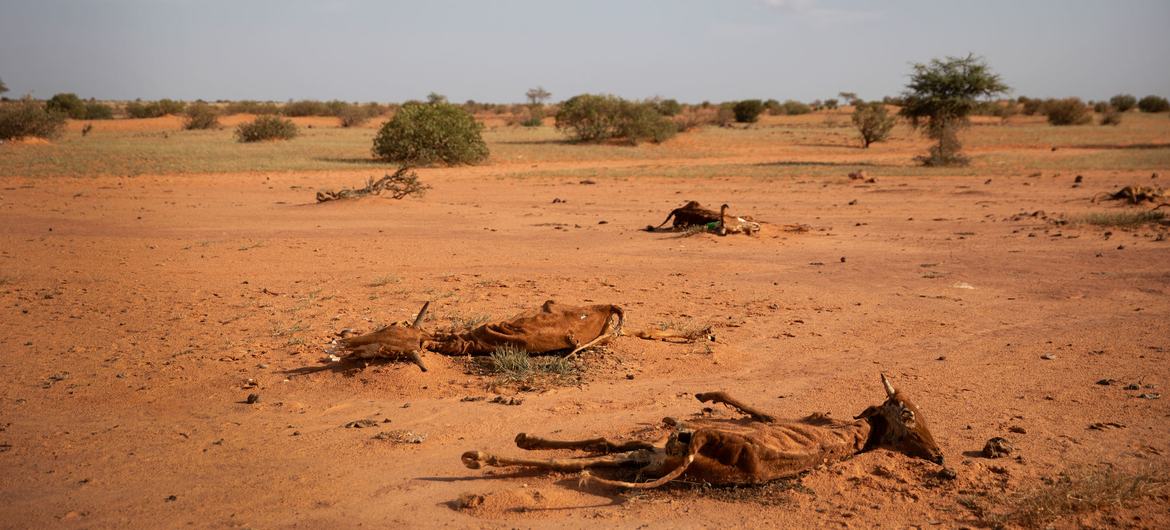
After two weeks of intense negotiations, the UN conference on desertification, called COP16, ended last week in Riyadh with another failure. One day late and without reaching a binding agreement on the fight against drought.
Without drums or fanfare, nearly 200 countries gathered in Saudi Arabia during the 16th Conference of the Parties (COP16) to the United Nations Convention. After intense days of discussions and hesitation, with no real resolutions aimed at combating desertification (UNCCD), they nevertheless committed to placing the restoration of land and resilience to drought at the heart of their national policies and international cooperation.
However, and due to a lack of more firm commitments, these efforts are perceived as an essential step towards ensuring food security and adapting to climate change. The representatives of the various countries present also appear to have made significant progress in the negotiations on a «future global regime on drought» that they plan to finalize during the COP17 in Mongolia, which is scheduled to take place in 2026, the UNCCD Executive Secretariat emphasized in a press release.
As a result of the war, more than 12 billion dollars have been «promised» to establish operations against desertification, land degradation and drought around the world, especially in the most vulnerable countries. Of course, as the saying goes, promises are only binding on those who believe in them.
However, it should be noted in the conclusion of the discussions that among the main advances of COP16 are, in UN language, the creation of a Caucus for Indigenous Peoples, as well as another aimed at local communities. More clearly, these commitments aim to ensure that their unique perspectives and challenges are fully represented: the continuation of the Convention’s Science-Policy Group to strengthen decisions based on scientific data, as well as the mobilization of the private sector within the framework of the Business4Land initiative.
« Our work does not end with the conclusion of COP16. We must continue to respond to the climate crisis—an appeal for action to embrace inclusivity, innovation, and resilience. Youth and indigenous peoples must be at the center of these discussions. Their wisdom, voices, and creativity are essential to building a sustainable future that brings hope to future generations. », insisted the UN Deputy Secretary-General Amina J. Mohammed, in a solemn statement.
Solutions within our reach, especially in the richest countries
In his closing speech, COP16 President Abdulrahman Alfadley, Saudi Minister of Environment, Water and Agriculture, did not fail to declare that this meeting marked a turning point in international awareness of the urgency of accelerating land restoration and resilience to drought.« We hope that the results of this session will mark a significant turning point by strengthening efforts to preserve land, reduce its degradation, develop capacity to cope with drought, and contribute to the well-being of communities around the world. », he declared.
Also, during the same closing plenary of COP16, the Executive Secretary of the UNCCD Ibrahim Thiaw, in turn, wished in a prayerful way: « As we have discussed and observed, solutions are within our reach. The actions we have undertaken today will shape not only the future of our planet, but also the lives, livelihoods, and opportunities of those who depend on it. ».
While also emphasizing that a significant change was taking place in « a global approach to land and drought issues, highlighting interconnected challenges with broader global issues such as climate change, biodiversity loss, food security, forced migration and global stability ». Finally!
Between financial needs and commitments, hearts waver
During the conference, while sitting comfortably in their chairs, the participants nearly faltered as the UNCCD told them that at least 2.600 billion dollars in investments would be needed by 2030 to restore more than one billion hectares of degraded land and strengthen resilience to drought. A figure that is truly staggering, as it represents a daily investment of 1 billion dollars by 2030 to reach the global goals of land restoration and combating desertification and drought.
Already and as a sign of good will, new commitments have been announced for large-scale land restoration and drought preparedness projects, such as the Riyadh Global Partnership for Drought Resilience, which has been funded with 12.15 billion dollars, including a commitment of 10 billion dollars from the Arab Coordination Group. This first envelope is intended to support 80 of the most vulnerable countries identified in the implementation of strategic and material initiatives.
The Great Green Wall (GMV), an initiative led by Africa to restore 100 million hectares of degraded land, has also mobilized 11 million euros from the Italian government for the restoration of landscapes in the Sahel, as well as 3.6 million euros from the Austrian government aimed at strengthening coordination and implementation of the initiative in 22 African countries.
A stronger voice for indigenous peoples
In a historic decision of the convention, the parties agreed to the creation of a «Caucuses for Indigenous Peoples» and a «Caucuses for Local Communities». The goal set is to ensure that their particular perspectives and priorities are adequately represented in the work of the convention. The declaration «Sacred Lands», presented at the inaugural Forum of Indigenous Peoples at a UNCCD COP, highlighted the role of indigenous peoples in the sustainable management of resources, further calling for greater participation in global governance of land and drought, including through participation in restoration efforts.
« Today, history has been written », concluded Oliver Tester, representing the indigenous peoples of Australia.« We are eager to defend our commitment to protecting Mother Earth through a dedicated Caucus, and to leave this space with the confidence that our voices will be heard. ».
In a spirit of optimism typical of each COP closing, the final press release states that the countries had «made significant progress in laying the foundations for a future global regime to combat drought, which they intend to complete at the COP17 in Mongolia in 2026.» Whatever the case.

 French
  English
  Chinese
  Arabic