
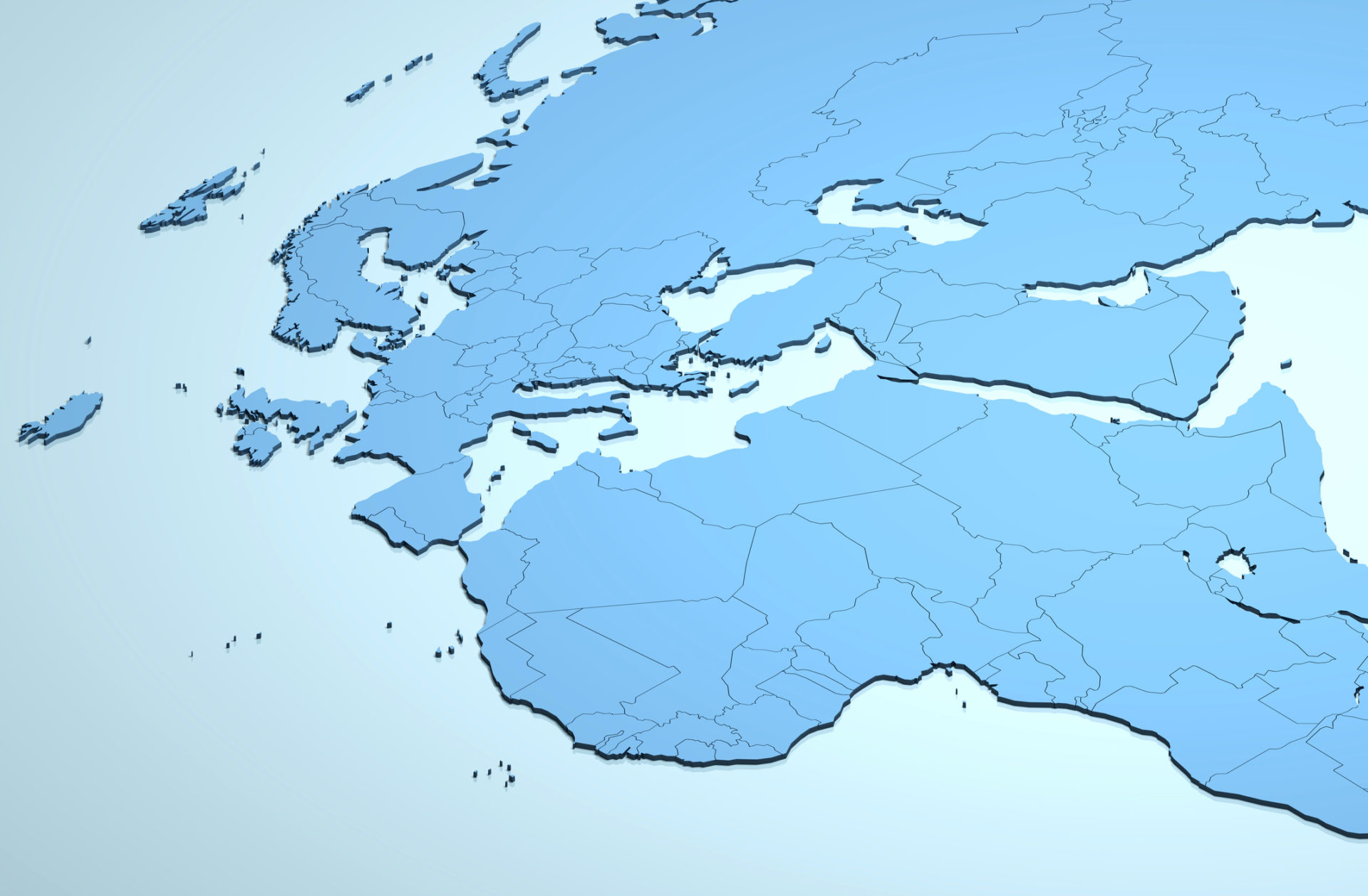
The Middle East, Europe, the Maghreb and the Sahel are linked by a common destiny where each local crisis produces global repercussions. The escalation in Gaza is a striking example. While the Abraham Accords seemed to herald a dynamic of peace, the region is today caught in a spiral of instability, fueled by growing tensions.
These violence go far beyond the borders of the Middle East. They disrupt global energy markets and deepen the gap between a «global South» demanding justice and an «West» perceived as deaf to Arab aspirations. This imbalance erodes North-South relations and undermines Europe’s credibility as a mediator.
In this context, enhanced cooperation between Europe, the Maghreb, and the Sahel becomes crucial. These regions share closely intertwined economic, energy, and security interests. Supporting the development of the Sahel, strengthening the economic integration of the Maghreb, and building a common regional vision are priorities to transform these challenges into opportunities.
However, the future remains uncertain. Donald Trump’s return to the presidency could further disrupt geopolitical dynamics. A strategy of military disengagement, coupled with the strengthening of American strategic alliances, could grant Israel an increased role against Iran, intensifying regional tensions.
In this context, Saudi Arabia’s integration into the Abraham Accords could consolidate an anti-Iran front with the Gulf monarchies and aim to contain Chinese influence. But at what cost? This strategy risks further marginalizing the Palestinian cause and exacerbating the fractures within the Arab world, especially if extreme scenarios, such as the annexation of the West Bank, come to fruition.
For Europe, the stakes go beyond mere geopolitical interests. The Mediterranean, a meeting point between three continents, must become a laboratory for shared solutions. Close cooperation with the Maghreb and the Sahel is essential to establish lasting stability, address energy and security crises, and restore genuine North-South solidarity.
An Indispensable Strategic Reflection
In a context of growing instability, the Maghreb, a crossroads between Europe and Africa, emerges as a key partner for Europe facing energy and economic challenges amplified by the war in Ukraine. Rethinking Euro-Maghreb relations is essential not only to address the energy crisis, but also to propose sustainable and strategic solutions.
With its immense potential in renewable energy – wind, solar, and green hydrogen – the Maghreb can become a strategic supplier for Europe while promoting the electrification of the Sahel. This triangular cooperation model offers a concrete response to the needs of the three regions. In 2021, a power electrification project in Niger, funded by Europe and using Tunisian technologies, enabled the supply of electricity to schools and dispensaries in an isolated village through solar energy. This example shows how concrete partnerships can transform local life and strengthen regional ties.
While the Maghreb is positioning itself as a key player in the energy transition, the Sahel, with its natural resources and young human capital, complements this regional dynamic. To maximize this asset, it is essential to invest in structuring projects aligned with local priorities. The Maghreb must be fully integrated into European strategies, particularly in the context of the energy transition, while the Sahel can become a pillar of interregional cooperation.
International Rivalries: Challenges and Opportunities
The Sahel, despite its potential, is today the scene of international rivalries.
Russia is strengthening its security alliances there, while China is massively investing in strategic infrastructure. These dynamics are redefining regional balances, weakening France’s historical influence.
In the face of these upheavals, conventional initiatives like the Barcelona Process prove insufficient. A more ambitious format, such as a «5+5+5», could integrate the Sahel into Euro-Mediterranean dynamics and support concrete projects in energy, infrastructure and security. This expanded framework is indispensable to address the urgency of current challenges and lay the foundations for sustainable cooperation.
The current challenges are not fatalities, but opportunities to build a transformative partnership. With concrete actions and a shared vision, Europe, the Maghreb and the Sahel can turn their challenges into a model of global cooperation.
An Integrated Vision for the Future
The Maghreb and Sahel have considerable strategic potential in terms of solar and wind energy. Innovative projects such as green hydrogen or the revival of Desertec could not only make them engines of the European energy transition, but also boost their local economies. Together around such ambitious initiatives, Europe, the Maghreb and the Sahel could thus build a common, stable and sustainable future.
In this context where the Sahel is becoming a battlefield for international rivalries, it becomes crucial for Europe to adopt an integrated strategy that combines security, energy transition, and development. This would transform the Mediterranean into an area of shared prosperity. In this regard, the «5+5+5» format emerges as a key strategic lever for supporting energy, infrastructure, and migration management projects.
Such a revamped partnership could offer a tangible response to security, migration, and development challenges. By establishing solid mechanisms and concrete projects with real benefits, it would enable the restoration of sustained and durable cooperation in the region.
At the same time, digital transformation is emerging as an indispensable strategic lever for development. By facilitating the creation of startups and technology hubs, this digital transition would strengthen social and economic inclusion while boosting local competitiveness.
Migration can also transform into a real engine of growth for these regions. By adopting an approach based on circular migration and vocational training, Europe could not only meet its labor needs but also support employment in the countries of origin. Initiatives such as the creation of training centers or the strengthening of academic mobility programs would be powerful tools for transforming migration flows into levers for sustainable development.
This Euro-Maghreb-Saharan partnership represents a unique opportunity to reinvent fair cooperation based on solidarity and mutual commitment. It is time to restore the Mediterranean its role as a space of bold cooperation. The current challenges should not be perceived as a fate, but as an urgent call to collective action.
A Pact of Trust for a Prosperous Future
Each actor must shoulder their responsibilities to build a pact of trust, with the aim of developing solutions suited to the common challenges. It is imperative to overcome immediate emergencies and embark on the construction of a prosperous and stable future. The Maghreb, a strategic player between Europe and Africa, must see Europe support ambitious initiatives to strengthen this regional integration. The Sahel, in turn, requires strong support, notably through investments in infrastructure, security, and education, in order to ensure sustainable and inclusive development.
Crises as levers of growth
Crises can become drivers of growth, but this will only be possible through bold actions. Only such actions will enable us to build a common future where stability and prosperity are not abstract concepts but tangible realities. However, crucial questions arise:
Will Europe be able to overcome its internal divisions in order to meet the legitimate aspirations of the peoples of the South, while reaffirming its essential strategic alliances?
Can the Maghreb overcome its internal divisions and position itself as a vital bridge between the shores of the Mediterranean?
Will the Sahel, fragile and tested by multiple challenges, be able to reinvent itself to become a model of international cooperation, or will it continue to embody the failure of a fragmented global governance?
And the Middle East, this key region, will it see the emergence of a new order, or will it be swallowed up by the rivalries of the great powers?
Balance is within reach, but it requires courage, innovation, and, above all, solidarity. History has taught us that inaction is the greatest of dangers. It is time to act together to seize this historic opportunity to build a more stable, more equitable, and more prosperous world for all.

 French
  English
  Chinese
  Arabic