
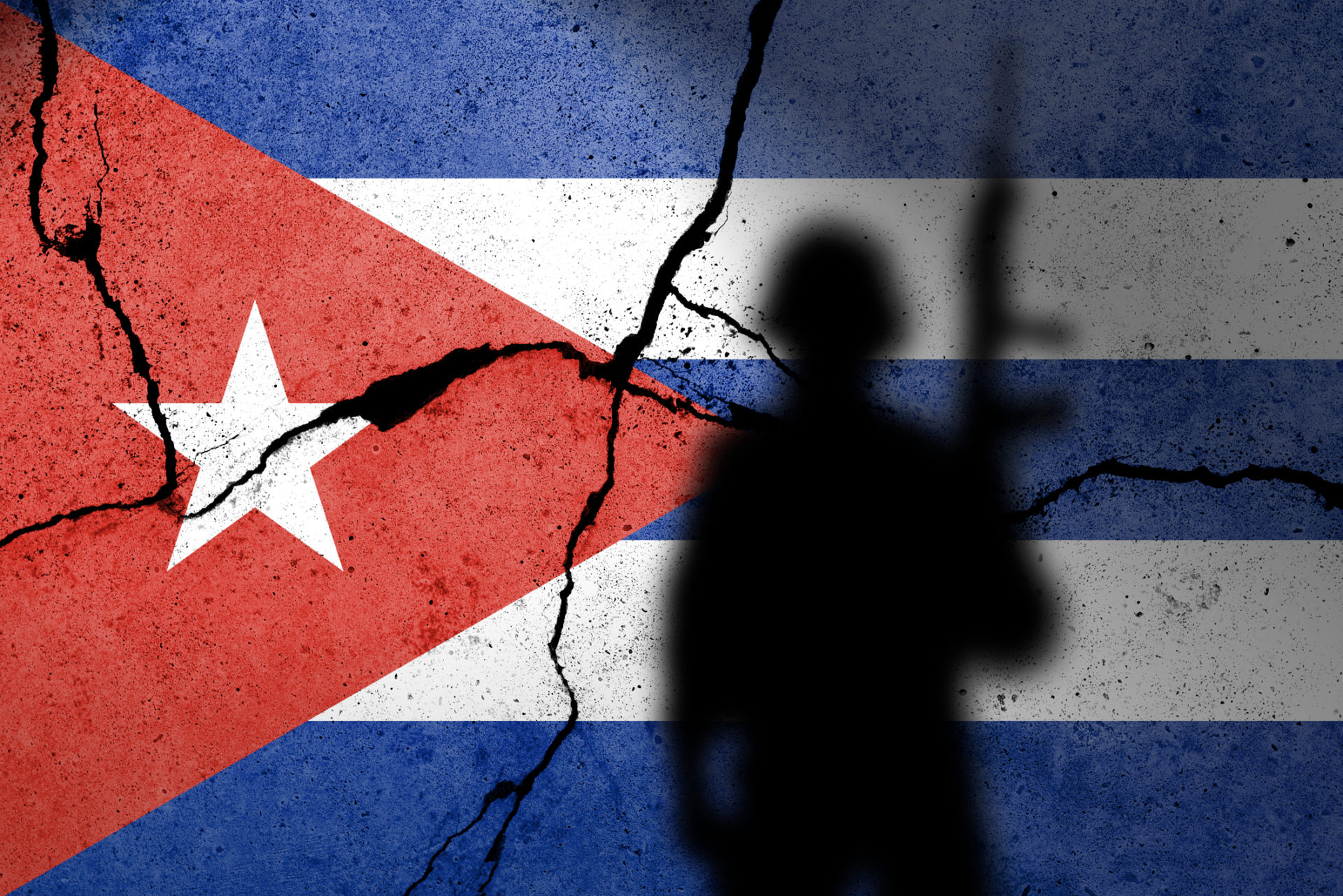
Cuba at the heart of United States foreign policy
The relationship between Washington and Havana follows a trajectory that has been open since 1962, structured by the US embargo. Over the decades, this «blockade» has experienced phases of hardening as well as periods of relative easing. Under Barack Obama's presidency, Washington and Havana even initiated an unprecedented process of diplomatic normalisation. Indeed, on 11 April 2015, Raúl Castro met Barack Obama, while the US president made a historic visit to Cuba, a first since 1928. But these attempts at a rapprochement have never truly interrupted the logic of confrontation that has structured relations between the two countries since the Cold War.
Today, the island is going through a crisis on a scale unprecedented since the 1959 Cuban revolution led by Fidel Castro, Raúl Castro and Ernesto «Che» Guevara. Donald Trump's return to the White House is accompanied by a hardening of the American stance on the Latin American region, now placed back at the heart of Washington's strategic priorities.
Born in 1946, Donald Trump also belongs to a political generation for whom the Cuban question retains a strong symbolic weight in the American imagination. For more than six decades, our administrations successive attempted, through different methods, to isolate, influence or transform the Cuban regime.
A singular place in American geopolitics
Despite its economic weakening and the progressive erosion of its capacity for influence, Cuba retains a special place in the American geopolitical reading. Because of its immediate proximity to United States territory, the 1959 revolution, its position in the Western Hemisphere, as well as its place in regional balances marked by rivalry with China and Russia, the island is a strategic focal point.
The Cuban question therefore goes beyond the sole bilateral framework. It involves several factors: the management of the American strategic neighbourhood, geopolitical realignments in Latin America, as well as rivalries for influence with China and Russia. In this context of growing tensions, one question therefore arises: how far is Washington prepared to push the pressure against Havana?
An island already weakened by more than sixty years of embargo
Since 3 February 1962, Cuba has been living under a US embargo
Originally conceived as an instrument of commercial pressure, this mechanism has gradually transformed into a much broader system of economic, financial and diplomatic constraints, the effects of which have long transcended the framework of bilateral relations alone.
Moreover, the island's isolation does not merely produce an effect of external closure. Over the decades, it has also helped to reshape the country's economic dependencies, in which energy occupies a central place, acting both as a factor of vulnerability and as a vehicle for political and economic adjustment.
Under Donald Trump's presidency, this policy is scaling up : the embargo has been tightened
During its first term, the US administration added 243 economic and financial measures against Havana; he thus places the relationship with Cuba within a logic of continuous pressure, more offensive and also more diffuse, where sanction mechanisms gradually cease to be mere instruments of bilateral coercion to become a constraining apparatus capable of reaching, by extension, the island's international financial and commercial environment.
In May 2019, the activation of Title III of the Helms-Burton Act introduced a particularly sensitive extraterritorial dimension. This mechanism opens up the possibility of legal action in US courts against foreign companies involved in the exploitation of assets nationalised after the Cuban revolution. The nature of the constraint thus shifted in scale: it is no longer exercised solely from within the US state, but now extends to transnational investment chains and international financial circuits.
In 2021, the re-inclusion of Cuba on the list of state sponsors of terrorism added an extra level of pressure
The country is already weakened by the collapse in tourism linked to the Covid-19 pandemic, persistent inflationary pressures, energy shortages and reduced import capacities.
Indeed, recent years have been marked by a form of partial liberalisation of the Cuban economy, supported in particular by the tourism sector. Before the Covid-19 pandemic, it had reached unprecedented levels, offering a glimmer of hope for some Cubans thanks to the injection of foreign currency into the local economy. The collapse of the sector during the post-Covid period then marked a sharp break, aggravated by the economic ’strangulation« measures taken during Donald Trump's second term.
To this is added a drastic reduction in diaspora remittances, a drop in foreign investment, and the worsening of the Venezuelan crisis, even though Caracas was still providing an essential share of the island's energy needs.
Between regional disruption and the reorganisation of energy balances
Donald Trump's second term opens with a sequence that brings Latin America back to the forefront of the international stage
The Cuban and Venezuelan trajectories appear closely intertwined, built upon the same logic of progressive pressure, where sanctions, diplomatic ruptures and economic instruments have accumulated over several decades.
This relationship forms part of the ALBA-TCP framework (Bolivarian Alliance for the Peoples of Our America – Peoples' Trade Treaty), which includes Cuba, Venezuela, Nicaragua and Bolivia, among others, is currently weakened and reveals the decline of Havana's regional allies. It is based on ideological convergences and mechanisms of economic solidarity centred around cooperation frameworks with Caracas. It is designed, in part, as a counterweight to American instruments of influence in the Western hemisphere. Within this architecture, Cuba occupies a position of growing asymmetrical dependence. The grouping retains a regional compensatory function in the absence of an equivalent alternative. Havana's dependence on Caracas is reinforced. The country is therefore becoming increasingly sensitive to the internal effects of any deterioration, particularly on the state's essential energy functions: electricity production, transport, hospital logistics and food supply.
The Venezuelan case
From 2019, the Venezuelan crisis has been part of a sequence of measures that are redefining the balance of power between Caracas and Washington. The oil embargo, the non-recognition of the incumbent government and the Juan Guaidó episode (2019-2023) have established a logic of political duality. Added to this are sanctions against the authorities in Caracas and a bounty on Nicolás Maduro, raised from 15 to 50 million dollars since 2020. The logic of coercion has thus intensified, not through any break in continuity, but through the successive accumulation of levers of pressure.
The dispute then broadens to even more sensitive dimensions, with accusations of drug trafficking and a migration crisis marked by more than eight million departures since 2014. It continues with episodes of more direct confrontation, notably Venezuelan accusations of an attempted armed incursion in 2020 and clandestine operations attributed to the Trump administration.
The US intervention in Venezuela on 3 January 2026, as well as the abduction of Nicolás Maduro, is marked by the death of 32 Cuban nationals. They are mostly from the Revolutionary Armed Forces and security services deployed on cooperation missions with Caracas. This constitutes an immediate split both for the stability of the Venezuelan government and for the entire regional political architecture.
Indeed, beyond the strictly local framework, this event acts as a point of tension regarding certain structuring principles of the international order, in particular state sovereignty and the prohibition of the unilateral use of force. Their significance does not disappear, but it is weakened by their repeated testing in contemporary practices of power.
In the hours that follow, the US administration announces a tightening of pressure against several states identified as sensitive in its regional doctrine
Explicitly mentioned are Cuba, Colombia, Iran, Mexico and Greenland (Denmark).
This extension is part of a broader movement of power projection, already perceptible in the strike carried out in north-west Nigeria at the end of 2025. It reflects a more diffuse circulation of US military instruments, beyond the Latin American sphere alone, towards peripheral yet strategically interconnected spaces.
On the energy front, the Venezuelan crisis is reviving an age-old yet highly structuring question of regional political economy: the control of oil flows and their transformation into a lever of influence. The ongoing realignment is not limited to technical adjustments of supply chains; it reflects a gradual reconfiguration of energy routes, now integrated into regional logic aimed at directing and securing flows.
It is within this context that the fragility of the balances inherited from the post-Chávez period fits, structured as they were around forms of political and energy cooperation of which Cuba was one of the linchpins.
Since the early 2000s, Caracas had been providing Havana with a regular oil supply, estimated at various times to be around 100,000 barrels per day. This maintained the island's structural dependence on hydrocarbon-fuelled thermal power stations. This flow, already weakened, is likely to stop after 2026. Washington is now demanding a halt to deliveries to Havana.
Trump goes even further. On 7 March 2026, he states: «Cuba is living its final hours in its current state». On 16 March 2026, he also declares that he wants to «take Cuba» and adds: «I can do whatever I want with it». Furthermore, this hardline stance finds internal support in Marco Rubio, the Secretary of State, who is an advocate for a complete break with Havana.
Resilience, control and stabilisation: a Cuban system under strain
The stability of the regime rests on a set of long-standing pillars that have been reactivated and consolidated by the current crisis, as well as by Cuba's economic and diplomatic isolation.
The informal economy plays a central role today
Daily resourcefulness, the restructuring of local solidarity networks and adjustments to ordinary life shape the survival conditions of a large part of the Cuban population. Faced with the scarcity of certain products and foodstuffs, Cuban society is adapting its practices, reorganising its trade and maintaining, as best it can, an internal balance under constraint. In several urban and rural areas alike, former modes of transport are thus reappearing (carts, horses), which reflect less a return to the past than an adaptation forced by the scarcity of energy and the deterioration of infrastructure.
The social control system also retains real effectiveness
It is based on the coordination between a centralised security apparatus and local surveillance devices, integrated into everyday life. The Committees for the Defence of the Revolution, integrated into the logic of surveillance (neighbourhood surveillance), extend this control into neighbourly relations and ordinary living spaces. Despite the gradual erosion of economic resources, the regime thus maintains a capacity for social control that remains operational.
To this internal architecture is added a third decisive pillar: the diaspora
It occupies an ambivalent position, between an economic resource and a space of political tension. Financial transfers constitute a central flow towards the island, mainly fed by the Cuban community living in the United States, concentrated in Florida and numbering more than 1.3 million people. These transfers, estimated at between 2 and 3 billion dollars a year, represent one of the country's main external flows, after tourism.
These resources use multiple channels, both banking and family-based, as well as para-banking channels. They play an immediate stabilising role: access to essential goods, food, medicines, private micro-activities and home repairs. However, this function remains rather ambivalent. Some of the flows pass through channels regulated by state structures, notably foreign currency shops and networks linked to public or semi-public enterprises. In an environment where a significant proportion of foreign currency trade passes through public groups, including GAESA, a fraction of these transfers may indirectly return to institutional channels.
Finally, the internal stabilisation system relies on a defensive architecture inherited from the Cold War. The setup still depends on anti-aircraft capabilities of the SA-3 Pechora type, integrated into territorial defence, as well as a compulsory conscription model of around two years. The whole thing stems less from a logic of external projection than from an organisation geared towards the protection of the territory and the continuity of the State. In situations of tension, this mechanism can be reinforced by internal mobilisation mechanisms.
Constraints of the American projection
Cuba maintains a distinct strategic function within the immediate environment of the United States
Its geographical proximity to US territory (approximately 150 kilometres from the coast of Florida) continues to give it value in regional security equations, despite the island's economic weakening and the gradual reduction of its capacity for influence.
However, the Cuban question goes beyond the mere bilateral framework: it extends into a much broader regional architecture, structured around Caribbean maritime routes, the Gulf of Mexico and the southeastern seaboards of the US. In this space, Washington seeks to preserve logistical, energy and security continuity in its immediate environment, which makes any direct intervention carry a risk of strategic dispersion, in an international context already marked by the coexistence of multiple hotbeds of tension.
At a regional level, an escalation would reinforce accusations of interference and could accelerate the repositioning of certain Latin American states towards China
China is perceived as a less interventionist, more «pacifist» and politically more «neutral» actor. Such a dynamic is itself part of broader realignments already visible in several areas of the continent, at a time when the United States is attempting to reaffirm its influence in the Western hemisphere, where this issue of interference is also being reactivated in the Western debate through recent military engagements in the Middle East alongside Israel.
Domestically, the Cuban question is closely linked to the balances of American political life
In Florida, home to a large community of Cuban origin, it retains significant electoral and symbolic weight, stemming both from the experience of exile and from a memory of the break with Havana that remains vivid to this day. For several decades, this section of the electorate has influenced certain political decisions, particularly within the Republican Party, and has helped to ensure that Cuba remains a particularly sensitive issue in the American political debate. This continuity now has a direct institutional extension within the executive itself, with the presence of Marco Rubio, Secretary of State of Cuban origin and an outspoken advocate of a particularly hardline stance towards Havana – a figure who embodies both the persistence and the resurgence of this ‘Cuban variable’ in the political balance of power in Washington.
To this electoral dimension is added a more personal and symbolic dimension in the political reading of Donald Trump
The Cuban question is part of a logic of demonstrating power towards Latin America, where strategic and domestic political considerations largely merge. It also responds to a logic of visible results, in which external action functions as an instrument of political legitimation.
Finally, any prolonged escalation carries the risk of a gradual erosion of US strategic credibility, at a time when Washington is already engaged in several open or militarised theatres of conflict.In this context, the onset of a new phase of tension in the Caribbean would place an additional strain on a system already under considerable pressure. It would further fragment the political, military and diplomatic resources available for US projection of power.
In light of all these elements, three main scenarios emerge:
1. A gradual transformation under economic pressure
The most probable scenario relies on the continuation of economic pressure. The objective is not the collapse of the regime, but a gradual shift in the behaviour of the Cuban state. Washington is seeking to shape the partial liberalisation of one of the most state-controlled economies in the world through a combination of targeted openings and sustained constraints, without challenging the internal political-military grip.
This dynamic is accompanied by a controlled reactivation of flows linked to the Cuban diaspora, which is mainly based in Florida. Part of this diaspora remains structured by long-standing political logics, between the rejection of the revolutionary model and claims relating to expropriated property.
Sectoral opening is already underway: it affects the energy sector, with the authorisation and ramp-up of fuel imports by Cuban private companies, including from US suppliers. This movement partially bypasses the state monopoly without abolishing it. It introduces a form of «progressive hybridisation» of the economy, in which central political control remains, while economic channels fragment and recompose under duress.
An internal fracture and an indirect transition
This scenario depends on external factors, notably the evolution of the situation in the Middle East.
If the operation in Iran is a success, the United States may seek to stabilise the Cuban situation rather than open it up further
In a context of strategic prioritisation, the pressure would remain, but it would primarily aim at a form of indirect negotiation with the military in power, who are considered the real decision-making centre of the Cuban system. A more direct involvement would indeed entail human, financial and diplomatic costs that would be difficult to sustain in a context already marked by the dispersion of US strategic priorities and the risk of a new wave of migratory instability in the Caribbean, an area of particular sensitivity for Florida.
Conversely, if the operation in Iran fails or bogs down, the dynamic could shift
With the mid-term elections in prospect, Cuba then becomes a political and symbolic objective. A surrogate trophy in a diplomacy marked by the search for visible results.
The island embodies a long-standing resistance to the United States since 1959, but also a revolutionary memory still deeply rooted in the American political imagination. In this context, Trump may therefore seek a quick and legible outcome, which leads to a hardening of pressure and a more offensive logic regarding the regime's internal balances, without direct intervention, but through the progressive tightening of pressure on the elites and structures of power.
3. A prolonged systemic crisis
The darkest scenario corresponds to a progressive isolation of Cuba on a regional and international scale, with the loss of several external relays that supported its economic and energy balance. This is manifested in particular by the gradual end of certain medical cooperation agreements, including the one with Guatemala, a long-standing partner of Cuban «health diplomacy» and a significant source of foreign currency for the island's economy.
Cuba would then enter a prolonged period of crisis, characterised by a deterioration in the economic, social, health, energy and environmental situations. Shortages, inflation and the breakdown of public services would intensify.
«Resourcefulness», the informal economy and local solidarity networks would act as a buffer, without altering the overall trajectory. In some respects, the situation is reminiscent of the period in the 1990s, characterised by isolation following the withdrawal of Soviet support, a drastic reduction in external resources and rationing organised around the ration book (ration book), which became an instrument for managing shortages.
According to estimates from the Cuban Observatory for Human Rights, nearly 89 % of the population is already living below the poverty line, whilst migration departures are intensifying.
Yet Cuba's recent history also recalls the limits of economic asphyxiation strategies. The political system remains controlled by a central military and security core, which limits scenarios for a rapid break. Society retains capacities for resilience inherited from decades of constraints.
The central question then remains: to what extent can this resilience hold out?

 French
  English