
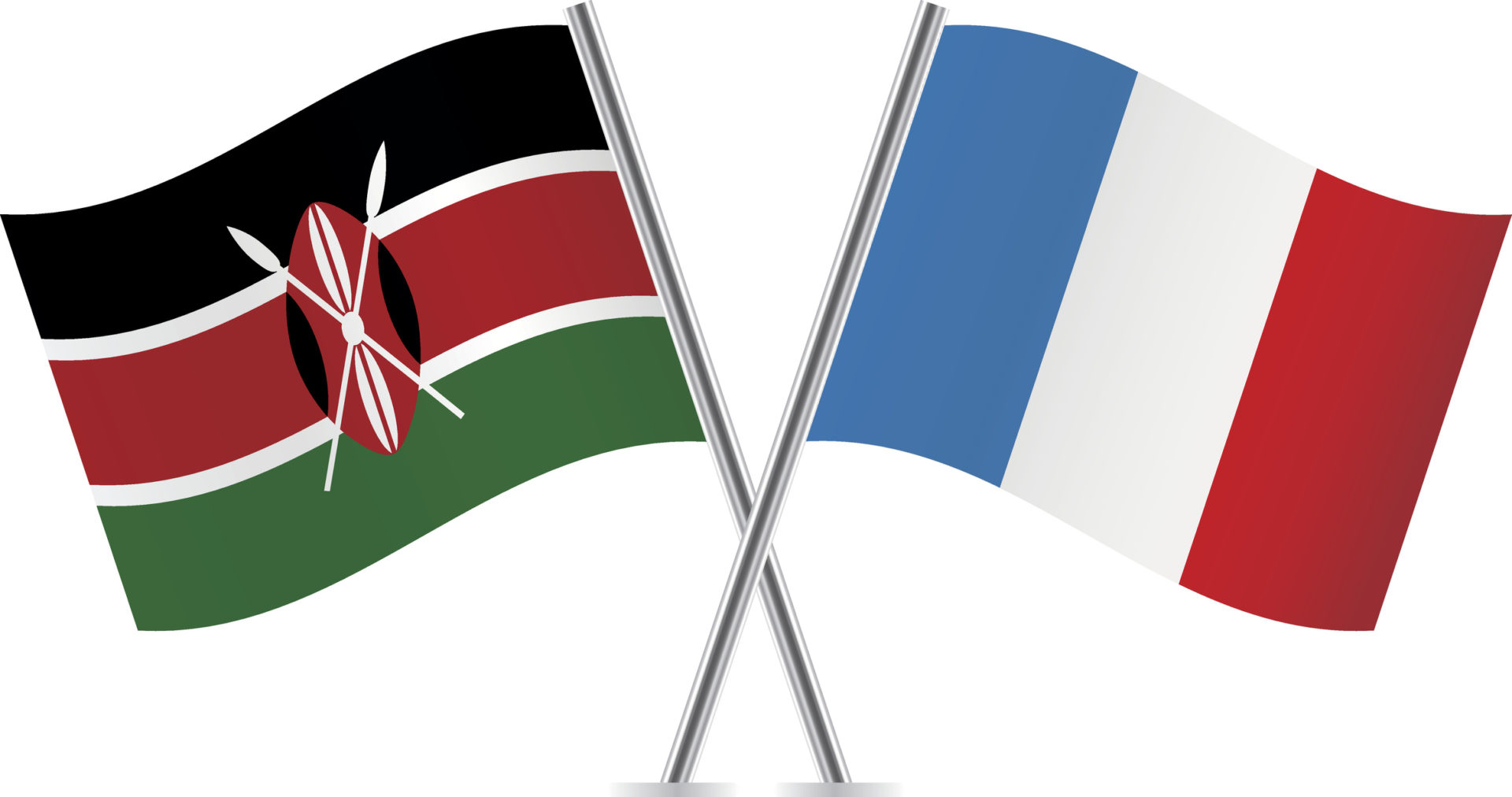
Officially, the summit Africa Forward, held on 11 and 12 May in Nairobi, was meant to symbolise a new stage in relations between France and Africa. A meeting focused on innovation, youth, artificial intelligence, entrepreneurship and investment.
But behind the scenes of the event, African diplomats, business leaders and presidential advisers are describing above all a summit for French strategic repositioning.
Because behind the modernised scenography, repeated references to the « balanced partnership »and the announced billions, one reality now dominates all discussions: Paris is seeking to stem the accelerated erosion of its influence on the African continent.
And this time, the Élysée seems to have understood that it could no longer speak to Africa as it did before.
Nairobi, symbol of a French geopolitical turning point
The choice of Kenya is not a diplomatic detail. For the first time since the creation of the major Africa-France summits, Paris has voluntarily left its traditional French-speaking sphere to organise this major gathering in an English-speaking East African country.
In Nairobi, several African diplomats immediately interpreted this choice as a strategic admission.
« The French know that their old African software is exhausted », remarks a West African adviser present at the summit. « They are now looking for new avenues of influence outside their former backyard ».
In closed-door discussions, Kenya is now emerging as one of the key pillars of the new French strategy on the continent: a regional logistics hub, a rising diplomatic power, a technology platform, a stable security partner and a gateway to Anglophone Africa.
The privileged invitation granted to Kenyan President William Ruto for the upcoming G7 in Evian confirms this strategic shift. In Paris, several advisers now consider Nairobi as a future nerve centre for Western influence in the face of the rise of China in East Africa.
The ghosts of the Sahel in every corridor
Even in their absence, Mali, Burkina Faso and Niger haunted the entire summit. In the private lounges of the Nairobi conference centre, several French officials admitted, sometimes with unusual frankness, that the successive break-ups with the Alliance of Sahel States have profoundly shaken Paris's African doctrine.
Since the French military expulsions and the rise in power of Russian partnerships in the region, the Élysée is now trying to rebuild its influence by other means. « France is returning via the economy because it has lost its monopoly on security », analyses a diplomat present at the discussions.
This evolution explains the ubiquity of economic themes during the summit: ports, logistics corridors, digital technology, artificial intelligence, infrastructure, energy, industrialisation. To put it clearly: Paris is now seeking to transform its declining military presence into economic and technological influence.
The €23 billion: real power or PR stunt?
The announcement dominated the summit's entire communication. French President Emmanuel Macron unveiled « €23 billion of investment for Africa », of which 14 billion comes from French public and private stakeholders.
At the Élysée, this announcement was intended to illustrate the famous « shift in logic »hammered home for several months: less public aid, more investment. But in African business circles, several observers put the true scale of the figure into perspective.
Because behind these 23 billion are a mix of private investments, public guarantees, concessional loans, previously scheduled financing and development mechanisms.« The real issue was not so much the amount as the political message », confides an African banker present at the economic forum.
The message is clear: Paris now wants to appear as a modern economic partner rather than a former tutelary power. Hence this formula repeated almost obsessively by Emmanuel Macron: « Africa no longer wants aid. It wants investment ».
French bosses are sounding the alarm
Behind the official smiles, major French companies operating in Nairobi have repeatedly issued warnings.
In several closed-door meetings bringing together African leaders and French CEOs, issues of regulatory stability, shifting taxation, administrative corruption and the cost of risk dominated the discussions.
The TotalEnergies, Orange and CMA CGM groups want to invest more, but are demanding much stronger political and financial guarantees.
A European leader present at the summit bluntly summarises the problem: « Western companies move forward with rules, audits and constraints. The Chinese move forward with speed and flexibility ».
This concern is particularly visible in infrastructure. A few months before the summit, Kenya had withdrawn a massive motorway contract from a consortium led by the French group Vinci to award it to Chinese companies.
This setback continues to cause quiet tensions between Paris and Nairobi.
The real battle: minerals, ports and supply chains
In reality, several European diplomats acknowledge that the Nairobi summit went far beyond mere economic issues. Africa has become one of the major arenas for global strategic competition.
In the preparatory discussions for the upcoming G7 in Evian, four issues now dominate:
- critical minerals ;
- the logistics corridors ;
- artificial intelligence ;
- African debt.
Congolese cobalt, Gabonese manganese, Namibian lithium and Mozambican graphite are now considered vital resources for the Western energy transition. The problem is that China already controls a large part of the African mining supply chains.
In Nairobi, several French officials emphasised the need to develop «sovereign industrial partnerships» with African states. The aim is to prevent the continent from remaining solely an exporter of raw materials to Asia.
But several African officials remain wary. « Europeans are suddenly discovering the virtues of African industrialisation because they are afraid of losing the minerals », ironised an East African minister.
AI: a new arena of influence
Perhaps one of the most revealing elements of the summit remains the prominence given to artificial intelligence. In Nairobi, Paris clearly attempted to position France as an alternative technological partner in the face of the American and Chinese giants.
The Orange group has announced its intention to train more than three million young Africans in digital professions by 2030 and to develop AI models incorporating African languages. Officially, this is about digital inclusion. But in strategic circles, the objective appears much broader.
« Whoever controls Africa's digital infrastructure will control a part of tomorrow's global market »", sums up a European consultant. For behind all the talk of youth and innovation, Paris is also trying to secure its place in Africa’s future digital economy.
Nairobi, dress rehearsal before Évian
For several of the diplomats present, the Africa Forward summit was, ultimately, merely a first step. The real event will take place in June in Évian at the G7 summit chaired by France.
Because Emmanuel Macron now wants to internationalise the African issue at the heart of major global rivalries: debt, energy, security, minerals, climate, artificial intelligence, global governance. But in Nairobi, a shared observation seemed to be held by many African delegations: the balance of power has changed. Africa no longer presents itself as a continent asking for assistance, but as a strategic space that all powers are now seeking to court. And in this new global competition, France is still trying to redefine its place.

 French
  English
  Chinese
  Arabic