
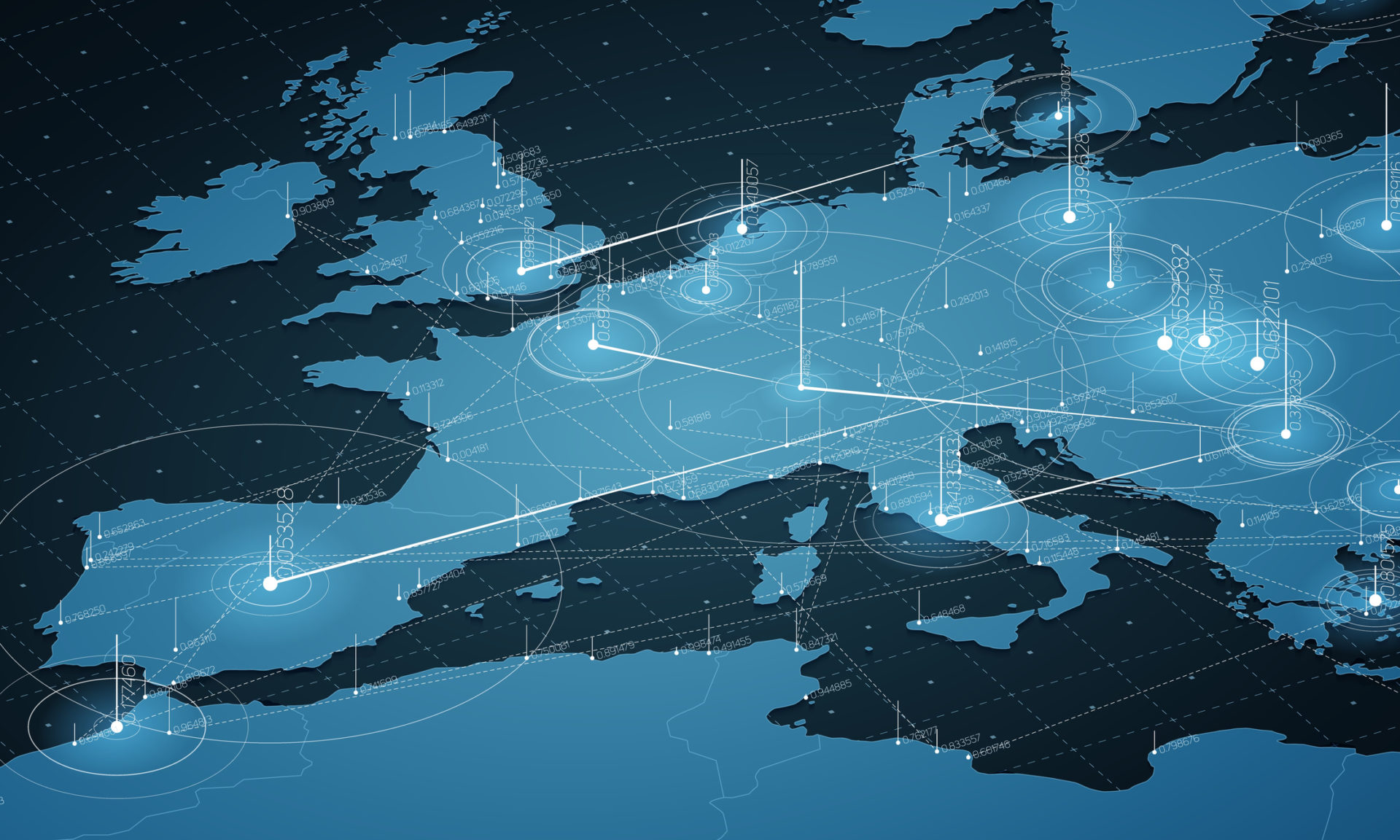
The Mediterranean has always played a role much greater than that of a mere geographical border. It embodies a true crossroads between three continents – Europe, Africa and Asia –, a natural space of connectivity, marked by profound cultural, economic and human exchanges. This basin, shaped by a shared history, holds immense strategic potential, but remains largely under-exploited. Despite this obvious interdependence and clear geographical proximity, cooperation between Europe and the Maghreb remains partially frozen, held back by long-standing divisions and rivalries that hinder the construction of genuine regional integration.
Since their independence, the Maghreb countries have always sought to establish strong and lasting relations with Europe. This desire for partnership is driven by common interests, whether in economic, political or cultural fields. However, after several decades of attempts at rapprochement, it has to be said that the region remains deeply fragmented. The dream of an Arab Maghreb Union, carrying a vision of regional integration, has remained an unfinished project, paralyzed by political, institutional and economic disputes.
The Arab Maghreb Union is stalled
The current situation well illustrates this reality. The closure of the borders between Morocco and Algeria since 1994, fuelled by the rivalry surrounding Western Sahara, constitutes a striking example of the way in which historical tensions persist.
In 2020, the normalisation of relations between Rabat and Tel Aviv, within the framework of the Abraham Accords, added an extra dimension to already existing geopolitical conflicts, exacerbating regional divisions and causing concern in Algiers. This diplomatic break is a symbol of the deep fractures within the Maghreb, where regional cooperation is hampered by longstanding rivalries and a lack of constructive dialogue between the main players. Morocco and Algeria, despite being immediate neighbours, currently find themselves in a situation of mutual distrust, reinforced by the closure of borders and tensions over the issue of the Sahara.
These tensions are not limited to bilateral relations between the Maghreb countries. They have repercussions on relations with Tunisia and Mauritania which, although less directly affected, cannot escape the complex dynamic at play in the region. Tunisia, long considered a model of democratic transition, is currently going through significant economic and social challenges, which influence its relations with its neighbours as well as with Europe. Mauritania, despite its strategic position between the Maghreb and the Sahel, remains a peripheral nation in this dynamic, caught in a delicate balance between its regional partners and outside powers. Its neutrality is being put to the test by initiatives such as the ’Atlantic Initiative» launched by Morocco, which seeks to extend its influence over the Sahel, a project likely to force Nouakchott to take a stance.
Beyond internal rivalries, Libya represents another major challenge for the region. Plagued by a devastating civil war and profound institutional chaos, Libya has become a breeding ground for trafficking of all kinds, including clandestine migration flows transiting through the country to reach Europe. This situation creates a hotbed of security concerns for the European Union, which is struggling to develop a coherent strategy to stabilise the situation. European interventions, often fragmented and short-term, have failed to restore a lasting political balance, and Libya's reconstruction still seems a long way off, notably due to the diverging interests of European powers, such as France and Italy, which respectively support opposing factions.
The European Union failed to position itself as a stabilising actor
In this difficult context, the European Union, despite possessing considerable economic and diplomatic levers, failed to position itself as a stabilizing actor at the regional level. By favouring bilateral relations, often driven by immediate economic imperatives, the EU neglected the development of a multilateral strategy aimed at strengthening ties between the five Maghreb countries. This limited the effectiveness of its initiatives, even though the urgency for enhanced cooperation is more apparent than ever. This fragmented approach prevents Europe from playing a truly unifying role and from answering the call for Euro-Maghreb integration.
Closer cooperation would benefit all parties
However, the benefits of closer cooperation are considerable. For Europe, a strategic partnership with the Maghreb countries would guarantee secure access to crucial energy resources, particularly in the context of a growing reliance on renewable energies and energy diversification.
Europe would benefit from the strengths of the Maghreb, which is rich in natural gas and mineral resources, forming a valuable alternative to traditional energy sources. In addition, the region offers a young and qualified workforce, a major asset for meeting Europe's growing need for skilled personnel, whilst helping to alleviate its demographic challenges and shortages in certain key sectors.
The Maghreb countries, for their part, would derive considerable benefits from such cooperation. EU support within the framework of circular migration would enable Maghreb workers to benefit from professional prospects in Europe while developing new skills and contributing to their local economies through remittances and technology transfers. The development of local infrastructure and European investment in large-scale projects would stimulate growth, reduce unemployment and foster better integration of the Maghreb countries into the global market.
At the same time, education, research and vocational training are areas in which Europe can have a direct and significant impact. By developing university partnerships, facilitating academic exchanges and supporting vocational training initiatives tailored to the needs of local markets, the EU would help to prepare a new generation in the Maghreb ready to meet the challenges of a globalised economy. This human capital constitutes a genuine engine of growth for the region, which benefits from a dynamic and ambitious youth.
A differentiated approach is needed
However, for such a partnership to become a reality, Europe must adopt a more proactive and differentiated approach, taking into account the specific characteristics of each Maghreb country. For example, the energy transition in Algeria, digital innovation in Morocco, and agricultural development in Tunisia require solutions adapted to local realities. Targeted and concrete sectoral cooperation could be the starting point for a new regional dynamic. By acting in a more targeted and coordinated manner, Europe could become an essential partner for the Maghreb.
Moving forward
History teaches us that geopolitical perspectives are never set in stone. What seemed unachievable yesterday can become a reality tomorrow. Who could have imagined, at the height of the Cold War, that countries like Ceausescu's Romania or even Erich Honecker's East Germany would join the European Union and NATO? Euro-Maghrebi integration, far from being a utopia, must be seen as a legitimate strategic ambition, driven by the shared will of peoples and nations.
Together, we have the power to transform the Mediterranean into an area of stability, shared prosperity and international influence. Through a shared vision and joint efforts, the Mediterranean can finally embody a model of successful collaboration between two shores bound by history, geography and the future.

 French
  English
  Chinese
  Arabic