
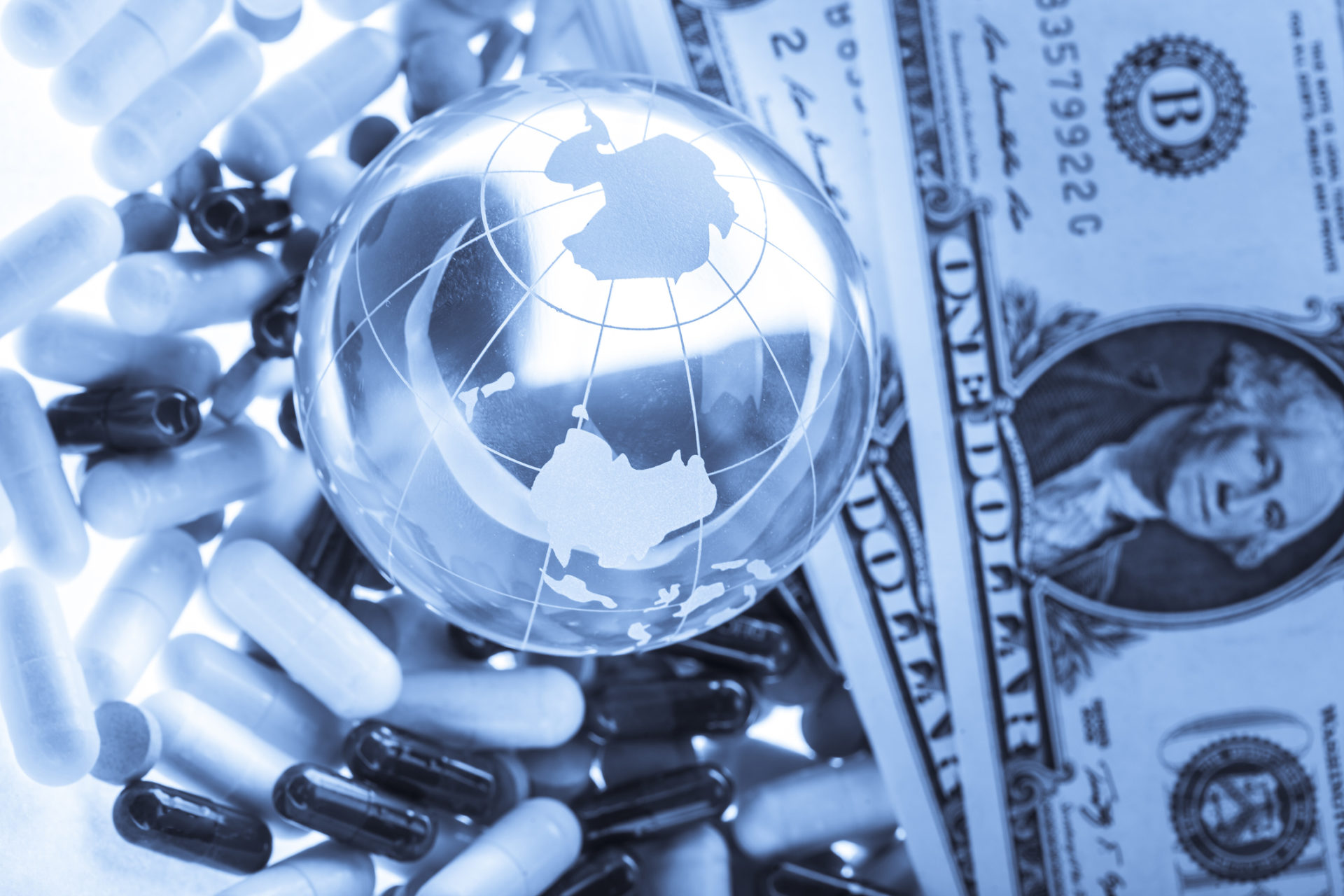
A series dedicated to health as an issue of power, sovereignty and geopolitics.
Health through the lens of power: from the G7 to global strategic competition
Health has become what energy was in the early 2000s or semiconductors in recent years: a factor of power. The G7 meeting in Évian in 2026 illustrates this evolution. Through its statements on the fight against cancer[1], the response to the Ebola epidemic[2]and more sustainable and resilient growth[3], the major industrial democracies recognise that health goes beyond the sole scope of health policies.
Even as states reaffirm their willingness to cooperate in the face of major global health challenges, they are also seeking to strengthen their own research, innovation and production capacities. Health thus appears at the crossroads of two complementary dynamics: both a growing need for international cooperation and an increasingly assertive strategic competition.
How does health establish itself as a factor of power in international relations? What challenges does this transformation raise for the European Union? And what new mindset does it call for from France?
Behind the G7 consensus, health is emerging as a new arena for strategic competition
Health is no longer just a global public good; it is becoming a strategic asset at the heart of industrial, technological, economic, and security policies.
Health is becoming an instrument of economic power
This development is particularly visible in the United States. US «Most Favoured Nation» (MFN) policy[4], which aims to align certain drug prices with the levels observed in other developed countries, does not constitute an isolated measure. It forms part of a broader debate on the financing of biomedical innovation and the preservation of American leadership in the life sciences. For several years, Washington has sought to enhance the attractiveness of its territory for research, pharmaceutical production and strategic investment[5].
The American case, while not the only one, shows that healthcare is no longer merely a public policy. It is becoming an instrument of economic competitiveness, industrial security and, increasingly, international power. Biomedical innovation, manufacturing capacity and the control of health technologies are now regarded as strategic assets. They contribute to the prosperity and influence of states.
Health innovation is becoming a matter of technological sovereignty
China illustrates another facet of this transformation. Beijing is making biotechnologies, innovative therapies and the life sciences priority sectors in its national strategy[6]. Beyond responding to the health needs of its population, this strategy is also accompanied by policies aimed at developing the domestic ecosystem[7], to support the emergence of national players and to strengthen local industrial capacities[8].
Despite different approaches, the United States and China converge on one essential point. Mastery of health innovation is now perceived as a factor of economic, technological and geopolitical power.
Health, a new instrument of international influence
However, the geopolitical rise of health is not limited to industrial and technological dimensions. Health aid programmes, funding dedicated to strengthening health systems and support for local production capacities now constitute foreign policy instruments in their own right. The World Health Organization (WHO) recognises health diplomacy as an important lever for cooperation and influence [9].
Much like development aid or defence cooperation, health thus contributes to the forging of strategic partnerships and the reinforcement of states' international influence.
Europe facing a paradigm shift
A risk of falling behind in the global competition
China is reinforcing its technological autonomy and the United States is increasingly conditioning access to its market on industrial relocation and economic security objectives. Europe is showing signs of falling behind. The gap in pharmaceutical R&D investment between the European Union (EU) and the United States has widened. It has gone from approximately €2 billion in 2002 to €25 billion in 2022[10]. Simultaneously, the global share of commercial clinical trials conducted in Europe plummeted from 22 % to 12 % between 2013 and 2023. An estimated loss of 60,000 clinical trial places for European patients[11].
These developments reflect a gradual shift of certain research, development and investment activities to other regions of the world. More broadly, they raise questions about the ability of European countries to remain leading players.
A challenge that goes beyond national politics
Recent crises have also highlighted the limits of a strictly national approach. The Covid-19 pandemic and the wars in Ukraine and the Middle East have served as a reminder that disruptions to supply chains, logistics infrastructure or flows of raw materials can affect the entire continent.[12].
Unlike agricultural policy or trade policy, there is no genuinely integrated European health policy. Nevertheless, the EU has growing levers to act on the factors that shape the European health ecosystem. Its means are manifold: regulation, research, health data, security of supply, crisis preparedness and international cooperation. The gradual building of a European Health Union«[13] is testament to this development.
3. Making health a European political choice
The initiatives undertaken in recent years by the EU illustrate the strategic nature of health at a European level. However, they mainly respond to vulnerabilities revealed by recent crises. The question that now arises is more fundamental. Does the EU wish to make health a true strategic priority, on a par with energy, digital technology or semiconductors? Failing this, the risk is that competing national strategies will multiply even though the main competitors are acting on a continental scale.
Making health a European strategic asset does not mean transferring powers that remain primarily national to the EU. Rather, it is a political choice: determining in which areas Europeans wish to act collectively to strengthen their capacity to attract investment, develop health technologies, secure supplies and prepare for future crises.
Thinking of health as a strategic investment: new software for France
Changing software: from expense to investment
If health is now establishing itself as a geostrategic issue, France must draw the conclusions from this. For several decades, public debate has focused mainly on the funding of health insurance, the control of spending, and the organisation of the healthcare system. These issues remain essential. However, they have largely been viewed as budgetary constraints. They are also investments in the health of populations, innovation, and competitiveness.[14] as well as social and economic resilience[15].
Making health a cross-cutting policy of power
France has major assets: high-level research, recognised university hospital centres, a dense scientific ecosystem and healthcare players present across the entire value chain. This ambition is also at the heart of the plan Health Innovation 2030[16], which simultaneously aims to strengthen innovation, the region's appeal, health sovereignty and the development of health technologies.
Achieving this ambition nevertheless requires moving beyond traditional sectoral approaches. The factors that determine the performance of a health ecosystem today are no longer solely a matter of health policy. They also depend on policies relating to research, higher education, industry, investment, digital technology, the environment and European policy.
In this context, the challenge is no longer merely to support innovation or reinforce the region's appeal. It is to make health a sustainable strategic asset, capable of contributing to France's security, competitiveness and influence in an increasingly competitive international environment[17]
Bringing health into the French strategic debate
Thinking of health as a strategic investment does not mean pitting the economy against public health. Upcoming political deadlines will continue to focus on hospitals, medical deserts or the finances of Social Security. These issues remain essential, but they can no longer be the only ones. New strategic questions must also be asked:
How to strengthen France's ability to develop and deploy innovations that will improve patient health? How to secure the investments, talent and research activities necessary for their emergence? How to prepare healthcare structures for tomorrow's challenges, such as the consequences of climate change and the multiplication of extreme events? How to mobilise artificial intelligence to improve the efficiency of the healthcare system and enable professionals to devote more time to patients? How to make France the benchmark territory in Europe for the deployment of health innovations?
These issues no longer fall solely within the scope of health policy. They concern the place that France intends to occupy in the major scientific, technological, economic and geopolitical balances of the 21st century.
Conclusion
The 2026 G7 did not make health a geopolitical issue. It helped reveal the place it now occupies in contemporary power relations.
In the 21st century, a state's power is no longer measured solely by the size of its army, its energy independence, or its technological capability. It will also depend on its ability to make health a strategic investment.
G7 Évian 2026, Call by Heads of State and Government on the fight against cancer, 2026.
[2]G7 Évian 2026, Call by Heads of State and Government for a coordinated response to the Bundibugyo ebolavirus epidemic, 2026.
[3] G7 Évian 2026, Declaration of the Heads of State and Government for More Balanced, More Sustainable and More Resilient Growth, 2026.
US references
[4] The White House, Savings from Most-Favoured-Nation Drug Pricing Policy, 2025.
[5] U.S. Food and Drug Administration (FDA), FDA Selects Seven Participants for PreCheck Pilot Program to Advance U.S. Drug Manufacturing, 2025.
[6]People’s Republic of China, Outline of the 15th Five-Year Plan for National Economic and Social Development (2026-2030), 2026.
[7] Centre for Security and Emerging Technology (CSET), China’s Biotechnology Development Strategy, 2024.
European References
[8] European Commission, Report on the Investigation into Measures and Practices Regarding Medical Devices in China under the International Procurement Instrument (IPI), 2025.
[9]World Health Organization Regional Office for the Eastern Mediterranean (WHO EMRO), Health
[10] EFPIA, R&D Investment Gap between Europe and the United States, 2024
[11] IQVIA for EFPIA & Vaccines Europe, Commercial Clinical Trial Trends in Europe (2013-2023), 2024.
[12] OECD, Securing Medical Supply Chains in a Post-Pandemic World, 2024.
[13] European Commission, European Health Union, 2025.
[14] Draghi, M., The Future of European Competitiveness, European Commission, 2024.
[15] OECD, Health at a Glance: Europe 2024: State of Health in the EU Cycle, OECD Publishing, 2024.
French references
[16] Presidency of the French Republic, Health Innovation 2030: making France the leading innovative and sovereign European nation in healthcare, 2021.
[17] French Government, Health Innovation Agency, 2023-2025 roadmap, 2023.

 French
  English
  Chinese
  Arabic