
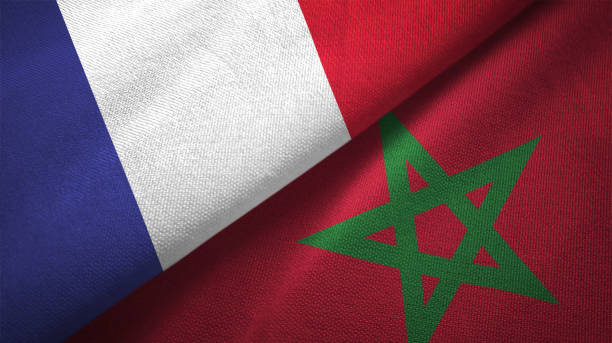
Since the turn of the 2000s, and even more markedly in recent years, Rabat has progressively broadened its strategic horizon far beyond its immediate environment: security, energy, industry, infrastructure, connectivity, Africa, the Atlantic. The Kingdom now occupies a position that can no longer be grasped solely through analytical frameworks inherited from the past. It exerts greater weight in regional balances, sets its priorities according to its own interests, and asserts a strategic autonomy that is leading its partners, starting with France, to revise their view of its evolution, its ambitions, and the role it now intends to play.
Prime Minister Sébastien Lecornu visited Rabat on 16 July 2026 for the 15th Franco-Moroccan High-Level Meeting. Following the diplomatic tensions of 2021-2023, Paris and Rabat have gradually resumed the political dialogue that the crisis had weakened.
For Paris, Morocco holds a unique position in a region undergoing reorganisation. At the crossroads of several strategic spaces, bolstered by its institutional stability and African networks, the Kingdom appears as a strategic partner for a France faced with the need to redefine its role on the continent following the decline of its presence in the Sahel since 2022.
For Rabat, conversely, the rapprochement with Paris is part of a broader strategy of diversifying its partnerships: the United States, Europe, the Gulf, sub-Saharan Africa, and emerging powers. Moroccan diplomacy no longer relies on a single, privileged relationship, but on building a network of multiple alliances designed to consolidate its strategic autonomy.
It is this evolution that should be examined: does the rapprochement initiated since 2024 merely represent an end to the crisis between Paris and Rabat, or does it reveal a broader redefinition of the Franco-Moroccan partnership within a reshaping Mediterranean, African and Atlantic space?
Towards a renewed strategic partnership
A relationship destined to change in nature
The Franco-Moroccan relationship finds itself today at a turning point in its history. Inheritor of an exceptional bond and a singular history, it can no longer be understood through the sole proximity that has long defined it. The Morocco that dialogues with Paris in 2026 is no longer entirely the one that French diplomacy has known in recent years.
Two decades were enough to alter the balance of the bilateral relationship. During these years, Rabat has strengthened its diplomatic autonomy, diversified its partnerships and developed a capacity for initiative that extends beyond the Maghreb alone: in Africa, across the Atlantic, and on energy or infrastructure issues, the Kingdom seeks to assert itself as a hinge between several strategic spaces.
The 2021-2023 diplomatic crisis acted as a catalyst in this regard. Tensions surrounding visas, political disagreements and the slowdown in bilateral dialogue opened a period of distance between the two governments, but above all they revealed a growing gap between certain French perceptions of Morocco and the Kingdom's profound transformations. For Paris, the challenge was therefore not merely to restore a weakened relationship, but to acknowledge the transformation of a partner now determined to define its own international priorities
The weight given to the Western Sahara file in this «new» diplomacy can be gauged by the formula used by King Mohammed VI as early as August 2022: «The Sahara issue is the prism through which Morocco views its international environment», the ’touchstone measuring the sincerity of friendships and the effectiveness of partnerships«¹. Less a simple territorial dispute, this file has become a barometer of trust between Morocco and its partners. It remains one of the main reference points of Moroccan diplomacy.
The French recognition in 2024 of the Moroccan position on Western Sahara represented much more than a diplomatic gesture: it lifted one of the main political obstacles between the two countries and opened a new political chapter between Paris and Rabat. It cannot be summed up by the Franco-Moroccan relationship alone, but it thus constitutes its turning point: the one that allows the transition from a relationship long structured by history to a partnership based on the convergence of interests. The visit of French head of state Emmanuel Macron to Morocco in October 2024, marked by the announcement of an «enhanced exceptional partnership», thus appears as the symbol of this major shift in the relationship between the two countries.
Scaling up: a new bilateral governance
The meeting of 16 July last, the first cross-departmental gathering of this scale since 2019, marks the transition from political momentum driven at the highest level to a new phase in the bilateral relationship, which is now set to be reflected in public policies and practical cooperation.
In Rabat, the French delegation led by Sébastien Lecornu marks the transition from the rapprochement initiated in 2024 to cooperation now brought to governmental level: twelve French ministers took part in the work; a total of twenty-two French and Moroccan ministers took part in the discussions, following on from more than forty high-level meetings recorded by Rabat in less than two years. Around ten agreements were signed: economy, security, immigration, defence, infrastructure, research, culture. The announced projects also demonstrate a desire for joint projection: extension of the high-speed rail line to Marrakech, development of a regional railway network around Rabat, as well as a memorandum concerning cooperation in the defence industry sector³.
The visit of King Mohammed VI to France, announced for autumn 2026, could constitute a major step in the relationship between the two countries; it would consecrate the political anchorage of this new phase and give the commitments made a long-term perspective.
Security, intelligence and regional stability
Security cooperation holds a unique place in the Franco-Moroccan relationship: it is one of the rare areas where continuity has often withstood political tensions. Over the years, it has become a true strategic anchor between the two countries. Terrorism, transnational organised crime, cyberthreats, border control or the protection of sensitive infrastructure: the fields of cooperation have expanded as regional crises have imposed new security demands.
Since the attacks that struck Europe from 2015 onwards, Morocco has consolidated its position within counter-terrorism frameworks. The Central Bureau of Judicial Investigations (BCIJ), created that same year, has established itself as a central player in Morocco’s counter-terrorism apparatus; the Moroccan authorities regularly report numerous operations dismantling terrorist cells since its creation⁴.
Several planned attacks in France and Belgium have also been thwarted, according to French and European authorities, thanks to intelligence provided by Rabat – cooperation that is part of a broader framework of security and judicial exchanges with European partners⁵. With Madrid, this cooperation has reached a more advanced level of integration: over thirty joint operations and 150 arrests since 2014, a record that the Spanish authorities themselves describe as a «fundamental pillar» of their internal security⁶.
Moreover, this security importance is also due to the Kingdom's geographical position. At the crossroads of Europe, North Africa, the Atlantic and sub-Saharan Africa, Morocco occupies a privileged vantage point for observing the human, economic and security movements that pass through these regions.
For France, the closer alignment with Rabat is taking on a new dimension as its role in Africa undergoes a phase of redefinition. The successive withdrawals from Mali, Burkina Faso and Niger have exposed the limitations of an operational model long based on direct presence. Morocco is consequently viewed in a different light: no longer merely as a regional partner, but as a player capable of connecting multiple regions, leveraging its own networks and offering Paris a foothold in an Africa where power balances are being reshaped.
Finally, the strength of this cooperation lies in its resilience during periods of tension. The diplomatic crisis of 2021-2023 interrupted neither intelligence sharing nor counter-terrorism cooperation. Security thus remains one of the areas where Paris and Rabat have maintained particularly strong continuity, notably due to Morocco's position at the crossroads of Europe, North Africa, the Atlantic, and sub-Saharan Africa.
Morocco, an interface power between Europe, Africa and the Atlantic
A Morocco «stepping stone»
The expression «stepping stone», often associated with King Hassan II's international vision, remains entirely relevant. It sums up a long-standing ambition: to turn Morocco's geographical position into a genuine political asset. The Kingdom now looks beyond the Maghreb and is strengthening its ties with Europe, sub-Saharan Africa and the Atlantic space. Its geography, infrastructure and diplomatic network enable it to occupy an increasingly important position between these different regions.
Morocco's economic rise is also fuelling another ambition: to use its geographical position as a genuine point of connection between several regions. According to the International Monetary Fund, the Kingdom was among the top five African economies in 2025⁷. Behind this progress lies a long-term strategy: to link Mediterranean, African and Atlantic markets, and to position Morocco at the heart of new economic exchanges. For France, the strategic importance of the Kingdom now extends beyond the purely bilateral framework. In Africa, where outside influences are intensifying with the growing presence of China, Russia, Turkey and the Gulf States, Rabat is emerging as a partner capable of maintaining ties with several regions and fostering new forms of cooperation.
Co-hosting the 2030 World Cup alongside Spain and Portugal offers Morocco unprecedented international visibility. Beyond the sporting event, it will allow Rabat to showcase its infrastructure, its attractiveness and its position between Europe and Africa⁸.
The ability to host such events also reinforces the image of a country capable of carrying out large-scale projects. Its institutional stability is a major asset, both for attracting investors and for strengthening its position with its European and African partners.
An industrial and logistics platform under construction
The Tanger Med port complex is the finest symbol of this. The leading port in the Mediterranean and one of the main ports in Africa, it connects European, African and Asian markets and makes Morocco a hub of circulation capable of attracting investment and integrating into major international value chains⁹. Nador West Med and the development of the port of Dakhla are part of the same ambition: to make Morocco's coastline a space of openness towards Africa and the Atlantic.
The boom is also affecting industrial sectors: automotive, aeronautics, rail, and agri-business. Sector by sector, Morocco has moved beyond a logic limited to assembly to develop more specialised skills; the aeronautics sector offers a good illustration of this, with the establishment of international groups and the gradual formation of ecosystems that combine businesses, training, and technical skills. Royal Air Maroc is part of this same connectivity strategy, by strengthening links between Africa, Europe, and other international regions.
An Atlantic power in the making
Long seen solely through its Mediterranean anchor, Morocco is today giving a new strategic place to its Atlantic coastline. The challenge goes beyond mere port geography: it touches upon the Kingdom's desire to strengthen ties between Europe, Africa and the Atlantic.
The war in Ukraine has highlighted the vulnerability of European energy dependencies and accelerated the search for new suppliers. The European Union is now seeking to diversify its supplies and reduce dependencies that have become a strategic issue. West Africa thus occupies a new place, while Morocco's geographical position, close to the Iberian Peninsula and open to the Atlantic, enhances its potential role in these new energy exchanges.
The African-Atlantic Gas Pipeline is one of the projects that best illustrates this evolution. Spearheaded with Nigeria and several West African countries, it is set to stretch for nearly 6,800 kilometres and cross thirteen states, with an announced capacity of 30 billion cubic metres of natural gas per year¹¹. Beyond the announced volumes, the project's route reveals a broader ambition: to create a new link between West Africa, Morocco and European markets. It could offer West African gas an alternative export route in a region marked by political and security fragilities.
For Rabat, the project therefore represents more than just an energy infrastructure. It forms part of a strategy aimed at consolidating Morocco's position as a connection point between several economic and political areas. For France and Europe, the stakes also go beyond the sole question of energy: in an Africa where balances are shifting rapidly, Morocco appears as a partner capable of developing economic, political and diplomatic ties with several regions of the continent. Nevertheless, the project remains a long-term gamble. Connecting thirteen states means securing financing, coordinating stakeholders and maintaining favourable political and security conditions in the countries crossed over several decades.
An African influence built on networks
The Moroccan presence in Africa is not solely based on economic logic; it relies on networks developed over the years in finance, telecommunications, infrastructure, training, religious cooperation, and South-South diplomacy. Major Moroccan companies have expanded their footprint across the continent, particularly in banking, telecommunications, real estate, infrastructure, and healthcare, all of which serve as vectors of the Kingdom's influence. Over twenty years, Moroccan exports to Africa have grown strongly, reflecting the development of economic relations between the Kingdom and the continent¹².
Added to this is a more human dimension: the welcoming of African students, the development of training programmes, cultural exchanges and religious cooperation build a soft power that goes beyond mere commercial logic.
Moroccan influence was also seen in more sensitive matters: the release in 2013 of four French DGSE nationals held in the Sahel demonstrated Rabat's ability to mobilise its networks in delicate situations¹³. In an African continent where China, Russia, Turkey and the Gulf states are strengthening their presence, Morocco offers France a partner with specific assets – not to replace its action on the continent, but to help connect several regions: Europe, North Africa, sub-Saharan Africa and the Atlantic.
An interdependence based on mutual interests
The economy, the new foundation of the relationship
The economy has become one of the main foundations of the partnership between Paris and Rabat. In less than ten years, bilateral trade has more than doubled, reaching 14.8 billion euros in 2024; Morocco has become France's leading trading partner in Africa. At the same time, Paris retains a major position in the Moroccan economy: France remains the Kingdom's leading foreign investor, with nearly 30.8 % of the total FDI stock, and more than 950 French subsidiaries are established there, representing more than 150,000 direct and indirect jobs.
The economic relationship between the two countries now goes beyond the mere presence of French companies in Morocco. Banque de France data shows that Morocco has become the leading African investor in France in terms of the stock of foreign direct investment. The Kingdom is today a fully-fledged economic player, capable of developing its own international establishment strategies¹⁶. Automotive, aerospace, rail, infrastructure, energy transition: several sectors are bringing the two economies closer together and creating an interdependence that goes far beyond the commercial relationship alone.
The Covid-19 pandemic, the war in Ukraine and growing tensions between Washington and Beijing have led the European Union to rethink the security of its value chains and the reduction of certain external dependencies. Rabat has significant assets: its geographical proximity to Europe, its infrastructure, its relative institutional stability and its progressive integration into several industrial sectors.
The electric battery sector illustrates both the opportunities and the challenges of Morocco's industrial transformation. Since 2023, several Chinese investments, with an announced total of over 7 billion dollars (notably Gotion in Kénitra and CNGR in Jorf Lasfar), have demonstrated the growing interest in the Kingdom within industries linked to the energy transition. One question remains, however: will these operations enable Morocco to strengthen its own industrial capacities or will they prolong a dependence on external actors? The coming years will be decisive. The Kingdom will need to pursue its efforts in research, innovation, training and the creation of local value in order to consolidate its move up the value chain.
Morocco is also continuing to strengthen several strategic sectors, notably agri-food, the pharmaceutical industry, cybersecurity and defence. The memorandum signed in July 2026 and the rapprochement initiated with Turkey illustrate this direction.
What challenges?
The migration issue, first of all, remains one of the most sensitive subjects in the bilateral relationship. Despite the political rapprochement initiated in 2024, questions relating to visas, the mobility of individuals and consular cooperation continue to reveal a reality more complex than that of a simple convergence between two states¹⁹. A relationship can progress at the diplomatic level while leaving tensions lingering in the daily lives of citizens. The Franco-Moroccan bond cannot be summed up by the agreements concluded between governments: it also relies on millions of individual, family, academic and professional journeys. The human dimension, which constitutes one of the great strengths of the bond between the two countries, can also become an area of tension when the expectations of the two societies evolve in different directions.
Next comes Morocco's international diversification. For Rabat, this is a major lever for strategic autonomy: the Kingdom has progressively widened the circle of its partnerships – the United States, China, the Gulf countries, Spain, Israel, the European Union – so that its diplomacy is no longer inscribed within a single privileged relationship, but within a set of alliances that increases its capacity of choice in a world often crossed by new rivalries of power.
A quest for autonomy that can also be seen in the fields of defence and security. France remains an essential partner, the fruit of history and long-standing cooperation, but it is no longer the Kingdom's sole strategic horizon. Rabat is now seeking to multiply its points of support, as illustrated by the rapprochement undertaken with Turkey in the field of military drones, through the acquisition of Bayraktar Akinci from the Baykar group and the project for local production in Benslimane from 2024. Behind these military choices lies a constant of contemporary Moroccan diplomacy: preserving the ability to choose its partners, broaden its horizons, maintain its freedom of action and build less exclusive alliances²⁰²⁰.
For Paris, this evolution represents both an opportunity and a challenge. Morocco is certainly a strategic partner, but the relationship no longer relies on a dominant position for France as may have been the case in the past. The challenge now is to continue to convince through the quality of its proposals and the depth of its commitment.
Third point: Morocco's African dimension constitutes another issue for the Franco-Moroccan relationship. Rabat's growing presence on the continent, through its investments and cooperation networks, reinforces its regional weight. For Paris, the challenge will be to take this new reality into account and to consider Morocco not only as a bilateral partner, but also as an actor with growing influence in Africa.
Finally, the Franco-Moroccan relationship continues to face regional tensions surrounding the Western Sahara issue. The rapprochement initiated between Paris and Rabat on this matter has helped to consolidate ties between the two countries, but it has also been a subject of disagreement with Algiers²¹. For France, the challenge now consists in deepening its partnership with Morocco while preserving its capacity for dialogue with other actors in the region.
Conclusion
The Franco-Moroccan relationship is entering a phase where history is no longer enough, on its own, to explain the nature of the partnership. The shared heritage remains a major component of the bond between the two countries, but it must now be underpinned by shared strategic interests.
The challenge for the coming years will be to transform these convergences into a shared vision, capable of withstanding political crises and geopolitical developments. For Paris, the challenge will be to find its place in a relationship where Morocco is asserting greater autonomy and diversifying its partnerships.
For Europe, Morocco represents an issue that goes beyond the sole Franco-Moroccan relationship. Its geographical proximity, its infrastructure and its industrial capabilities could make it a nearshoring platform for certain strategic sectors, such as the automotive industry, aerospace, batteries, hydrogen or renewable energies.
Finally, the human dimension will also remain a determining factor. For several decades, the Moroccan diaspora in France has formed a unique link between the two societies; it must not be viewed solely from a migratory or cultural perspective, but also as a lever for innovation, entrepreneurship, the circulation of skills and economic rapprochement. The youth of both countries will also have an essential role to play in the future of this relationship, through academic exchanges, mobility, innovation and new joint projects.
References
¹ Kingdom of Morocco, Royal Cabinet, «Speech by His Majesty King Mohammed VI to the Nation on the occasion of the 69th anniversary of the Revolution of the King and the People», 20 August 2022,
https://www.maroc.ma/fr/discours-messages-royaux/discours-royaux/discours-de-sm-le-roi-mohammed-vi-loccasion-de-lanniversaire-de-la-revolution-du-roi-et-du-peuple
² Office of the French Presidency, «Declaration on the reinforced exceptional partnership between the Kingdom of Morocco and the French Republic», 28 October 2024.
https://www.elysee.fr/emmanuel-macron/2024/10/28/declaration-relative-au-partenariat-dexception-renforce-entre-le-royaume-du-maroc-et-la-republique-francaise
³ APAnews, «Morocco-France: two defence industry agreements», African Press Agency, 16 July 2026. https://fr.apanews.net/security/maroc-france-deux-accords-de-dans-lindustrie-de-defense/
Central Bureau of Judicial Investigations (BCIJ) / Directorate General for National Security (DGSN), information regarding the creation of the BCIJ in 2015 and its action in the fight against terrorism; see also Habboub Cherkaoui, Director of the BCIJ, interview granted to Al Ahdath Al Maghribia, picked up by L'Observateur, «Morocco is a benchmark model against terrorism, and vigilance remains the order of the day», 26 May 2026. https://lobservateur.info/article/118478/video/habboub-cherkaoui-le-maroc-est-un-modele-de-reference-contre-le-terrorisme-et-la-vigilance-reste-de-mise
⁵ Eurojust, European Union Agency for Criminal Justice Cooperation – Morocco and cooperation with third countries. https://www.eurojust.europa.eu
⁶ Ministry of the Interior (Spain), «La Policía Nacional y la DGST marroquí consolidan más de una década de éxitos en la lucha contraterrorista con 31 operaciones conjuntas», 25 March 2026. https://www.interior.gob.es/opencms/eu/detalle/articulo/La-Policia-Nacional-y-la-DGST-marroqui-consolidan-mas-de-una-decada-de-exitos-en-la-lucha-contraterrorista-con-31-operaciones-conjuntas/
⁷ International Monetary Fund (IMF), World Economic Outlook Database, data relating to the GDP of African economies.
⁸ Fédération Internationale de Football Association (FIFA), «The Extraordinary FIFA Congress designates the hosts of the 2030 and 2034 editions of the FIFA World Cup», 11 December 2024
https://inside.fifa.com/fr/organisation/congress/media-releases/congres-extraordinaire-fifa-hotes-coupe-du-monde-editions-2030-et-2034
Tanger Med Port Authority, the Tanger Med port complex and its international positioning: https://www.tangermed.ma
¹⁰ Groupement des Industries Marocaines Aéronautiques et Spatiales (GIMAS), data on the development of the Moroccan aerospace sector and industrial facilities.
¹¹ National Office of Hydrocarbons and Mines (ONHYM), «Nigeria–Morocco African Atlantic Gas Pipeline Project: Meeting between ONHYM and NNPC», 25 January 2024
https://www.onhym.com/en/nigeria-morocco-african-atlantic-gas-pipeline-project-meeting-between-onhym-and-nnpc
¹² Office des Changes of the Kingdom of Morocco, Moroccan foreign trade statistics. https://www.oc.gov.ma
¹³ French National Assembly, parliamentary work relating to French external operations and security cooperation in the Sahel region. https://www.assemblee-nationale.fr
¹⁴ Directorate-General of the Treasury, Regional Economic Department of Rabat, Morocco – Bilateral economic relations, «Trade exchanges».
https://www.tresor.economie.gouv.fr/Pays/MA/relations-economiques-bilaterales
¹⁵ Directorate General of the Treasury, Regional Economic Service of Rabat, Morocco - Bilateral economic relations ; economic exchanges, French investments and the presence of French companies in Morocco. https://www.tresor.economie.gouv.fr/Pays/MA/relations-economiques-bilaterales
¹⁶ Banque de France, data relating to Moroccan direct investments in France. https://www.banque-france.fr
¹⁷ European Commission, European strategy for securing value chains and economic resilience policy.
¹⁸ Le Monde, «Morocco, target for Chinese investment in batteries», 27 May 2024.
https://www.lemonde.fr/economie/article/2024/05/27/le-maroc-cible-des-investissements-chinois-dans-les-batteries_6235826_3234.html
¹⁹ Cour des comptes, report on French migration policy and consular cooperation with partner countries.
Baykar / Atlas Defense, cooperation agreements and local production of Bayraktar drones (TB2, Akinci) in Morocco, industrial establishment in Benslimane. https://www.baykartech.com
²¹ Frédéric Bobin, Alexandre Aublanc, Philippe Ricard, «Western Sahara: France aligns itself with Morocco's position, risking a new crisis with Algeria», Le Monde, 30 July 2024.
²² Financial Times, «EU frets as China builds an industrial base in Morocco», 2026.

 French
  English
  Chinese
  Arabic