
The fall of a system
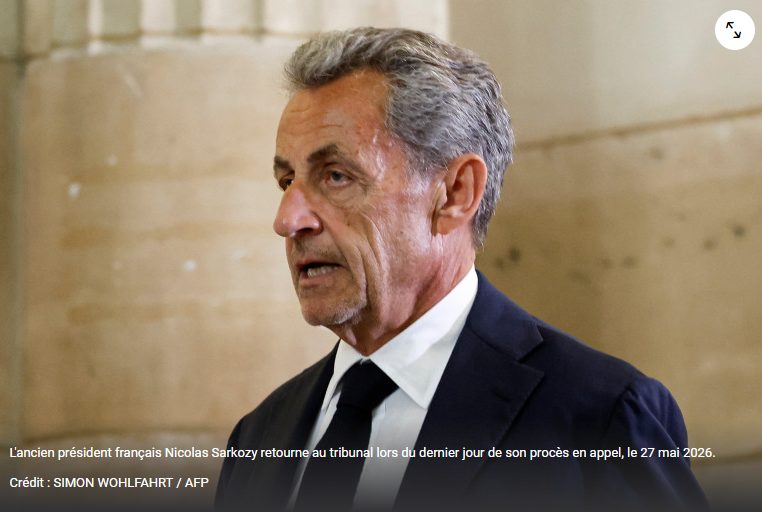
There is a tragic irony in Nicolas Sarkozy's trajectory. He who embodied the verticality of power, the certainty of the republican impunity tacitly granted to former presidents, finds himself today in the most vulnerable position of his public life: that of the ordinary defendant whom the judicial machine grinds down without regard for past service. It is not just a man who is on trial. It is a certain conception of the Republic, the one that held that the great could fail without ever truly falling, which is fracturing before our eyes.
In this regard, the Libyan affair is more than just a legal case. It is a revealing indicator. If the suspicions prove to be well-founded—and the judges have begun to uphold them—the entire question of the sovereignty of democratic decision-making comes to the fore. An electoral victory potentially greased by the gold of an African despot, in defiance of the rules that form the basis of the legitimacy of universal suffrage. One can therefore understand why his lawyers so vehemently defend the idea that this trial is political. Indeed, if the accusation is true, the consequences go far beyond the fate of a single man.
«It is a grim day for him, for France and for our institutions. This imprisonment is a disgrace.»
Mr Jean-Michel Darrois, lawyer for Nicolas Sarkozy
The breakdown of loyalties
At the appeal trial, the defence strategy sought to create distance between the man and the actions. Sarkozy did not know, Sarkozy trusted, Sarkozy was betrayed by overly zealous aides. This stance, which is classic in trials involving power, has an obvious limitation: it requires others to play their part as human shields. Yet Claude Guéant, the most loyal of the loyal, the shadowy figure who had managed everything during the boom years, refused to shoulder the role of the convenient scapegoat alone. Absent from the proceedings due to serious ill health, he replied from his forced silence with precise and devastating statements, contradicting his former boss's version point by point. This fracture is in itself a political event. It says something profound about the way loyalty systems unravel when judicial pressure becomes unbearable.
What this trial also reveals is the powerlessness of the support networks that had long protected Sarkozy from the most immediate consequences of his actions. The Right fell silent. Former ministers slipped away. Carla Bruni is there, present, loyal, but the circle has shrunk. The man who had turned his address book into a political weapon finds himself facing the fundamental loneliness of someone whom the justice system has decided to treat as an equal.
The precipice
What makes the situation particularly serious comes down to the judicial mechanics itself. With such a heavy sentencing request, and if the court were to uphold it next November, an appeal to the Court of Cassation would not suspend the execution of the sentence. And this sentence, given its severity, would be too heavy to be eligible for immediate adjustment, even taking into account age, potential medical conditions, and the rules regarding the humanisation of sentences that enforcement courts can apply.
For the first time in the history of the Fifth Republic, a former president could be forced to serve a long custodial sentence without a safety net. No delays, no electronic tags, no early release. The man in a hurry, the one who reformed by decree even before he had finished lunch, would then have to learn what it is like to wait, locked away, as time goes by.
The question that now hangs over the entire political class is not merely that of the fate of an ageing man, however powerful he may have been. It is that of what this fall means for the Republic itself, for the image it projects of itself, for the trust that citizens can still place in its institutions, and for the way it treats those it has lifted to the summit. There is no simple answer. But the question itself will not disappear with a verdict.

 French
  English
  Chinese
  Arabic