
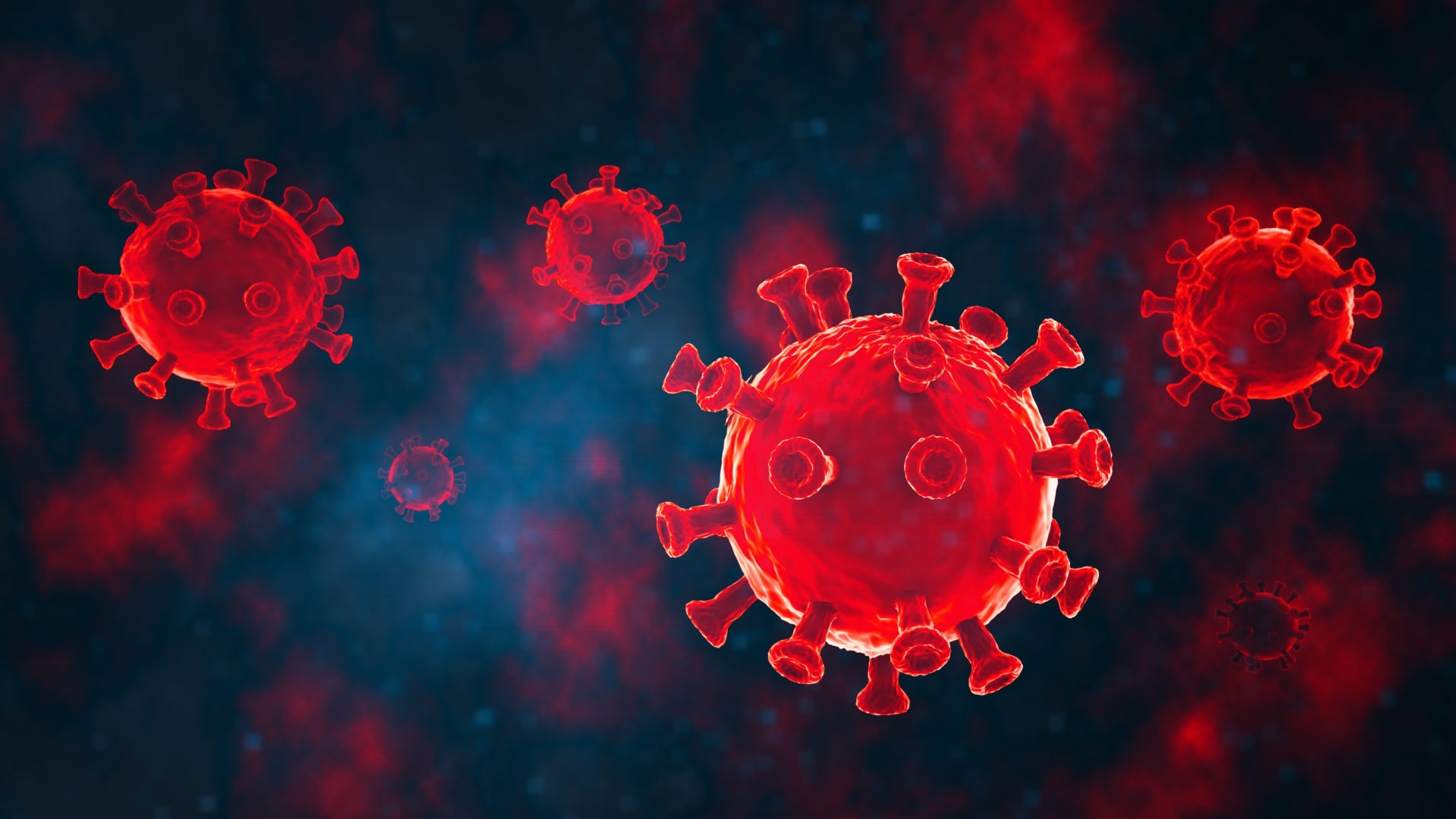
Officially, it is merely a scientific breakthrough published in the journal «Nature». However, according to several sources close to biomedical research and international health surveillance, the discovery has triggered a series of discreet exchanges between laboratories, public health institutions, and biological risk experts.
At issue: an East African bat coronavirus, Cardioderma cor coronavirus (CcCoV-KY43), which is capable, in a laboratory setting, of entering human lung cells. A weak signal. But a signal being taken very seriously.
A discovery that immediately circulated through the alert networks
According to several European researchers, the results were quickly shared beyond the traditional academic framework. « This type of discovery never stays confined to a scientific paper. It circulates very quickly within surveillance networks », confides a virologist involved in international programmes. The reason is simple: this virus uses an entry mechanism hitherto unknown for this family.
The unexpected «key» intriguing researchers
Research shows that the virus relies on CEACAM6 to enter human cells. Until now, alphacoronaviruses were considered to be limited in their ability to exploit cellular receptors. This discovery is a game-changer.
Researcher Dalan Bailey admits it privately to colleagues: « This suggests that we have probably underestimated the diversity of possible entry points ».
In certain scientific circles, the question is now being asked differently: how many other viruses already possess similar mechanisms... without us having identified them?
What the health authorities are not saying publicly
Officially, the message is clear: no human-to-human transmission detected; no confirmed cases; no immediate risk. But according to a source involved in epidemiological surveillance: « A discovery of this kind always triggers a period of heightened vigilance, even if no public announcement is made ».
Further analyses are reportedly underway, notably using samples collected in Kenya and other areas of East Africa.
A method that intrigues... and reassures
Another element that caught attention: the method used. The researchers never manipulated the complete virus. They only worked on the «spike» proteins, reconstructed from genetic data.
A choice that is far from trivial. Researcher Giulia Gallo points out: « This makes it possible to identify potential risks without exposing teams to full-strength pathogens »Behind the scenes, several experts see this as a turning point: a new ability to map threats before they actually emerge.
Between scientific caution and the memory of Covid
Impossible for decision-makers to ignore the COVID-19 precedent. Even though the current situation is very different, certain habits have become ingrained. A global health expert confides: « These days, no signal is ignored. But we also avoid any premature communication that might cause unnecessary concern ».
East Africa: a region now under increased observation
The discovery brings back into focus the role of certain regions as reservoirs of viral diversity. Researchers are calling for increased studies in East Africa, particularly on bat populations.
The scientist James Nyagwange insists: « Understanding these viruses upstream is essential to anticipate future spillover events »In short: it is better to detect a theoretical risk today than to manage a real crisis tomorrow.
A threat? No. A scientific warning, yes.
At this stage, all experts agree: the virus does not meet the conditions for a pandemic; it shows no capacity for human transmission; it remains limited to laboratory observations. But the discovery sends a deeper message: viruses possess adaptive capabilities that are still largely unknown.
What this case really reveals
Behind this scientific paper lies a broader reality. The fight against pandemics is no longer waged solely in hospitals or in the middle of a crisis. It is now waged: in genetic databases, in laboratories, in quiet exchanges between scientists, in the ability to anticipate.
And in this silent race between virus and science, one thing is changing: humanity is no longer discovering threats after the event, it is starting to see them coming.

 French
  English