
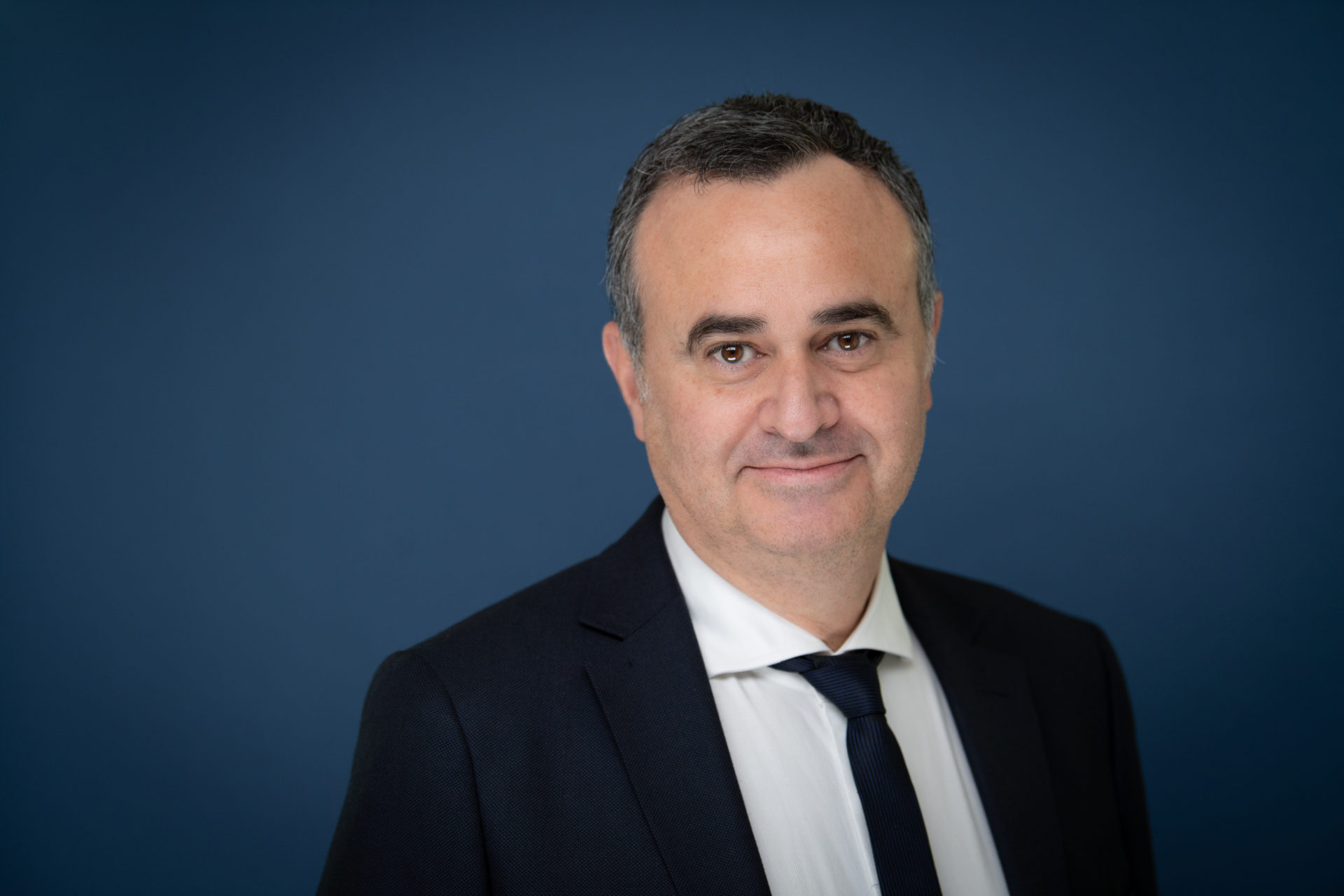
Erwan Davoux is a candidate in the upcoming French legislative elections on June 30 in the 9th constituency of French expatriates (Maghreb and West Africa). In this interview, he talks about his ties with the Maghreb, his vision on immigration, the Franco-Algerian relations, and the future of the European Union. Gaza.
You are running in the 9th constituency of the French living abroad, which includes the Maghreb. Why this caution?
I am a native of Tunisia (3rd generation), a country where I grew up and for which I feel a great affection. I completed all my schooling there, in French education abroad (my father was a teacher at the French Lycée de la Marsa). This left a particularly strong impression on me. I also participated in the creation of the association of Former Students of the French Lycées of the World.
I have traveled to the various countries of the constituency in my various roles as diplomatic advisor. Of course, I have had the pleasure of visiting several times the Alger and Oran and the honor of accompanying Jean-Pierre Raffarin and Alain Juppé there.
When I arrived in Paris for my postgraduate studies at the Institut d’Études Politiques, I chose to also take a course at the Institut National des Langues et Civilisations Orientales (INALCO), the department of Arabic studies. In order to never break with the Arab world and consolidate my level in literary Arabic, a language I started learning at the age of 6.
All my roots are in this constituency.
Which political party do you represent?
I will be an independent candidate whose inspiration is Gaullist, Chiracist, and who supports Dominique de Villepin’s remarkable positions.
I have not sought any nomination. Political parties no longer play their role of enlightening and contributing to public debate but serve only the interests of their leaders. The general interest, France, and the French living abroad are far from their concerns.
My path will be authentic and sincere, in keeping with my commitment as a young man to stand behind Jacques Chirac.
Immigration is at the heart of the election campaign debates. What are your proposals on the subject?
Immigration is too often at the center of the debate as if it were the only issue to be addressed. There are many others!
Often perceived in purely negative terms, as a rejection of the other, of everything that is different, I advocate a more balanced position. Controlled immigration is naturally indispensable, but it is also necessary to adopt an intelligent approach and to move beyond clichés. There are naturally integration problems that need to be tackled and resolved. The current government is neglecting urban policy and abandoning social diversity. There is little or no communication about exemplary successes.
The practice of the language and family ties seem to me to be the two key factors to take into account. From this perspective, Algerians have no reason to be penalized, quite the opposite.
«France is rich in its diversity,» Jacques Chirac declared in his last message to the French in March 2007. That is my position.
And what about Schengen visas for Algerians?
The brutal and purely electoral decision to reduce visas for Algerians by 50% in 2021 was a mistake. It will leave a lasting negative resentment, despite a certain return to normalcy. Family life and projects must not be taken hostage by political contingencies decided in haste! Consideration must prevail over suspicion.
What are your proposals regarding the relations between France and Algeria to overcome the current obstacles?
I hope that after the Algerian presidential election on September 7, the relationship will experience a new strong momentum. I am a supporter of Franco-Algerian friendship. I am not part of the Macron clique, but my country comes first. It seems to me that it is in the interest of our two great nations to achieve an intense and peaceful relationship.
The opportunity had already arisen with Jacques Chirac in 2005, but we missed this rendezvous with History, because of that stupid «Vanneste Amendment» on the «positive role of colonization».
This time, I think the context is favorable; the recent announcements in the memory field, the restitution of property, are going in the right direction.
A great founding Treaty of Friendship that allows a lucid understanding of the past and lays the foundations for a future dense relationship will have to emerge. Perhaps we should draw inspiration from the Treaty of Elysée, concluded in 1963 between France and Germany….
You have taken courageous positions regarding the war in Gaza. If you are elected, what are the projects you will advocate for in the National Assembly?
The massacres committed in Gaza is neither a parenthesis nor a simple issue confined to the international arena. They upset me because they challenge the very foundations of civilization: equal value and dignity of human life. International and humanitarian law are being flouted. The values of equality and secularism of the Republic are being discarded. Indeed, secularism is the recognition of all religions as respectable and their treatment in an equal manner. It must not be twisted to cast suspicion on any of them.
I deplore the passivity of French diplomacy on this issue and its hesitant and incoherent policy. On the other hand, I respectfully applaud the immense work accomplished by the Algerian diplomacy on this groundbreaking issue.
In the immediate term, it is a matter of stopping the Netanyahu government, the revisionist Zionists, and supremacist Kahans by imposing sanctions: freezing assets, prohibiting entry into the national territory, trade sanctions, and revising certain agreements.
Naturally, the decisions that the International Court of Justice and the International Criminal Tribunal will take will be imposed on everyone.
The recognition of the Palestinian state is urgent; I am sure Jacques Chirac would have done it long ago!
In the National Assembly, I will carry this path and this voice so that French diplomacy can return to its Gaullist-Chiracian tradition, in keeping with its history and its values.
 French
  English
  Chinese
  Arabic