
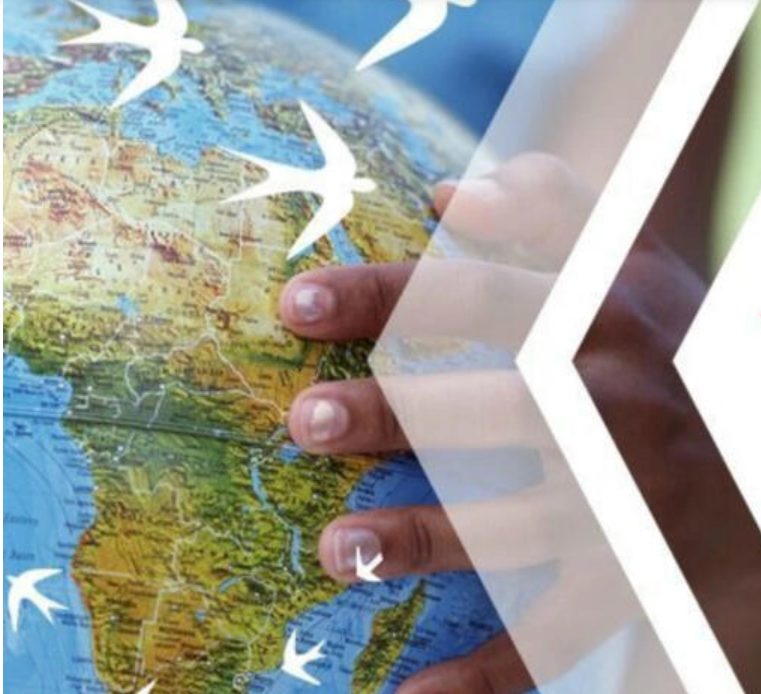
Some 1.3 billion people and 2.6 billion inhabitants are projected in Africa in 2050, of which 200 million are already part of the diaspora.
In their adopted country, diasporas participate in innovation, cultural exchanges, and the acceleration of the economy. They are also an essential support for their home country. The issue was discussed at the 16th U.S.-Africa Economic Summit, which was held from May 3 to 6 in Dallas. In the United States. In the United States, the state of Texas is home to the majority of the African diaspora.
Increasing the participation of the diaspora in American political spheres
In September 2023, the Biden administration created the Presidential Council on Diaspora Engagement, with Deniece Laurent-Matney as its president. According to the latter, the impact of the diaspora is becoming increasingly visible. She believes that ’it is necessary to use the diaspora as a tool, and as a generator of recommendations for public policies.« Deniece Laurent-Matney recalls the strong participation of the African diaspora in the construction of the United States. Today, Afro-Americans, Afro-Caribbeans, and the first and second generations want to connect with the continent. »It is our role as a government to give them the space to do so,« she adds. The ambassador of Tanzania to the United States, Elsie Sia Kanza, declares: »My current concern is to see how we can increase the participation of the diaspora in the different political layers of the United States. Whether in the federal government, at the state level, or in cities. This is important, because that is where decisions are made.« She refers to the phenomenal representation of the Indian diaspora in the various American layers. »You see them in Congress, in the administration, at the local level. They position themselves where the resources are.«. We too need more political commitment from the diasporas in the country where they live. », she insists.
The African diaspora in France
Diasporas potentially represent % 20% of the French population. Ties with the country of origin are manifested, among other things, by increasing remittances: $520 billion transferred worldwide in 2018 according to the World Bank, of which $8 billion were transferred from France to Africa in 2018. Recent trends also show an overall increase in the level of education of diasporas, as well as an increased feminization, according to the 2019 OCDE-AFD data.
Initiatives taken by diasporas
If the vast majority of transfers from diasporas to their home countries are intended for the consumption of the families that remain in the country (current consumption, tuition fees, housing or health costs), It is estimated that on average 15 % of these transfers are dedicated to investments., In particular in the real estate sector. A single person is sometimes called upon to support a family member, participate in an association, undertake an entrepreneurial project or develop a real estate project. Different practices emerge with the new generations, the so-called second and third generation children: more space for business and private investment, involvement in the major issues such as the climate and the fight against inequality. Iconic figures from the economic, political, cultural, and sporting worlds are committed to being ambassadors of international solidarity. This proves that these diasporas can have a tremendous impact.
The essential role of the «returnees»
Among the new generations of the diaspora emerges the movement of the «repats», Abbreviation for «returnees», as opposed to expatriates. 70 % of the African MBA students therefore want to relocate to Africa. This return of talent, supported by initiatives such as AfricTalent, Forum Elit, MoveMeBack, Careers in Africa, is characterized by strong legitimacy, personal interest in the development of the continent, as well as emotional intelligence and the ability to identify trends. Major companies such as Orange, Unilever, CFAO, Canal+ are already making diasporas a major asset in their development in Africa. Data on these new profiles are still scarce, but the Inspire Africa association estimates that: 76 % of the «remigrants» lived in France, 26 in % North America; a third do not return to their country of origin but prefer another country in Africa; 32% of the «remigrants» would be entrepreneurs.
The main reasons for returning to Africa are the desire to have an impact on the continent, interesting professional opportunities, and family and social pressure. Diasporas are increasingly imposing themselves on institutions. Their contribution to civic, political and economic life is increasingly recognized by the governments of the countries of origin, especially in Morocco, Senegal, Guinea and Mali; members of parliament and government ministers are from diasporas.

 French
 English
 Chinese
 Arabic