
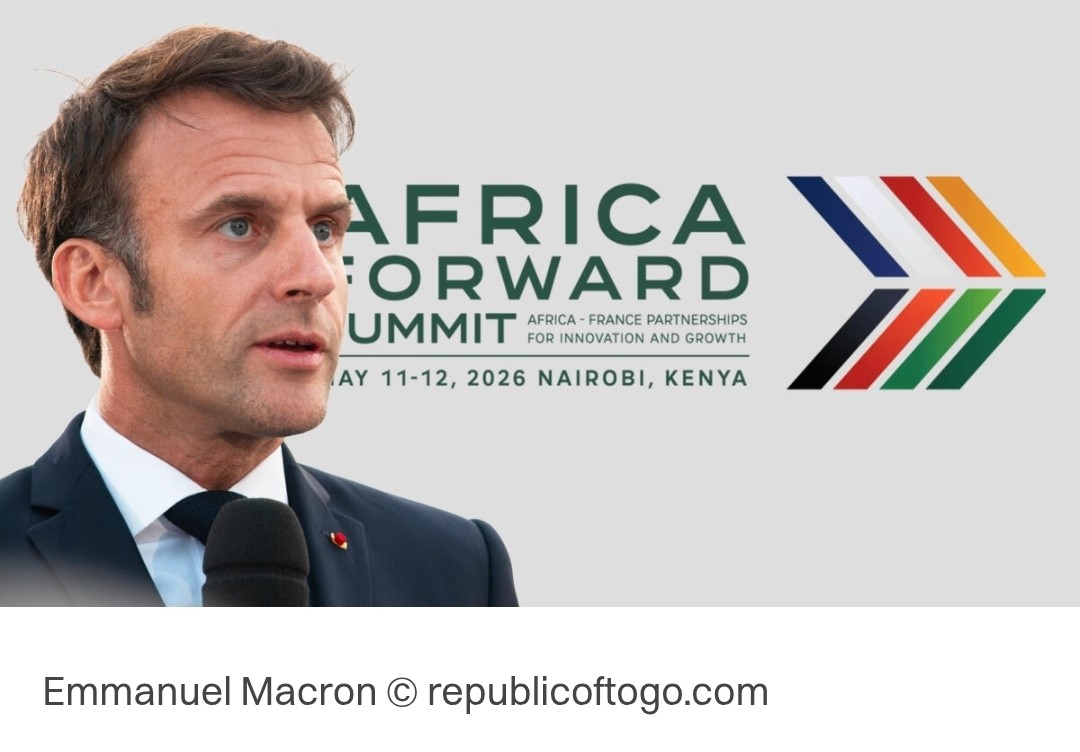
Officially, it is a diplomatic tour focused on « the renewed partnership »with Africa. However, several African diplomats speak of an emergency strategic repositioning operation.
Between Alexandria, Nairobi and Addis Ababa, Emmanuel Macron’s trip looks less like a simple African tour than a sequence of methodical reconquest after several years of French retreat on the continent.
And in European diplomatic corridors, many see it as an implicit admission: Paris knows it has lost part of its historical influence.
Alexandria: the French-speaking world as a tool for return
The choice of Alexandria to open this tour is far from trivial. Alongside his counterpart Abdel Fattah al-Sisi, Emmanuel Macron is inaugurating the new campus of Senghor University, presented by the Élysée as a« modern campus geared towards Africa ».
But behind the cultural image, several diplomatic sources see a broader attempt: to reactivate French levers of influence outside the traditional Francophone sphere.
« France is trying to rebuild intellectual and economic footholds wherever it is losing political ground », diplomatically summarises a diplomat. .
Because the paradox is glaringly obvious: a few hours before taking part in a summit with an English name –Africa Forward - Emmanuel Macron celebrates Francophonie in Alexandria as a strategic tool.
Kenya, Paris's new linchpin
The true political heart of the tour, however, lies in Nairobi. For the first time since coming to power in 2017, Emmanuel Macron is organising an Africa-France summit with African heads of state... in an anglophone country.
The message is clear: to move away from the historical one-on-one with francophone Africa. And above all, to bypass the open fractures in the Sahel.
Since the break with Mali, Burkina Faso and Niger, Paris has been seeking new regional partners capable of embodying a relationship less marked by the colonial legacy. In this new architecture, the Kenyan president is becoming central.
Why William Ruto is attracting so much interest from Paris
Behind the scenes, several French advisers describe the Kenyan president as « a compatible partner with the new French doctrine »Understand:
- economically liberal
- close to international financial circles
- influential in discussions on the reform of the global financial system
- credible interlocutor on regional security issues
Kenya is now home to around 140 French companies, compared with just thirty or so fifteen years ago.« Nairobi has become an essential diplomatic and economic hub », observes an analyst.
Africa Forward: the big return of French business
Behind the political speeches, the main objective of the summit is clear: to re-establish French businesses at the heart of the African game. The announced business delegation sets the tone:
- Rodolphe Saadé: Head of the CMA CGM group, one of the world leaders in logistics.
- Patrick Pouyanné. Chief Executive Officer of Total
- Sébastien Bazin, CEO of AccorHotels
- Antoine Bernard de Saint-Affrique; Chief Executive Officer of Danone
According to several sources, Paris wants to respond to a growing concern: France's economic decline vis-à-vis China, Turkey, the United Arab Emirates and even certain Indian groups.
« France can no longer live off its historical networks. It must become competitive again », admits a senior European official on condition of anonymity.
Hormuz, Red Sea: securing trade routes as a backdrop
Another subject is quietly occupying discussions: the maritime corridors crisis. With tensions around the Strait of Hormuz and disruptions in the Red Sea, Paris is now pushing the idea of a « maritime coalition »neutral. Emmanuel
Macron hopes to convince several African and Middle Eastern partners to support this initiative. Because behind the security rhetoric, the stake is colossal: protecting the energy and trade routes linking Europe to Africa and Asia.
« African ports are becoming strategic in the new global geopolitics », says a maritime expert.
Addis Ababa: return to the seat of African power
Final stage of the tour: Addis Ababa. And once again, the symbolism is powerful. Emmanuel Macron is scheduled to meet the Chairperson of the African Union Commission as well as António Guterres. Official objective: to support African peace and security efforts.
But several observers see it primarily as a French attempt to reinvest in African multilateral bodies, at a time when other powers are gaining ground.
China, the permanent shadow of the journey
In all the issues covered – infrastructure, energy, digital technology, debt, security – one player comes up systematically in private conversations: China. Because the figures worry Paris:
- China-Africa trade now far exceeds that of France
- Beijing controls a major share of strategic African infrastructure
- several African capitals now consider China a priority partner
« The real subject of the summit is the global competition for Africa », admits a European diplomat.
A high-pressure tour
At the Élysée, this sequence is presented as proof of openness towards « an Africa of a thousand tongues ». But behind this formula, a more brutal reality is asserting itself: France is now seeking its new place on a continent that no longer wants to depend on a single partner. And in this accelerated recomposition, Paris is trying to avoid a lasting geopolitical decline.

 French
  English
  Chinese
  Arabic