
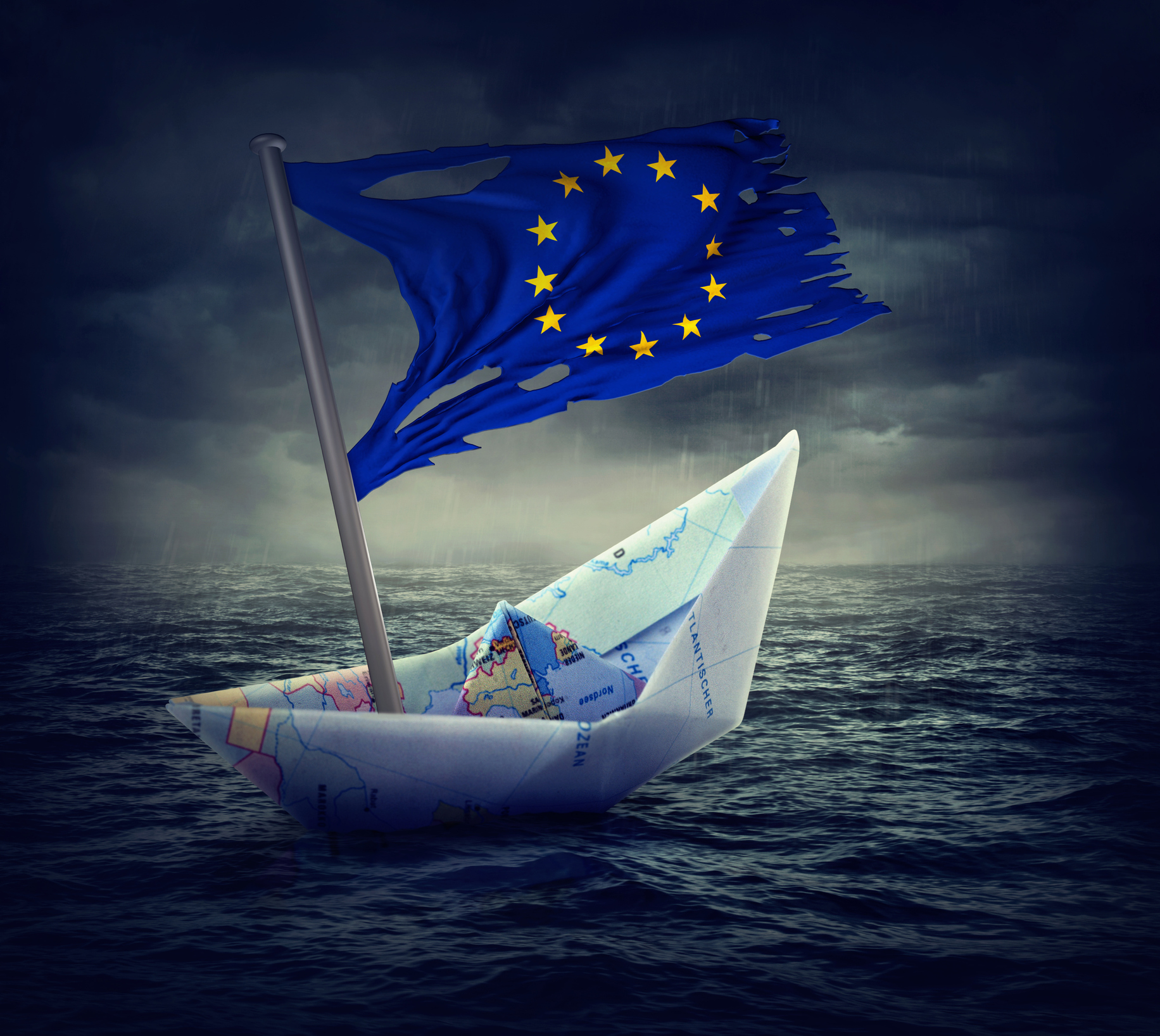
This is the brutal reality dictated by the chronology of events. Washington negotiated. Tehran responded. Israel struck. The United States followed. As for Europe, it commented and activated a legal mechanism that everyone immediately contested.
2015: the triumph that carried within it its own fragility
We have the nostalgia we deserve. That of European diplomats often goes back to July 2015 and the Vienna agreement, the JCPOA, that rare moment when the European Union managed to establish itself as a co-architect of a global security agreement. On 20 July 2015, the UN Security Council unanimously adopted Resolution 2231, which endorsed the agreement concluded between Iran and the group of the five permanent members of the Security Council plus Germany. France, in particular, had thrown all its weight behind the verification deadlines and control mechanisms. It was tangible proof, at last, that an autonomous European diplomacy was not just a Brussels technocrat slogan.
The text was sophisticated: progressive sunset clauses, the lifting of the arms embargo in October 2020, the end of restrictions on missiles in October 2023, the expiry of the entire mechanism in October 2025 and a «snapback» mechanism making it possible, in the event of an Iranian violation, to automatically reimpose sanctions without the risk of a Russian or Chinese veto. A legal innovation presented at the time as revolutionary.
Three years later, on 8th May 2018, Donald Trump pulled out. And there, reality struck in all its coldness: Europe could not deliver what it had promised. INSTEX (Instrument in Support of Trade Exchanges), that painstakingly devised financial mechanism to bypass US sanctions and maintain trade with Tehran, will go down in history as one of the most stinging failures of European impotence. On paper, a fine idea. In practice, no major European company was willing to take the risk. Total, Siemens, Airbus—all had too much at stake in the US market to defy Washington's secondary sanctions. The fear of the dollar proved infinitely stronger than the rhetoric on strategic autonomy.
Pragmatic, Iran drew its conclusions as early as 2019: Europeans make promises. They do not deliver. From that date onwards, Tehran began gradually withdrawing from its commitments by enriching uranium beyond the authorised thresholds, restricting access for IAEA inspectors, and accumulating a stockpile of fissile material that the Agency would describe, in October 2025, as having no «credible civilian justification».
The slow agony of the JCPOA: 2019-2025
Between 2019 and 2025, the JCPOA survived in a state of clinical death. The Biden administration attempted to revive it from 2021 onwards, with indirect talks in Vienna multiplying without ever succeeding. Iran progressively increased its uranium enrichment level: first to 20%, then to 60%, and certain analyses pointed to traces at 84% detected by the IAEA in early 2023, a threshold close to the 90% required for military application.
Meanwhile, Europe is trying to keep the framework alive. JCPOA Joint Commission meetings are continuing. France, Germany and the United Kingdom are striving to hold together an agreement from which one of the main signatories, the United States, has been absent since 2018. It is an absurd position, and everyone knows it. In a letter to the UN in July 2025, Iranian Foreign Minister Abbas Araghchi accused the Europeans of effectively renouncing their role as JCPOA participants by supporting or acquiescing to US and Israeli military actions. Carnegie Endowment for International Peace He warned that if France, Germany and the United Kingdom were to trigger the snapback mechanism, Europe would «lose its role in the Iranian nuclear dossier».
June 2025: the Twelve-Day War and the end of an era
On 13 June 2025, Israel launches Operation Rising Lion, a surprise strike against Iranian nuclear sites, their scientists, the country's air defences and energy infrastructure. On 22 June 2025, the United States carries out Operation Midnight Hammer, targeting the Iranian nuclear facilities at Fordo, Natanz and Isfahan using B-2 Spirit stealth bombers and Tomahawk cruise missiles.
Twelve days of crossfire between 13 and 24 June: the Iranian nuclear programme is partially destroyed, its defences dented. But the regime holds firm.
Where is Europe during these twelve days? It is watching. It is calling for a «ceasefire» and «de-escalation». It is issuing press releases. None of the three countries—Germany, France, the United Kingdom—was consulted ahead of the American strikes. None had been informed of the Israeli plans. The European «diplomatic nuclear power» learns of the bombings like the rest of the world on television screens.
The IAEA withdraws its inspectors from Iran in June 2025 following Israeli-American strikes on Iranian nuclear facilities.
Transparency regarding the Iranian nuclear programme, painstakingly negotiated over years, is collapsing in a matter of hours.
August-October 2025: Europe takes action... but nobody listens
Faced with this void, the E3 (Germany, France, United Kingdom) decide to play their final legal card. On 28 August 2025, the United Kingdom, Germany and France trigger the snapback mechanism provided for in the 2015 nuclear deal, claiming that Iran is in a state of «significant non-performance» of its commitments. On 29 August, the EU High Representative, France and Germany send a joint recommendation to the Council calling for the reinstatement of all European nuclear sanctions that had been suspended or lifted.
The snapback mechanism triggered by the E3 results in the reimposition of sanctions on 27 September 2025. On paper, this is a European victory: the E3 used the legal tool that they themselves designed in 2015 to maintain pressure on Tehran. In reality, it is a diplomatic disaster.
Russia and China immediately dispute the legality of the move. An October 2025 letter from China, Iran and Russia to the Security Council argues that the E3 have no standing to invoke the snapback mechanism because the three governments had «ceased to implement» their commitments under the JCPOA and Resolution 2231. Iran goes further: Araghchi declares that Europe has just signed its diplomatic death warrant on the nuclear issue. He is not entirely wrong.
For what is the use of European sanctions on a country whose nuclear facilities have just been bombed? Tehran itself highlights the absurdity of the situation: how can one enforce obligations on centrifuges reduced to ashes by bombs? The question is rhetorical. It is also politically devastating for European credibility.
April 2025 – February 2026: negotiation without Europe
But let us return to the heart of the matter: the negotiations themselves. For it is there that European exclusion is most flagrant, most documented, and most laden with consequences.
On 7 March 2025, Donald Trump's letter to Ali Khamenei is made public, expressing his desire to begin new nuclear negotiations. The initiative is purely American. Europe was not consulted. It learns of the existence of this letter like any reader of the press agencies.
The first series of high-level meetings is being held in Oman on 12 April 2025, led by US special envoy Steve Witkoff and Iranian Foreign Minister Abbas Araghtchi. Format: strict bilateral, Omani mediation.
The two delegations are in separate rooms. The E3 are absent. A second round is taking place in Rome on 19 April, followed by a third in Muscat.
Four rounds of negotiations in a few weeks, all without direct European presence at the table.
In March 2026, the Guardian revealed that the British National Security Adviser, Jonathan Powell, secretly attended US-Iranian negotiations in Geneva, accompanied by a technical team from the Cabinet Office. Secretly. The word says it all. The UK, a founding member of the E3 and a nuclear power, has to sneak into negotiations on the Iranian nuclear programme, as if its presence were an intrusion.
Omani Foreign Minister Badr Albusaidi, the chief mediator of the talks, stated after the outbreak of hostilities in March 2026 that negotiations on the nuclear programme had progressed and that the US-Israeli war against Iran was merely an attempt to reorganise the Middle East in Israel's favour. Translation: even Oman, a small Gulf sultanate, had more clout in these negotiations than the entire European Union.
28 February 2026: the day diplomacy collapsed without Europe
A final diplomatic effort is made in February 2026. Negotiations get underway in Muscat on 6 February. A final meeting takes place in Geneva on 27 February. The Omani envoy speaks of «significant progress». Iran says it is ready to make concessions. But Trump declares he is «not enthusiastic» about the discussions. The next day, the bombs fall.
On 28 February 2026, the United States and Israel launch a vast series of strikes against Iran. The Iranian regime retaliates with salvos of missiles across the region, targeting Israel, but also the Gulf states. The scale of the attack exceeds anything the region had experienced since the invasion of Iraq in 2003.
Where was Europe on the evening of the 27th, when the decision for war was taken in Washington? It was not in the room. It was not consulted. It was informed probably a few hours before the strikes, or perhaps at the same time as the press agencies. On the most explosive nuclear non-proliferation issue since the North Korean crisis, the so-called European «nuclear diplomatic power» was presented with a fait accompli.
France: Wasted Singularity
We must distinguish here between European collective impotence and specifically French waste. For France occupies a theoretically unique position: the Union's sole nuclear power since Brexit, a permanent member of the Security Council, endowed with an autonomous deterrence doctrine that the whole world envies or dreads depending on the day.
This singularity could have — should have — made Paris the pivot of a European nuclear diplomacy. It did not, or hardly so. Three structural reasons overlap.
First, the residual Atlanticism of its partners. Post-2022 Germany, traumatised by its dependence on Russian gas and its past geopolitical naivety, has reverted to a simple reflex: Washington first, strategic questions afterwards. Central and Eastern European countries, led by Poland, have never believed in European strategic autonomy. For them, security is called NATO, and NATO is called the United States. In this context, for many, pursuing an agenda of diplomatic independence is like talking to a brick wall.
Second, the lack of financial leverage. Exercising credible diplomatic pressure requires the ability to autonomously reward or sanction. Yet European sanctions weigh infinitely less than their American equivalents in a global financial system that remains overwhelmingly dollar-ised. The Instex episode demonstrated this with ruthless clarity: without financial sovereignty, there is no diplomatic sovereignty.
The Franco-German cacophony, at last. Paris has always had a harsher interpretation of the Iranian dossier: ballistic missiles, support for Hezbollah, regional threat to Israel. Berlin long banked on economic dialogue as a vector for normalisation. These two visions are not irreconcilable in theory. In practice, they have never been reconciled. And a Europe that speaks in a disjointed manner speaks, basically, to no one of importance.
What war reveals: Europe’s quiet declassification
What played out between April 2025 and March 2026 is revealing of a deeper phenomenon, which could be called the silent declassification of Europe. A progressive, almost painless shift from within, but perfectly legible from Tehran, Beijing, Moscow or Washington: Europe has gone from the status of a power that sets the terms to that of a power that manages the consequences.
She published statements. She commissioned special envoys. She activated legal mechanisms that her opponents immediately contested. She funded INSTEX, which never worked. She called emergency meetings whose outcome no one in Tehran or Washington expected. And meanwhile, the real decisions were being made elsewhere, in the Oval Office, in the bunkers of Tel Aviv, in the meeting rooms of a hotel in Muscat.
This paradox—negotiating and striking simultaneously—says something essential about the nature of the Iranian-American conflict. It is not merely a disagreement over nuclear power, nor even over regional geopolitics. It is a war of values, identities, and rival legitimacies that neither a diplomatic roadmap nor a nuclear treaty could resolve on their own. And in this existential confrontation, Europe has no role, because it represents neither camp, nor does it have the strength to impose itself as an arbiter.
Three conditions, none met
Let us be precise, for geopolitics has no time for pious hopes. For Europe to become a credible diplomatic nuclear player once again, not just in speeches but in reality, three conditions would be necessary, and none of them are currently met.
First, an autonomous and credible sanctioning capacity. This requires seriously building financial instruments independent of the dollar, an alternative international payment system, bilateral clearing mechanisms, and a banking architecture that is not under US jurisdiction. The digital euro, the strengthening of European Swift, local currency clearing agreements—all of these have existed as projects for years. The political will to make them a reality remains nowhere to be found.
A unified stance on hard security dossiers remains a long way off. As long as Warsaw and Paris do not share the same reading of the Iranian threat—and they do not—as long as Berlin hesitates between dialogue and alignment with Washington, as long as the Baltic states view every strategic dossier solely through the prism of the Russian threat, Europe will have no voice on the international stage. It will have only contradictory, competing, neutralised voices.
An assumed diplomatic courage, at last. Establishing oneself as an indispensable mediator implies accepting to upset Washington or Tel Aviv, sometimes. It implies recognising that European interests are not always identical to American ones and owning up to it publicly, with all the friction that entails. That courage, which is in reality the bare minimum requirement for any autonomous foreign policy, is not the quality that European institutions naturally cultivate.
What history will remember
The European Union representative at the Security Council, speaking as an observer in December 2025, stated that the snapback of sanctions «must not be the end of diplomacy, quite the contrary» and that it was necessary «to ensure that Iran does not acquire or develop a nuclear weapon». It was a fine phrase. Six weeks later, the bombs were falling on Tehran.
If a lasting Iranian-American agreement is signed in the coming months, something the fragile April 2026 ceasefire hints at without guaranteeing, Europe will applaud. It will hail the victory of multilateral diplomacy, recall its foundational role in the 2015 JCPOA, and eagerly position its businesses to take advantage of the potential reopening of the Iranian market.
That will be, once again, shutting the stable door after the horse has bolted.
Nuclear diplomatic Europe exists as a concept, as a legal heritage, as an ambition proclaimed in a thousand speeches from the Sorbonne to the benches of the European Parliament. As a reality of power in the world of 2026—a world where a major war in the Middle East was decided, conducted and perhaps concluded without it—it remains, essentially, to be built.

 French
  English
  Chinese
  Arabic